
The Best Surgery I’ve Ever Had (true!)
I’ve had two surgeries for the same problem (Hernia). The two were so different, this is the tale of my two surgeries!
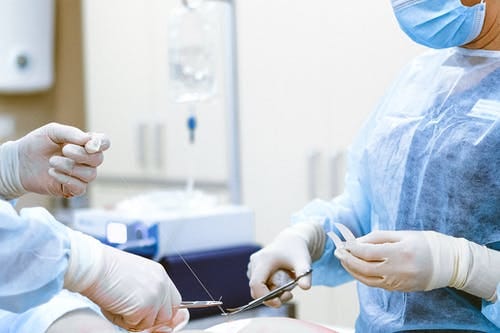
Best surgery I’ve ever had- That’s a weird title, isn’t it? Who writes about that stuff? But after today’s surgery to treat Hernia, I feel like I need to.
It’s incredible to think that the best surgery I’ve ever had was one I just had a few hours ago. By the way, it went exceptionally well due to the cutting-edge medical technology and science we have today.
Why did I write about this one as the best operation/surgery? Read on, here comes the tale of two surgeries!
Surgery One — Right side: Chennai/India, 2006:
I was in my early 20s, so I acted bravely. My manager then pulled me aside and asked if I needed an extra day before the surgery. He mentioned that I seemed anxious and I had no clue what he was talking about. Apparently, I was anxious but didn’t know!
In 2006, there was still internet (if I made myself go to a browsing center). I read minimally (research — who needs it), and the surgeon appeared competent. I didn’t bother thinking about it or looking for different choices.
This was the open surgery, not the keyhole type. The surgeon had to cut open more than 8cm on my lower abdomen/groin area on the right side. The day after the surgery, my surgeon suggested that I try walking. Being cocky, I tried to walk before I was ready.
I remember falling/fainting a couple of times after the surgery (and scared the shit out of my mom). I finally was allowed to go home after 3 or 4 days. And I remember my brother helping me with the toilet for the next few days.
I was covered by private insurance from work. It cost more than three months of my salary. I would have needed a loan if my employers hadn’t paid for it.
I still don’t think it was within reach of most ordinary folks, not without some struggle financially.
Surgery Two — Left side: Copenhagen/Denmark, 2022
After hearing my complaints, my doctor ordered some tests suspecting some infection. The urine and blood tests returned nothing; he referred me to ultrasound. After the ultrasound, it was clear.
My favorite nemesis was back, on the other side now. Hernia doesn’t want to leave me alone. Thank you for the blessing, genetics!
The Danish public health system is under stress from Covid. They couldn’t fit my surgery until Feb 2023 (until 14 months later). You might think, what a horrible place!! Read the full story.
The Danes are dedicated to their people and society. If the public hospital cannot take your surgery in a month, you will be referred to a private hospital. You will receive higher-quality care.
And guess how much all of it costs — ZERO! The tests, the surgery, the consultations — they cost nothing. When the system says that they’ll take care of you, they really do.
The public system was apologetic that they couldn’t arrange for transport back after the surgery. Providing the cover for surgery was part of their policy, not the transport. I smiled and told them it was okay.
I woke up early and arrived on time for surgery. You have to fast for six hours and not drink anything before the surgery. I felt nervous as I drove in the morning. My mind wandered to the previous surgery.
Will I be able to walk soon?
Am I going to be on painkillers and antibiotics for 2 weeks?
Will I be able to go to the toilet myself?
Will I wake up from anaesthesia? I hadn’t thought about this one before. Thank you to all the American Medical TV dramas.
Fortunately, they managed to do the same exact surgery with three holes this time around. Not an 8 cm cut, just three small holes. Laparoscopic procedures are easier on the patients, slightly more challenging for doctors (according to the internet).
The Danish doctors were polite and spoke flawless English. They even pretended to understand some of the Danish I was trying to speak when coming back from the effects of anaesthesia. Not my best moments of speaking Danish!!
I was back on my feet in 3 hours or so, and I was home before the clock hit the 4th hour. After a good nap, I managed to do some work, and I wrote this post. How amazing is that? In 16 years, I had the same problem that got fixed differently. Very very differently!
Some of the many things that occupied my thoughts during this time
- Following my initial diagnosis, the first thing that ran through my mind was: I’m hoping it’s less complicated this time. It was not, “oh great, I hope my insurance pays for it,” or “where do I get this money from?”
- Laparoscopic surgery isn’t new technology. It’s been available much longer than the last 16 years. Why didn’t I have access 16 years ago?
- Technology and the impact it has on medicine are massive. But these changes reach different places at different speeds. Why does inequality still exist, how can that change?
- If healthcare and education aren’t free, what kind of society are we? Why do countries need Obamacare or whatever version they call it now? Shouldn’t this be a universal right?
- We stand on the shoulders of people whose sacrifices we’ll never know. I thank all the scientists, engineers, doctors and other healthcare professionals. You are the real heroes that the world never stops and thanks enough!
- How much being at the right place and right time matters. I hate to admit it. I’m living a privileged life. And many millions (probably billions) do not have access to this. They likely will never experience this quality of treatment and a system that takes care of them genuinely
Thank you for reading!
Follow me for more like this, and you can also subscribe to emails so you’ll know as soon as my next post is out. If you are not yet a member, you can join in and get access to the work of thousands of writers, use the link here!


