
The Best Stoic Exercises For Mental Clarity
Simple instructions on how to practise
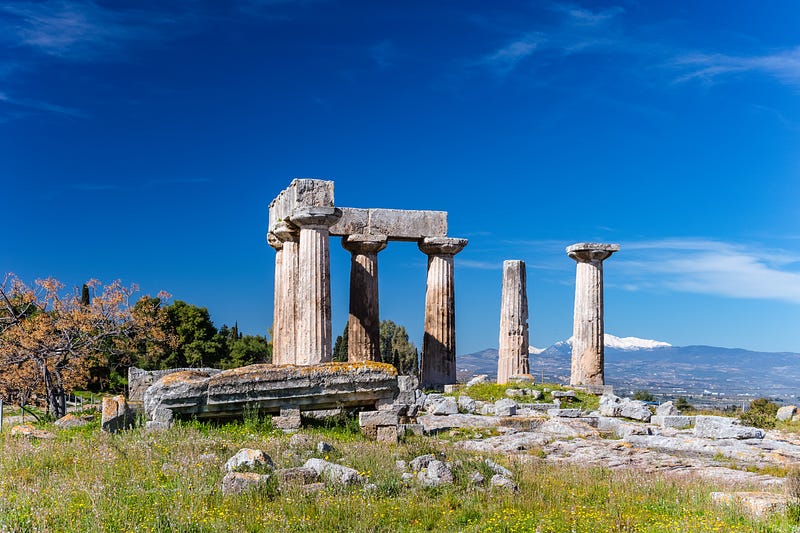
The Stoics did not practise their philosophy just to be able brag with their theories about the world, like other philosophers sometimes seem to do. The stoics had one clear and practical goal in mind: to live a better life.
The Stoics had some clear ideas of what wisdom looks like and how to practise it. They laid out simple and practical exercises everybody can do.
Practise
These exercises work best if you practise them repeatedly. Gaining more insight, you will notice that your mental clarity improves. For this reason I recommend you to do at least one of these exercises every day. If this is too much, at least once a week will go a long way as well.
“Practise yourself, for heaven’s sake, in little things; and thence proceed to greater.” — Epictetus
To be able to practise effectively, we need to have a clear understanding of the goal of these exercises. If you are not entirely clear on what is important and what is not according to the Stoics, here you can learn more.
Now you know why we do these specific exercises, we dive straight into the training:
Exercise #1: Task Focussed Journalling
This exercise is about separating things that matter from the things that do not matter. When you get better at making this distinction, it will get easier for the mind to know what to focus on.
Get a new, clean and empty journal and devote it to your stoic practise. It is important that when you pick up your journal, your mind gets a signal that it is clarity-time.
Answer one or more of the following questions, preferably with answers that you have not written down before, so that every session you will make a little bit of progress.
- What can I say no to, so that I can say yes to the things that really matter?
- What is important to me?
- What takes up more time than I would like?
- What has distracted me lately?
Take the time to carefully think about your answers before you write them down. Your progress is directly related to the quality of your answers.

Exercise #2: Premeditatio Malorum
This practise is all about taking the factor of surprise away from adversity.
Literally premeditatio malorum means the premeditation of evils and is about visualising all that can go wrong so that you have seen it coming as things inevitably go wrong sometimes.
“The man who has anticipated the coming of troubles takes away their power when they arrive.” — Seneca
To effectively do this:
- Sit down every morning and take a minute or two.
- Visualise your day and the biggest things you have planned to do.
- Imagine multiple ways your day becomes a huge disaster. For example: your car broke down, the house flew on fire, you got into a fight or a loved one got sick.
- Visualise yourself staying calm while dealing with whatever terrible happens to you
When you are done, remind yourself to expect your day to go about well, but that you are also prepared if things do not go your way.
Exercise #3: Memento Mori
Maybe the most famous stoic expression these days is memento mori. It literally means: ‘remember you [have to] die’, according to the Oxford English Dictionary.
I think it’s easiest to see it as a kind reminder, and I think it’s incredibly important to always keep our own true nature in mind: one of mortality.
If this sounds pessimistic to you, then you have not yet become fully aware of the positive side of memento mori, which is incredibly powerful. For example, you can use memento mori for:
- Creating a strong stimulus to get yourself to action.
- Helping you to get clarity about what is important and what is not.
Example 1: If you are procrastinating endlessly and feeling like you have all the time in the world, take a look at your past. Remind yourself that a considerable amount of your total days on this earth is already behind you. Death is getting closer everyday and at some point you will lie on your death bed. How will you feel about the way you spent your life?
Example 2: When you struggle to decide what is important and what is not, memento mori is a powerful way to get a bigger perspective. Remind yourself that at some point, sooner or later, you will only be having a couple of days left. Your limited time will almost all be spent, and looking back, was this struggle really that important?
“Memento mori — remember death! These are important words. If we kept in mind that we will soon inevitably die, our lives would be completely different. If a person knows that he will die in a half hour, he certainly will not bother doing trivial, stupid, or, especially, bad things during this half hour. Perhaps you have half a century before you die — what makes this any different from a half hour?” — Leo Tolstoy
Thank you for reading. Also check out my most successful articles, among which are two free books that shape minds.
Join Medium and read more of the best lessons (If you use this link, Medium will share half of the proceeds with me)


