
The Best Running Shoes for You
The complete guide on selecting the perfect shoes to run
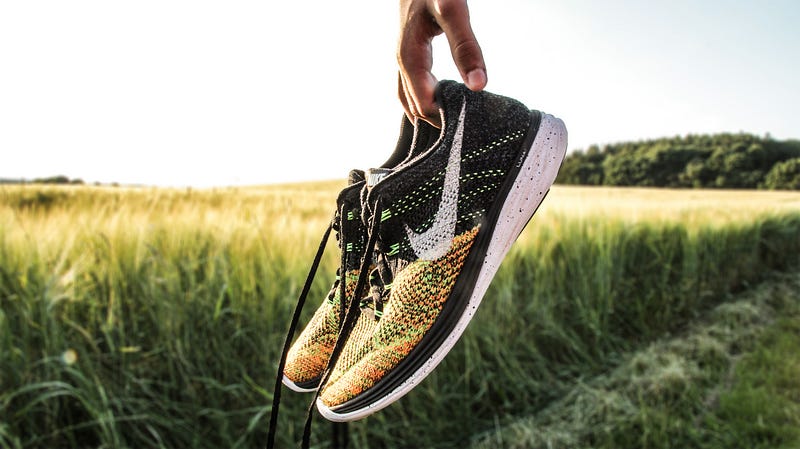
When you’re in a running shoe store and you are not sure about the best running shoes for you, there is always this sense that you’ll buy that piece of design you like, but you are also not sure if it’s the best choice about your foot shape or your footstrike.
It happens to everyone. I bought a lot of running shoes that were not the best choice for me.
But that was never an excuse not to run, not to exercise.
Whether you do a 5k run or an ultra-marathon of 100 miles, everything has to happen in a synchronized way because every detail is important.
If you have the best running shoe, but your body isn’t in shape, it doesn’t work.
If you have the best running shoe, but your mind is a mess, it doesn't work either.
You have to treat your whole body and mind as a temple. Nothing can stay behind. Every detail is going to make the difference at some point, in that special race.
And in that particular moment, you’ll feel that you’re supported by those details. It can be your shoes, your body, your mind, or everything at the same time.
When you’re in pain in the middle of a race, your feet hurt, your body is full of aches, and your mind is struggling, you need something to hold on to.
And running shoes can make the difference in that extra mile. They can be the factor that keeps you going forward or stopping right there.
It’s All About Balance
We should not believe in illusions. Our bodies are not a perfect running machine. Some of us came from other sports, others didn’t do any kind of sports until they started running.
So, it’s important to know a little about everything when we’re learning about running efficiently. And the first thing you need to know about is balance, and how to balance your body to a better position to run without any stress or future injuries.
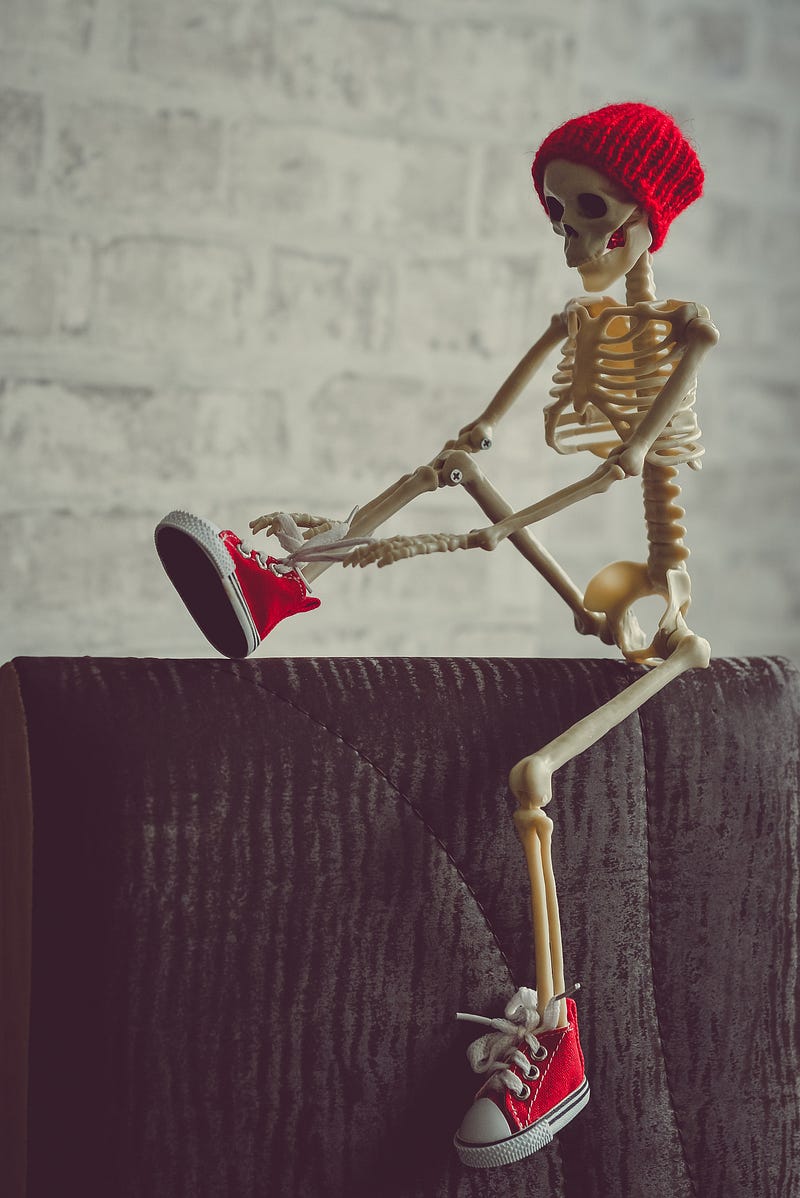
Our skeleton is very complex, but it was designed to generate movement. Not everyone agrees about the exact number, but we have between 250 to 350 joints. And they were made to create movement.
Yet, as we grow up, some of us have asymmetries and over the years they can dramatically affect your balance and the way we walk and run.
That’s why some scientists and investigators found out the best position to run without creating too much stress and avoiding injuries.
It’s called ChiRunning.
ChiRunning has also been described as using “the principles of tai chi to focus on alignment, relaxation, and proper form when running and walking.” It is said to emphasize posture, core strength, relaxed legs, and mindfulness.
Especially for those who are starting their first steps, this technique should be learned because, for beginners, the body is going to suffer a lot of new stress. And it’s always better to start with the best posture to lower the probability of future injuries.
The Only Part of Your Body That Touches the Ground
No matter what, we weigh what we weigh. And that impact has to go somewhere.
But how you engage your midline matters a lot. If your midline is loose, you automatically put a heavy weight on your feet. And starting to hear your feet hitting on the ground is not a good sign.
Although, by being a little more engaged with your midline, and by breathing a little bit deeper under your belly, you’ll feel more tight and connected.
Another important thing when you run is keeping your ankles relaxed, so when they hit the ground they’re a little bit softer rather than being stiff. If you observe that you start to slap on the heavy ground, automatically your knees and ankle suffer more with the impact.
Shoes Can Trick Us
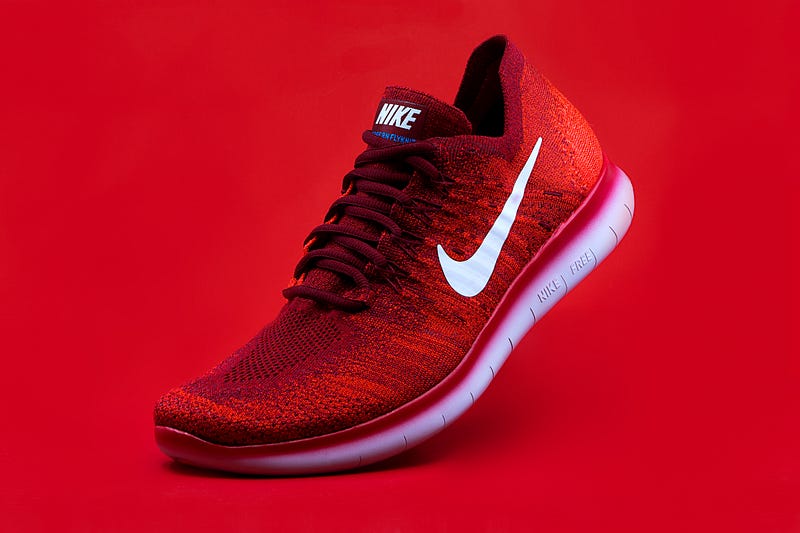
Our footwear can be tricky. Because shoes are comfortable, cushioned, light as a feather, it doesn’t always mean they are the perfect running shoes.
Meaning that sometimes, comfort is so great that it affects your posture. It makes you believe, unconsciously, that the shoe does all the work and you start to move away from your midline and aligned position. It’s like you’re sitting in a comfortable armchair. At some point, you don’t need to focus on your core anymore, and that’s wrong.
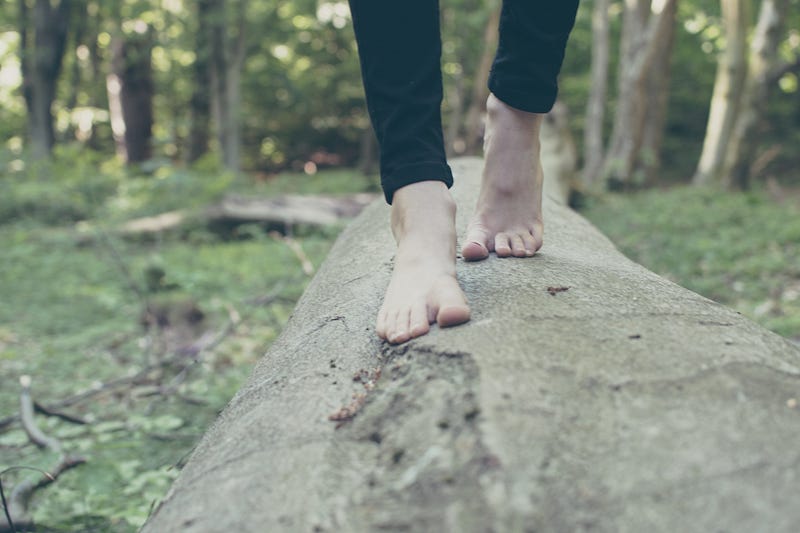
Let me give you a piece of advice to counter this trend. Try to spend a day running barefoot. As you run without the support of the shoes, you’ll automatically recenter your midline and force your body and mind to focus on a lighter footstrike again. You reprogram once more your correct position to maximize your run and empower your pace.
3 Types of Shoes for Different Purposes
You don’t have to buy just one pair of shoes when you’re a beginner or even if you’ve run for some time. You can have several types of shoes for different occasions.
For instance, I have two pairs of shoes for the mountains and two for hard ground.
When I go training in the mountains on a 10 to 15k run, I use some light shoes. They have less stability and cushioning, but make me feel the ground. I always buy Salomon shoes for the mountains. It’s my favorite brand. But there are many good brands making secure and comfortable shoes.
When I go to a race, I use different shoes. I need more stability because I’m gonna run a 30 to 50k run. Usually, the mountains have a lot of rock and you have to surpass rivers. So it’s important to protect your ankles and your Achilles tendon.
When I go on a quick 30-minute run, I put on my normal hard ground shoes. For me, it’s important to have a shoe with a good drop, because I have 84kg of weight and need to protect my Achilles from the impact.
For marathons, I usually use a more light shoe. It’s one race. I have to use all the tools I have to be as light as I can to maintain a good pace until the finish line.
But you have 3 types of shoes:
Stability shoes — They are a little more structural and usually have a higher drop. They also have more protection in the arch of the foot so that our foot naturally pronates (leans slightly inward). It’s good for starters and for those people who just run for fitness.
Cushioned shoes — New innovations in the cushioning technology make this type of shoe more of a broad variety. It’s the type of shoe that makes you run in ways that you didn’t necessarily need to run. And brands wanted to reach a broader niche so they started to produce shoes that can be used for running but also for streetwear. So I think this can be less secure for the runner because too much cushion makes you forget the midline posture, and that’s bad for injuries. Runners strike the ground at a greater degree of force than in other shoes.
Minimalist shoes — When you take off your shoes and start running, your body changes a little bit. You tend to be more intentional with your footstrike protecting your heel and do the first contact with your tiptoe to control the stability of your body. This type of shoes has zero cushioning, no drop, and almost no stability. They are excellent to develop that relationship with the ground and for your realignment posture. Although, be aware because your Achilles is going to be pushed to the limit. You don’t have any drop to support your weight. So, start with short distances, or you’ll have trouble with your heels.
So, personally I can suggest that you should be aware that the cushioning not be too much, as it affects your midline and posture in longer distances. Be also aware of the minimalist shoes, because they will push your Achilles to the limit.
Personally I prefer stabilized shoes. A little cushion but enough for you to feel the ground. If you don’t feel the ground when you’re running, your body is going to move away from the principles of race alignment.
Transitioning to a Lower Drop Version
One of the major characteristics of our feet that affect our footstrike is the arch. The bigger the arch, the bigger the pronation movement when you contact the ground. So, you have to be aware of it and try to use shoes to balance your body weight.
You have also primary contact points when you put your foot on the ground. They are pinky toe, big toe, and heel. These three points are crucial because they are going to inform your central nervous system about your balance and adjust the strength of your muscles and tendons to keep you safe and balanced.
So, these are the benefits of transitioning to a lower drop:
- Less rubber sole;
- Improved running technique;
- More thoughtful running;
- Strengthen feet;
- Strengthen calves;
- Strengthen Achilles;
- Positive feedback loop.
Running Shoe Heel Drop Effects
When you’re buying running shoes, the heel drop is probably the most important issue that affects your performance.
Heel drop is the measurement of the offset between the heel and the toe.
A lower heel-toe drop means you land more on your midfoot. That means your turnover is gonna be a little quicker and you’re going to have a better economy and thus, better running times and performance.
There are several studies, none of them very conclusive, about the efficiency of a lower heel-toe drop transformed in better performance. You can make a 10k race with a 4mm drop shoe and feel your self light and stable. But technology makes shoes lighter with a higher drop. So you can make a 5k race with a 10mm drop shoe and still feel light and secure.
The thing is that you must feel free to experiment with different types of shoes with different heel-toe drops. I had to do that so I can, at present, know exactly what kind of shoes my body better adjusts to performance, whether I do a 5k race on hard ground or a 50k race in the mountains.
It’s a process you have to build by experiment until you find the perfect shoe for you. It’s so personal that there is no science to prove a universal standard.
I’ve run for more than 20 years. And my conclusion is simple. Buy 3 pairs of shoes and experiment with them in different scenarios. It’s more important that you feel stability and stay injury-free with those special pair of shoes. I don’t believe they are going to make a difference in your performance.
Yet, it will make a difference in your posture and your stability. And that can affect your performance. Does it make sense?
Conclusion
You can read and listen to a lot of opinions about running shoes. In the end, it’s all about your adaptability to certain brands. You can feel that Nike shoes fit better in your feet. You prefer Adidas or Asics. New Balance or Scoot. Or some others. It’s a personal choice.
Start with entering a store and try on different shoes and feel the impact on your body and feet. Then, remember to analyze the heel-toe drop. The cushioning, the stability, the weight. Then walk with them. Skip and bounce a little bit.
The thing is that the shoe is going to communicate with you. In that several seconds or minutes in the store, you’ll gonna feel different sensations. Your instinct is going to tell you which running shoes are going to be the best for you.
With the items I shared, you’ll have the knowledge to filter out what’s good and what’s not good for your next running journey.
So, keep working ward. Keep challenging yourself. Remember that the best running shoes for you are your feet. They need to be cared for and well treated. Because they are the connection between your body and mother nature.
Treat your body as a temple and enjoy the journey!


