
The Best Life Advice I’ve Ever Received Came From a Man with Half a Face
The man is my father and what he learned the hard way is an essential Stoic principle
It never ceases to amaze me: we all love ourselves more than other people, but care more about their opinion than our own. — Marcus Aurelius
When he was a young boy, older than 5 but not yet 10, my father burned himself with acid. My grandmother intervened to save him and she also suffered burns.
The first order of things was to save my father’s life. My grandmother’s burns on her lower legs were minor compared to my dad’s. He suffered burns all over his body, most notably his forearms, the back of his legs and the entire right half on his face.
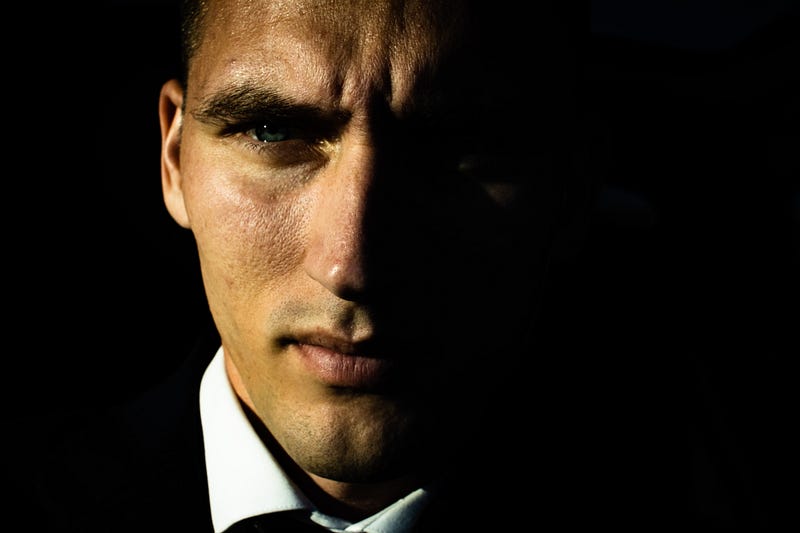
A perfect line divides my father’s face, from his forehead, along the bridge of his nose and down to the chin, as if it had been carefully dipped in the acid.
The Accident happened between 1945 and 1950, a few years after the family had immigrated to Venezuela from Italy. My father hardly ever talks about the Accident. However, from the little he has revealed to my siblings and me, and from what others have told us, it’s obvious my father’s childhood was indescribably painful, both physically and psychologically.
Once my dad’s burns had healed to the point that infection was not going to kill him, the long reconstruction journey began. This journey took my father to Italy and the United States.
Once, when I was visiting my dad’s aunt in Italy, her eyes watered as she remember my dad’s arrival after the Accident. His arms were bent at the elbow and the backs of the arms were stuck together. With the skin around the elbow creases gone, the arms had “healed” in that position.
Over the years, my father underwent countless surgeries. Skin was removed from his buttocks for grafts to repair his face and ear, which was completely gone as well. Vision to his right eye, also burned, could not be restored.
Unimaginable as the physical pain must have been, I get the sense that the psychological pain was greater still. That’s the aspect of the Accident I’ve actually heard my dad bring up a few times. He has never spoken to us about it at length, just enough to convey a realization that saved him.
At a certain point in life, my dad says, he realized that the way people reacted to him was not his problem, it was their problem.
People stared at my dad, of course. Some averted their eyes or avoided him. Other kids didn’t approach him to play; others left if he got close. And there was nothing he could do about it. Somewhere along the way, he must have stopped caring so much until reaching the conclusion that other people had a problem, a problem that was not his to fix.
My father has brought up this lesson not as consolation for people dissatisfied with their physical appearance, but as a way to approach life in general. You never can control how people will react to who you are, what you do, what your say, how you say it.
My father learned this lesson the hardest way possible, but it’s an old teaching espoused by, among others, the Stoic philosophers.
Consider this quote from Seneca’s Letters from a Stoic:
“Praise in him what can neither be given nor snatched away.”
Physical attractiveness is not something you earn. It certainly falls into the category of what is given and can be snatched away in an instant. Thus, whether your are rejected or praised for your physical appearance amounts to the same thing because attractiveness is not a virtue you can pursue. I admire my father for internalizing this belief so completely.
But it is this quote from Marcus Aurelius’s Meditations that best reflects my dad’s advice:
“It never ceases to amaze me: we all love ourselves more than other people, but care more about their opinion than our own.”
It’s not that we must not care at all or ever about the opinions of others, but it is our own opinions, judgments and reactions we must ponder first and foremost. They’re the only ones we can control. The rest are not our problem.
Further reading: