
LEADERSHIP
Great Leaders Sacrifice Themselves for Those Under Their Watch
Lessons from “Leaders Eat Last”
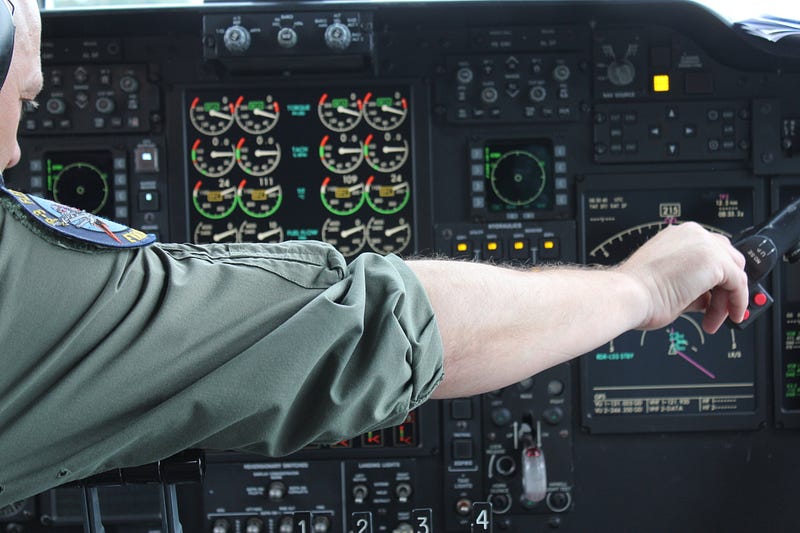
In 2002, US Air Force pilot Johnny Bravo (his call name) decided to fly beneath cloud-cover to check out what was going on below. He knew his colleagues were moving through hostile territory. Instructing his wingman to stay above for cover he descended through the dense clouds.
Just before he emerged, he heard a call over the radio … “Troops” … “Troops in contact.” The Soldiers on the ground were under enemy fire.
As he cleared cloud cover he was surrounded by mountains, flying no more than 1,000 feet above ground level over Afghanistan. Within seconds he was greeted with tracer fire from all directions. He returned fire as he maneuvered dangerously between cliff edges.
Bravo was flying a Warthog. The A-10 Warthog is a low-flying, heavily armed aircraft used to provide air cover for ground troops in difficult terrain.
After his death-defying experience, Bravo called for his wingman to assist. Soon both A-10s dipped below cloud cover again to defend their troops on the ground, repeating the cycle a number of times.
During the engagement, Bravo exhausted his ammo but continued to fly alongside his wingman. He put the lives of others, the troops below and his wingman, above his own.
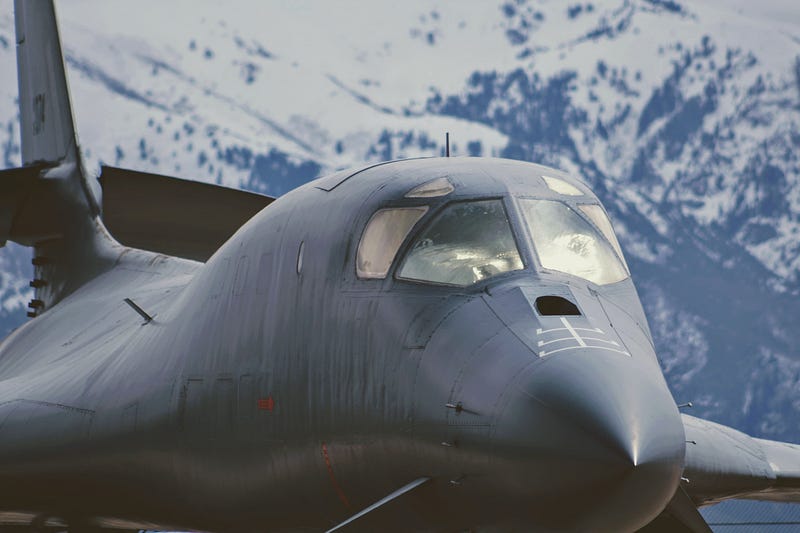
I learned about Johnny Bravo from watching Simon Sinek’s video “Why Leaders Eat Last.” Sinek asked Johnny Bravo “Why did you do it?”, his response: “Because they would have done it for me.”
“Where do people like Johnny Bravo come from?”
— Simon Sinek
“That night 22 Americans went home alive”, with zero casualties.
The Menu
In contrast, “Operation Menu” was a covert US Airforce bombing campaign in Cambodia from 1969 to 1970 during the Vietnam war. The targets were the bases of the Peoples Army of Vietnam, known at the time as the North Vietnamese Army (NVA) or the Viet Cong. “Operation Menu” preceded “Operation Freedom”, the latter covering a much larger area from 1970 to 1973 including Laos and Cambodia.
In 1973, a week after signing the Paris Peace Accords with North Vietnam, a US aircraft with 8 US servicemen on board was shot down by Vietnamese forces over Laos. For decades this covert mission was covered up because the crew was commanded to proceed under “Operation Freedom” despite the knowledge that they were contravening international law.
The crew members, on the doomed mission known as Baron 52, were:
361st Tactical Electronic Warfare Squadron
- Capt. George R. Spitz — Pilot
- 2nd Lt. Severo J. Primm III — Co-Pilot
- 1st Lt. Robert E. Bernhardt — 3rd Pilot
- Capt. Arthur R. Bollinger — Navigator
6994th Security Squadron
- Sgt. Joseph A. Matejov — Radio Operator
- Sgt. Todd M. Melton — Radio Operator
- Sgt. Peter R. Cressman — Radio Operator
- Sgt. Dale Brandenburg — Systems Repair Technician
Intelligence reports indicate that four servicemen survived the crash, but were eventually captured by North Vietnamese troops stationed nearby, before being traded with Russia months later.
Given that the ink was still wet on the peace agreement, signed days earlier, one crew member wrote a letter about his frustrations. This letter was discovered by his family amongst his belongings returned to them after the war. Ironically, his written words went on to form part of the case to unveil the cover-up that cost him his freedom, and eventually his life.
According to Roger Shields, former Deputy Assistant Secretary of Defense, the power-brokers in government “acted ‘precipitously’ to declare Matejov and the other three missing crew members to be dead. When in fact overwhelming evidence and eye-witness testimony proved they were alive after impact.”
“In the military, they give medals to people who are willing to sacrifice themselves, so that others may gain. In business, we give bonuses to people who are willing to sacrifice others so we may gain.”
— Simon Sinek
Great military leaders don’t sacrifice their troops. The same cannot be said for Governments, politicians in suits, who play poker with the lives of others.
Four lives were lost and another four were abandoned in 1973 by so-called leaders of the time. Why? To protect themselves, to conceal their law-breaking behavior from the world, and from the families of the missing servicemen.
Final Thoughts
The two missions described above shed light on two different scenarios. Opposing insights on leadership, good, and bad.
So what lessons can we learn?
Leadership is not a position of rank. Leadership is a mindset, governed by a set of values that result in decisions that benefit others. True leaders are those who only eat when everyone else is fed, they do not sacrifice their followers.
In the Marine Corps, “officers eat last.” Leadership is therefore a choice, not a rank. If you decide to look after the people around you and do so with good intent, you’re a leader. Remember what Johnny Bravo said:
“Because they would have done it for me.” — Johnny Bravo
Leadership is a measure of “your willingness to sacrifice” yourself. Not necessarily your life, like Johnny Bravo. No. Just some of your time, your support. The best leaders make time to pick up the phone to chat with their team members. They care about their people.
“The future leader will need to possess a new arsenal of skills and mindsets to lead effectively.” — Benjamin Laker
Leadership is your ability to sacrifice for others “so that they feel safe”, feel valued. Leaders like this are followed, not by HR hired subordinates, rather by trusted comrades who have your back because you have theirs.