
The Best Laid Plans of Mice and Meth Addicts
Slammed: a Memoir — Chapter 8 Part 4
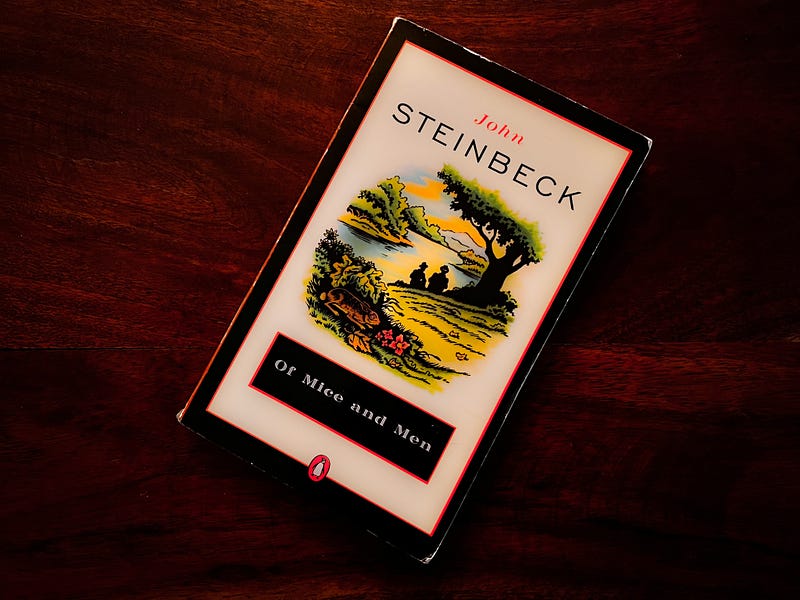
We were halfway through the first week of rehearsals for Springfield Rep’s inaugural summer season and I was still crashing. I felt hollowed out, like no amount of sleep was enough. I was in full meth withdrawal.
During the day, when I had to be around people, I spent every possible minute attached to Jason’s hip. This was inevitable with Of Mice and Men as we were playing George and Lennie, but even during morning rehearsals for A Midsummer Night’s Dream — where Laura had cast Jason as Bottom, a principle character, and me as a small character with, thankfully, all of three lines — whenever Jason wasn’t in the scene, I was at his side.
This wasn’t that odd. We were best buds. We were brothers from another mother. On more than one occasion we had been described as a Saint Bernard with his Jack Russell Terrier.
But I wasn’t just hanging with a friend.
I was scared.
I didn’t know any of these people.
I knew Jason. I felt safe with Jason.
In turn Jason spent much of his time corralling me and taking care of me. He was the only person I could talk to. Not just because he knew the most about what was going on with me, but because quite often he was literally the only person who could understand me. My brain was so scrambled that I had a hell of a time just making simple conversation. Thoughts would come out piecemeal, half formed, often missing important verbs or nouns.
I asked the director, “Karen, when…when we, tomorrow, can we, do, the part. Can we do the part. Beans and Everything?”
“I’m sorry?”
Jason translated. “He wants to know if we can do the first scene with all the props tomorrow.”
“Oh! Sure. Of course.”
I was also paranoid as fuck.
While working on a scene with nearly the full company, police sirens began wailing in the distance. Most paid it hardly any mind.
Not me.
I tried to keep my focus on Karen while she explained a nuance she was looking for in the scene, but those sirens sounded like they were getting closer.
And closer.
I stared at the front door of the theater.
I imagined it bursting open.
I imagined armed, uniformed men walking down the center aisle.
Toward me.
With handcuffs.
I wasn’t breathing.
I couldn’t move.
I was frozen.
I was terrified.
“Karen,” Jason interrupted, “We need to take a break.”
“What?”
Jason gestured at me. “We need to take a break.”
Karen looked at me and saw I was miles away. “Ok, well, let’s take a quick five.”
“Five minutes, everyone,” the stage manager announced.
“Thank you five,” everyone responded.
I snapped out of my torpor. “What? Didn’t we just take one?”
“We’re taking another one.” Jason said. “Come outside. You look like you need a cigarette.”
I followed him out, somewhat confused but happy to have a smoke.
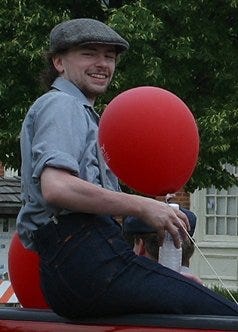
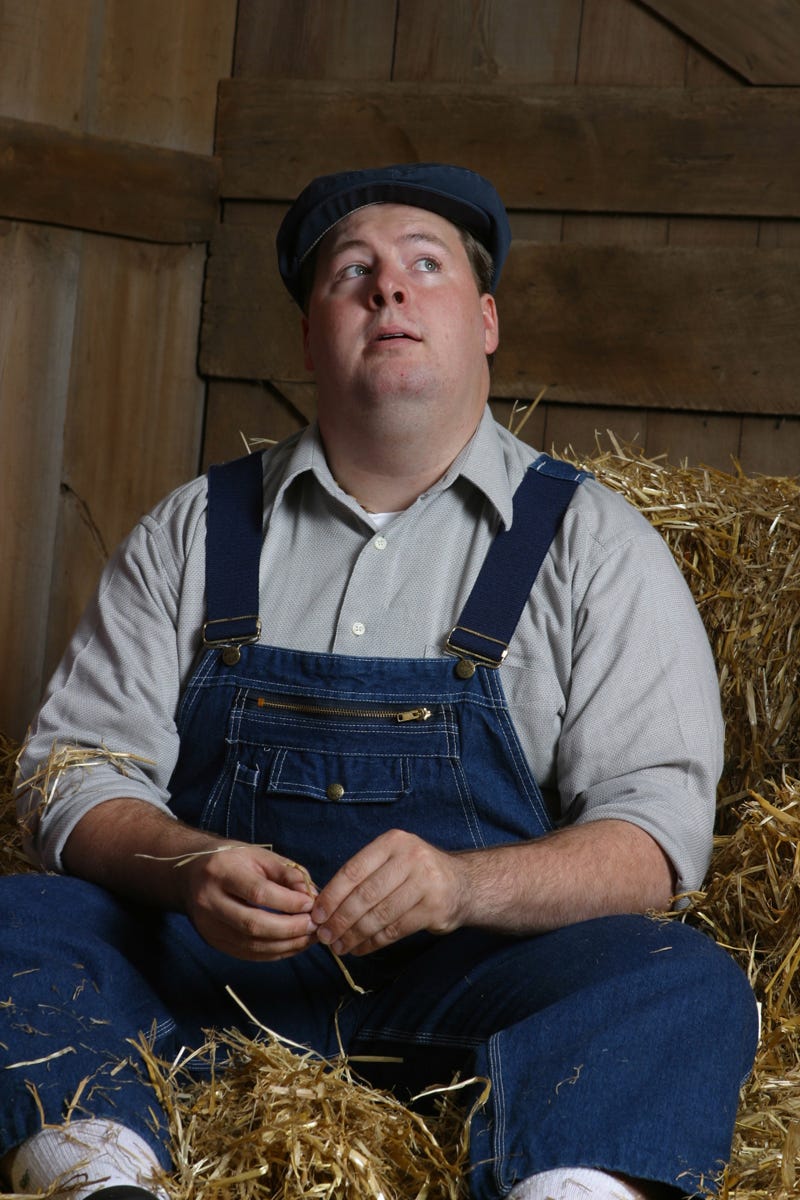
When I wasn’t needed in rehearsal, I busied myself memorizing my lines, partially to have an excuse not to talk to anyone, but mostly because there were a shit-ton of them. Usually I don’t have any trouble memorizing. But between the paranoia, the exhaustion, the fear, and the withdrawal, it was so goddamn noisy in my head that I had a hell of a time getting anything to stick. I had a line where I talked about a pig, a chicken, a rabbit, a cow, and a goat in that order. It took me damn near two hours just to get the order right.
Part of the problem was my body being weird again. There were white canker-like sores on the inside of my mouth and under my tongue. They were really annoying and made eating uncomfortable. I didn’t know what was happening or what could be done about it, so I just dealt with it and hoped, once again, they would go away on their own.
Also, my hands developed strange dry spots. They were small circles the size of a pencil eraser and would crack and start bleeding sometimes. I would often get distracted, picking at them, wondering what the fuck was going on. I tried using moisturizer, but it didn’t seem to help.
That wasn’t the worst of it. in the middle of the night I got hard in my sleep. Only it was like the skin on my dick had lost its elasticity and broke open like the spots on my hands, which woke me right the fuck up. Dry spots on my hands was one thing, but on my dick? Fuck.
All of this left me frazzled and not at all in the right headspace to rehearse the final scene full out for the first time.
George: Look over there, Lennie. Like you can really see it.
Lennie: Where?
George: Right acrost that river there. Can’t you almost see it?
Lennie: Where George?
George: It’s over there. You keep lookin’, Lennie. Just keep lookin’.
Lennie: I’m lookin’, George. I’m lookin’.
George: That’s right. It’s gonna be nice there. Ain’t gonna be no trouble, no fights. Nobody ever gonna hurt nobody, or steal from ’em. It’s gonna be — nice.
Lennie: I can see it, George. I can see it! Right over there! I can see it! (George fires. Lennie crumples, falls behind the brush. Voices of men in distance)
CURTAIN*
*Of Mice and Men stage play by John Steinbeck, Dramatists Play Service Inc.
I held a folded copy of the script in my left hand while my right hand was pantomiming a gun pointed at where Jason’s head had been before he slumped over “dead.” For the gunshot I had simply yelled “Bang!”
That “bang” continued ringing in my head and all around me as I stared down at Jason. It was just a rehearsal. We weren’t even off book. But I stared, not moving, not breathing.
I had shot Jason.
I had shot my best friend.
“Ok, hold,” Karen called from the back of the house. Jason pushed himself up, and I lowered my gun hand.
“This is why I can’t direct this play,” Karen said half joking, wiping tears from her eyes. “Here, come. Have a seat.”
Karen was short and slim with fair skin and long reddish blond hair. She had a warm and peaceful energy about her, which was a wonderful — and necessary — counterbalance to my ball of chaos.
Jason and I took a seat on the lip of the stage facing Karen who was now sitting in the front row.
“Ok, I’m gonna have a conversation with you two, first as Jason and John.” She went on to ask us details about each other: things we liked about each other, things that got on our nerves.
“Jason, what John’s favorite food.”
“Well,” he looked at me and pondered. “I don’t think I can tell you what his favorite food is, but I can tell you exactly how he eats his food.”
“Ok,” Karen said, inviting Jason to continue.
“On tour, whenever we would stop at a Wendy’s, which was a lot, John would get a number four, bacon cheese burger, biggie size with a Dr Pepper. First, he takes one sip of his soda. Then rips open a salt and pepper packet and sprinkles it over his fries saying in a Robin Williams voice ‘I want to die.’ Then he’ll eat every single one of his fries before going for the burger. Then he’ll eat the entire burger, and then and only then he’ll take another sip of his soda.”
Karen laughed as she looked to me.
“In my defense, the fries get cold if I eat the burger first.”
“Now,” Karen said, “I want to have a conversation with George and Lennie.”
We shifted ourselves, trying to take on the characters for this improv. Jason pushed back on the stage and sat cross legged like a happy kindergartener. I hunched my shoulders like a man who’s abused his body with years of hard labor. Karen asked us questions about George and Lennie, some of the same as well as more specific questions about our lives as transient farm workers.
“Lennie?”
“I ain’t done nothin’,” Jason said. His normal voice vibrates in his sinuses, not quite nasal but very brassy. For Lennie, he dropped the center of his voice down to just above his chest giving a rounder, fuller quality.
“I know, I know,” Karen replied, amused. “Lennie, what’s George’s favorite food?”
“Oh, George, he, he likes, George likes beans. Yeah, George likes beans. Beans with ketchup!”
“George?” Karen asked.
“Well, I wouldn’ say they’re my favorite…”
“Sure! Sure they are George!”
“No, Lennie, they’re your favorite, remember?” As Jason’s face turned contemplative, I continued. “Beans is ‘bout the best we can get when we’re not workin. Farm food ain’t nothing special, but if I never ate beans again, it wouldn’t be too soon. This guy,” I gestured at Jason and his face lit up. “He’d be happy eatin beans for the rest of his life.”
“With ketchup, George. Beans with ketchup.”
“With ketchup,” I agreed.
“Ok,” Karen said, ending the exercise. “You guys are so wonderful. You’re bringing so much of yourselves and your friendship to these roles. But we need to be clear about when you’re John and Jason and when you’re George and Lennie. At the end of the play, it has to be George shooting Lennie. It can’t be John shooting Jason.”
The exercise helped. It helped to be reminded of the kooky John I had been before all this mess. It helped to be reminded of my friendship with Jason and how well we knew each other. It helped to be reminded that, as George, it was my job, my responsibility to take care of Lennie. I was depending on Jason, but Lennie was depending on George.
It was a struggle to find that line of demarcation between John and George, but as we moved into the second week it got easier. As we ran longer sections and whole scenes off book, I was able to let George take over.
There was a comforting security within the world of the play, within the script, within knowing exactly what to say and when to say it. I knew who I was. I knew where I was. I knew where I was going, what objectives I was pursuing, and what obstacles were in my way.
When I spoke as George, everything clicked into place just as they had when I was child in a monkey helmet telling the audience how I love playing in the trees.
As George, I was in a world where I belonged.
As George, I felt like a normal person.
Albeit a normal person carrying a truckload of anger.
In the first scene, Lennie sets George off on an angry tirade about how frustrating it is to have to take care of Lennie and how much easier his life would be without him. I hit this section so hard from the very beginning — on top of having 90% of the dialogue in a 20 minute scene — that I immediately began losing my voice. My clear toned tenor became a gruff and scratchy baritone. I didn’t care. I hadn’t been cast in either musical so I wasn’t going to be singing any time soon. It also, I believed, suited the character of George. So I let my anger — of which there was a lot — come out full force not caring about the damage I was doing to my voice.
But it wasn’t only my anger that found an outlet in George. It was also my despair.
So much of the play is about loneliness versus hope. From Crooks, the black farmhand set apart by his race, to Curly’s neglected wife set apart by her gender, to Candy set apart by his old age and being a cripple, each lonely and struggling for connection in a lonely world.
Through their friendship, George and Lennie are spared that loneliness which frees them to hope for a better future. They’ve dreamed together about saving up enough money to buy their own property and “live off the fat of the land” where George can be his own boss and Lennie can finally tend the rabbits. With this new job, they allow themselves to hope. For the first time in their lives their dream is within their grasp.
Toward the end of the play, Lennie accidentally kills Curly’s wife. When George finds the body, the reality of what Lennie’s done fatally kills any and all hope he had for the future. He knows what must be done. And once it’s done, he knows he’ll be alone, perhaps for the rest of his life.
I never had any problem connecting with the despair of a hopeless life, but during a dress rehearsal it got out of my control. I felt not George’s despair, but my own, staring down a future as a hopeless and lonely drug ravaged drifter.
My throat tightened. My voice cracked. My eyes welled. It was all I could do to keep each word from becoming a sob. I did my best to hit my acting beats before fleeing the stage.
I was supposed to re-enter to finish the scene, but I couldn’t. I ran to the furthest corner of the arts center I could find. I collapsed onto a metal folding chair in a dark room and wept, trying in vain to keep from crying too loud. I hung my head, hiding my face, and watched as my tears rained down on the beige linoleum floor.
When I didn’t reenter, the rehearsal stopped.
Jason was the only one to come back and find me. He put a hand on my shoulder.
“Leave me alone,” I snapped. “I’ll be fine, just…please. Leave me alone.”
Jason was the only person I would allow to get close to me, but I couldn’t let him get too close. As far as he or anyone knew, I had stopped using meth months ago. Get too close and he might figure out that I’ve been suffering through withdrawal during the entire rehearsal process. He might figure out I had been lying. To him. To everyone.
Eventually I collected myself and we continued. From that point on, I didn’t try to connect to any emotional life within me for George’s moments of despair. I didn’t need to. It was right there on the surface.
Sometimes it’s enough to just say the words.
After two weeks of rehearsal, Of Mice and Men opened. I was finally able to relax just a bit as we settled into the routine of the show. Audiences loved us, but when the house let out, they left as if they were leaving a funeral, sad and emotionally exhausted.
As for the cast, the minute we got off the stage after the curtain call, several members couldn’t start cracking jokes fast enough, and all of us were ready to laugh.
The actors playing Candy and Curly at one point were discussing Zelda, the show’s dog who was up for adoption.
“Come on,” Curly said, hanging up his costume. “You should adopt Zelda, you have that big house and yard…”
“I don’t want to adopt Zelda, I already have a cat,” Candy replied.
“But everyone needs a dog. Come on, give Zelda a home.”
“But I don’t want a dog. I have a cat.”
“Fuck the cat, you should take the dog.”
“How ‘bout this, you fuck my cat and I’ll take the dog.”
The room exploded. I couldn’t breath, I was laughing so hard. After tearing our hearts open on stage we all needed to laugh as a way to shake off the world of the play and come back to ourselves.
Candy, who had worried me in the beginning having never been on the stage in his life, turned out to be a perfect Candy. Once he had the lines down, all he had to do was say the lines as himself and he was perfect. I had to lead him through his exposition during the first couple performances when his nerves got the better of him, but after that he found his groove.
It felt good to act. It felt good to know those muscles were still there. It felt good to be part of a group, to laugh with them, to have created something together. George may have ended the show alone, but I walked off stage anything but lonely.
At the end of our final performance, after I shot Lennie for the last time and the stage went to a blackout, I bent down and tapped Jason’s shoulder. In the dark, he grabbed my hand and I helped him up.
During the entire process of Of Mice and Men, Jason had been reaching down in the dark, tapping me on the shoulder, and helping me up. On stage I took care of him. Offstage, he took care of me. I was still in the dark, but thanks to Jason, thanks to Of Mice and Men, thanks to Springfield Rep, I was at least on my feet again.
Something inside of me that had been knocked over was set right. I had felt unmoored, adrift, carried away by overwhelming currents. But for a couple hours a night, I knew what it was to stand on solid ground again.
After closing night’s final bows, when we left the stage we didn’t devolve into ribbing and laughter. Instead Jason wrapped me up in the strongest bear hug.
All I could say, over and over, was “Thank you. Thank you.”
I didn’t know or understand what I was thanking him for, but I meant it with all my heart.
Next Chapter
Chapter Guide
A lot of heart, time, and work goes into each piece. One way you can support me is by signing up for a $5/month Medium Membership. Use this link and I’ll get a percentage of your subscription fee. Huzzah for supporting artists!


