
The Best Investment You Can Make
And no, it’s not Bitcoin.
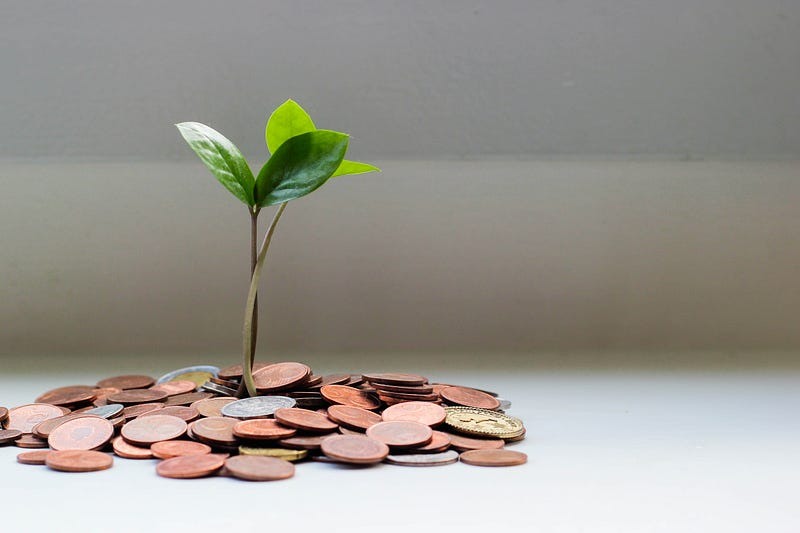
It’s not Apple or Tesla stock.
It’s not gold or cryptocurrency.
It’s not bonds or index funds.
It’s time.
Time is the single best investment you can make in your lifetime. Time is the only resource that everyone gets the same amount of, every single day. It’s the only resource that doesn’t have inflation. And, the sooner you start investing it, the better off you’ll be.
How much time do we really have?
There are 24 hours in a day. Let’s assume the average human spends 8 hours a day sleeping — this is unavoidable time, which can’t be spent doing anything else. Now we are down to 16 hours left in a day. Cut out 8 more hours for the average workday (assuming a typical 9–5 job). We now have 8 hours left.
The average human spends 67 minutes a day eating and drinking. Let’s round this down to an hour, now we are down to 7 hours left in a day. From these 7 hours left, we spent over 2 hours a day on social media in 2018, which has only gone up since.
Filling up a 24 hour day no longer seems like a challenge. In fact, it may now seem like there isn't enough time in a day — and this isn't even factoring in bathroom use, driving, cleaning, distractions, and several other time-consuming activities.
Author Malcolm Gladwell discusses what he coined the 10,000-hour rule in his book Outliers. The idea is that it takes 10,000 hours of practice to become a master at something. Being a complex idea that was oversimplified in translation, it gets a lot of criticism for being debunked. However, Gladwell states that the rule has external factors, such as genetics, that influence one’s success.
Whether Malcolm Gladwell’s 10,000-hour rule holds true or not, the general consensus is still the same: you need to invest significant time to improve your skills. But how do we invest time when we are left with so little of it each day?
Small investments add up.
We know that in the stock market, time is more important than any stock or index fund. As the saying goes, “Time in the market, not timing the market.” This boils down to continuously investing over long periods of time, rather than trying to guess when the market will rally or crash.
The best example of “time in the market” is compound interest — the reinvesting of money so that your total investments are the sum of your initial deposit plus your earnings.
For example, if you invested $5,000 today, and every month invested another $500, with compound interest and assuming a 6% return rate, your total deposits would equal $11,000 and your total interest would be $463.26, for a grand total of $11,463.26 after 1 year.
Doesn’t seem like much.
However, wait a few more years, and after 10 years this will have grown to $90,190.96, with 28% of this total being from interest alone. Not bad.
With compound interest over 40 years, you would have $1 million.
But 40 years is such a long time! How do I get $1 million now?
Unfortunately, unless you are a very lucky day trader or manage to win the lottery, becoming a millionaire overnight is probably out of the question. Again, you need to invest time. By continuously investing over long periods of time, you can grow your bank account to numbers you have never seen before.
Investing in yourself.
Just like in the markets, your small investments in life will compound and notably add up. Take 1 year for example. If you live out your year, all 365 days, without investing your time into something, you will have made no progress:
(1.0)³⁶⁵ = 1.0
However, if every day, you put just a little bit of your time and effort into something, you will see significant growth by the end of the year:
(1.01)³⁶⁵ = 37.78
And how about if you put in this small daily effort over the course of 2 years? 5 years? Or even 10 years?
(1.01)³⁶⁵*²= 1,427.59
(1.01)³⁶⁵*⁵= 77,002,912.75
(1.01)³⁶⁵*¹⁰= 5.29 x 10¹⁵
Yes — that is over 5 quadrillion. If you start today, and invest just a little bit into yourself each day, your growth will be explosive. The magic of compound interest is almost beyond belief, but in fact, it works. Investing your own time, over a long period of time, creates unimaginable personal growth.
The future you.
Ultimately, investing time requires you to know what you are investing for. You need to have a future goal in mind, and every time investment needs to be towards that goal. If you want to achieve a goal later in life, you need to start investing in it now.
You can’t grow a tree in a day, no matter how much you water it today.
Time is valuable, and it’s the only resource you’ll never get back — so spend it wisely.
References
Baer, Drake. “Malcolm Gladwell Explains What Everyone Gets Wrong About His Famous ‘10,000 Hour Rule’.” Business Insider, Business Insider, 2 June 2014, www.businessinsider.com/malcolm-gladwell-explains-the-10000-hour-rule-2014-6.
Bjarki. “7 Time Consuming Things an Average Joe Spends on in a Lifetime.” Tempo, www.tempo.io/blog/7-time-consuming-things-an-average-joe-spends-in-a-lifetime.
“How Much Time Do People Spend on Social Media in 2020?” Review42, 21 Nov. 2020, review42.com/how-much-time-do-people-spend-on-social-media/.


