
The Top Hackers of The 21st Century
Who is ‘the hacker’?
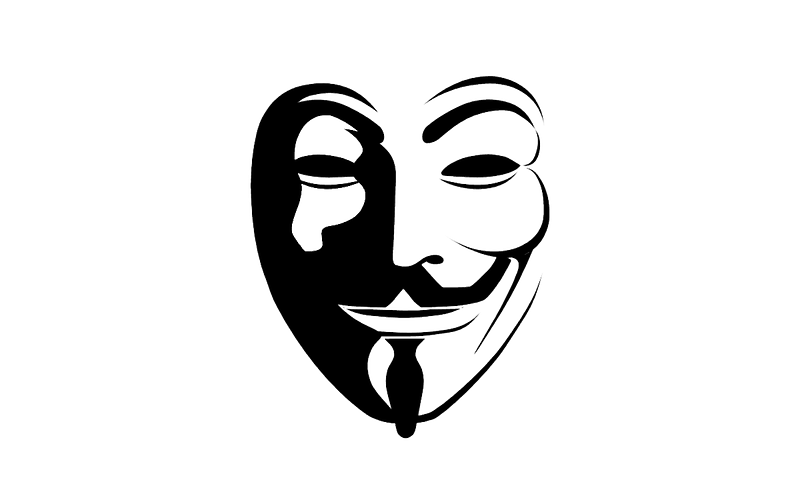
We’ve all heard of ‘the hacker’, the random basement-dweller in the Guy Fawkes/Anonymous mask (not to be confused with the Salvador Dali/Money Heist mask), who sits down, presses a few buttons, and suddenly the power grid goes down in a major city and World War 3 is declared. Hopefully most people know how unrealistic that is, and 99% of known hackers probably couldn’t pull that off. However, some people have gotten close to that 1%. They’re the kinds of guys who find and exploit the highest level vulnerabilities on a daily basis (see the linked post at the bottom), so let’s take a look.
Wait… What is a hacker?
We generally think of the word ‘hacker’ as being malicious, given that most digital crimes nowadays are committed by them. In ‘the biz’, we call those black-hat hackers, the hackers who intend to harm, extort, or otherwise hurt others for their own benefit.
The white-hat hackers are the ones who attempt to patch security threats for good, finding them before the black-hat hackers can. Sometimes the white hats even get paid participating in bug bounty programs, finding ‘bugs’ and being rewarded with a ‘bounty’.
Gray-hat hackers (namesake of my personal blog, The Gray Area) are in the middle, hacking with intent not so malicious as a black-hat, but not so generous as a white-hat.
Onward!
Now that we’ve established what black, white, and gray hat hacking is, let’s look at the top hackers from both sides.
Master Hackers:
— Anonymous (Yes, the group)
“We do not forgive, we do not forget”
Known for it’s network of skilled ‘anonymous’ hackers, the group lurks in the shadows of society until a common cause binds them together. The work of its members varies, but as they join together the organization’s strength builds. With a group powerful enough to take down small governments and the best hackers of the group able to achieve those 1% type tasks, Anonymous is truly a digital force to be reckoned with.
“US foreign policy is akin to Government-sponsored terrorism these days … It was not a mistake that there was a huge security stand down on September 11 last year … I am SOLO. I will continue to disrupt at the highest levels”
Born in Glasgow, Scotland in 1966, McKinnon had a bit of a bumpy start, with divorced parents, dropping out of college, and getting involved with internet groups such as the Disclosure Project. From the late 1990s to the early 2000s, he took up computer hacking, breaking into almost 100 computer systems like the U.S. army, the navy, and NASA.
— Kevin Poulson (!= Kevin Mitnick): ‘Dark Dante’
“It’s official: cyber terror is the new yellowcake uranium.”
Born 1965 in Pasadena, California, Poulson was notorious for hacking all things audio. Wiretapping and taking over telephone lines were his main gigs, and when he hacked a radio station to win a car with those skills he caught the attention of the FBI. They pursued him while he fled underground as a fugitive, but eventually was caught and sentenced to 51 months in prison with any possible computer access barred. He did his time, and now that he’s out he writes articles on WIRED: Threat Level.
The Top 3:
3. Wikileaks Founder Julian Assange: ‘Mendax’
“Secrecy breeds incompetence because where there is failure, failure is kept secret.”
Born in Queensland Australia, 1971, Julian Assange had an interesting teenage life, marrying Theresa May and allegedly fathering 4 children. He had moved to over 30 different Australian towns by his mid-teens. At 16, he would join two other hackers in a group called “the International Subversives”. Tapping a telecommunications system at 20 years old, he would be charged with 31 counts of hacking. However, he received a lenient penalty due to his “disrupted childhood” and was released due to good behavior. He went on to found Wikileaks, a popular site for anonymous submissions (utilizing Tor).
“I have no faith in the ‘justice’ system,” […] “ Perhaps my actions today, and this letter, will send a stronger message to the public. Either way, I have lost control over this situation, and this is my only way to regain control.”
One of my personally favorite hackers, just because of his superiority to nearly all others age-wise. Born 1983, James would locate critical vulnerabilities in NASA, and then hack a division of the U.S. Department of Defense by the time he was 16. He planted a backdoor in one of their servers, and the credentials started coming in. Over the two months he sniffed data coming in and out of the server, he intercepted over 3000 different messages on at least 10 different computers. He was caught and received a lenient sentence, but served 6 months in jail when he failed a drug test on probation. He would later commit suicide at age 24 in 2008, attempting to “regain control” over his own life, for fear he would be prosecuted for recent cybercrimes he did not commit.
“My primary goal of hacking was the intellectual curiosity, the seduction of adventure.”
The best. Being the best at something like hacking takes a whole lot of effort, and Mitnick definitely put in that effort. Kevin David Mitnick, born 1963 in California was a high profile hacker from the time he was just 16 years old. Upon hacking a tech company’s custom operating system, he would infiltrate the company network and copy the company’s software. He was caught and convicted for one year, and 3 months of supervised release. Near the end of his supervised release, he started hacking maliciously again, but when a warrant was issued he decided to flee for 3 years as a fugitive.
He was then caught with fake identification, and over 100 cell phones used to deter law enforcement. The judge that sentenced him to 5 years was convinced he had such a technical expertise that he could dial into a NORAD modem, and just by him whistling it would launch a nuclear missile. After his sentence, he was restricted from certain electronic/communication devices, and from profiting off of his cybersecurity experience for 7 years. He now runs a computer security consultancy and is recognized as the best hacker in the world (go ahead, search it up!).
This was super fun to write, as I hadn’t heard of a few of these guys before I started doing some research. Hopefully you found it just as fun to read about, and learned a little something about the most capable known hackers of our time. Here’s some more info on those ‘high level vulnerabilities’ that I was talking about before:
I’ve also got a plethora of posts relating to cybersecurity, all sorted into this list for easy access —
If you liked this post, I’d appreciate if you gave a few claps to show me I should write more about this topic. To see more neat stuff I’m interested in, check out my website grahamzemel.xyz. Thanks!


