

The best cities to live in for the modern digital nomad
Pros, cons, and tips for entering a digital nomadic lifestyle.
Remote work has been slowly gaining momentum, but in the past few years, the global shutdown has shifted it into turbo drive.
Since 2009, remote work has increased by 159%. Forbes reported, “As of 2023, 12.7% of full-time employees work from home, while 28.2% work a hybrid model.”
Armed with laptops and easy connectivity, the modern workforce is making their declaration of location independence.
The subset we’re examining today is the digital nomad.
As the name suggests, these remote workers embrace a nomadic lifestyle, combining work with the desire to see the world. They aren’t anchored to a single location for long.
The typical length of stay for digital nomads is:
49% stay two weeks or less at a location 23% stay between two weeks and two months 28% stay longer than two months
As for the top-rated cities for digital nomads today, they are:
1: Lisbon, Portugal 2: Chiang Mai, Thailand 3: London, UK 4: Canggu, Bali, Indonesia 5: Oaxaca, Mexico 6: Budapest, Hungary 7: Sofia, Bulgaria 8: Edinburgh, Scotland, UK 9: Barcelona, Spain 10: Bangkok, Thailand
These are just the flavors of the day.
However, there are so many possibilities and different cities that you don’t have to settle for these locations. And you can carve your own path.
Finding the perfect itinerary
Depending on your criteria, there could be a variety of combinations. You could create a live-work migration pattern based on your interests.
Here are some great ideas to consider:
- If you’re looking to develop as an artist, plan out cities with artistic sites of interest or near universities specializing in the skill you want to develop. This also applies to architectural, graphic, or other artistic endeavors.
- If you have scientific or historical interests, plan your migration through capital cities or discovery centers around the world.
- If you want to learn new cultures or languages, immersing yourself in global cultures is better than learning from a book or a website.
This type of exposure is invaluable for artists, writers, and perpetual learners. There’s also the added benefit of meeting like-minded groups of people who are on the same journey.
Examining the pros and cons
The advantages are easy to spot. Being a digital nomad allows you to travel the world without waiting until you have some vacation time or until retirement.
You live, work, and travel. And have integrated these into life rather than regulated them into separate compartments.
In addition to going where you want, making new friends, and experiencing new cultures, you can:
- grow your craft
- mature intellectually
- develop empathy for others
- and become better citizens of the world
It’s been shown that this flexibility provides a less stressful and more productive lifestyle. And you get the perfect opportunity to have a work-life balance.
The cons
On the flip side, there are some challenges people have experienced as digital nomads.
- Loneliness: Being away from home in a foreign environment and not knowing the language could be lonely. Some have complained about feeling isolated and having difficulty making new friends. Find local community groups and cultivate friendships.
- Safety: Being a foreigner in a foreign land, you have to be vigilant. Also, not knowing your surroundings could make you a target. This is a risk no matter where you are, even at home. Exercise common sense and be aware of your surroundings, no matter where you go.
- Time differences: This could be drastic depending on where you are in relation to the rest of your team. The same is true of connecting with friends and family at home. Depending on the time difference, you may need to have meetings in the middle of the night, a day ahead, or behind.
- Travel necessities: Working out your visa, transport, lodging, medical, and food needs is part of the hassle you deal with as a digital nomad. It can sometimes be frustrating, but that’s just part of the package.
Here are a few things to consider that will make your journey as a digital nomad more satisfying.
Attitude check
Avoiding escapism
If you’re unhappy where you are, going across the world may not be the solution you’re looking for. We sometimes believe our problems will magically disappear if we pack up our suitcases and catch a flight elsewhere.
Being unhappy is not unusual. We all have those moments, and they signal that something needs to be addressed or that we need help.
I’ve talked to people who complain that their city is not very friendly and wonder if moving to another city will solve this problem. However, going to another city will not fix this. As the song says, “People are the same wherever you go. There is good and bad in everyone.”
The issue of personal happiness is deep, and it’s worth it to work on the underlying issues and tackle them within ourselves. Otherwise, the reasons we’re unhappy at home will only follow us to our new location.
Avoid replicating home base
Home is always where the heart is. But, as digital nomads, remind yourself that you are entering a different culture where you can learn from and grow.
If you want an exact replica of your hometown, you don’t need to travel to a foreign country. Just stay home. You’ll save money and a lot of frustration.
By definition, a foreign country is foreign. You may not understand everything culturally but try to appreciate it from a different point of view. This is how we can develop empathy for others.
Besides, if we exported everything from our home to another country, we would lose the variety. There’s nothing more discouraging than traveling across the globe and seeing exactly the same things we see at home. It makes me wonder why I got on the plane in the first place.
Instead of insisting on our culture, learn to adapt and be observant. Learn to love the people and culture around us and gain wisdom. Venture out a little; you don’t always have to have chicken nuggets.
The world is a big place with lots of variety, and we want to be able to preserve it and not alter it because we all want something to treasure and enjoy.
The criteria for the best cities
There’s a limitless combination of cities to map out your global migration. Your agenda is as unique as you are. As mentioned above, let your goals guide you.
Here are a few additional things to keep in mind:
The flow of humanity
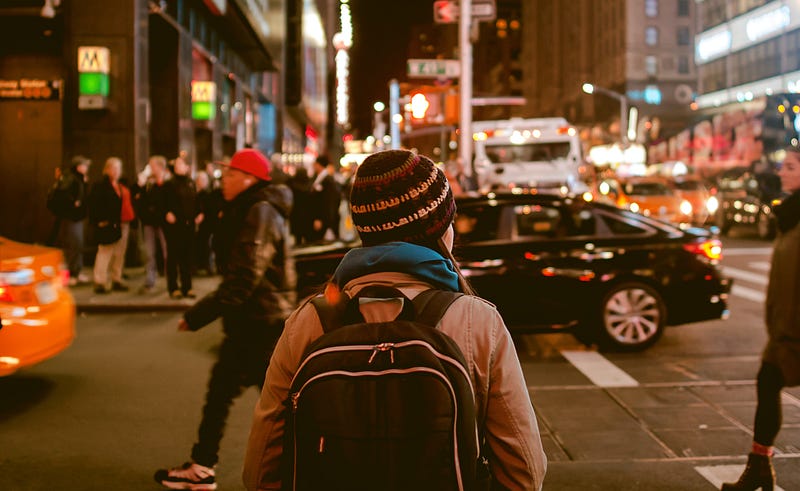
Cities are where people gravitate because of their convenience and amenities. If humanity is a river, cities are the oceans everything flows to. It’s a melting pot, but there are eddies and swells, which can be chaotic.
Think about the Shibuya Crossing in Tokyo, the busiest crosswalk in the world. One million people use this crosswalk every day. Tokyo itself is the most populous city in the world, while some of its surrounding towns are emptying.
In considering your destination points, you will be drawn to many cities, but you won’t be the only one. That’s just the way it is. Cities have a way of drawing people. Here are some things to consider.
a. Government policy: Determining the country’s attitude toward remote work is important. Some cities are stricter about it, while others are not.
Tokyo, for instance, has strict guidelines for remote work.
Many countries even offer digital nomad visas. And many do not. See the following list.
b. Amenities: Next, you’ll want to think about the amenities you want in a city.
- Food, culture, nightlife, or access to nature?
- What about hobbies such as surfing or going to the beach?
- Are you interested in the arts, culture, or local history?
- What are the tax implications for living and working there?
- Do you prefer homogeneity? Or do you want a mix of ethnicities?
- How about walkability?
c. Population: Obviously, you may not want to be in a city like Tokyo or Mumbai if you don’t like huge crowds. Less populated cities are available.
d. Climate: Temperature is another big thing to consider. Do you prefer warm, tropical weather or cold, rainy weather? What range of temperatures are you comfortable with?
Easing into a nomadic future
It’s much easier today to become a digital nomad than ever before. If your employer doesn’t allow remote work, you might want to start by finding a new job that allows fully remote or hybrid work.
There are a range of jobs that allow remote or hybrid work. Pick one that’s suitable for you and start planning for one of them. You may need to upgrade your skills, but it'll pave the way for you to work from anywhere.
Testing out the water
The next step is to get our feet wet.
Consider taking a workcation for a month to see how you feel. Test out working throughout your week. Where would you be working? Would you be productive? How’s your connection?
One advantage is that you’re not tied to a city for the rest of your life. You could stay at a location for six months to a year before moving on to another city.
You never have to go on vacation because you are constantly on a workcation. This has been shown to lower your carbon footprint compared to traditional workers and vacationers.
Conclusion
There have been a lot of changes and opportunities for digital nomads in recent years. And these opportunities are projected to increase.
If you’ve ever dreamed of living and working from anywhere in the world, there’s no better time to prepare for it than now.
If you’ve enjoyed this article, subscribe to my newsletter for more like it.