
The Best Advice You’ve Heard Is Wrong… Probably
What eating can teach you about life.
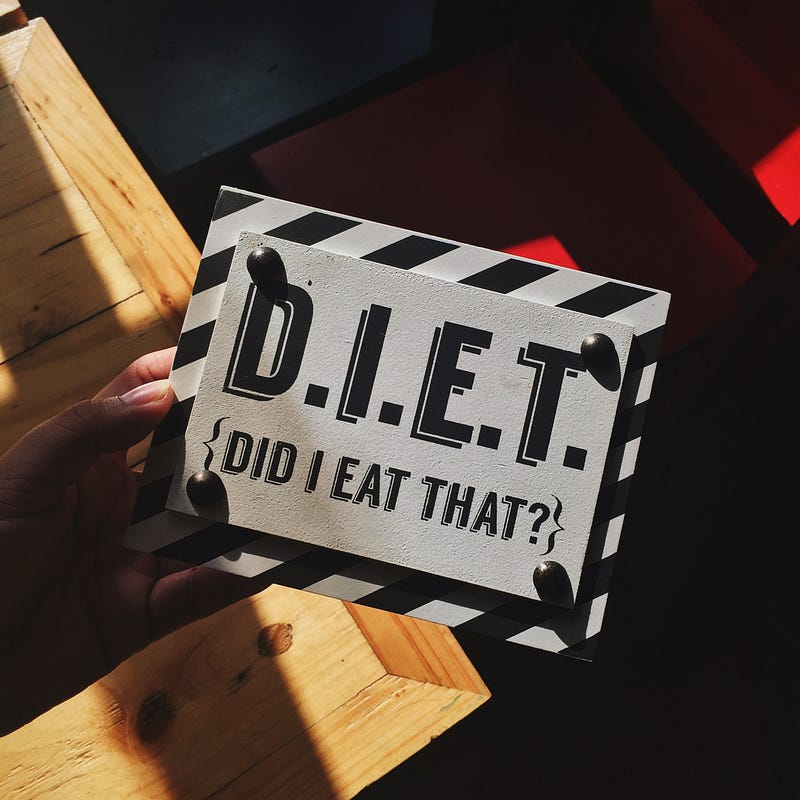
With the years passing quickly, Carly found herself more lonely and disconnected than ever. By most standards, her life was reasonably good, but she had become obsessed with dieting.
She looked back on old photos of herself and felt a deep, nostalgic longing to return to that moment, romanticising how beautiful she was and how she took it for granted.
“Why did I think I needed to diet?” she asked herself.
She thought of the moments she let pass by for fear of gaining weight.
She skipped travelling to Southeast Asia, girls’ holidays, and even a cooking class with a celebrity chef she admired in her hometown. All those precious moments lost, only to end up binge eating.
She didn’t even allow herself to eat her favourite croissant at the bakery where she went for coffee each week with her best friend, Annie.
Most of her friends had drifted, work had taken priority and moderate life successes became stale at an alarming rate. Food felt like her only comfort. Which meant it became her vice.
She felt hopeless, as if a few strings holding her together snapped, which caused the few strings that were left holding her together to snap. It was like a death occurred. A breakdown. A desperate plea for wellness through the medium of unwellness.
She was envious of Annie, who seemed to have everything figured out. She was determined to taste the freedom she believed Annie had. She was too proud to ask though. She had always felt in competition with Annie. At least in her mind.
In a mid-life crisis-style decision, she took a trip to China. She needed time for herself and wanted to see that part of the world.
She visited many cities, temples, art galleries and gardens. She enjoyed having nowhere to be.
She sought people and experiences she could learn from. Soon, she was directed to a revered spiritual teacher and guru — one whom people travelled great distances for answers and advice.
She travelled in the direction she was advised to go, far outside the cities at the foot of the peaceful mountainous regions.
She finally met the person she was looking for — a peaceful woman who was somehow tiny and larger than life at the same time.
She asked Carly why she had travelled so far to meet her. Carly explained her difficulties with binge eating and how she couldn’t accept her body. She wanted to feel the sense of connection that the spiritual types embodied.
“In your view, what is the best dietary practice for me?” she asked when the moment was right.
The guru paused for a moment before confidently responding, “Fasting.”
“Fasting? For how long?”
As long as you can, as often as you can. 16 hours at first. Then try 20 hours. Soon, you’ll be ready to try a full 24-hour fast. Go for long periods without food. Feel the hunger. Embrace the tolerable, pleasant sensation of wanting nourishment. Then you will appreciate your meals. This is what a healthy dietary pattern looks like.”
The conversation soon reached its natural end. Carly thanked the woman sincerely and went on her way.
She felt immense clarity. It made sense to her. It sounded wise.
She sat under a tree and wrote as much as she could in a little notebook while the freshness of the exchange was in her mind.
Soon, however, she still felt unsatiated. She questioned the practicality of fasting with the pace of real life back home. She went on her way and returned home.
At the airport, she overheard a man sitting next to her on a video chat talking about slides for an upcoming University presentation on escaping the typical pitfalls of dieting.
He turned out to be a scientist with a PhD in binge eating. She couldn’t believe her luck.
Sensing the man was happy to talk, she asked, “If I may, what is the best dietary approach for me?”
“Well, the first thing we teach our students is not to fast. If you’re in the typical diet cycle, getting too hungry is likely to exacerbate the cycle you’re trying to break. Do not go for long periods without food. Even if you’re not hungry, eat something small every few hours. Establish a normal eating routine. This is what a healthy dietary pattern looks like.”
“And what about if I want to lose weight?” she asked.
“I recommend you postpone that for now and focus on building a foundation first. You cannot lose weight when the cycle is chaos-rigidity-chaos. Take the pressure off yourself.”
She thanked him for being generous with his time.
She felt a sense of clarity as she pondered it. It sounded wise. She waited to board her flight at the gate whilst taking notes in the same book as the guru from China.
Soon, however, she felt unsatiated. She continued in search of advice. The kind everyone seemed to hold but her. The overnight transformations everyone seemed to unlock. She wanted it to be her.
At the recommendation of her friend, she sought the advice of a local Personal Trainer.
He had a large social media following with endless transformation photos. She arranged a call with him, apprehensive about what he was going to say.
Surprised by his mild manner and warm tone, she asked “What is the best dietary practice for me?”
With a confident smile, he replied, “Track your calorie intake. Better yet, track your macros. Be meticulous in everything you do. Avoid fast food and alcohol, and remember to focus on your goals. Eat protein at every meal. I suggest you eliminate sugary foods. It’s easier to have no Doritos than it is to have one Dorito. This is what a healthy dietary pattern looks like.”
She thanked him for his enthusiastic approach. It all made sense to her. Struck by his emphatic insights, she went home and ate everything in the house to get rid of it. This time, the diet would start tomorrow.
But the next day rolled around, and she felt as unmotivated as ever before.
Soon, she looked through the notes she had taken during their call. Feeling rather unsatiated, she thought about the rigidity of the plan. The amount of times he said “always” and “never” — in any other walk of life — would have clearly been unsettling.
A few days later, still unsatiated and growing increasingly frustrated, she attended a nutrition and health event where a debate occurred between a fat loss researcher and an anti-diet nutritionist who both made compelling points.
After the debate, she approached the anti-diet woman at the bar when everything was more relaxed. She introduced herself and they spoke about the topics of contention during the debate.
When appropriate, Carly asked, “What is the best dietary practice for me?”
“Don’t track or measure food. That leads to disordered eating. Those desires are nothing other than diet culture. Have unconditional permission to eat anything you like any time you like. That’s how you stop ruminating on food. Food is no longer the enemy when you stop treating it like it is. If it involves you counting calories, it’s a diet. Let go of diet thoughts. This is what a healthy dietary pattern looks like.”
She thanked the lady and went home. Soon, however, she returned to her unsatiated state. The sense of normal in which she lived.
Later that week, Annie messaged Carly to meet at the same bakery where they sat in the same seat each week, righting the wrongs of the world as only best friends can.
“You seem a little…..” Annie hesitated.
“A little….?” Asked a bemused Carly.
“Distant” Annie replied.
“Oh, I’m not sure why,” Carly said. “Actually, I do have a question”, she continued.
“Sure”.
“You seem to never struggle with dieting. You make it seem so easy. What’s the best dietary approach for me? I find it hard to know.”
Annie took a moment, clearly buffering a thoughtful reply.
“I’m not sure there is a best approach. I think what you do depends on what season of life you’re in. Sometimes, I find myself more comfortable with tolerable hunger, and I’ll eat less. I might even skip a meal. Other times, if I go too long without food and get too hungry, I overeat in the evening, so I prevent that as much as possible.”
“What about calories? Do you count them or do you intuitively eat?”
“Em, I don’t really have a name for my approach. I learned the energy content of my favourite foods like I learned the value of money. I don’t overthink it. I tend to eat many of the same things often. And sometimes, I guess I intuitively want a doughnut or a slice of pizza, and I don’t battle it too much. It’s far more important to have a routine than a perfect diet. I think more about continuity than perfection.”
Carly looked confused, the way you would expect when conflicting truths coexist.
“So you don’t stick with one approach then?”
“Not uniquely, no. I’ve noticed that the closer I get to one outcome, the more obvious its disadvantages become and its opposite appeals.”
Carly looked startled before Annie continued.
“People torture themselves by eating everything before the diet starts only to then experience intense cravings. I refuse to live in that constant state of dissatisfaction. To be human is to accept no state or goal will satiate us permanently. Some people have to make this mistake again and again. Maybe some never learn it.
Try to lower your expectations, and if you choose a behaviour, simply accept the consequence and move on…. In a good way. You’ll probably never be happy with your body. Not fully. But you can choose to nourish your body and mind. If I had to call my diet anything, I’d call it normal — whereby I strive to eat healthy most of the time but not so much that it feels restrictive. I have unconditional permission to eat, which makes me thoughtful because it doesn’t mean I always will. It means I always can.”
She paused before inquiring, “Am I making sense?”
“More than you know.”
Although melancholic, Carly felt a sense of clarity in Annie’s answer. It made sense and was wise.
She thought about all the conversations she had with those she deemed to be experts, all the diet books gathering dust, all the notes she had taken without ever stopping to ask if she even wanted to apply those ideas in her life.
She understood it made sense that all the answers she received contradicted each other because they were for a certain person at a certain time.
The information was correct for someone. It’s just that the giver hadn’t discerned the difference.
Carly reflected on how she had fooled herself into thinking she sought wisdom. But what she really sought were answers. In a single moment, Annie had taught her the difference between the two.
Annie understood the limits of wisdom. She had the right answer all along. But only now, in this setting, at this moment, was Carly’s mind and heart ready to accept it.
All the advice she received was good. At the same time, none of it was. It was both true and false, meaningful and meaningless depending on where the person is in their journey.
One can travel, work with smart people and seek sage-like wisdom, but the one thing they cannot escape is their own mind. Life is an impossible puzzle, and no one knows how many pieces there are.
To find joy in what one is eating is a form of wisdom. But so is allowing oneself to say no. To feel hunger. Carly thought of all the diets she googled whilst eating excessively and joylessly. This was the wisdom she needed now.
Just then, the waiter asked if they were ready to order.
Annie looked up and replied “Two black coffees and one almond croissant.”
A brief pause filled the space as the waiter took the order.
“Make that two croissants,” said Carly.