
The Belgian Colonisation of the Congo and the Brutality of King Leopold II
In the late 19th century, the European gaze, already with a long established history of colonial exploitation and expansion, turned eagerly towards Africa — hungry for its riches and potential.
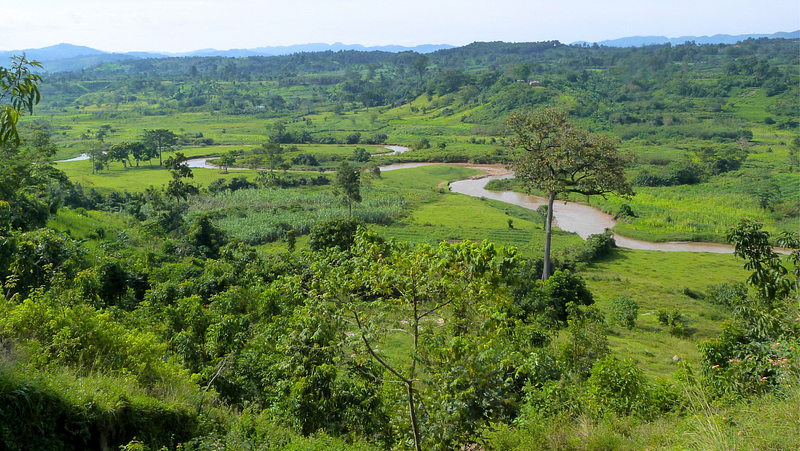
Among the territories eyed with keen interest was the Congo Basin — an area alive with winding rivers and thick rainforests.
While the broader European engagement in Africa had multiple players and varied motivations, Belgium’s entanglement with the Congo had a singular focus: the aspirations of King Leopold II of Belgium.
Leopold II’s dreams were grand and far-reaching — and primarily rooted in personal ambition. He looked to the Congo as the crown jewel that would distinguish him among Europe’s monarchs.
Unlike some of his contemporaries, who were driven by a mix of economic, strategic, and at times, purportedly altruistic motives, Leopold’s interest lay squarely in personal enrichment and the magnification of his own legacy.
Belgium, as a nation, had actually been circumspect about diving into the frenzied rush for colonies. However, Leopold’s personal ambition proved to be a force unto itself.
Cleverly navigating the international politics of the era, and deploying a blend of diplomatic guile, cunning manipulation, and even deceit, in 1885, in a move that was both audacious and unprecedented, he managed to have the Congo declared a personal possession.
That is, not as a Belgian colony, but (ironically) as the “Congo Free State” — a vast territory answerable to himself alone.
In effect, an entire region and its inhabitants had become the property of one man, and his ambitions for it were ominously clear.
Origins of Belgian Interest in the Congo
The tragedy that unfolded under Leopold’s rule was not just a product of his personal greed and megalomania but was also facilitated by the international community of the time.
Despite the apparent reluctance of the Belgian state to join the colonising race, Leopold’s hunger for prestige saw him weave intricate international relationships to achieve his goals.
The Berlin Conference of 1884–85 granted him the opportunity to elevate his plan from a personal ambition to an internationally acknowledged arrangement.
The larger powers of Europe, absorbed in their own colonial endeavours, overlooked the implications of granting a vast, resource-rich expanse of land to a single individual.
Leopold, portraying himself as a philanthropist committed to eradicating slavery and promoting civilisation, manipulated international sentiment.
He garnered endorsement through clever presentations of his intentions, effectively veiling his brutal objectives beneath a façade of philanthropy and progress.
Prominent figures and organisations were seduced by this narrative, unwittingly lending their prestige to endorse his venture.
The grotesque irony of the Congo Free State is that it was birthed amidst applause from a global audience captivated by the Belgian king’s assertions of benevolence and civilising mission.
Leopold’s eloquence and the allure of progress made for an intoxicating mix, blinding many to the imminent horror.
Economic Exploitation and the Rubber Trade
Once in control, Leopold’s primary interest lay in the economic exploitation of the region.
At the heart of this exploitation was the rubber trade.
As the 19th century advanced, the industrial and technological innovations in Europe and North America spurred a massive demand for rubber.
From bicycle tires to insulating cables, rubber became the cornerstone of modern industries.
Leopold, with a keen eye on the prevailing economic trends, realised the gold mine he sat upon. The Congo’s dense forests, previously revered for their biodiversity and untouched beauty, morphed into sites of merciless exploitation.
Beneath the verdant canopy, wild vines oozed with the coveted latex, setting the stage for a brutal extraction regime.
The native Congolese, who had thrived for centuries by understanding and respecting their ecological surroundings, found themselves ensnared in this merciless enterprise.
Their intricate knowledge of the forest, once a source of sustenance and spirituality, was weaponised against them.
As rubber’s value skyrocketed, they were coerced into harvesting it. They faced unspeakable pressures to meet quotas, their families held hostage, and entire communities brutalised to maintain a constant flow of rubber.
The façade of employment offered to the Congolese was a sinister mockery. With no rights, negligible remuneration, and working under constant threat, their situation bore all the hallmarks of servitude.
The transition from a harmonious existence with nature to a coerced role in its plunder epitomised the devastating impact of Leopold’s reign.
As the latex flowed from the Congo to fuel industries abroad, it carried with it tales of suffering, repression, and an ecology disturbed by insatiable greed.
The Congolese were not just stripped of their autonomy but were thrust into the epicentre of a global trade that cared little for human dignity or environmental sanctity.
The exploitation of the Congo’s resources went hand in hand with a draconian system of control and violence.
Leopold’s regime established a fearsome network of agents, fortified by state-sanctioned militias. Their primary task? To ensure the extraction of rubber proceeded without interruption and at any cost.
Each time a village failed to meet the exacting rubber quotas set by these agents, the consequences were dire.
In what can only be described as punitive rampages, militia squads descended upon such villages. Homes, once filled with culture and the laughter of families, were torched.
Crops, which ensured sustenance for the village inhabitants, were systematically razed. Even livestock, vital for both labour and food, weren’t spared from the wave of destruction.
Yet, among these various acts of cruelty, one particular practice stands out for its sheer inhumanity: the collection of severed hands.
To the agents and militias under Leopold’s employ, each bullet was an investment that needed justification. And so, for every shot fired, soldiers had to account for it, not with paperwork, but with human hands.
Tragically, to conserve bullets, many hands were severed from living victims. This grotesque form of audit ensured that bullets weren’t “wasted” in frivolous activities.
The result was an environment where maimed survivors bore witness to the regime’s cruelty — their missing limbs a constant, grim reminder.
Such brutality took an inevitable toll on the Congolese populace.
The combined weight of forced labour, terror tactics, famines resulting from disrupted agriculture, and psychological trauma led to a catastrophic decline in population.
While exact numbers remain contentious, there is a somber consensus among historians that millions perished during this period, with some estimates suggesting that the Congo lost half its population under Leopold’s avaricious grip.
The magnitude of suffering inflicted upon the Congolese by a distant monarch’s ambitions is staggering.
A land so rich in natural beauty and community spirit was, within a few decades, transformed into a landscape of fear, pain, and loss.
Revelations and International Outcry
The dark shadow of oppression and brutality in the Congo couldn’t remain hidden for long. As time wore on, whispers of the horror reached beyond the Congolese borders.
Initial fragments of information, often shared by missionaries and travellers, coalesced into an undeniable narrative of systemic abuse and exploitation.
One by one, voices from across the world began to rise in condemnation.
Missionaries, often the few outsiders with firsthand knowledge of the conditions in the Congo, shared harrowing tales.
Early proponents of human rights, appalled by the scale and intensity of the abuses, rallied to the cause. Together, they formed a chorus of indignation that grew louder by the day.
Among the figures who spearheaded the campaign against Leopold’s cruelty, was E.D. Morel.
Working for a shipping line that facilitated trade between the Congo and Europe, Morel, in a meticulous examination of shipping records, noticed a chilling pattern.
While ships went to the Congo loaded with firearms and ammunition, they returned heavy with rubber and ivory but conspicuously absent of any African goods or produce.
This glaring imbalance led him to a grim realisation: the wealth coming out of the Congo was not the result of trade but of pillage.
With relentless determination, Morel, alongside other committed activists, launched a campaign to shine a light on the grim reality of the Congo Free State.
Through public speeches, writings, and organised meetings, they sought to educate and galvanise public opinion against the atrocities committed under Leopold’s watch.
Their tireless efforts were not in vain. As the weight of evidence and the gravity of testimonies mounted, the international community could no longer turn a blind eye.
The culmination of these efforts was the formation of an international commission of inquiry. Comprising representatives from various nations, this body delved deep into the Congo’s affairs.
Their findings, laid out in an exhaustive report, not only verified the tales of cruelty but also laid bare the scale and systematic nature of the abuses.
The revelations sent shockwaves through the corridors of power and public squares alike.
The facade of Leopold’s benevolent enterprise was shattered, replaced by the grim visage of a regime built on cruelty, exploitation, and unbridled greed.
The revelations from the commission’s investigations triggered a domino effect of reactions. Countries that had once stood by, either ignorant or dismissive of the realities in the Congo, now found themselves in a position where inaction was untenable.
The stark revelations about Leopold’s Congo cast an unfavourable light on the international community, prompting urgent calls for change.
Within Belgium, the tide of public opinion was turning against King Leopold II. It became increasingly clear to Belgian officials and the public alike that the ongoing scandal surrounding the Congo could not be sustained under Leopold’s personal rule.
The outcry was not just from a humanitarian perspective but also from those who felt that Leopold’s actions were tarnishing Belgium’s reputation on the international stage.
In 1908, in response to this dual pressure from the international community and mounting domestic discontent, a significant political decision was made.
The Congo Free State, which had hitherto been the personal possession of King Leopold II, was annexed by the Belgian state and rechristened the Belgian Congo.
On paper, this transition symbolised a new beginning — an attempt to right the wrongs of the past and introduce a more just system of governance.
However, realities on the ground depicted a different story.
While the most barbaric practices, which had gained notoriety under Leopold’s regime, saw a decline, the underlying system of exploitation persisted.
The vast resources of the Congo — its rubber, minerals, and other natural wealth — continued to flow into Belgian coffers, though now under the direct administration of the Belgian state.
The Congolese, who had borne the brunt of Leopold’s brutal rule, now found themselves under a new overseer.
But this change in management did little to alter their day-to-day experiences. They remained subjected to forced labour, their rights were minimal, and the new administrative machinery continued to prioritise extraction over the well-being of the native population.
In essence, while the reigns of control had shifted and the most overt forms of violence had diminished, the ethos of exploitation that had been the hallmark of Leopold’s Congo endured.
The Belgian state, rather than fundamentally reforming the system, chose to perpetuate a modified version of Leopold’s model, ensuring that the Congo remained a lucrative asset for Belgium, even if the costs were borne by the Congolese themselves.
The Long Shadow of Colonial Exploitation
The ramifications of Belgian colonisation in the Congo persist. Decades of exploitation disrupted traditional social structures, distorted the economy, and instilled a legacy of mistrust and trauma.
Cultural expressions, oral traditions, and communal memories bear witness to the harsh realities of the colonial period.
While the Congo gained independence in 1960, the challenges of post-colonial governance, socio-economic disparities, and the quest for national identity remain closely tied to its colonial history.
In Belgium, the memory of the Congo and its colonisation has, for a long time, been a topic shrouded in selective memory.
In more recent years, there has however, been a more critical reassessment, with calls for recognition, apologies, and reparations.
We are seeing new forms of colonialism in Africa today too, reflective of this horrible history.
Acknowledgement of Belgium’s culpability and role in creating today’s Congo is paramount in addressing this.