The Beginning of the World
-an epistolary poem of an ending of the old ways
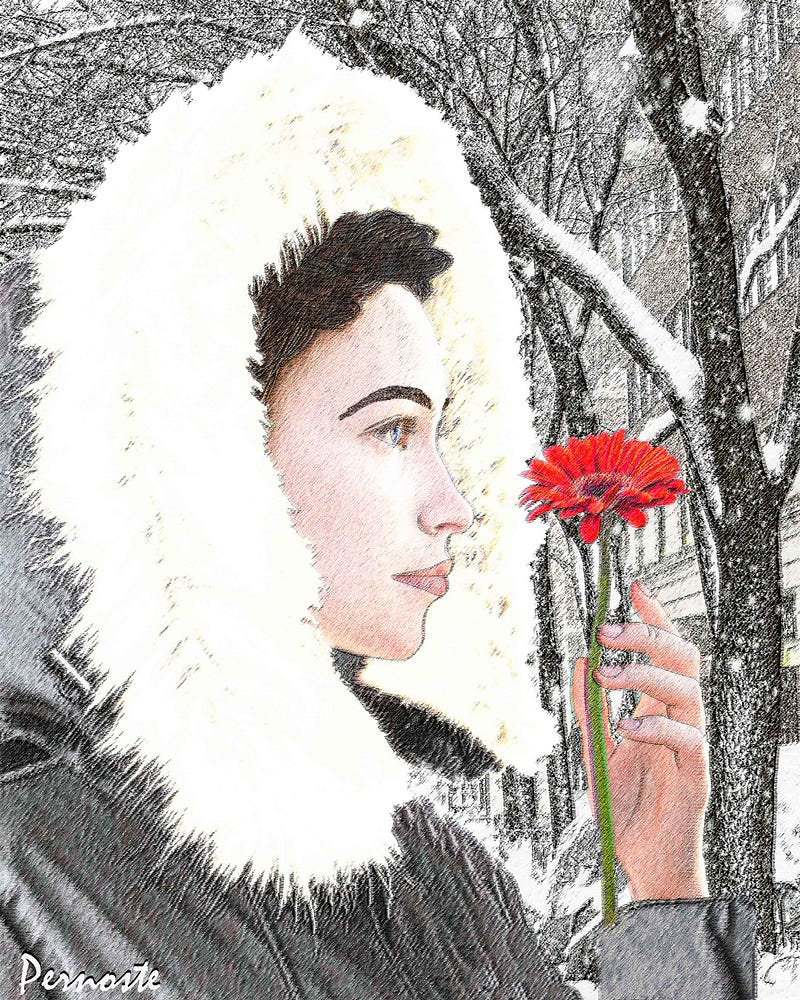
You have the option to listen and read along with narration and music (13 minutes) or to read it on your own, below.
The Beginning of the World
Oh Michael, the house is quiet, so empty, devoid of thought, drained of time, and now forever hollowed of expectations. I remember what you said last night, over dinner, when we talked of the past.
“Small towns raise the truth from us, where we’re pared down and simple, just the way we all should be,” you said.
My town is a people with proud humility, the only thing left to us of our own. I can count what I have with no fingers, because most things don’t count. I can’t even include myself, my faith, or the small blessings for me in life. They don’t feed me when I’m hungry.
The whole world has gone crazy, bursting with fierce politics and hatred, oppression driving rebellion and violence. I looked out this morning, across the way, at the empty church, forlorn and broken, a casualty of the first day the troops arrived.
“Show me something different today, better. Papa, ask God for me, if He can’t hear me.”
I had asked, like a child, for some sort of miracle, but truly I expected only cold and snow on a day that should have been like all others.
When I stepped outside, I saw the words that cried out in righteous anger and fear, scrawled across the crumbly masonry of the abandoned house across the street.
WORK HARD AND WE’LL TAKE CARE OF YOU… government words in garish red, like blood. Underneath, in blue… a rebuttal, in obscenities. The government took away the jobs and money, and gasoline and kerosene for generators, as though we’re somehow all dangerous.
The winter day surprised me with warmth, not the weather’s warmth, but yours, when I met you late on the street in town. You stopped a soldier from harassing me… some hostile government mercenary from Europe.
You smiled and pretended to know me, and he ran away scared after a private word. Naturally I was grateful, yet so very distracted, wondering at the mysterious power you wielded… and, also, whether you truly knew me.
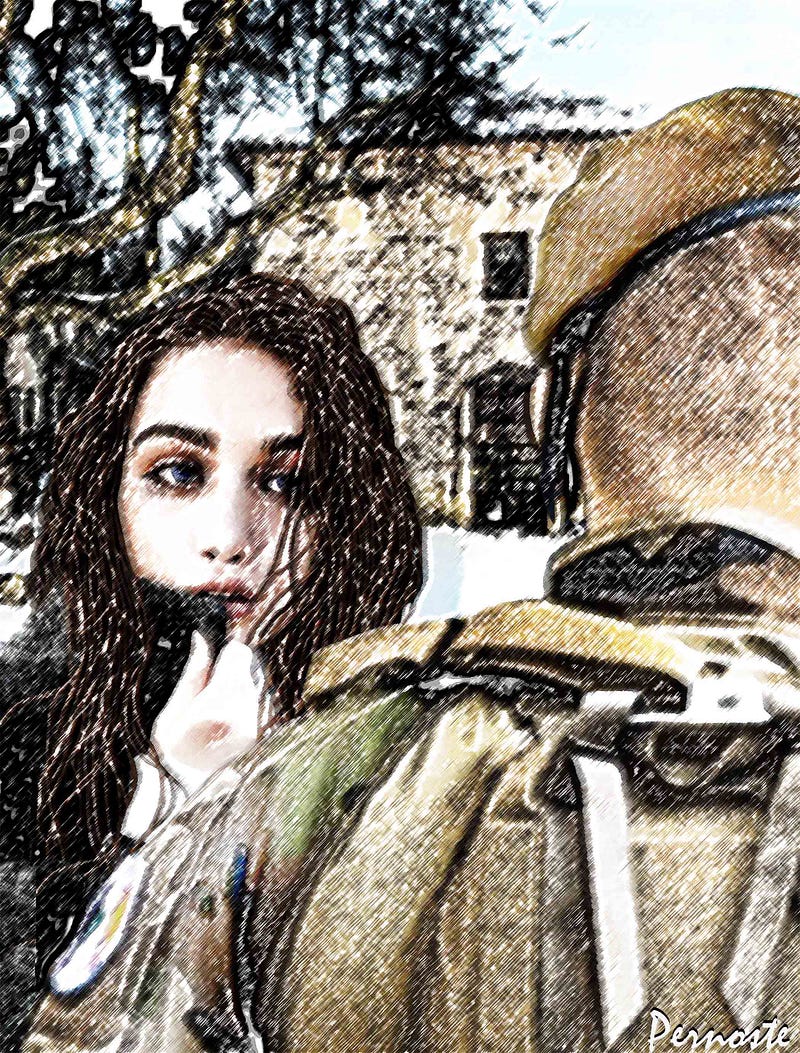
After the soldier, you stayed with me. You saw I was cold and gave me your coat. Rivetted by your beautiful green eyes, I absently felt myself wrapped up warm.
Then you told me about yourself, Michael, that your aunt recently died here, in the part of town that burned away. Did I ever meet her? Did I know her?
I saw your eyes brimming with pain, but, also, they were so full of the world, and laughter and kindness, and intelligence, and it seemed there was room there for me. I had been heart-deep in a lost silence, but your smiles broke my fast of words, and I told you about our lives here.
We walked and spoke beneath falling snow, on a bright, fresh carpet underfoot. I told you how the town survives, agreeing to share what we have and to try to watch out for each other. But there is no longer much for us.
I have only a little purse of coins left to me, and potatoes growing in my windows that I will eat or trade or give when ready. My friend Cindy says I’m the Potato Queen, so many potatoes in so many windows.
Though I was cold and wet in my old sneakers, I was warming up in your heavy jacket. Cold hardly touched you in scuffed boots and your strange dark wool uniform. The sun shined sometimes through the clouds, creating bright diamonds to dazzle the air. It made the day feel momentous to me.
“Maybe we can get out of the cold a moment, so Your Highness doesn’t get frostbite,” you teased.
Deciding to avoid more soldiers on Main we went to the little pub by Church Street, luckily finding a small table available, in a dark corner by the smoky fireplace.
It was crowded in the Old Barn Pub & Grill, heavy with scents of candles, smoke and beer. Those who know me smiled and winked at me, seeing me with a man and not stuck in a book.
The place was full of laughter and quiet complaints, most of the town there to get warm, to get away. No bar food, though. Not even peanuts.
In a surprise upwelling of happy feelings, I told you I remembered us as children, though we both knew, of course, I couldn’t. It was my whimsical game of make-believe started by your claim of knowing me.
I spoke in detail of sledding in the winter and going to our favorite lake every summer. You kissed me on the beach one time when we were only eleven or twelve. I paused a moment, suddenly embarrassed, feeling the warmth of a blush upon my cheeks.
“Do you think the tree we planted years ago will ever be quite big enough to climb?” you asked me with a happy smile.
“Well, no, but its apples came this Fall, so we won’t have to starve at least, I hope. Not like in poor devastated Canada anyway. I saved one girl, though, Camille Belair, who escaped Montreal, very hungry and wild, weak and hiding in my little shed out back.”
“There is aid going there, to Canada, but it’s good that you helped her,” you said. “Va te faire foutre, was all she said to me, an insult I think, but she’ll come around.”
You laughed, smiling broadly at me, “I think I have missed you, Isabella,” adding “… and it’s good you don’t speak French.”
When our beers came, I dropped two shiny nickels, quickly scooped up by Rinny’s fast little hand. You and I laughed and “cheers-ed” with our drinks, our fingers brushing softly as the glasses clinked. We talked of little things, and big, for a while. “Come, let’s get our fortunes told,” you said, grabbing my arm suddenly, gently, pulling me up. I laughed, confused, until you pointed, smiling. We grabbed our beers and walked to her, Madame Equus, the name of a stallion rather than a fortune teller of Craine New York.
You put a quarter on her table, and she shuffled… then quickly, slap slap slap — slap slap slap, she dealt the Running Man, 7 of Spears, Life (inverted), covered by The Fall and 3 of Shadows and The Drowning Man (inverted), so real, with dead eyes shining mother-of-pearl. It looked so like my father, The Drowning Man, so I grabbed your waist and pulled you away. Those memories were still too fresh for me. “It’s not good,” I said, not knowing, just fearing. “The fortune… it’s not going to be good for us.” You just laughed. “No, it is good. It is.” “Sorry,” you said to her, stepping away with me, and Madame Equus sighed, picking up the cards. Her sigh made me laugh, and I had you gulp your beer so we could go back outside into the white cold, though I didn’t dare to tell you why. There were no soldiers out the back door, probably busy feeding their hungry bonfire with all of our souls and our hopes and prayers — taking our air too, perhaps, burning it away - over on the west side past the old playground.
We ran quickly over the snow covered lawns and through the small woods to Hall Street. My wet feet no longer minded the cold. “Isabella!” old man Passle called from Parish House, but I just waved and laughed, still running to my tiny, ugly house with the shed in back.
I made a small dinner for us in my kitchen, from what little the General Store had yesterday, and we invited a sullen Camille to join us. You built a fire in the fireplace using wood and coal, and I lit old stubs of candles I had all over.
Camille put a record on my old gramophone, horrible old music, but a delight to hear it in a world with no electrons, buttons or remotes. Even she smiled and danced as she wound it up. I would have asked her to wind me up, too, but you already had me wound tight as a clock. “It’s over,” you told us. “It’s all going to be better now.” And you explained the hard fought changes coming. I cried for the first time in a long time, happy tears. “It eez over, really?” Camille asked, laughing loudly then crying as she fled to the room I had given her.
We sat later, close to the fire, close to each other, and finally you put a strong arm around me. “Tell me again, even if it’s a lie,” I implored, tearful, and you smiled and reassured me. You kissed me. In the cold moonlight, over tumbled graves and years of devastation, hope still walked, I knew, released from those many chains not easily seen. I stood and beckoned you to your feet. “I feel as though I have known you forever. Remember the first time we made love?” I asked, joking, as I took you upstairs to my bedroom. You laughed. “For certain I will remember tomorrow.” You were gone when I awoke in the morn, tying me again in foolish emotional chains. I didn’t want to even look for a note … too difficult with silent tears flooding my eyes. There was no more food in the house, so I dressed and grabbed a few coins. Maybe Stewart’s or the General Store or eggs from Molly’s or, or … hunger until I figured out ice fishing in Champlain.
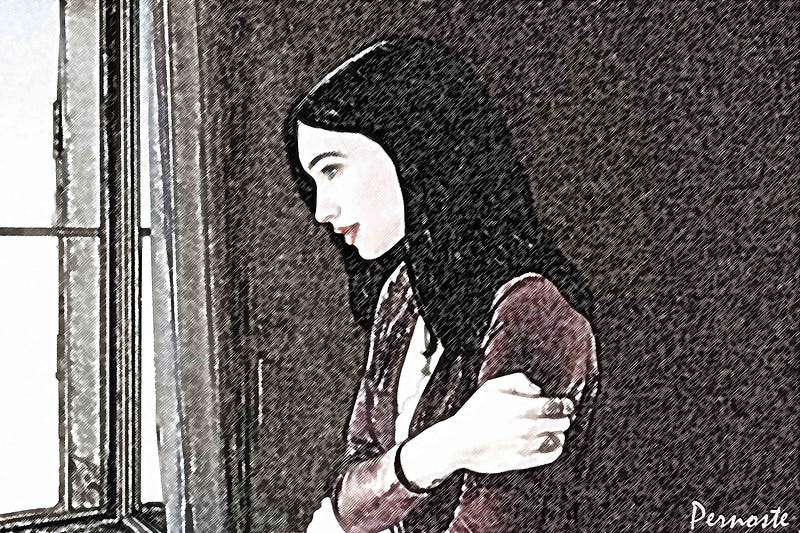
I paced my room in my cold bare feet, smoothing my hair with automatic fingers. I’d returned to my fast of words already just scant moments after finding you gone.
I picked up my pad and my stubby pencil, my heart in need of releasing words, of understanding survival in my world, of knowing that your promises were true. I sat for a few minutes, just breathing, and I spent some moments writing this…. When I heard the yelling and laughter, I wiped the moisture off the window, and I saw the people dancing in the streets with soldiers in dark uniforms like yours, everybody jumping like happy children.
I saw you appear… striding up the driveway carrying bags and bags of food, it seemed. I remember now that green-eyed newspaper boy, so long ago and lost to me for some reason. Fetching the paper had been an excuse to talk to him. I thought, “I don’t need to write more…. I will run downstairs to see you, Michael, and I will be happy with whatever comes…
… and I will dance in the street with my neighbors, for this is the beginning of the world.”
Love,
Isabella
Thank you for reading our poem.
Here are some of our other poems posted here on Medium and some background on our writing approach.