
TRAVEL. ARCHITECTURE.
The Beauty of South Tyrolean Architecture
A photo essay of the city of Dobiaco and its buildings
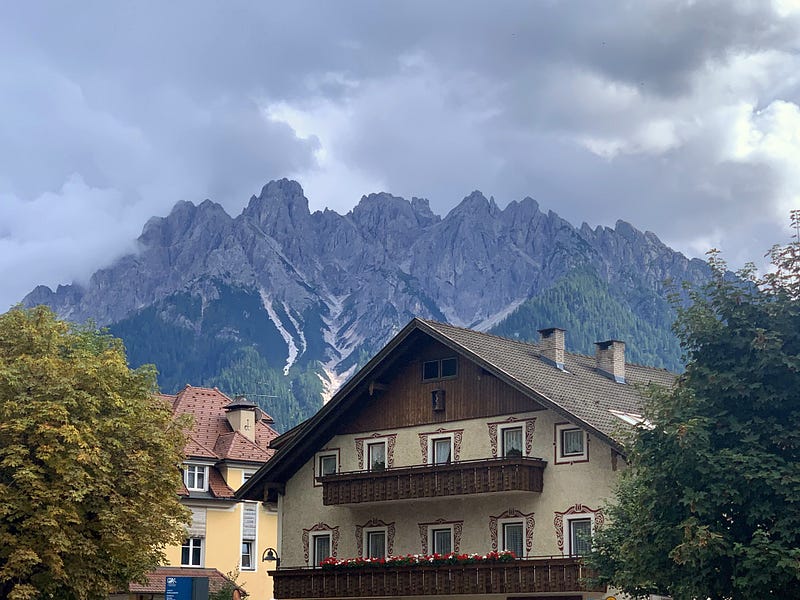
I’m sitting on the balcony overlooking the valley over the city of Dobbiaco (Toblach in German). The spectacular Dolomites overpower the view. A mountain range so unique I fell in love with it when I saw it the first time.
This morning we flew from Berlin to Innsbruck where we met up with my parents. We then drove another 2 hours south. Deeper into the Alps. We crossed the border from Austria to Italy while driving on the highway at 120kph and then reached our destination in the city of Dobbiaco.
For one night we will be staying in this idyllic town of South Tyrol.
South Tyrol is the northernmost region of Italy. It is an autonomous province and is home to the world-famous Dolomites, a mountain group that became a UNESCO world heritage site in 2009.
South Tyrol was part of Austria-Hungary until 1918 and was an almost entirely German-speaking territory until the Allies gave it to the kingdom of Italy. This is why even today you’ll still find a minority of locals speaking German in this region of Italy.
Many cultural traditions will remind you of Austria or southern Germany. Part of these historical traditions is their architecture. And after enjoying the view above the city we took off into town to explore more of its charm.
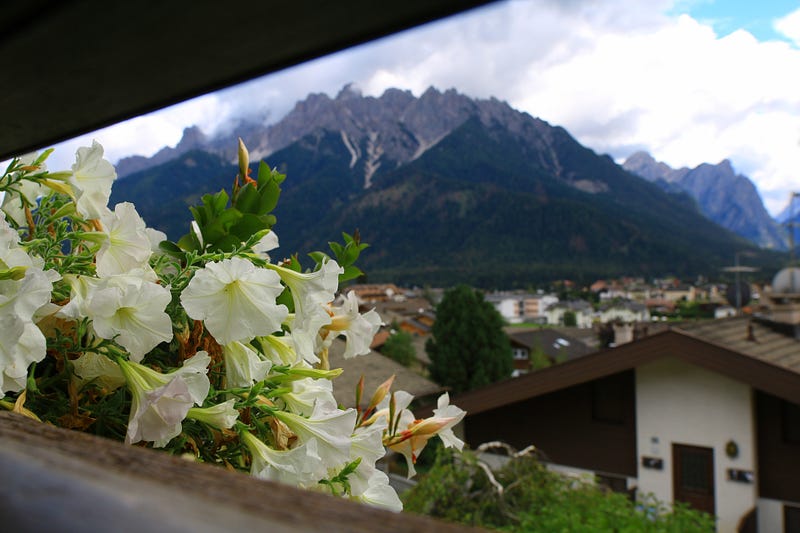
While there is a lot more to say about this region or town, I want to focus on the architecture in this photo essay.
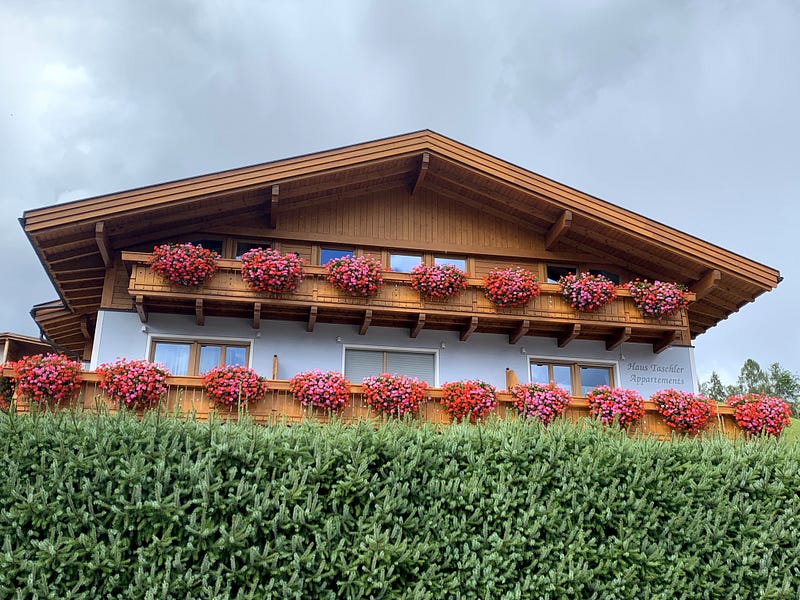
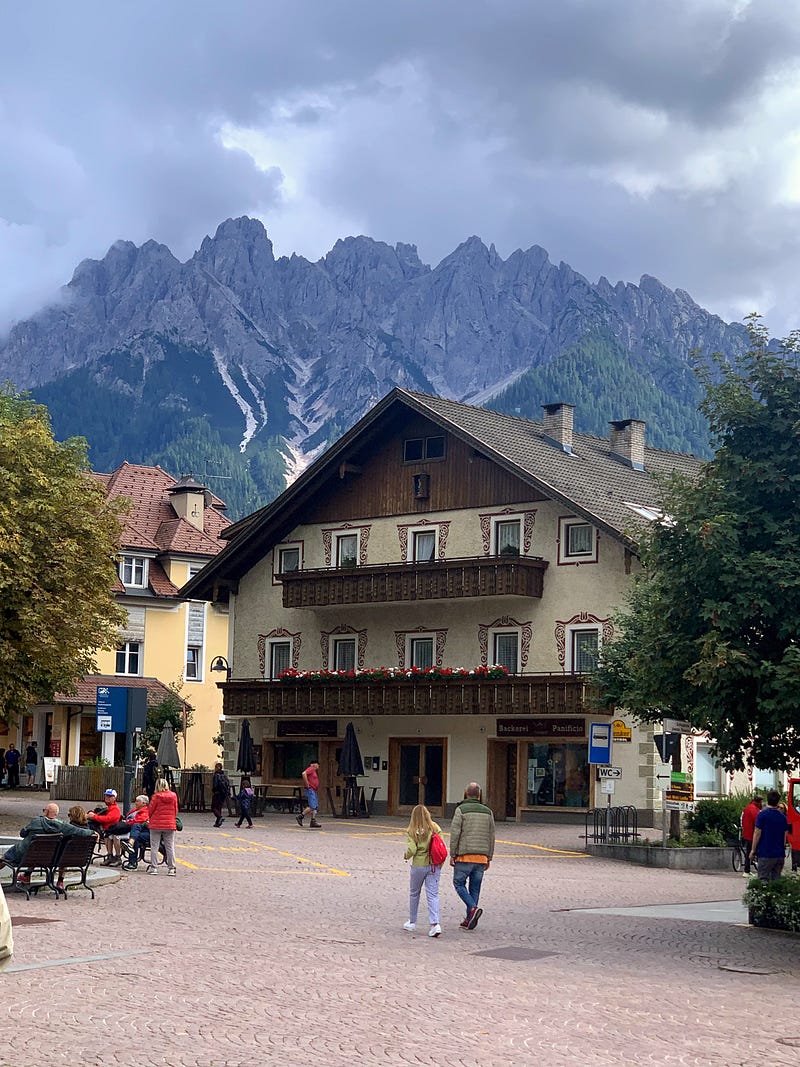
I love the traditional homes characterized by wooden walls and balconies covered in blooming flowers. The houses are often not more than two stories tall. Only newer-built hotels will rise above three floors.
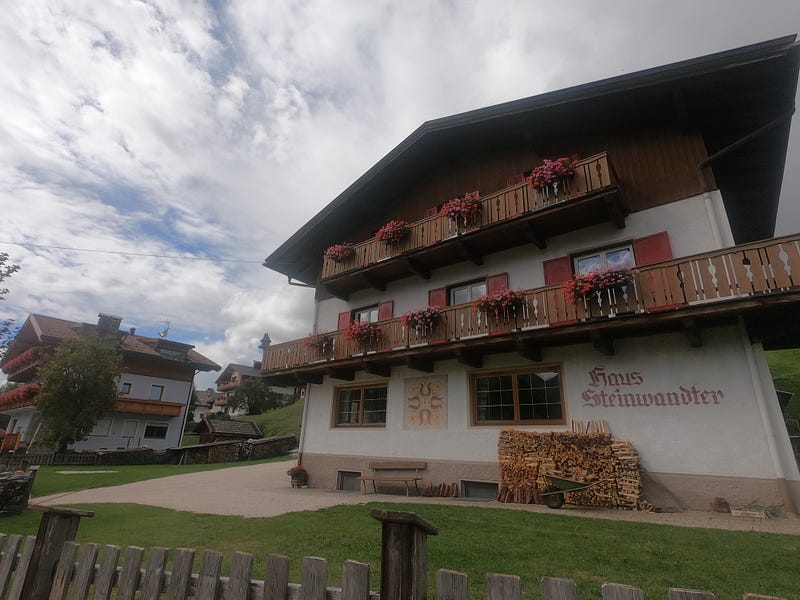
The weather wasn’t ideal for this photography walk of mine but I tried to ignore the gray background and focus on the shining flowers.
Next to the beautiful architecture of the houses in Dobbiaco, one other thing is standing out on the horizon. The mountains.
They are part of every scenic photograph of the city.
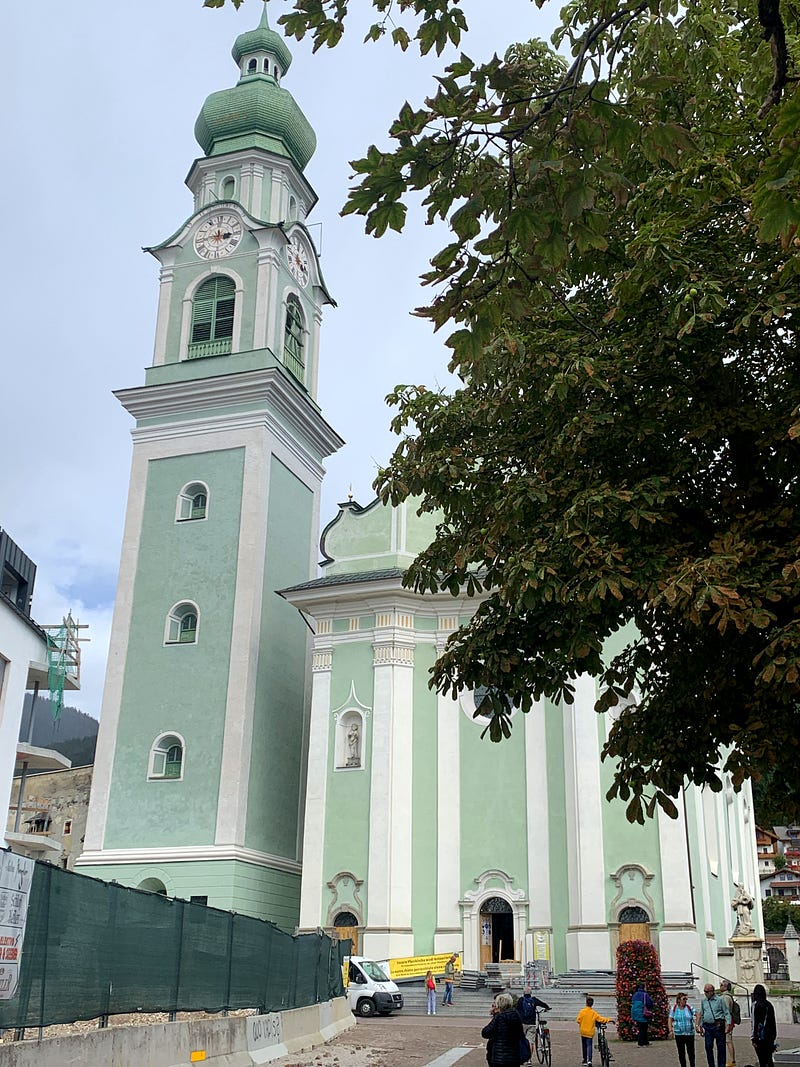
While I am admiring all the beautiful residential houses, I almost missed the church. It was closed due to renovations but the building is a symbol of town to be seen from afar.
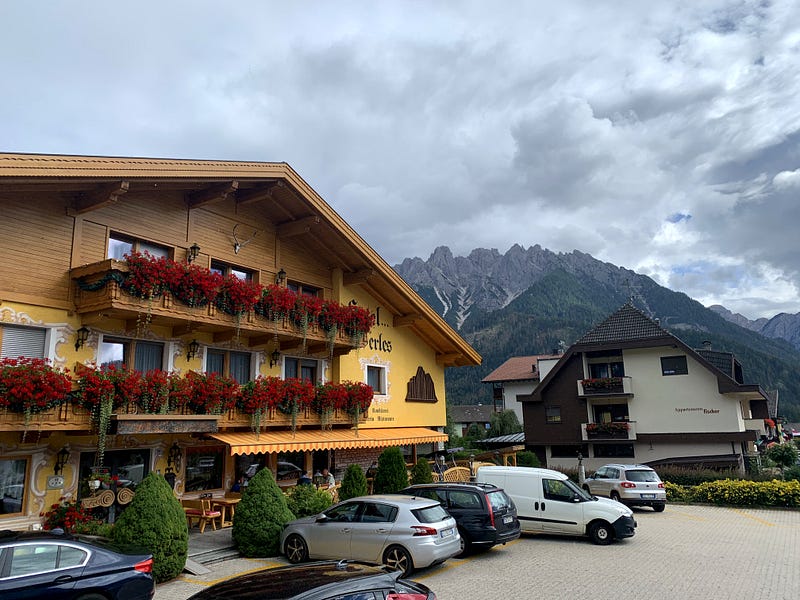
More restaurants and guesthouses draw my attention. It was starting to rain and we found a table in this beautiful yellow building. Sitting on the terrace we were able to watch people walking by while being out of the rain.
Some buildings have a more modern style but still implement floral beauty on their balconies.
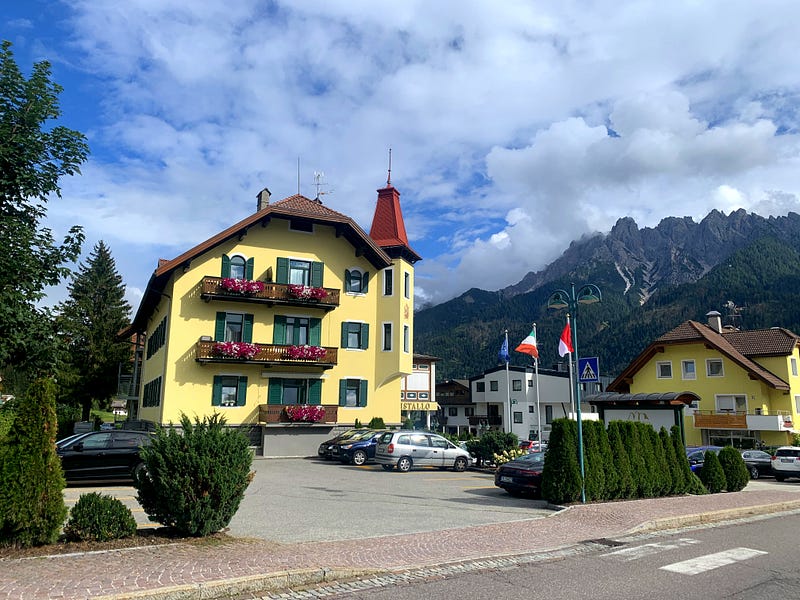
Other hotels stand out with their majestic architectural features.
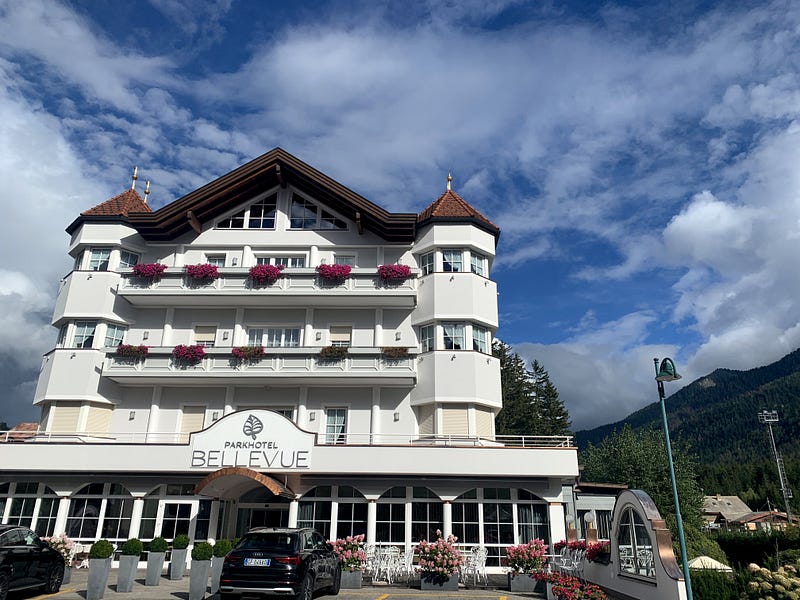
We were heading out of town to reach the Lago di Dobbiaco. A lake located at the foothills of the Dolomites. Another spectacular building was standing out of the forest on shore.
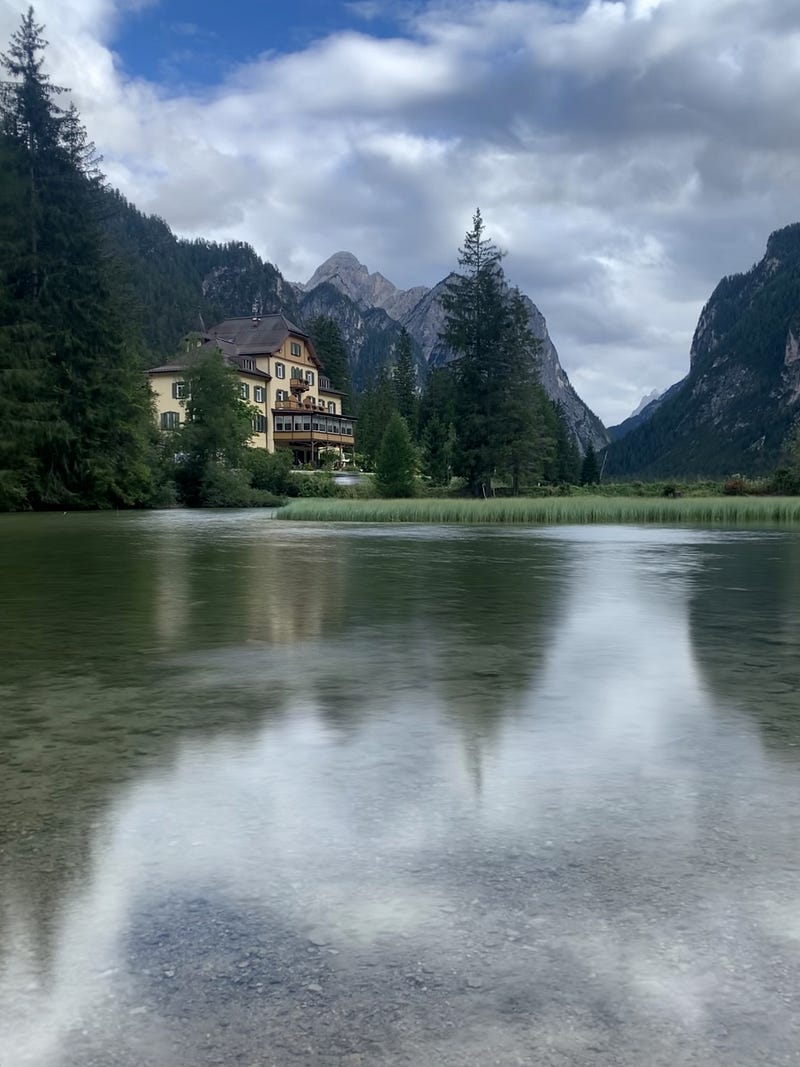
While we were now getting hungry and tired from a long day of traveling, we turned around and headed back into town looking for a place to have dinner at.
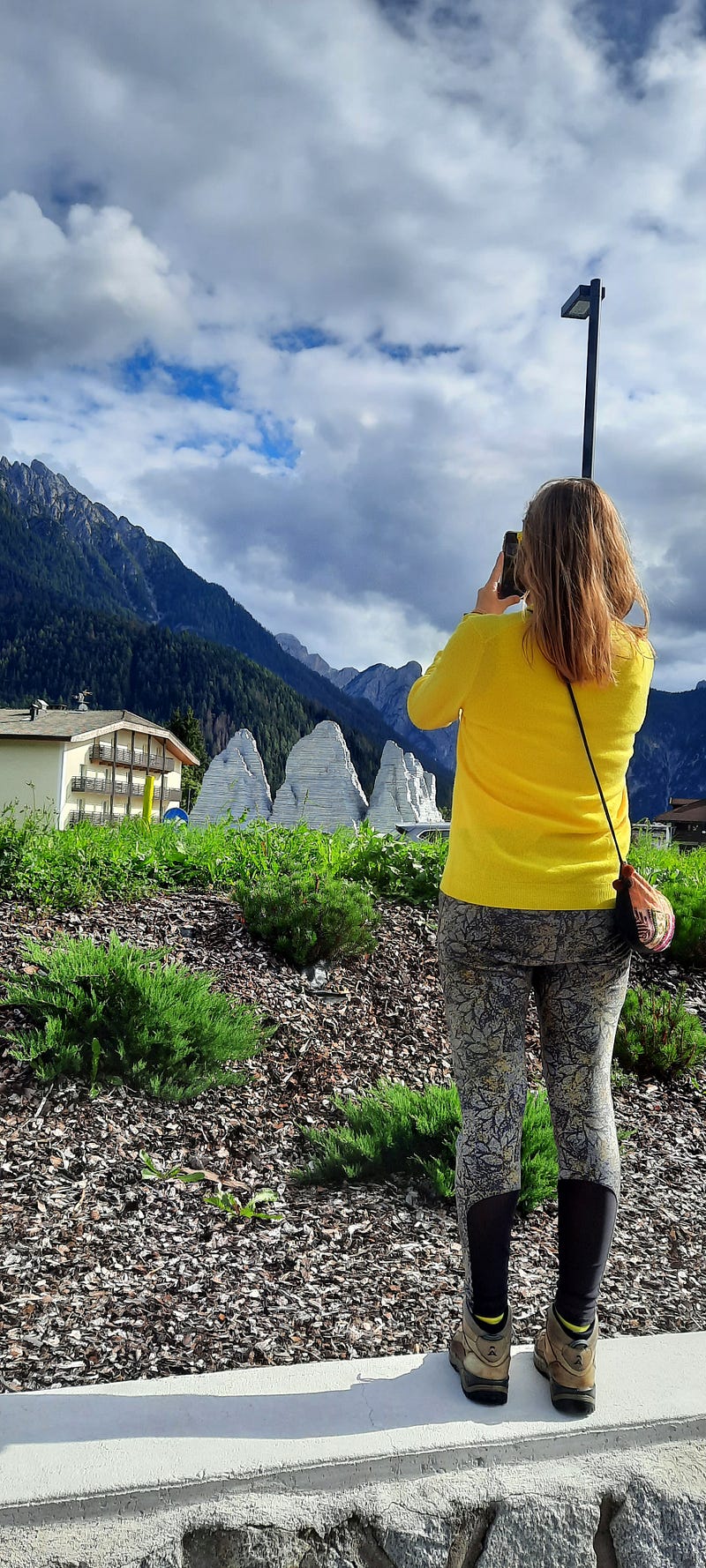
And in case you were wondering what I am doing while walking through town, look below. My dad took this picture of me while I was photographing the statues of the Tre Cime di Lavaredo, the most famous mountain range of the Dolomites with the real mountains in the background.
“Architecture is a visual art and the buildings speak for themselves.” — Julia Morgan
More about my trip to South Tyrol:
Join my email list here if you would like to read more photo essays or sign up for the Medium membership to receive unlimited access to my and other writers’ stories out here (I will receive a commission fee in return).


