
Animal Anecdote
The Beauty of Encountering Wildlife
Learn how and where to enjoy Canadian wildlife at its finest
Once upon a time, there was a wild, wild side of mine. Fortunately, as my personality began changing for the better, so did my wild side — it started to vanish day by day, little by little until it eventually all perished away.
And there I was, with empty hands. My brain was buzzing with confusion, just like a newborn would. I was trying to make sense of the past. But as I realized that this is far from happening, I have moved on thinking about the future. I knew that as one thing goes out, another must come in, but my new state was so vague that every time I tried to foresee it felt like there was simply nothing for me.
One year later, it all has come to its place and I can now look back in the past future, where I see that every little step that I have made was a step that has been steadily leading me to my new passion — photography. Moreover, capturing the moments of wildlife.
My only desire is to bring consciousness to the society about their existence and importance. Nevertheless, I feel connected to myself more than ever with this new kind of wild connection within me, a new kind of desire to help and preserve the wild in someone else.
The opportunity to encounter various wildlife species in their natural habitat became one of the most exciting things about traveling for me. Wild animals are an integral part of biodiversity, but as I have learned they are of great importance for tourism as well. This is of no surprise given the fact of how energizing and empowering a meeting with them can be.
The most frequently asked question by tourists is probably — “Where can we see wildlife?” Me, as a traveler myself, I have asked countless times this question and while at some times I was given an abundance of good recommendations, at others I was simply stared with a pokerface and get shot with the cold, cold answer — “We can not predict wildlife viewing.”
The fact is, that answers like the latter one made me start making my very own researches where and when can I see wildlife. This brought me to iNaturalist a much broader community and online social platform for people who share information about biodiversity to help each other to learn more about nature and to increase the worldwide awareness of different species around the world. Hence, this is an application and platform that I highly suggest for worldwide species research.
Here are some photographs of animals that we have encountered in Canada and captured. Nevertheless, remember that wildlife viewing is really about being at the right place at the right time, but of course, informing yourself increases your chances of an encounter.
Moose
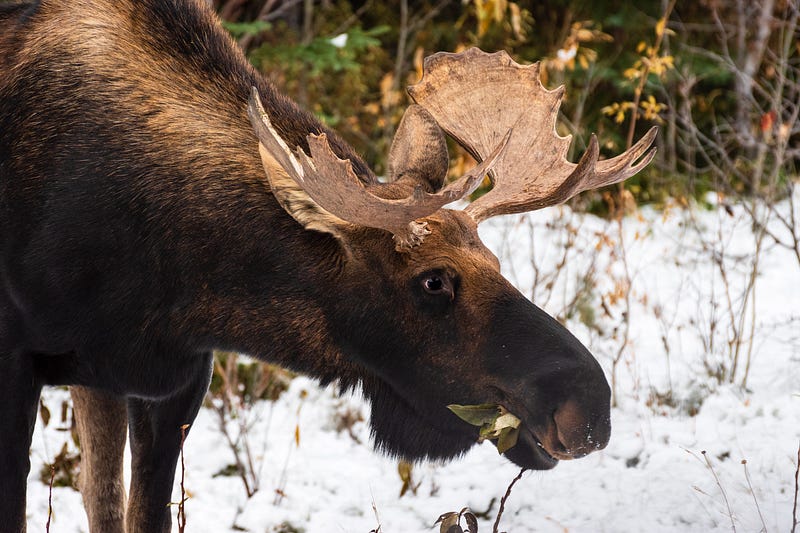
The moose is considered to be the largest species in the deer family. They are not aggressive but they can often turn wrathful if hungry.
We couldn’t wait to encounter one, in fact we thought that this would happen much earlier than it did, since there were numerous road signs warning about unexpected encounters with those mammals.
However, we saw only one moose from close and it was at Jasper National Park in Alberta, Canada. This cute omnivore fellah was simply eating his grass out by the road to Medicine Lake.
Bears
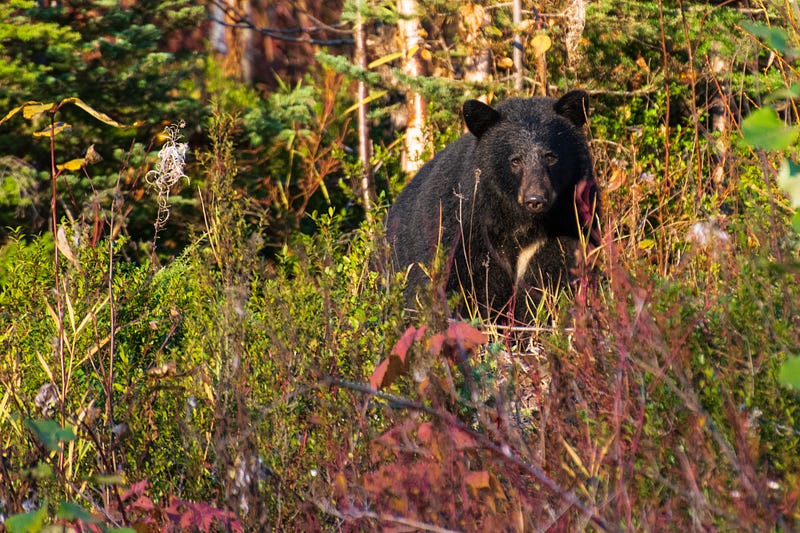
Probably luck, but we haven’t met many bears in the woods. Most of the times that we saw bears were from the car on the highway. In the beginning of October, on the Cassair Highway, we saw as much as of 5 black bears in a row, within the frame of 30 minutes. This lonesome black bear below is one of them captured during a sunset golden hour.
Apart from that, we had two more closer meetings with black bears. The first one was with 60 seconds delay that saved us from face-to-face meeting with a black bear on a tiny wooden bridge in the middle of a lake, you can see pictures and read more about the story here.
The second one was very sudden and luckily no-one got hurt! We were riding bikes back from Kinley Lake at Mount Robson Park in Alberta, Canada, when after a turn my boyfriend almost bumped on a black bear, which was crossing the road up from the river. He was shocked, but so was the bear and it went up the hill immediately.
Eagles
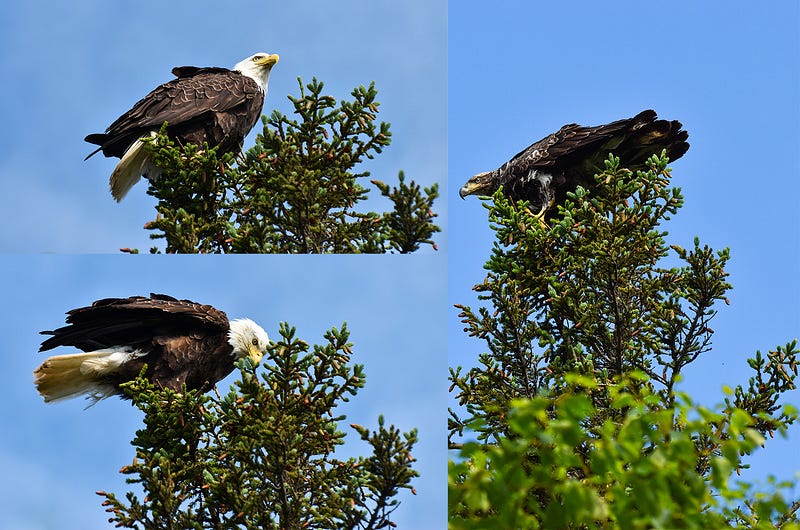
Somehow, I’ve turned into an avid birdwatcher, but you don’t have to be one to spot some of these majestic creatures. Most of the Canada’s bald eagles live in coastal British Columbia, and this is exactly where we spotted them as well. The easiest place to watch eagles is in Brackendale Eagles Provincial Park, which lies in the Squamish River just outside Vancouver.
The Squamish Valley is one of the most significant areas of wintering and migrating bald eagles in North America and the viewing peaks are between November — December. To add in, the walk along the river is very pleasentful and you mightt spot some seals in the river as well. It’s true! I saw one myself.
Eastern Chipmunks
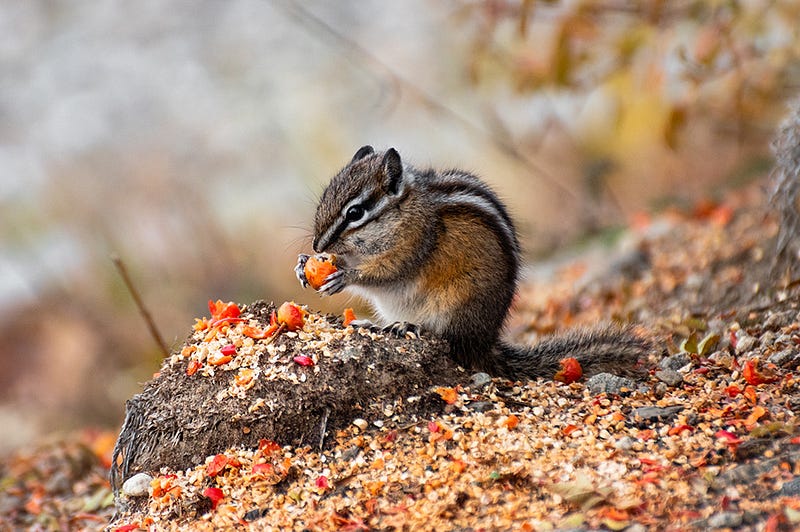
If someone tells me there is a cuter rodent than a chipmunk, I’ll probably question them. There are five different species in Canada, and four of them live in forested areas in British Colombia.
We saw the most chipmunks gathered in one place at the Myra Canyon in the Kettle Valley Railway. We went to cycle there and spent the night up as well.
Since we are early birds and were ready to leave the canyon around 7 am after small jogging, when all of a sudden, I’ve spotted ten chipmunks under a rose-hip bush. While these adorable mammals were having their morning feast, I’ve managed to get as close as few centimeters away from them and enjoyed my moment of contentment, too.
Chipmunks are overly friendly. They would come right next to you and take food from your hand, which by the way, is illegal. However, stay alert as these are not the only wild animals out there. Bears, coyotes, and cougars are inhabiters of the Myra Canyon, too, and you probably want to stay aware regarding their presence around.
Elk
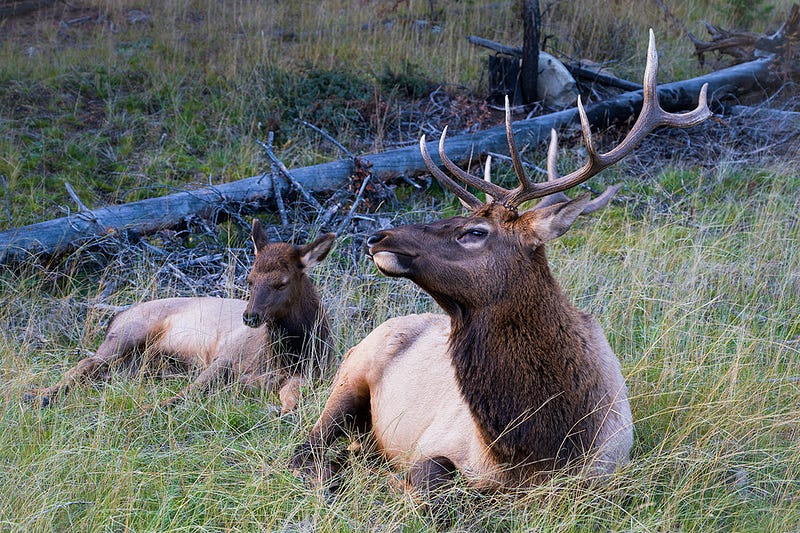
Elk Island National Park is where you can see a lot of bison at first, and at second — a lot of elks. It is a national park that plays a major role in the conservation of bison. Therefore, they were abundant.
But if you take a hike around any of the trails, you will encounter at least one of these wild animals: elks, beavers, birds, and of course, bison.
It is very convenient to visit this park as it’s open all year long, and the highway passes along the park, which makes it incredibly accessible for a national park in Canada. Apart from that, we saw many elks in Jaspar National Park and Banff as well.
Coyotes
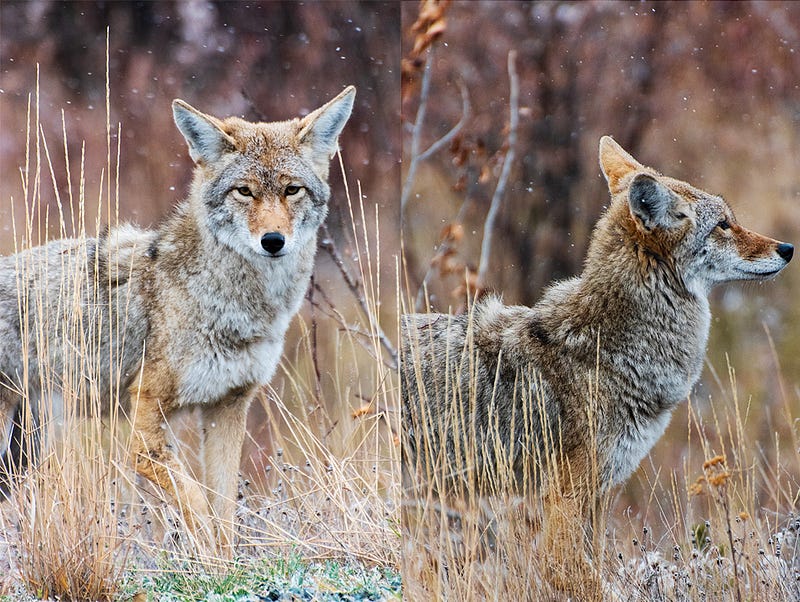
If you travel around Canada, you will probably encounter coyote more than once, or at least you will hear their raucous canine howl overnight, which will remind you of the wolf packs wandering around as well.
We spotted this little hunter in Kluane National Park and Reserve in Yukon. Although coyotes form strong family groups, this one was roaming alone.
When wandering around Canadian nature, it’s good to have some protecting equipment for any case, such as bear spray or some sharp tool that can protect you in case of any danger. Animal behavior is unpredictable, and coyotes might become a potential danger, especially to children and pets, have this in mind.
Bighorn Sheep
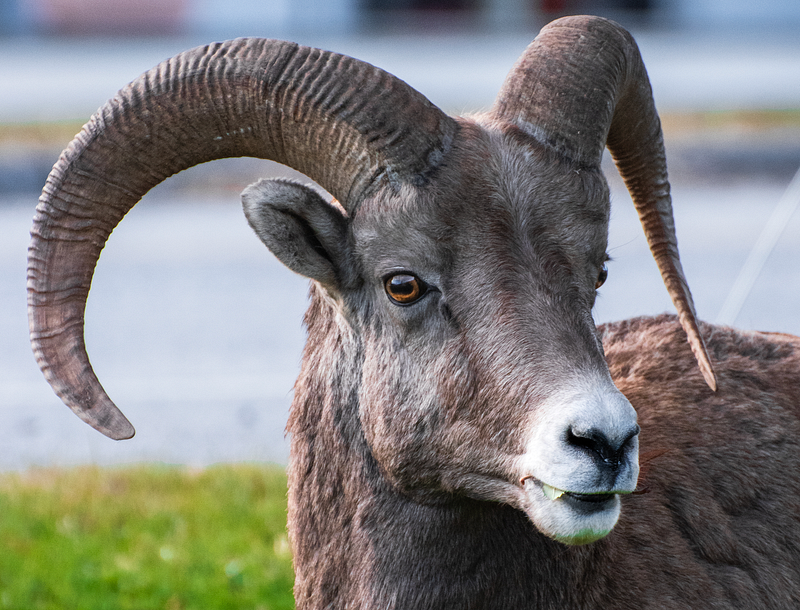
The Latin name of the Bighorn Sheep — Ovis Canadensis Canadensis, is translated as a sheep belonging to Canada. They are the larger relative of the domesticated sheep, and even though their horns look like the most important and distinctive mark, it is not so. The most important asset is its hoofs, which give them excellent traction on rocky and steep terrain.
Spotting bighorn sheep interconnected with our leisure time. We were visiting Radium Hot Springs, one of British Colombia’s top natural hot springs, and stopped for a while at the visitor’s center in the village, where a few bighorn sheep were grazing.
I’ve managed to appreciate the beauty of their big horns up close and though they are typically not aggressive animals, be aware that there are some attacking cases as well, so I highly suggest you stay away from their zone if you don’t want them to butt you!
Mule Deer
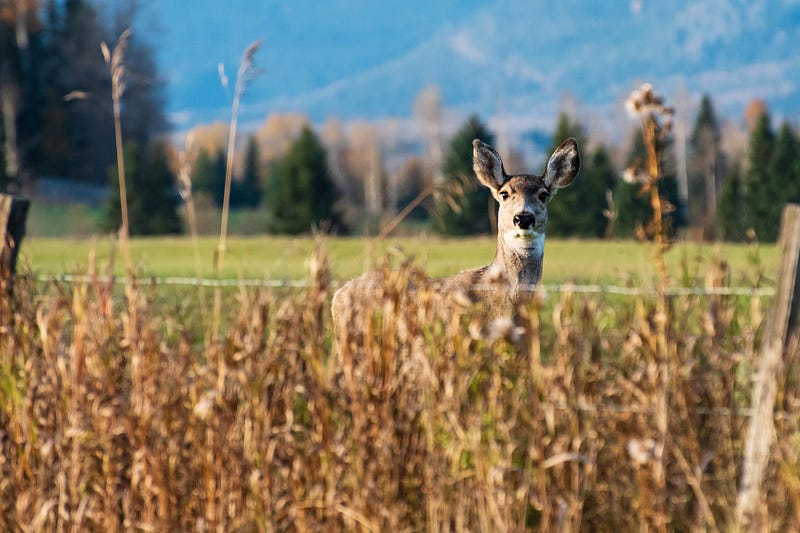
This cute big-eared buddy readily seeks out human habitation to hide from predators. Therefore, you can see them roaming freely around valleys in British Colombia and Yukon. They prefer open and rugged landscapes, and we have seen them very often while driving around British Columbia and Yukon.
Mule deer populations have been depleted by market hunting at the end of the 19th century. Although their population has stabilized ever since, it is on the decline once again due to forestry, drought, and rising predator populations.
Stay alert when you see these animals and try to remain incognito. Though they are harmless and cute on the first look, they can become very aggressive to people and dogs.
Porcupines
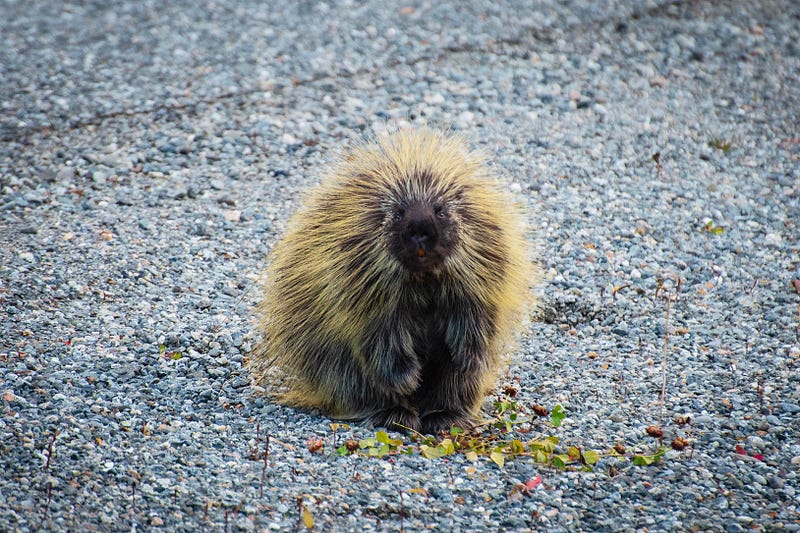
This prickly fellow is a porcupine. Those animals tend to live close to trees, forests, and rivers. We saw this one on the Cassiar Highway and pulled over to photoshoot him eating. However, when he saw us, he ran away faster than you might imagine!
The second time we heard about his existence was in the Bugaboo Provincial Park in British Columbia. Porcupines like to chew tires, wiring, brake lines, and whatever else they can underneath your car, so it’s common to see a chicken wire on at some parking spots in provincial parks, meant to protect your vehicle in the case that you plan to stay overnight. One of my favorite things in Canada is that everyone is friendly, and they care to help and assist others.
Marmots
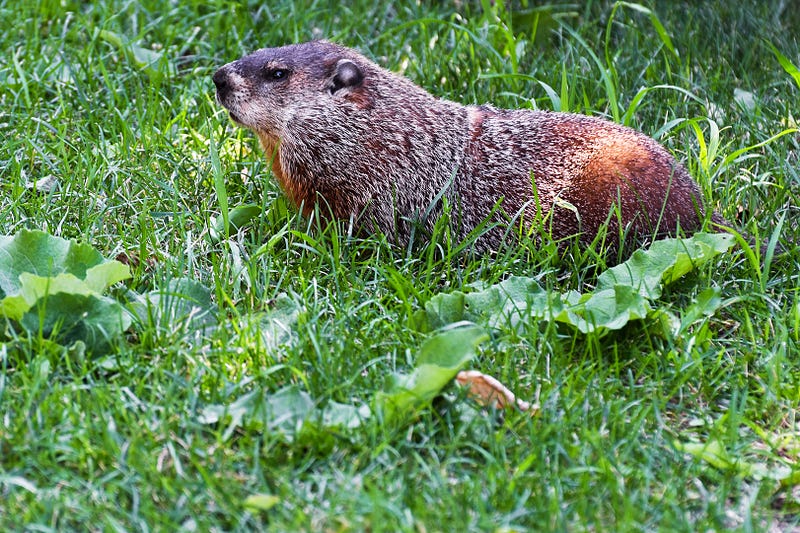
Did you knew that marmots are the largest ground squirrels in the whole world? Normally, they live high in the mountain areas as they have a thick coat to protect and keep them warm.
However, you don’t need to climb up mountains to spot some of these creatures. We saw marmots in cities like Montreal, where the picture from above is taken, and in Ottawa, the capital of Canada. Though, if you go around national and provincial parks you have the chance to spot different marmot species.
Foxes
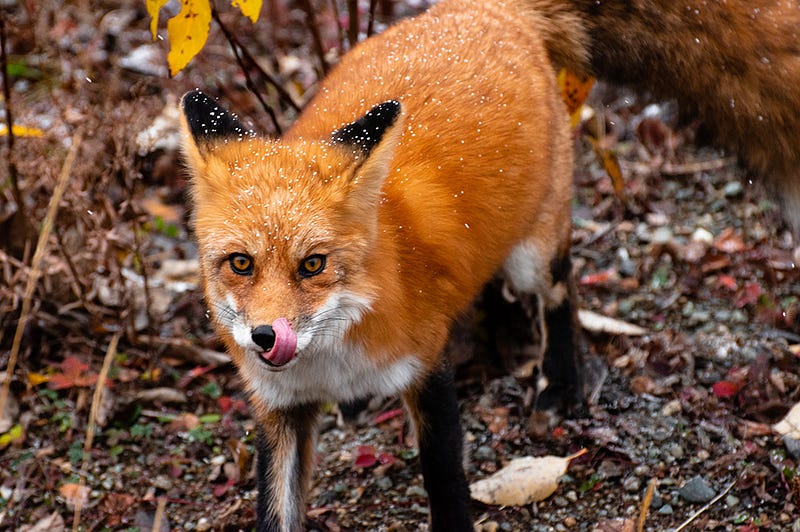
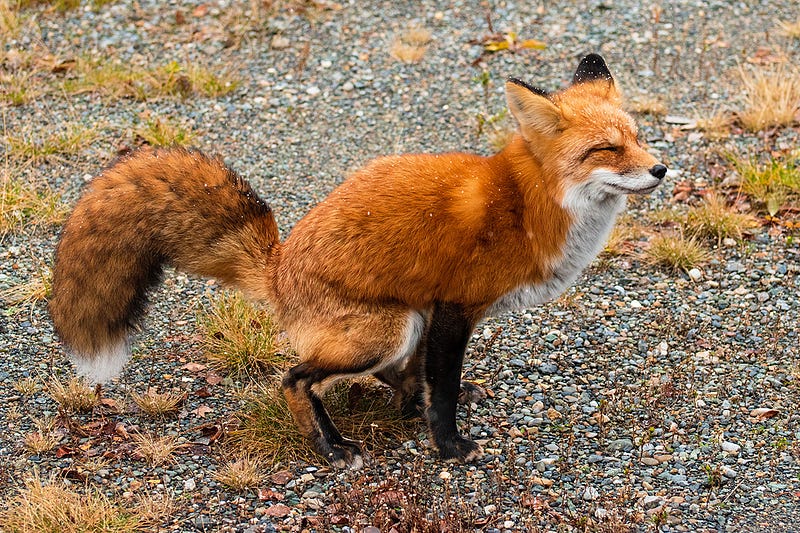
Different fox species inhibit Canada, and they can be spotted anywhere from mountains to forests to farms. We spotted some around Boya Lake Provincial Park and on the Cassiar Highway as well.
They are beggars. Very often, foxes will wander around and act cute to get some food, but remember that under animal harassment laws — it’s illegal to feed any kind of wildlife, no matter how cute!
If you are up for a big trip around Canada, don’t forget to buy the discovery pass, which gives you and your family a free entry to more than 80 national parks around the whole country and is valid for an entire year. Honestly, only our visit to Banff for a night would’ve had a similar price as the discovery pass.


