
The Beauty of Batching Tasks
How eliminating the repositioning between tasks can pave the way to better quality
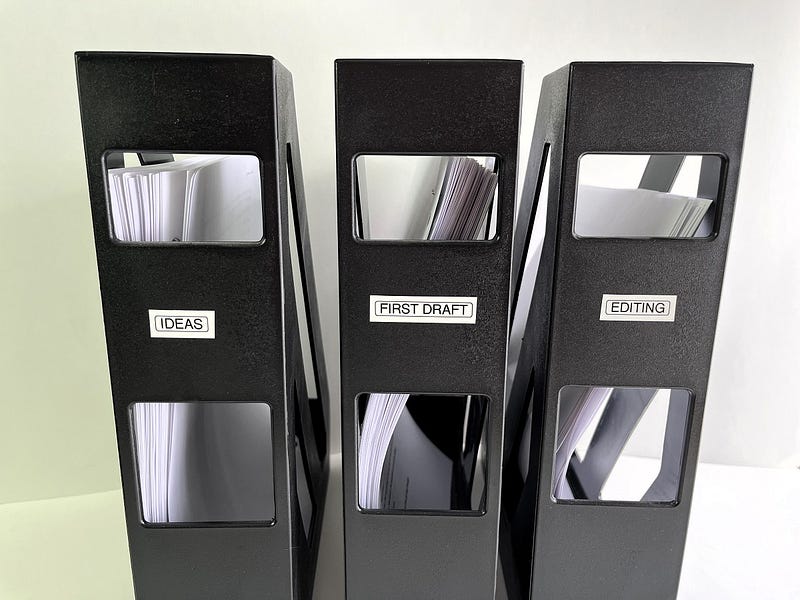
When I think back, I often surprise myself at how many times I batched tasks without really thinking about it or planning for it.
It just seemed to be the most intuitive thing to do when I was short on time.
It was only later that it crossed my radar as a principle of time management with its own cool buzzword.
The concept is fairly straightforward:
Let’s say you had a grocery list of ten items.
You wouldn’t go to the grocery store ten times to pick up one item. Naturally, you would make one visit to pick up the ten items… at least that would be your plan, barring situations like the items being sold out, discontinued or encountering supply chain issues.
When you factor in the preparation time to go out, as well as transportation time to get to and from the grocery store, it makes sense to make the fewest trips possible.
That is the beauty of batching tasks: gathering similar tasks together to create a more comprehensive use of time, energy and resources.
To me, the key reason why batching tasks works is because of the repositioning factor.
During my office career, my work duties were quite diverse, as I expect many peoples’ jobs are.
But it doesn’t take long to realize how challenging it is to feel one is accomplishing anything in a scenario like the following:
Take one phone call; answer one email; write one sentence for an important assignment; step away to attend a meeting; answer one more phone call; start formulating another email response; chip away at the assignment again.
In between each task, the worker is having to change gears, so to speak, in repositioning for a different activity that may call upon a different kind of energy, thought process or subject matter expertise.
It’s that constant jumping in and out of a state of mental readiness for a given task or subject matter that becomes disruptive. This can also become an impediment to getting into the flow of more complex or more creative tasks.
This situation occasionally presented itself when I worked on written pieces requiring tact, diplomacy, judgment or a heightened degree of sensitivity. It also applied to pieces in which I had to translate complex concepts into training materials for newcomers to the subject matter.
How difficult is it to achieve these tasks when your email is pinging at you every two or three minutes, and you’re watching the clock to not be late for your next scheduled meeting.
When those situations arose, I started negotiating with my supervisor, asking if I could shut off my email completely for one hour and to put on noise cancelling headphones to fully focus on the challenging task.
Sometimes I was able to, sometimes I was not. But when it was allowed, I was able to produce work for which I was very proud.
Either way, those were some of my first instances of batching tasks in a practical sense, to give them my full attention in the moment, and to not keep alternating between different tasks, thereby spreading my attention span too thinly.
Today, as my own boss in the writing world, where I can call the shots on how I work, it is a skill that I use weekly and sometimes, I admit to taking for granted.
Deep down, I wish I could have articulated this need to batch tasks earlier in my working days. How this could have saved me headaches (in the literal sense) and helped me to accomplish more when not feeling like a juggler spinning plates at the end of tall sticks like a circus performer.
Lessons learned.
But at the end of the day, setting aside blocks of time for specific tasks and not flipping back and forth, not only makes me feel that I am accomplishing something, but it also increases my satisfaction in a job well done, knowing that I was able to complete an important task in one sitting instead of ten.
Did you enjoy this post? If you did, your claps, shares and follows are most appreciated.
Sincere thanks for reading!
Have a great day,
André