
The Beautiful and Tricky Ambivalence of Words
They mean everything and nothing at the same time
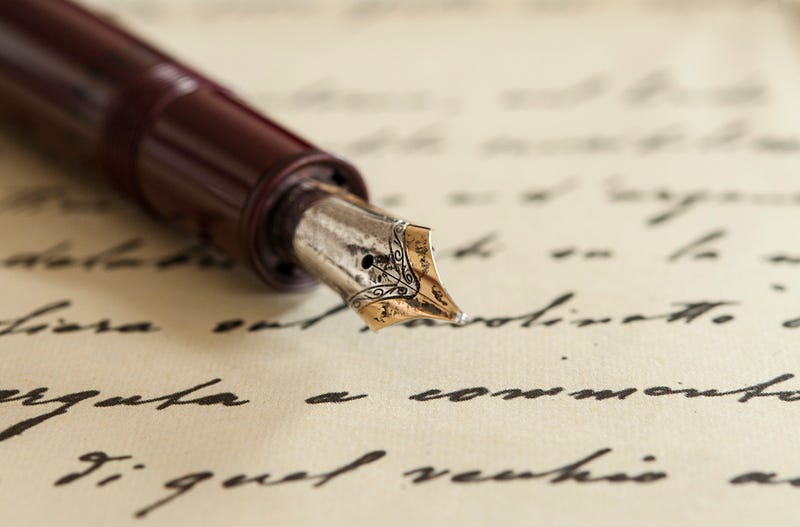
“The pen is truly mightier than the sword.”
I’ve loved this quote since Jack Nicholson’s Joker triumphantly declared it while stabbing one of the Gotham’s mob lords to the heart with a fountain pen.
All about that scene and the whole movie fascinated and still does.
Tim Burton’s 1989 Batman, specifically the enigmatic Jack Napier takes the meaning to another, ultimately literal level.
But the core message of this phrase has accompanied humanity forever. We have always known the power of the well-aimed and timely word. So many times we have seen it to win a war even before the soldiers mobilize.
Words have shaped history as any sword.
However, in this precise form, the original use is attributed to the English author Edward Bulwer-Lytton and his 1839 historical play Richelieu; Or the Conspiracy.
There’s no better historical character to interpret the meaning of this quote than famous Cardinal Richelieu, known as The Red Eminence, the Chief Minister of French King Louis XIII.
The master of diplomacy and deceit, Richelieu knew the power of words and information. That’s why he introduced and oversaw strict authoritarian measures — heavy press censorship, ban on all political debates in public assemblies. He also established a vast network of spies not only in France but in most of Europe, so torn by the devastating Thirty Years’ War.
Richelieu learned that word travels much quicker than any soldier.
History of politics and international relations is fantastic evidence of the immense power of words. Both in spoken and written form, they can save millions of people or condemn them to death.
They can play a similarly dramatic role in our personal lives.
Yet, it is just one perspective.
We can flip the coin and treat the words only as a requirement for the real meaningful action.
Words can mean everything, but they can also mean nothing.
Everything
“Words have magical power. They can bring either the greatest happiness or deepest despair.”
Sigmund Freud
The father of psychoanalysis, a method for the study of the unconscious mind by the dialogue between a patient and psychiatrist, definitely learned his share about the fundamental role of words in our lives.
We all remember moments when a single sentence hurt us to the core. When someone close to our heart (or a stranger) pierced our emotional armor with a sharp dart of an insult. In an instant, we felt a terrible pain.
Just a couple of words can cause damage that lasts years.
On the other hand, just a single sentence can drive us to a godlike performance. Piece of advice, even a critique can propel us to embark on a fascinating journey, which leads to the mythical promised land.
It can trigger the chain of events we would not expect in the wildest dreams.
Either in their negative or positive connotations, words can become our terrible master or the most trusted servant.
However, that monumental energy doesn’t lie in the words themselves. Without proper interpretation, they lack any real meaning. What remains is a sequence of random syllables.
Our perception is the deciding factor influencing the role of words in our lives.
In the end, they often mean nothing.
Nothing
“I don’t want just words. If that’s all you have for me, you’d better go.”
Francis Scott Fitzgerald
In Fitzgerald’s novel The Beautiful and Damned, the lovelorn young Dot denounces her lover Anthony from her life. She’s had enough of hollow words, she wants an actual proof of his love.
The words are just empty shells for her.
This takes us back right to the perception thing. Words have no value at all if we don’t put it in them. We can spit them out left and right without even thinking about what we are saying.
Action is what matters. By acting on our words, we elevate them from an intangible concept to a palpable value.
I confess to countless moments when I said something without actually meaning it. Other times I meant it and believed it, but didn’t back it by action.
Like this blog.
Approximately ten years ago I started to ponder the idea of writing a blog. Not only did I think about it, but also talked about it with my friends.
I truly meant it, it was an idea straight from my heart.
Starting a blog in the 2010s (still feels weird thinking about it as a past decade) was as simple as it is now. If you want it hard enough you can set everything up in a matter of minutes.
Yet, I never did it.
Even though I believed in it, my words meant nothing until I backed them by conscious action. Conscious is the keyword here — only when you intentionally think through what you let out to the world, you can back it up by action.
For all their power and ability to shuffle the history of mankind back and forth, words don’t wield the authority. We hold all the reins and determine the course of action.
Let’s end on a high note with a quote from the Dhammapada, a collection of teachings of one particularly cool dude.
“However many holy words you read, However many you speak, What good will they do you If you do not act on upon them?”
Buddha
Listen to his friendly encouragement, this guy knew what he was talking about.


