
The Battle for Home
A short story of protecting one’s home
Shom looked up from this third cup of tea and a crumpled newspaper in his long, bony fingers. Jiten, the energetic driver cum caretaker of the obscure forest lodge, was running towards him. Shom’s weather-beaten face broke into a smile as an animated Jiten delivered him the news. Shom had received permission to enter the Milapata forest from the forest officer. It was mid-day already.
Shom had been trying to get permission to enter since the day before. Entry into the Milapata forest had been closed since the protests last week.
At first, there were poaching incidents killing a tusker followed by protests in the adjoining tribal areas, against a mining company that was planning to start their operations in the area. They knew the operations would eventually displace them, forcing them to give up their intimate relationship with the forest, their sense of self-sufficiency, their roots.
The Forest officer had routinely rejected all applications for permits to enter all national parks in the protected forest area for the tourists in the past week. Licensed jeep drivers had been out of business. MIlapata was not a tourist hot spot yet but it is catching on, as an emerging destination to sight one-horned Indian Rhinos, nestled in the elephant corridor between Nepal and north-eastern India.
Shom knew that his background and “purpose of visit” on the permit application form helped him bag this privilege. He was one of the lead researchers in the Rhino rehabilitation project in India and had strong connections at the national and pan-Asian levels. The few phone calls he made might have helped, too.
He was keen on investigating the terrain of Milapata on how conducive it would be to grow the dwindling population of this sub-species that was on the fast track to extinction. A few Rhinos remained in this forest, but more need to be introduced for breeding if the terrain was right. He was aware that the local government was finally starting to pay heed to poaching incidents and tightening its grip on perpetrators. The forests needed to be protected.
The afternoon sun of early spring cast a soft shadow of Mount Dibru on the forest lodge as Shom and Jiten worked out a plan to enter the forest. Shom could wait till the next morning and be better prepared but that would mean wasting a day. Besides, he had to sample various areas of the forest, and he wanted to get a feel of the area right away.
He threw his DSLR and binoculars into his sling bag. Jiten pulled a jeep in through the worn-out gate of the rest house. Shom hopped into the jeep filled with enthusiasm and they headed to the watchtower near the south gate of the forest
Shom looked down at the straw-colored grasslands around the watchtower swaying in the rustling wind. Shom’s heart skipped a beat as he spotted a Rhino through his binoculars; he was not expecting a sighting on his first visit. The thick foliage of Teak and Sal beyond the grassland murmured in the wind as if judging him for this sudden intrusion.
The shadow of the evening was setting in, he hurriedly took a few pictures of the terrain. Jiten waved towards him from the front of the jeep that was parked below, signaling that they should start their journey back. It would be dangerous to be in the forest after sundown.
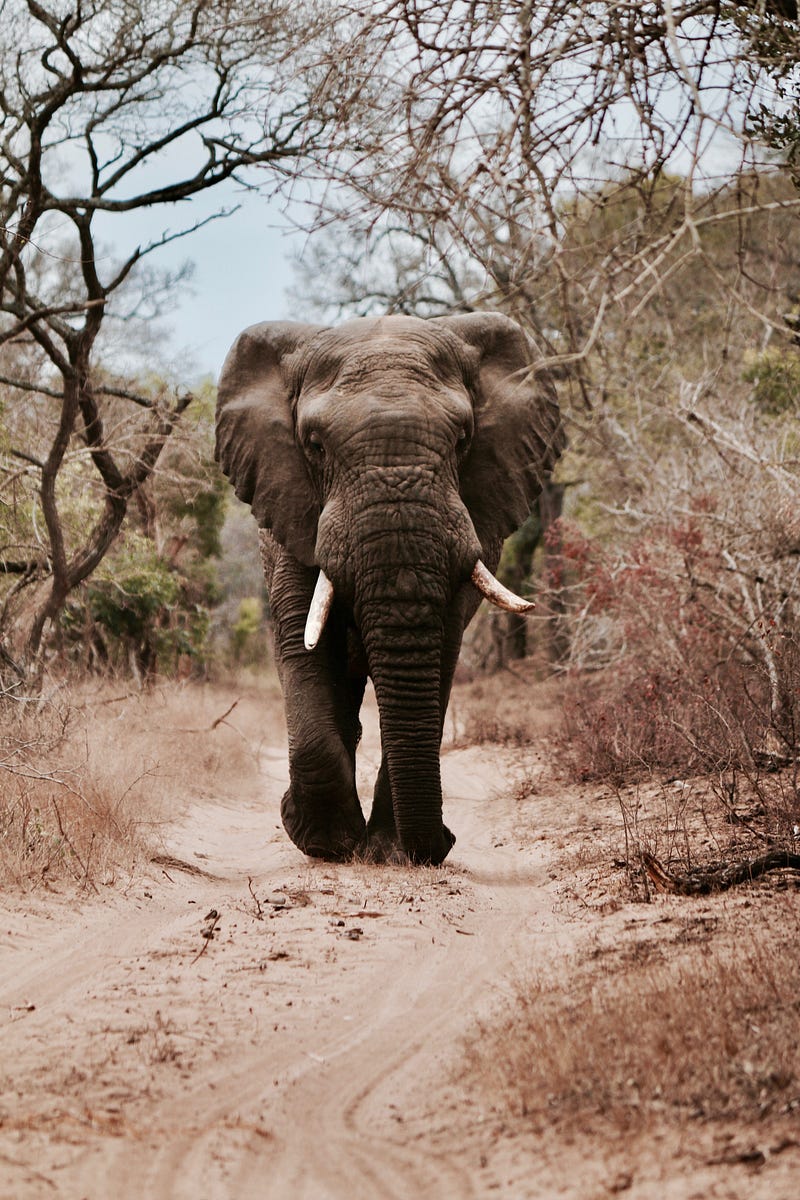
Gaja and his companions stopped in their tracks. Did they hear a car’s engine? There had been no cars in the past several days. Seeing no human activity in the forest, Gaja was leading his people to a safe passage, to greener pastures. The young ones need a safe place to grow up.
Earlier, it used to be greener. From the other end of the big mountain till the great lake beyond the seven streams was all their territory. The rains were used to be better earlier and the greenery that followed provided enough food. It provided a safe path to move and graze for their group.
Things have changed in the last few years. Now, Gaja and his people were forced to raid human villages and eat their crops on occasions. As a leader, Gaja was not proud of it.
Gaja swayed his big ears as he thought of the rectangular buildings that have come up, on patches where previously the forest existed. Humans were taking their homes away. In the last lunar cycle they killed one of his grown sons for his tusk, he bitterly thought; his grief was fresh.
As the sound of the engine became louder, the car came closer to them, following the forest track that connected the watchtower and the highway. Gaja and the herd were close to the track, about to cross it over. Gaja looked at his companions. They understood each other perfectly. They needed to protect their people from humans.
Gaja let out a loud war cry, one that reverberated through the forest. Gaja ran towards the track with his massive, elegant body, his tusks poised forward for the attack. His two companions followed. The rest of the herd waited behind trees.
Shom heard the hair-raising trumpet echoing through the forest. The car screeched to a stop as a panic-stricken Jiten slammed on the brakes. Shom saw the huge tusker running towards them. The elephant’s tusks were unmistakable even in the fading light of twilight He knew that a full-grown elephant could easily overturn a car.
Shom’s throat was dry. Unlike his other field studies, they had no forest guard with him this time. He regretted his decision of visiting the forest without enough preparation. He looked at Jiten, whose face had lost all color. Jiten was touching his forehead, his mouth mumbling a prayer. Both were unsure of a way to save themselves from the wrath of the beasts.
They heard another trumpet from deep into the forest, it seemed to be coming from another herd. The tusker in front of them and his companions looked startled for a few moments as if confused at this unexpected cry. Jiten grabbed the moment and sped the car off the designated forest track through the woods.
Jiten knew this bit of the forest like the back of his hand. Soon, there was some distance between the tusker and the car. They saw the group running behind the car for a few seconds, but soon the car came to a clearing that led to the main highway. The group wouldn’t be able to catch up with the car anymore. Shom breathed, conscious of his racing heart, thankful for being alive.
Gaja and Shom exchanged one last look for the evening from a distance as the car gained distance from the elephants. “This isn’t over; the forest needs to be protected,” each thought to himself, each unaware of the other’s thought.


