
The “Bathing of the Buddha” and the Symbolic Nature of Water
What the Buddha says about rituals and self-purification.
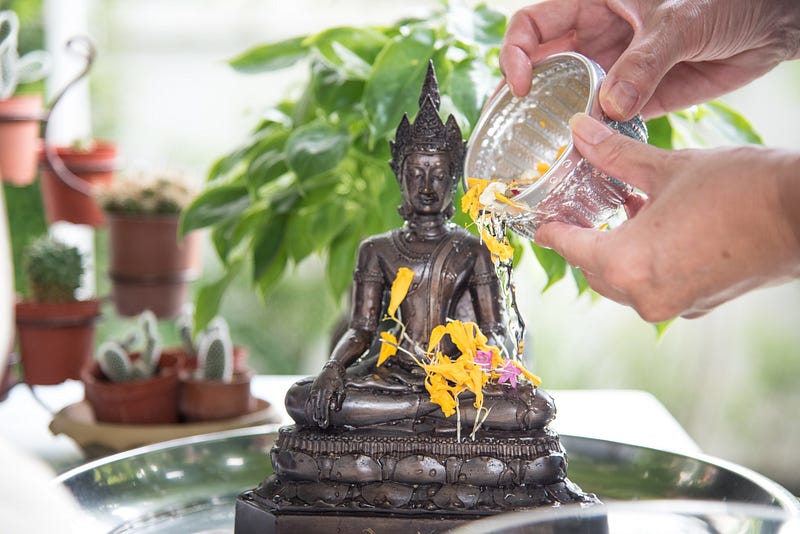
When practitioners pour fragrant water over the image of the Buddha, it symbolizes inner purification and purgation of their sins. The ritual is called “Bathing of the Buddha” and is performed on Vesak day every year by Buddhists and non-Buddhists alike. Not only does the pouring of water embody the calmness and serenity of Buddhism, but it is a reenactment of the Gods showering the newly-born Buddha with rain.
What is Vesak Day?
Vesak Day or “Buddha Day” marks the birth, enlightenment, and death of the historical Buddha, Siddhartha Gautama, born 2,600 years ago. These three life events are said to have each occured on the same day many years apart. Vesak Day is typically celebrated in April or May—the exact date differs by country—and is observed by Buddhists of many traditions and even some Hindus.
Water is Important, but Only Symbolically
Bathing the Buddha on Vesak Day only serves as a ritualized reminder to Buddhist practitioners, just like jumping in a lake or taking a bath alone won’t “wash away your sins” (according to the Buddha). Take the following story for example:
The Brahmin Sundarika Bharadvaja had used the Bahuka river in order to bathe and purify himself. Once seated next to Buddha while he was teaching, the Brahmin asked, “does master Gotama go to the Bahuka River to bathe”?
The Buddha responded, “What good, Brahmin, is the Bahuka River? What can the Bahuka River do?”
“Truly, Master Gotama, many people believe that the Bahuka River gives purification, many people believe that the Bahuka River gives merit. For in the Bahuka River many people wash away the evil deeds they have done,” said the Brahmin.
The Buddha’s explanation is as follows:
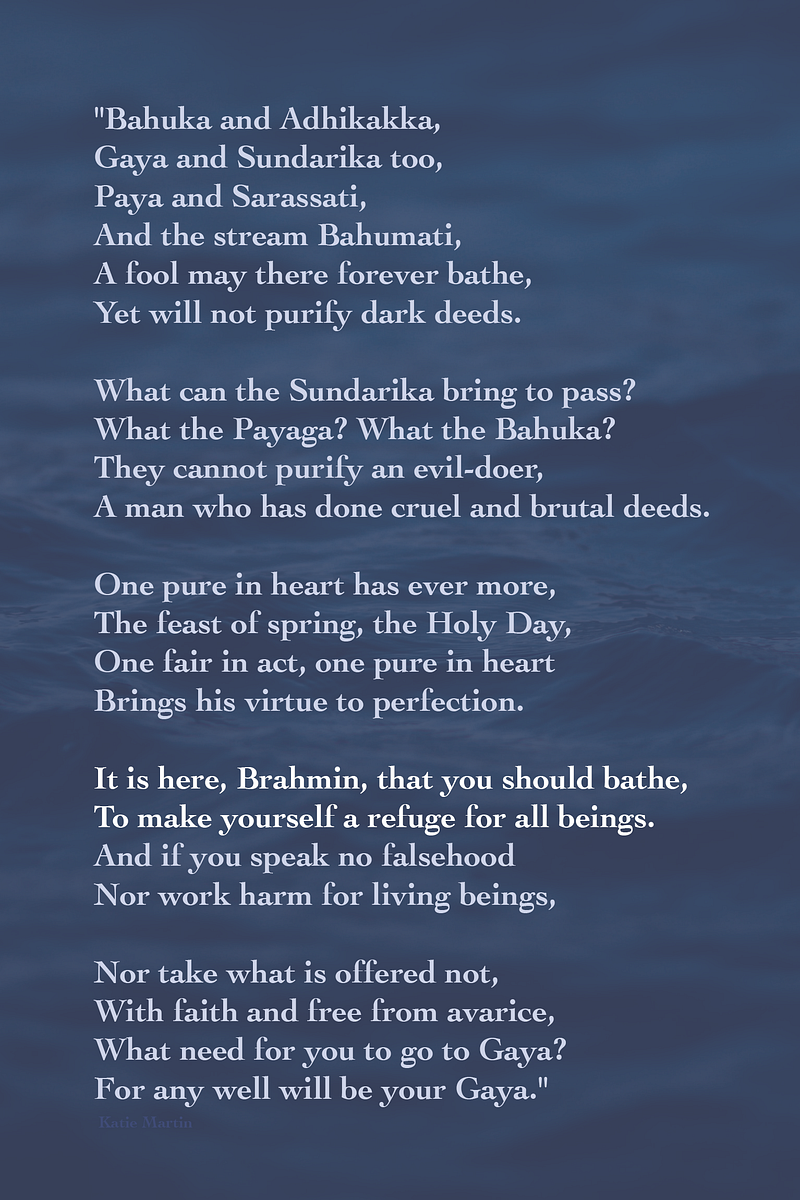
Bodh Gaya, as mentioned in the final stanza, is the place where Gautama Buddha attained Enlightenment and therefore a pilgrimage site. In short, the Buddha is telling the Brahim, “It doesn’t really matter where you’re doing it, you just need to focus on your inner purification first.”
Water as a Universal Solvent
That’s not to say water isn’t cleansing—it is. Water is considered a universal solvent because it can dissolve and wash away most substances. But maybe you have to bring to light your “cruel deeds” on your own first before water can dissolve and remove them (and then hope the chemical make-up of greed, avarice, etc., is that which is soluble in water).
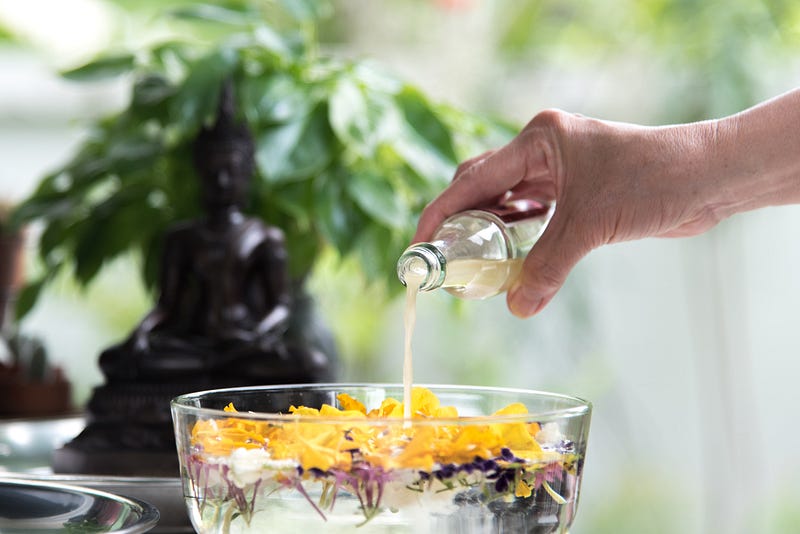
Maybe you can use water by meditating on it’s nature—serenity, flexibility, dissolution—but don’t believe that just taking a bath is the first and last stop. The Buddha also overturned the Brahmin Sundarika Bharadvaja’s belief that there were specific physical places for purification; being so, practitioners may celebrate Vesak Day and perform the “Bathing of the Buddha” at a temple and in front of an alter, but accordingly, as Buddha says, any well will be your Gaya.
“What need for you to go to Gaya? For any well will be your Gaya.”