avatarPatricia Ross

Summary

David's journey after death leads him to discover that the key to heaven or hell is the choice to be selfless or selfish, symbolized by whether people feed only themselves or each other with utensils that are difficult to use.

Abstract

Upon dying, David is initially told by St. Peter that he must go to hell, a place depicted as a banquet where people cannot feed themselves due to long-handled utensils, leading to eternal frustration. However, a mix-up is soon realized, and David is actually meant for heaven. There, he finds a similar banquet scene, but with a crucial difference: the people are happy and well-fed because they use the same challenging utensils to feed each other instead of themselves. This story serves as a parable for the power of cooperation and kindness over selfishness.

Opinions

  • The narrative suggests that the afterlife reflects one's moral behavior on Earth, with selfish actions leading to suffering and selfless actions leading to joy.
  • It implies that hell is not necessarily a place of fire and brimstone, but rather a state of mind characterized by self-centeredness and the inability to help others.
  • The story posits that heaven is not just a reward for good behavior but a continuation of a life lived in community and mutual support.
  • It conveys the idea that small acts of kindness, such as feeding another person, can have profound implications for one's spiritual well-being.
  • The tale critiques the human tendency to focus on personal gain at the expense of the collective good, suggesting that such behavior is ultimately self-defeating.

The Banquet

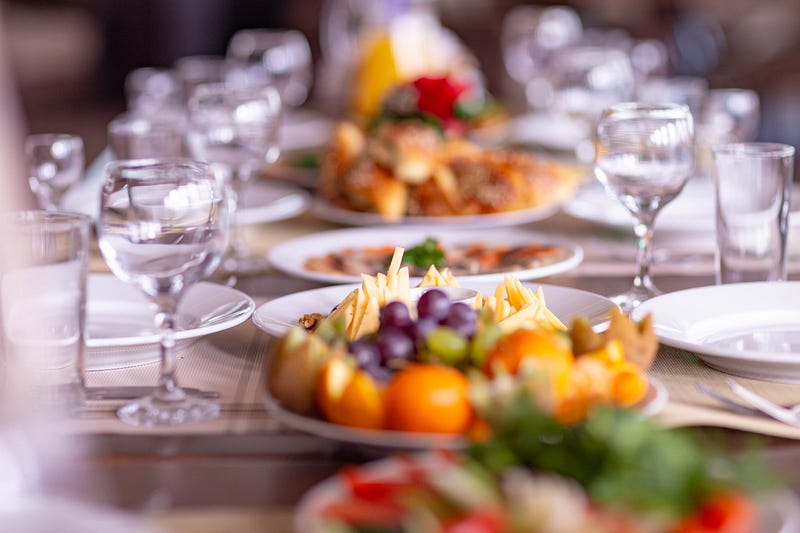
image by Artem Charkin/Shutterstock

David died unexpectedly and found himself at the pearly gates facing St. Peter. St. Peter, looking at what looks like a ledger: “Let’s see, hmmm . . . David, David, David . . . here we go!” “Oh. Doesn’t look so good I’m afraid. Says here that you have to go “Down There.” So sorry.With that, St. Peter calls the Archangel Michael to escort David to “Down There.” David, devastated, knowing that he hadn’t been perfect during his life but certainly never imagining that he’d been that bad, goes with Michael to a place where he faces a very tall elaborately carved wooden door. Upon opening it, he comes upon a large hall with a banquet table laden with food of all sorts: meat, fish, fowl, fresh produce, fruit, pastries, pies and cakes, ice cream of all flavors, fine wines . . . every conceivable food or drink one could want. And seated around the table are hundreds of people, moaning and groaning, weeping and crying. Then he notices: they all have forks and spoons with long, long handles and can’t get the food to their mouths.
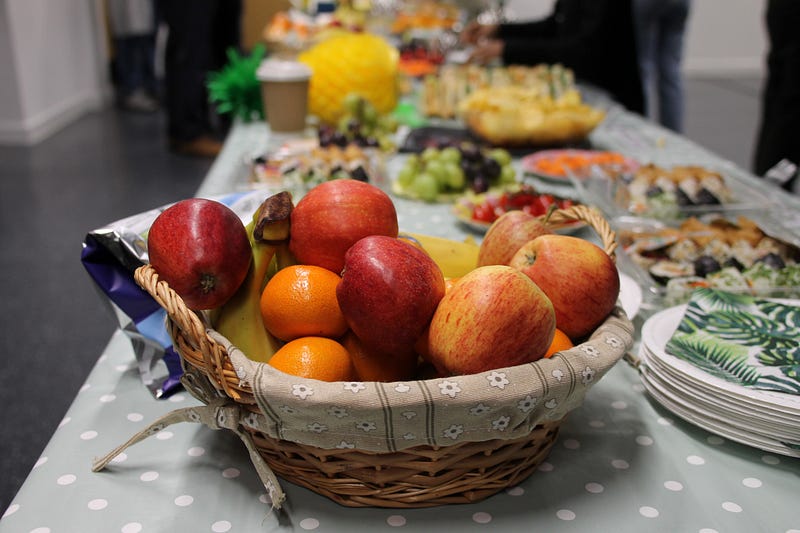
Photo by Jonathan Hunt on Unsplash

As he’s taking in this scene of perpetual frustration, the Archangel Gabriel comes running up crying “Wait! Wait! St. Peter made a mistake! David is supposed to go to the “Good Place!”

And with that Michael closes the tall door and leads David to another very tall ornately carved wooden door, identical to the first one right next to it. Upon opening the second door, David comes upon a scene identical to the first — with a notable difference. In this hall everyone was laughing and happy, drinking and having a wonderful time. Then he notices: even though these people have the same long-handled forks and spoons as the people “Down There,” the difference changed everything. That difference was . . . they were feeding each other!

image by G-Stock Studio/Shutterstock
Life Lessons
Storytelling
Fantasy
Recommended from ReadMedium