
History
The Baffling Tale of Dorothy Eady
The British woman who claimed to have lived in ancient Egypt
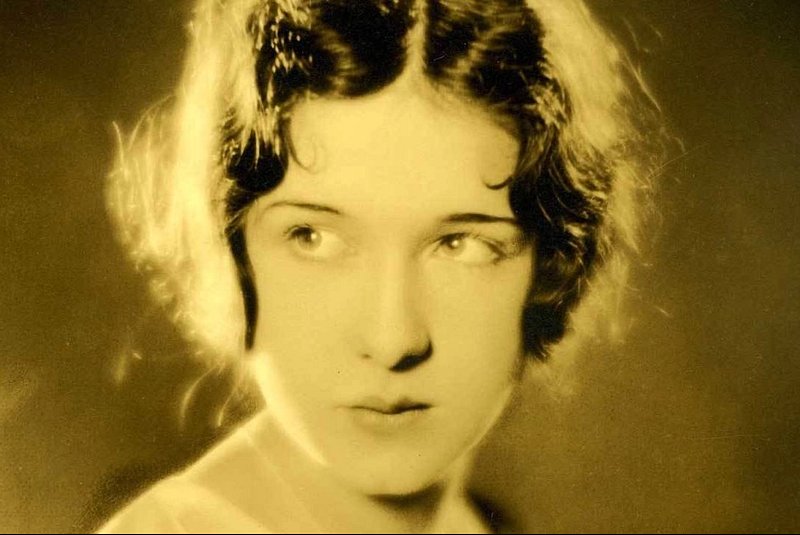
Here’s a historical head scratcher for you. It’s the tale of Dorothy Eady, a 20th-century Egyptologist of some renown. All her life, she claimed to be the reincarnation of a priestess in the cult of Isis — and seemed to have intimate knowledge to back it up. She even knew details that had never been published.
The Childhood Accident that Started It All
Born in London in 1904 to Irish parents, Eady’s remarkable story began at age three. That was when she fell headlong down a flight of stairs in her home and was knocked unconscious. Accounts disagree on what actually happened next. Some say she was pronounced dead before suddenly reviving. Others claim she merely suffered a rare brain injury of some sort, such as foreign accent syndrome.
Whatever the case, the spill forever altered her. For one thing, her speech patterns had noticeably changed. For another, she kept asking her parents to take her home. When they asked where ‘home’ was, the girl couldn’t say. Her mother and father were understandably baffled.
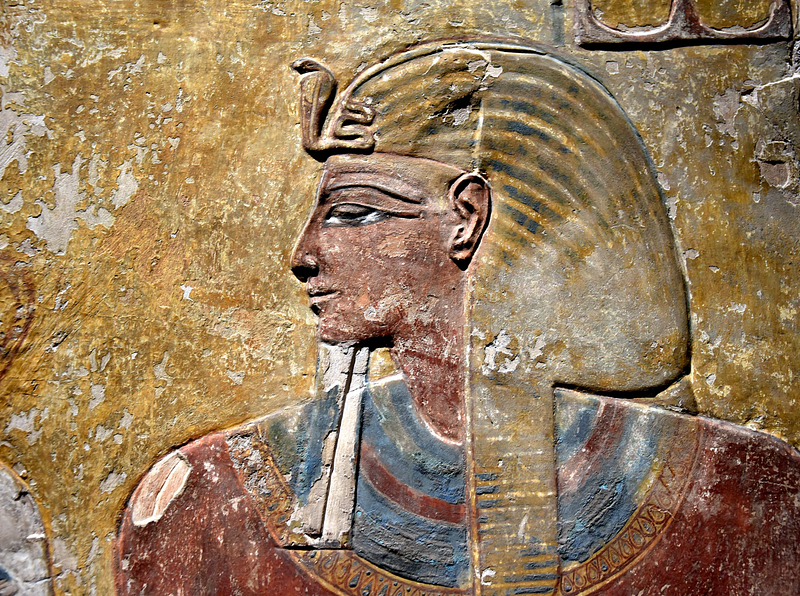
Sometime within the first year of her accident, Dorothy’s parents brought her to an Egyptian exhibit at the British Museum. It is at this point her story truly gets weird. Wandering among the artifacts, it is said she suddenly pointed to a photo and cried, “there is my home!” The image was the temple of Seti I, who was the father of Ramses the Great. The child insisted fervently that she had once lived in that very building, but then noticed that something was missing: “Where are the trees? Where are the gardens?”
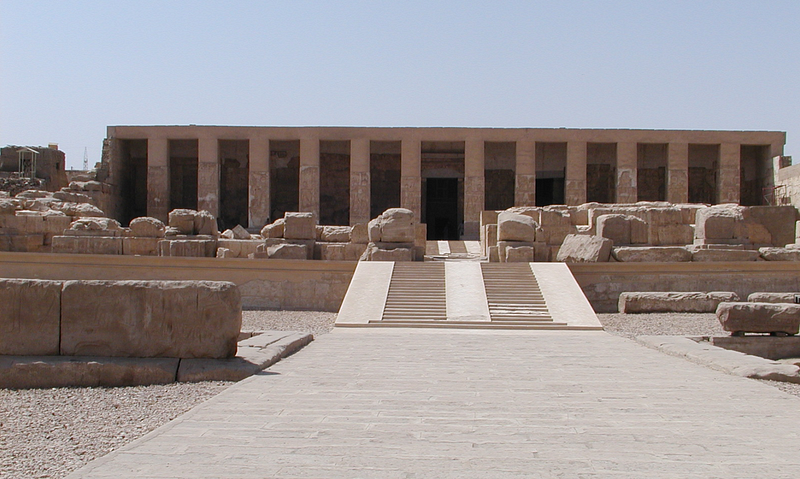
The story goes that Dorothy joyously ran about the Egyptian rooms in the museum, kissing the feet of statues and saying she was now “amongst her people.” Her parents understandably discouraged this talk. But as she grew older, the girl took to visiting the exhibits as often as she could. At some point, she caught the attention of the prominent Egyptologist E.A. Wallace Budge, who encouraged her to learn hieroglyphics.
Her teenage years were troubled, though. One Sunday school teacher, for instance, asked that her parents keep her at home because of her tendency to compare Christianity with Egyptian paganism. The girls school she attended expelled her after she stubbornly refused to sing a hymn that exhorts God to “curse the swart Egyptians.” It is even said she hurled the hymnal at her teacher before storming out of class.
She even had to drop Catholic mass, which by all accounts she thoroughly enjoyed. Her comment that it reminded her of the “old religion” of the pharaohs brought an angry priest to her house. He told her she was no longer welcome in his congregation.
A Troubled Teenager
Her obsession with ancient Egypt only deepened as she matured. At 14, she began to describe her sexual relationship with Seti I. Claiming to have been his lover in her previous life, she even described visions of nighttime visitations in which his mummy came to her bedside and tore away her nightdress. Yet rather than being terrified by these nocturnal hallucinations, the girl was deeply obsessed with them.
At their wits end, Dorothy’s parents committed her to one sanatorium after another. Nothing worked. She simply refused to let go of her beliefs. At sixteen, she finally dropped out of school for good.
But her education was hardly at an end. She now took up part-time studies at an art school in Plymouth, where her father was operating an early movie theater. It was here that she had the opportunity to play Isis on the stage, a role for which she felt a keen affinity.
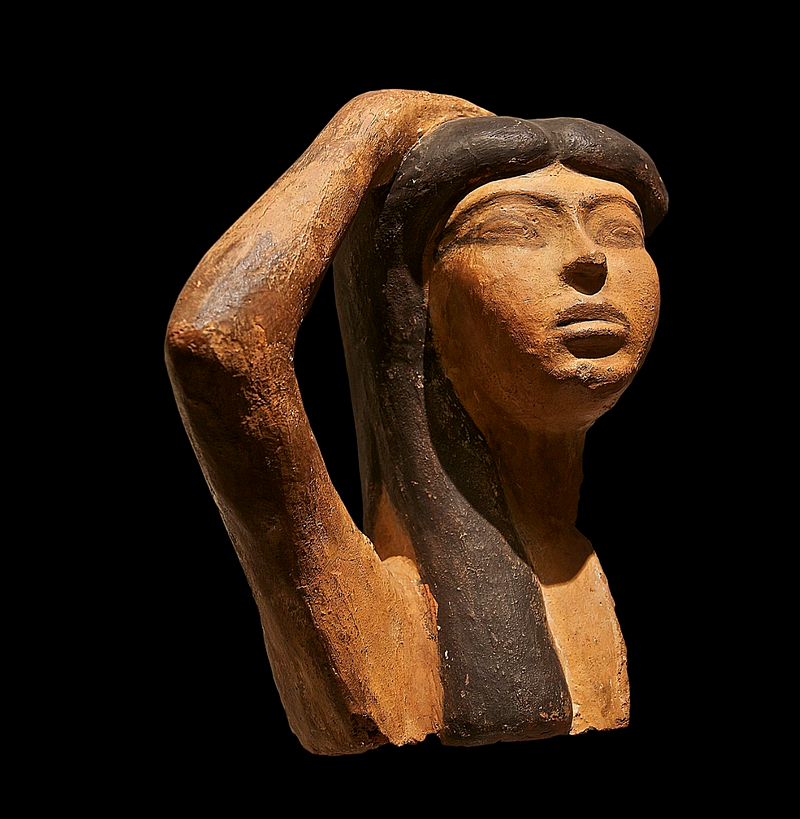
During this period, Dorothy worked out the details of her previous life. She told her parents that nighttime apparitions of the god Hor-Ra dictated it to her over a year-long series of visitations.
Claiming to be the reincarnation of a girl named Bentreshyt, Dorothy described being abandoned at age three and being raised thereafter in the temple of Seti I at Abydos — the very building she had pointed out as a four-year-old. She recounted meeting the pharaoh in the temple gardens while serving as a priestess of Isis. For a priestess of Isis to lose her virginity, though, was a capital offense. After becoming pregnant with Seti’s child, Bentreysh was ordered to stand trial. Instead, she chose to die by her own hand.
Moving to Egypt
The next pivotal phase came at age 27, when she began writing for an Egyptian magazine in London. This was where she met Emam Abdel Meguid, whom she eventually married. Talking up residence in Cairo, she bore her husband a son. Naming him Sety after her long-lost pharaoh lover, she herself assumed the moniker Omm Sety, Arabic for “mother of Sety.”
Things were hardly any easier for her in Cairo, though. She had married into an upwardly mobile family who took exception with her descriptions of pharaonic apparitions and out-of-body experiences. Ultimately the marriage failed, lasting a scant two years before Emam left her and moved to Iraq.
In any event, Omm Sety clearly loved Egypt more than she did him. So she stayed behind in Cairo, raising her son and working as a draftswoman with the national Department of Antiquities. During her tenure there, she published numerous books and articles that are still widely admired.
But plenty of people were also frightened by her, especially the locals. She was known to spend nights alone inside the Great Pyramid of Giza or lay offerings at the feet of the Sphinx. These rituals spooked people and made her the subject of much gossip. In an odd contradiction, she was also widely admired for being so open about her beliefs.
Working in Abydos
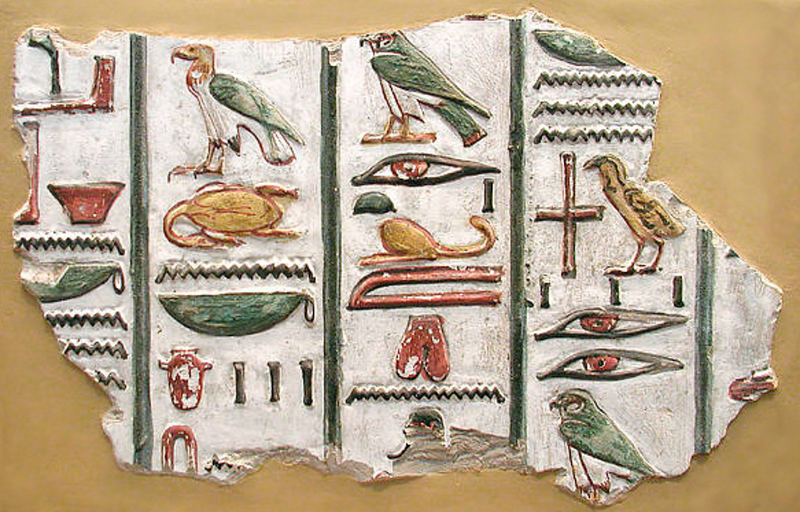
In her fifties, Omm Sety was suddenly given the opportunity to work alongside excavators in Abydos. Naturally, she sprang at the offer. Abydos was the site where Seti I and Bentreysht had become lovers, after all, the very place she had pointed out as a girl of four in the British Museum.
In Abydos, she proved to be of invaluable aid to researchers. Among other accomplishments, she helped them locate the ruins of the gardens she had so long ago described.
Even more uncanny was the exchange she had with the chief inspector from Egypt’s Antiquities Department, who took her to Seti’s temple and tested her claims. Standing there in total darkness, he described a series of wall paintings to her. After each description, he would ask her to walk in the direction of that particular mural. She did so without erring once. The inspector was naturally astonished. The locations of these paintings had never been published.
Spending the rest of her days in Abydos, Omm Sety offered invaluable assistance to the researchers and excavators who frequently came through. She primarily chose to remain there, however, because she said the place brought her a sense of peace. She believed herself to be atoning for the sins of Bentreysht. The opportunity to work with researchers was merely a bonus.
Yet her contributions to Egyptology were undeniable. She had a seemingly preternatural understanding of hieroglyphics and was highly knowledgeable about the local ruins. In 1981, the year she died, she was even featured in a National Geographic documentary entitled Egypt: Quest for Eternity — a fitting name for someone claiming reincarnation.
Death and burial
For all her contributions to Egyptology, including countless essays on ancient folk practices, the locals were still fearful of Omm Sety. She went to her death at age 77 aware that no Christian or Muslim cemeteries would accept her.
With that in mind, she began constructing her own tomb right in her back garden. Naturally, she wanted an underground chamber with a concrete slab. Yet at the last minute health officials intervened, insisting she be given a proper burial. A local Coptic cemetery finally relented, allowing her an unwanted plot out in the arid desert. But no marker was to be placed above her grave. A pile of stones would have to do.
Her anonymous burial marked an unceremonious end to a most unusual life. To this day, some forty years later, efforts to disprove her claims are still underway. Naysayers suspect Omm Sety somehow gained access to unpublished materials and used them to deceive people. And, yes, it is tempting to dismiss her as just another attention-seeking charlatan. But we should probably also remember what Shakespeare has Hamlet say to Horatio: “there are more things in heaven and earth than are dreamt of in your philosophy.”


