
The Badass Who Kicked Open the Door to Workplace Equality
Barbara Walters worked like hell, and the result is a better workplace for us all
As a girl growing up in the 1970s, I had little beyond my bicycle, a library card, and the vague desire to do something big with my life. When the bookmobile parked down the street, I pedaled over and stepped inside.
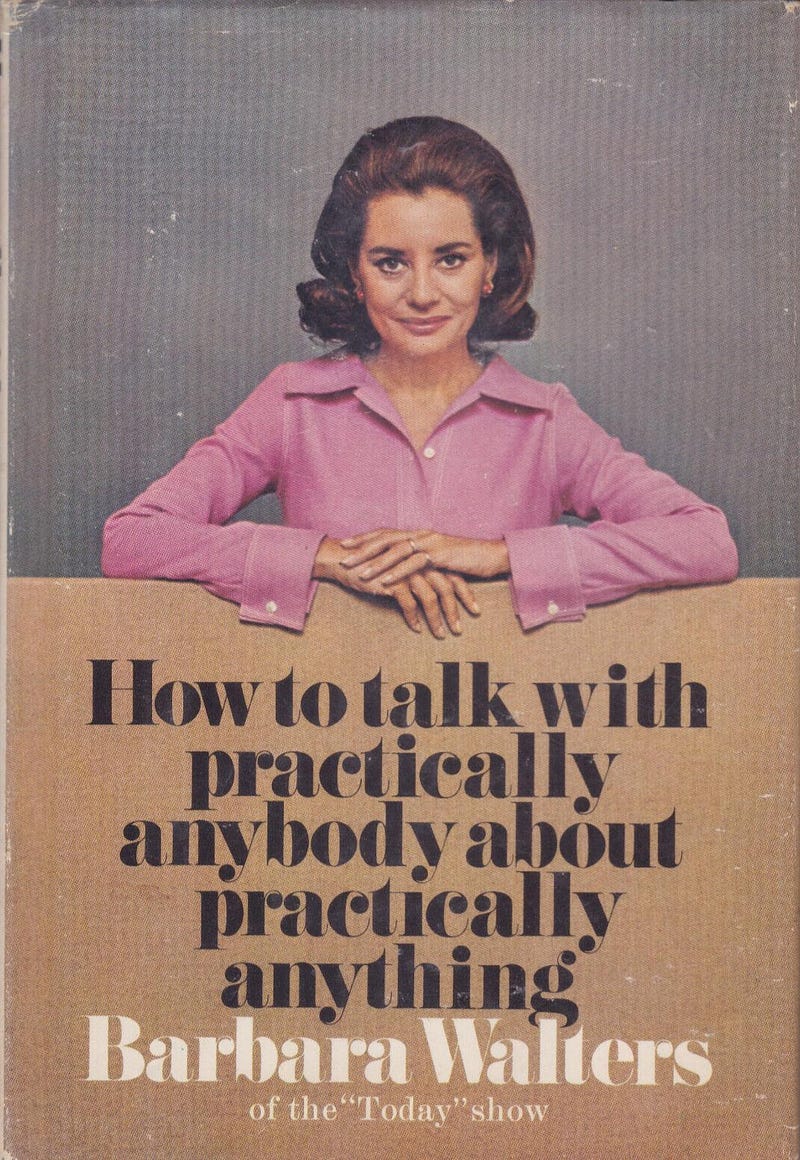
I emerged with Barbara Walters’ 1972 bestseller “How to Talk to Practically Anybody about Practically Anything.” I devoured it from cover to cover, eager to learn the secrets of getting people to open up — especially if you’re “only a girl.”
Even at a young age, I was acutely aware of my second-class status. The boys had sports teams and camping trips and ambitions to become whatever they wanted. Girls had to settle for cheerleading, tending to siblings, and futures as wives and mothers. Or, if unmarried, maybe a nurse or teacher.
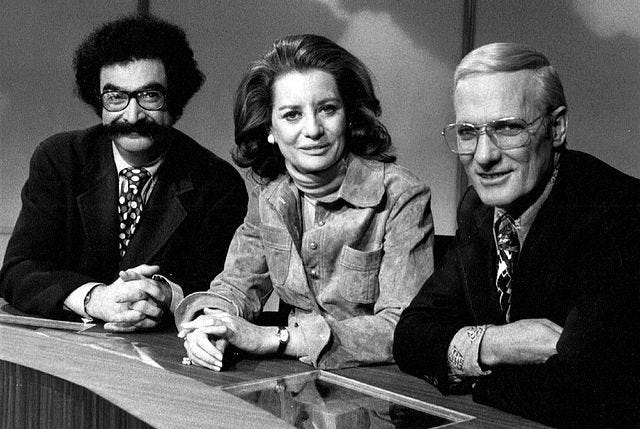
The inequality stung. But Barbara seemed above it all. I’d watch her on the “Today” show, sitting across from Harry Reasoner, who always acted like he was doing her a big favor by allowing her to breathe the same air.
And I thought, Give ’em hell, Barbara. Someday I’ll be just like you.
At the beginning of her career, Walters was a writer on NBC’s “Today” show. It was a tough time to be a woman in television news. Male coworkers openly joked about “getting the broads out of broadcasting.”
Walters was relegated to covering “women’s interest” stories such as fashion and gardening. Despite being in her 30s, she was referred to as “The Today Girl.”
But Walters wasn’t deterred. She worked hard, and her stories were so popular that she was promoted to co-host, sitting alongside veteran newsman Frank McGee.
She was now in the “big leagues.” But things were hardly easy. When interviewing guests on the show, McGee insisted on asking the first three questions — a tactic designed to keep Walters in her place and demonstrate who was “really in charge.”
Walters was annoyed but didn’t take the bait. She stayed focused on her work.
This paid off. Two years later, she was again promoted — this time to co-anchor the ABC Evening News with Harry Reasoner.
But Reasoner turned out to be no better than McGee. He also despised sharing “his” desk with a woman. It was no surprise that two years later, Walters was fired.
Walters was at a low point in her life when a telegram arrived. The message was simply “Don’t let the bastards get you down.” It was sent by John Wayne.
Encouraged, Walters pivoted, landing a series of interviews on “20/20” and on her own specials. Over the course of her 50-year career, Walters emerged as one of television’s most powerful and influential figures.
Barbara Walters scored many marquee interviews. And she never shied away from asking the tough questions.
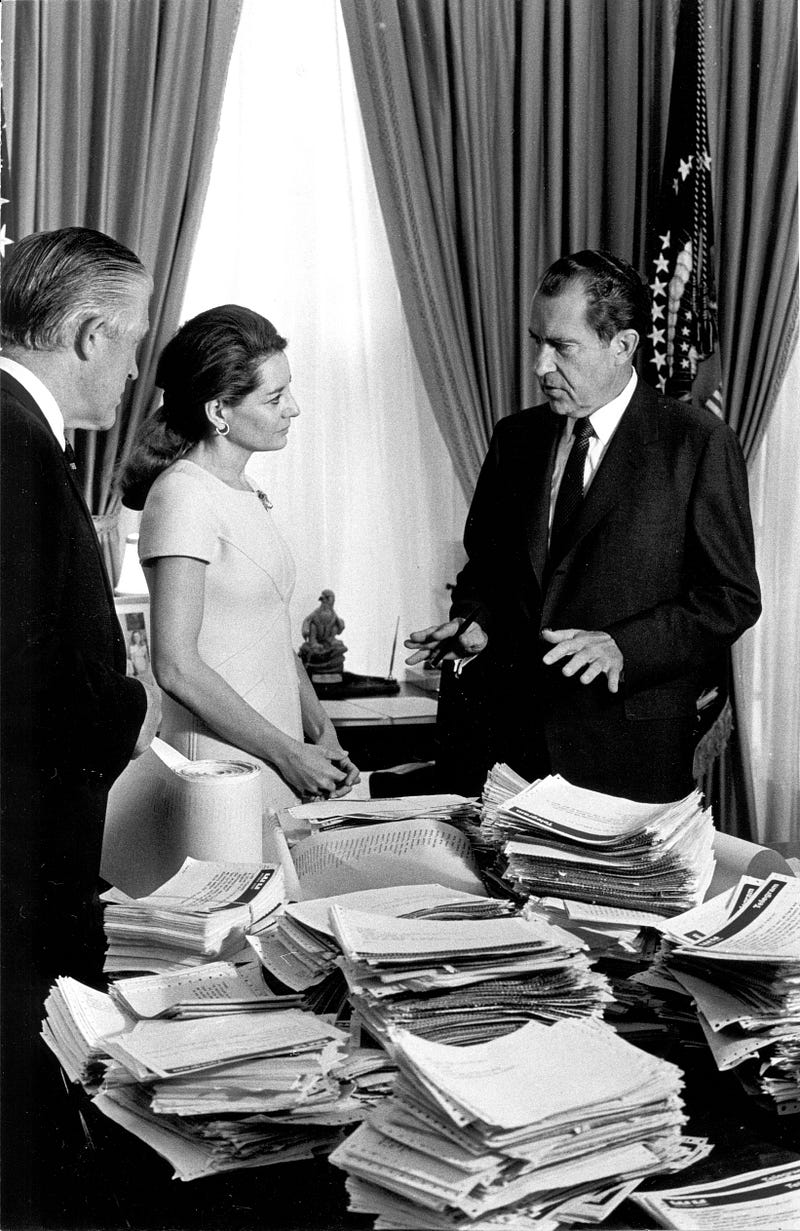
She asked President Richard Nixon whether he was sorry he didn’t burn the Watergate tapes. (He said yes.) She also asked Barbara Streisand why she never got a nose job, and Monica Lewinsky whether Bill Clinton was passionate in bed.
Why did everyone open up to Walters? Simply, people understood that while she was tough, she was also honest and fair-handed.
Unlike the good ol’ boys — who openly disdained women, but could also aggressively turn on each other — Walters never stooped to corporate game-playing.
While the good ol’ boys ogled the secretaries and enjoyed three-martini lunches, Walters studied her subjects backward and forwards. She never gave up. She worked like hell.
The passing of Barbara Walters underscores the seismic shifts she helped bring to the working world. While there were no women in broadcasting when she began her career, today they’re on virtually every station.
Likewise, women occupy leadership positions in most industries. For the first time in the Fortune 500 list’s 68-year history, more than 10% of Fortune 500 companies are led by women.
Walters helped make this possible. She pursued her career dreams when they were considered unladylike. She put up with ridicule, derision, and outright sexism.
By taking these hits, she paved the way for us all to pursue our career ambitions, regardless of gender.
I know how hard taking those hits must have been. During my own long (and much-less spectacular) career, I found myself sitting in many newsrooms and boardrooms as the sole female.
Most times, my male colleagues were cordial. But even when they weren’t openly baring their teeth, being different made a challenging job even harder.
More pertinent: I wouldn’t have even been in those rooms… had Barbara Walters not shown me the way.
Rest in peace, Barbara Walters. You kicked open the door of opportunity for so many working people.
Unlike those who tried to sabotage you and keep you from succeeding, you did your job with poise, talent, and persistence. And you didn’t even have to sleep with the boss.
Thanks for the inspiration.
If you enjoyed this story, come join my free mailing list. Read more from me here: