
The Ayodhya Verdict
Nov 9, 2019: The day witnessed the entire nation waiting with bated breaths for the commonly known Ayodhya verdict or, to be more precise, the judgement of the 140-year-old Ramjanmabhoomi dispute.
Historically, the year 1949 saw the earliest flare-up of communal tension between the two communities, Hindus and Muslims when idols of Ram were placed inside the mosque with both communities approaching the local authorities.
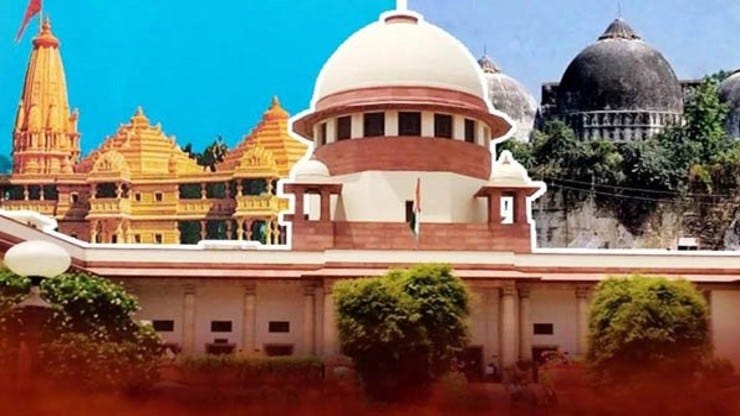
Subsequently, four events took place in 1950, 1959, 1981. In 1950, a petition was filed by Gopal Visharad to worship Ram Lalla and in the same year, another individual Paramahansa Das filed a petition to keep the idol for further continuation of the worship. In 1959, a Hindu sect called Nirmohi Akhara filed a suit claiming possession of the site. In 1981, the Uttar Pradesh Sunni Waqf Board filed an affidavit of the site.
Post the Babri Masjid demolition Dec 6, 1992, the Allahabad High Court started its hearing in 2002. In 2010, the Court ruled that a third of the site will go to the Hindu Mahasabha and Nirmohi Akhara each and the remaining to go to the Sunni Waqf Board which the parties appealed against in 2011 which the SC squashed.
This is a brief description of all that happened regarding the Ramjanmabhoomi dispute and a critical analysis of all these events is imperative before going into the mediation events that were tried with regard to the dispute. Even against the backdrop of miserably unsuccessful mediation attempts that happened from 1992, 2017 in 2019, yet again the SC appointed a three-member panel as a last resort of truce between the communities with their own rights and justifications. The panel consisted of Retired Judge FM Khafiullah, advocate Sriram Panchu and spiritual guru Sri Ravishankar.
After all the mediation attempts, on the 9th of November, the five-judge bench consisting of CJI Ranjan Gogoi, Justice SA Bobade justice DY Chandrachud Justice Ashok Bhushan and Justice SA Nazeer declared its verdict of letting the construction of the temple in the site and allocating an alternative five acres of land to the Sunni Waqf Board to build the mosque.
This is rather a very diplomatic move of the judiciary in ensuring that it puts forth an apparently effective solution to the flared up the bickerings between the two communities in question.
The site is traditionally considered by Hindus to be the birthplace of the Hindu God- Lord Ram and the presence of an idol of Lord Ram inside the ‘mosque-temple’ led to the earliest tension between the two communities who till then prayed together in the ‘mosque-temple’. The Muslims prayed inside while the Hindus prayed outside.
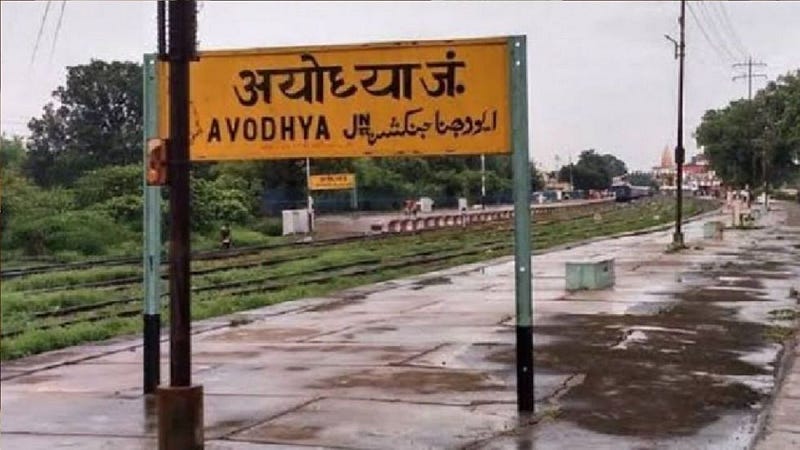
There also remains the fact that there was a 12th-century idol and this was found after the demolition and also the fact that Muslims used to offer namaz, till 1857.
It would be an immaturely partial opinion to say that the so-called acknowledged right of the Muslims has not been taken into consideration into the very Supreme Court judgement which is being lauded for its unanimous attempt at communal peace. This is because there is nothing constitutionally loopholed in this 1045 page judgement which relies on the ‘preponderance of probabilities which is the standard proof in civil law. Also, the responsibility of proving the exclusive right of the Muslims over the inner portion of the ‘mosque-temple’ was laid with the side of the Sunni Waqf Board which could not be eventually proved.
The absence of any unconstitutional element which provides masked support to the majoritarian forces in the country, itself provides ample proof for the fact that the Supreme Court judgement is based not alone on sound rationale, but also has taken into consideration the actual requirements of namaz that clearly shows the non-necessity for a specified place of worship.
On the other hand, this judgement of the Supreme Court should put a mark on all the forces of the country seeking to carve out their own ballot boxes out of the religious sentiments of the people. The religious aspirations should be fulfilled but vain promises that exploit the sentiments of the people should be given a tough reminder through this judgement. And in a fast-shaping liberal society where secularism is turning anti-majority, the Ayodhya verdict has carved another edge for itself by upholding the argument of faith of the millions of Hindus, that a single place can be considered as Ramjanmasthan. This should not be deliberately interpreted as the judiciary is subservient to the political majority of the country and any such malicious misinterpretation should come under the strict category of contempt of court.
The Shia Waqf Board had welcomed the verdict but the issues still remain in the Sunni Waqf Board and Muslim Personal Law Board where the latter is being prepared to approach the court with a review petition.
And, in a developing nation like India, it is needless to say that the trust formed for the construction of the temple should be free of all hardcore groups keeping in mind the likely occurrence of other rifts and sparks at a time when things are apparently at their cool now. It was a great surprise to know that the situation after the verdict was peaceful, making the efforts taken by law enforcement authorities a success.
The cultural diversity of our land was a marvel even in the past too. But in the 21st century, preserving and upholding this very cultural diversity should not be at the cost of suppressing the voices of any particular community alone.
Disclaimer: We are a platform which allows all views to be represented without bias or discrimination. This piece is not to be judged upon as the final of MUNner’s daily or MEC MUN Society.
Also Read-
.
.
.
Follow us on medium for more for similar stories. Follow us on Social media to stay in the loop- Facebook| Instagram|Telegram Channel |Youtube|Twitter. We also invite guest writers to publish their material via this blog!


