
The Authentic Path to Acquiring Your First Bitcoin
Today, I’m going to tell you how to acquiring your first Bitcoin
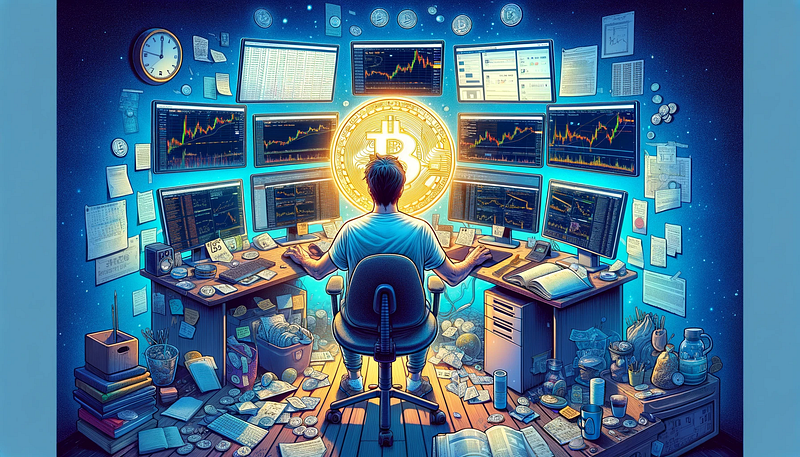
You might’ve heard that Bitcoin is a bubble, a scam, a flash in the pan. Some say it’s the currency of the future. Maybe you’ve seen the stories of people making millions overnight, or losing it all in a forgotten hard drive.
Today, I’m going to tell you how to acquiring your first Bitcoin.
Step 1: Deep Dive into the Bitcoin Universe
The inception of Bitcoin marked a paradigm shift in the realm of currencies.
First conceived in a whitepaper by an anonymous entity known as Satoshi Nakamoto back in 2008, Bitcoin became the first-ever cryptocurrency, taking the financial world by storm.
The essence of Bitcoin lies in its decentralized nature, made possible by a revolutionary technology known as blockchain. This technology empowers peer-to-peer transactions without the involvement of centralized authorities like banks.
Diving headfirst into this world might seem overwhelming, but I assure you, it is a journey worth taking.
Start by reading Satoshi’s whitepaper — it is surprisingly accessible and provides a foundational understanding of Bitcoin’s workings. Do remember, even the best of us needed time to comprehend the whitepaper’s intricacies.
Augment your knowledge by immersing yourself in the vast ocean of resources available online.
Websites like Bitcoin.org, CoinDesk, and CoinMarketCap provide a wealth of articles, guides, and news about Bitcoin and other cryptocurrencies.
Podcasts, like the Bankless podcast, are an excellent way of keeping in touch with the latest developments and expert opinions in the crypto-sphere.
Once you have a solid understanding of Bitcoin and its significance, it’s time to set up a Bitcoin wallet.
A multitude of options are available for wallets, including but not limited to Coinbase, Binance, and Exodus. These wallets will not only store your Bitcoin but also facilitate the sending and receiving of Bitcoin.
From here on, the journey only gets more exciting.
Be aware that exchanges like Binance or Coinbase store your Bitcoin for you. And hold them.
If you don’t have your wallet’s private key, you don’t own the Bitcoin and are likely to lose it. (e.g. FTX)
Step 2: Earning Bitcoin
There are several ways to earn Bitcoin, and how you approach it will depend on your risk tolerance, resources, and interest level.
Here’s a breakdown of the main methods:
- Buying Bitcoin: This is the most straightforward method. You simply go to an exchange, like Binance or Coinbase, and buy Bitcoin with your local currency. How much you can buy will depend on the current market price, which fluctuates.
- Mining Bitcoin: Bitcoin mining involves using computers to solve complex mathematical problems, helping to secure the network and validate transactions. In return, miners are rewarded with Bitcoin. However, mining is increasingly competitive and requires a significant upfront investment in hardware and ongoing energy costs.
- Earning Bitcoin: Some companies, both online and physical, offer payment for goods or services in Bitcoin. Websites like BitWage can help you receive part of your salary in Bitcoin, while services like Lolli give you cashback in Bitcoin for shopping.
- Microtasks or Bitcoin faucets: These are websites or apps that reward you in Bitcoin for completing small tasks, like filling out surveys or watching ads. It’s a slow method, but accessible to most people.
- Trading: This involves buying and selling Bitcoin, or other cryptocurrencies, on an exchange to take advantage of price fluctuations. It’s similar to stock trading and requires understanding market trends and taking on a higher level of risk. I really do not recommend this option. Trading is for professionals.
Step 3: Protecting Your Bitcoin
Congratulations! If you’ve reached this stage, you’ve managed to acquire some Bitcoin — a notable achievement in its own right.
Now comes an equally important task: securing your digital treasure.
Given the anonymous and irreversible nature of cryptocurrency transactions, they are tempting targets for cyber-thieves. Remember, once stolen, retrieving your Bitcoin is a near-impossible task.
That’s where the choice of a wallet comes into play, or more specifically, the choice between a “hot” and a “cold” wallet.
These two types of wallets represent different levels of security and accessibility, each suited to particular needs.
A hot wallet is connected to the internet and allows easy access to your Bitcoin for transactions.
The convenience factor is high — you can send and receive Bitcoin at a moment’s notice, which is particularly useful if you’re actively trading or using Bitcoin for daily transactions.
However, the flip side is that hot wallets are more vulnerable to online threats like hacking and phishing attacks due to their internet connectivity.
Cold wallets, on the other hand, are completely offline — hence the term “cold”.
They are immune to online attacks as they physically store your Bitcoin’s private keys on a hardware device, like a specialized USB stick. Cold wallets provide the utmost level of security and are ideal for storing large amounts of Bitcoin that you don’t need to access frequently.
One popular cold wallet option is the Ledger wallet.
So, should you go hot or cold? It really depends on your personal needs and the amount of Bitcoin you’re dealing with. If you’re actively trading or spending your Bitcoin, a hot wallet’s convenience might make sense.
However, if you’re in it for the long haul and security is your prime concern, the cold wallet is your best bet.
In essence, think of it as balancing a seesaw — with convenience on one side and security on the other. The key is to find your sweet spot on this spectrum, ensuring that your Bitcoin journey is both enjoyable and secure.
Step 4: HODLing
“HODL” is a term in the Bitcoin community that means holding onto your Bitcoin instead of selling it. The idea is that, over time, the value of Bitcoin will increase.
One thing I’ve learned with Bitcoin is the importance of patience. Bitcoin’s price is highly volatile, and it can be tempting to panic sell during a crash or get caught up in the hype during a bull run.
But my strategy has always been to HODL, and it’s paid off in the end.
Conclusion
So, how do you get one Bitcoin?
Understand it, earn it, protect it, and then hold onto it.
Keep in mind that it’s not easy, and it’s not without risks.
Never invest money you’re not prepared to lose.
Getting one Bitcoin is a journey, and like any journey, it’s filled with ups and downs. It’s not for the faint of heart, but if you’re willing to take the time, learn, and be patient, it’s a journey worth taking.
Remember, Bitcoin isn’t just a get-rich-quick scheme; it’s a technological revolution, a new form of money, and potentially, a key piece of our financial future.
- Bitcoin: A Peer-to-Peer Electronic Cash System (Whitepaper)
- Bankless Podcast
- CoinDesk
- SEC Charges Samuel Bankman-Fried with Defrauding Investors in Crypto Asset Trading Platform FTX
Enjoyed the read? For more on Web Development, JavaScript, Next.js, Cybersecurity, and Blockchain, check out my other articles here:
If you have questions or feedback, don’t hesitate to reach out at [email protected] or in the comments section.
[Disclosure: Every article I pen is a fusion of my ideas and the supportive capabilities of artificial intelligence. While AI assists in refining and elaborating, the core thoughts and concepts stem from my perspective and knowledge. To know more about my creative process, read this article.]