The Auteur: An Independent Filmmakers Publication
INTRODUCTION
Click here for: Business Model of Film Theory & Film Criticism Publication THE AUTEUR: An Independent Filmmakers Publication
(NOTE: This essay on Independent Filmmaking was written on November 14, 2019, so before COVID-19, but the message stands even stronger now. It will be published in April, 2020. All Rights Reserved)
The Auteur: An Independent Filmmakers Publication
The Auteur: An Independent Filmmakers Publication, to be launched shortly on Medium at medium.com/@theauteur, will be a Film Theory & Film Criticism Publication by Film Organization The Auteur.
The investigation into the State of Independent Filmmaking, and the fact that it is still relevant as an Art Form today, is the main reason why I am launching the Film Publication The Auteur.
I’d like to contribute a few potential solutions to ensure its’ survival.
I’ve been building the idea for a Nonprofit Film Organization very gradually in order to establish a particularly strong organization to cater to and aide in the specific issues pertaining Independent Filmmakers.
For the last several months I’ve also been writing out and filming my thoughts on independent filmmaking, including an actual Manifesto for a new Independent Film Movement.
(See: A 4-Point Manifesto for a new Independent Film Movement.)
Some of the footage will be used in my feature documentary The Queer Case for Individual Rights, (which I’m preparing a work sample for right now as well.) And some of it will be posted online in the form of several short videos, specifically for the launch of Film Organization’s The Auteur, website theauteur.org, and its’ Film Publication on the writing platform Medium at medium.com/@theauteur
I don’t want to say too much about the actual contents of the videos, other that than I’m talking about a pretty thorough examination of independent filmmaking and where we can realistically take it from here, if we want it to survive at all and be an accessible alternative to a film industry largely dominated by big budget American superhero entertainment.
As much as I had wanted to include short, original video content as part of a media site, I came to the conclusion that this would prove complicated.
I do really like the idea of short videos though, and would allow for Video Essays about Independent Films and Filmmakers to be posted on the film organization’s website theauteur.org, although I would not be able to pay you for Video Essays. (You would always retain the rights to your work.)
(NOTE: This entire 6-part article was written before COVID-19 started, and if prolonged self-isolating periods will become a part of our future existence, the creative needs of the Publication might change and evolve as well, so there could be room for video expansion in the future as well.)
So I returned to the original idea of a Film Writing and Film Criticism online magazine Publication for Independent Filmmakers, through the writing platform Medium and their Medium Partner Program, which actually pays writers.
I definitely want to include focussing on Film Theory in this film publication as well, beyond writing Film Reviews and articles about Filmmaking and Film Business, as the current state of independent filmmaking is in such an unstable and dwindling state that I find it absolutely necessary to go back to reframing what independent filmmaking actually is supposed to be, through a variety of film essays, and including an actual film manifesto I have created.
Please do note though that I am exclusively interested in Independent, Low-Budget Filmmaking, that is Independent, as in made without any studio control, and Low-Budget, meaning well under what Hollywood generally deems acceptable spending, and Filmmaking, as meaning mostly feature length narrative and documentary.
And when I say “what independent filmmaking is supposed to be” I mean Filmmaking as Art, and as opposed to Entertainment, (and not to say art cannot entertain.)
I want to talk about the actual Function of Art, Psychologically and Philosophically, as it has existed for as long as human history, and has simply evolved to include filmmaking.
I want to talk about the Role of the Filmmaker, as Artist. And I want to talk about this in general, and also specifically as it applies to Independent and Personal Identity Filmmaking.
The ORIGIN STORY
The ORIGIN STORY for this Filmmaking Publication came out of a nearly 30 year struggle to get my personal story of a trans-masculine, gender nonconforming independent filmmaker and bi-racial immigrant from the Netherlands to the screen in the face of serious adversity in Hollywood and the US at large.
As someone who grew up in Europe the idea of filmmaking as on some level being independent came rather natural. In fact, working independently, as any kind of concept at all, in Europe in my mind was associated with the post-war film movements, Italian Neo-Realism, the French New Wave, British Kitchen Sink, etc. They were a genius bunch, Rossellini, Visconti, De Sica, Godard, Truffaut, whose talent even I at my young age recognized but they were ultimately from a very different time and I couldn’t quite find a film equivalent in my own time.
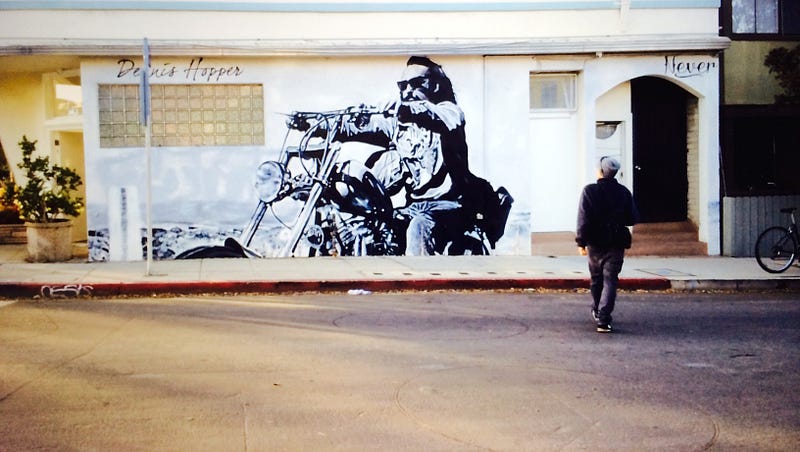
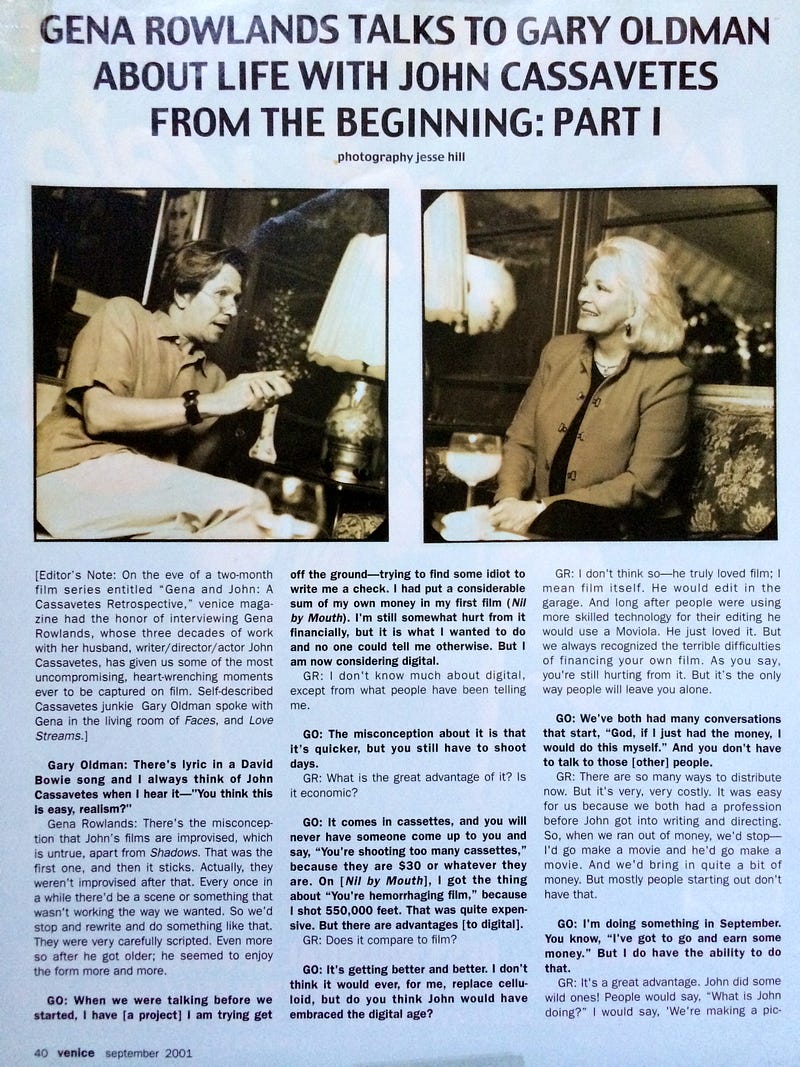
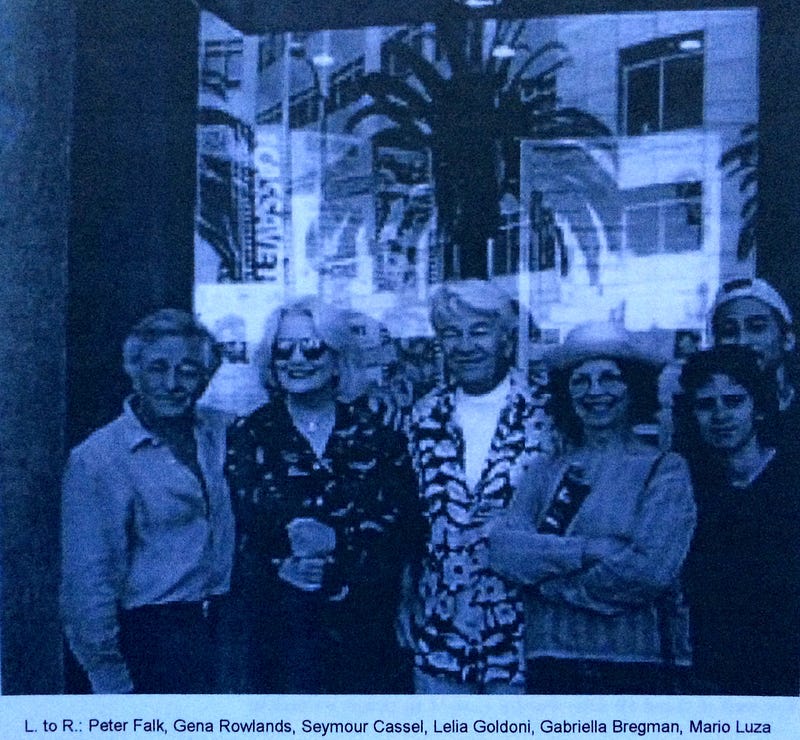
The American filmmakers from mostly the 1970s New Hollywood, Terrence Malick, Dennis Hopper, Francis Coppola, Martin Scorsese, Shirley Clarke, and the man who started it all, John Cassavetes, came the closest in my mind to having something of a “career,” the way I started envisioning things for myself. In the late 80s and early 90s a new crop of filmmakers started making names for themselves and I started gravitating towards Gus Van Sant’s ‘Drugstore Cowboy,’ Soderbergh’s ‘Sex, Lies, and Videotape’ and Spike Lee’s ‘Do the Right Thing,’ the possibility of being a filmmaker seemed real for the first time in my life.
But a studio system like the one in Hollywood, with a complete marketing machine towards “fame and fortune” in place, simply doesn’t exist elsewhere, and with no real system in place the idea that you could actually make a living as a filmmaker, a decent enough living you would never require another 9 to 5 in your life, simply didn’t seem feasible in the Europe of the 1980s I grew up in.
I figured if I stayed in the Netherlands I would end up getting stuck in a regular job and a family life that offered no meaning to me personally and was actually highly gendered to top it off, the very idea of it all triggering my social gender dysphoria increasingly the closer it came to entering the workforce.
So in 1992, at age 19, I immigrated to the US by myself, through enrollment in Film School in Los Angeles, and just in time to live through a new independent filmmaking era.
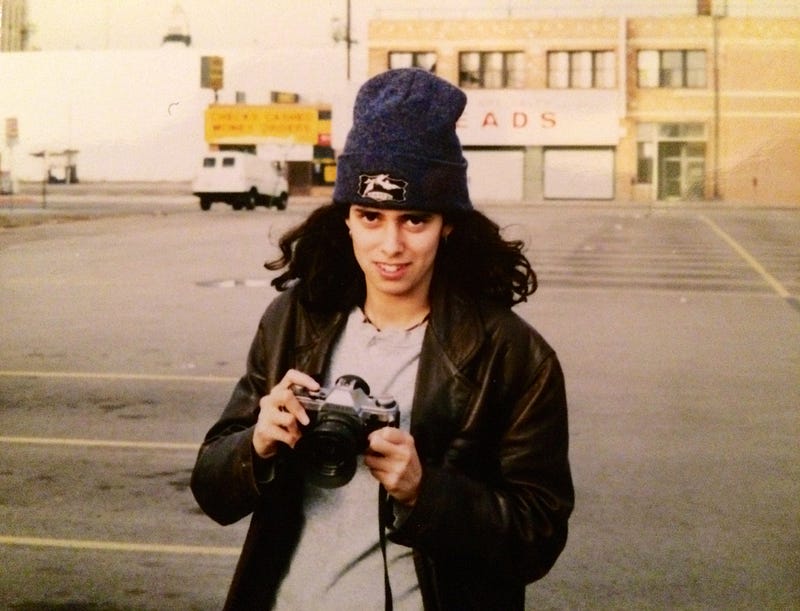
I was in the right place at the right time, with all the energy and passion and ambition in the world, intent on making my own “Easy Rider,” my own “Midnight Cowboy,” “Badlands,” “The Killing of a Chinese Bookie,” my “Taxi Driver,” my “Dog Day Afternoon,” gradually finding my voice and honing my skills over the years, and yet nothing was truly paying off ever, and certainly not financially.
In fact, I seemed to be getting further removed from my initial goals the harder I pursued them. People simply didn’t understand my filmmaking goals at all, even in the right town, and closed the doors on me every step of the way.
They kept stumbling over two very distinct issues, as I came to gradually understand, and they ultimately tied into two very familiar phenomena, sexism and racism.
The first issue was the sheer disbelief I was a writer and a filmmaker at all, based on my perceived gender.
Now most women in general do not view themselves as some female alternative to a “male” profession, in the way that they don’t call themselves female teachers or female bus drivers or female lawyers, but for a trans-masculine person like myself, who has felt and behaved and dressed male their whole life, this was particularly confusing and frustrating and off-putting.
It is still taking me a lifetime to convince people transgenderism is ultimately a hormonal and genetic condition, predetermined, with a biological basis, even though science is increasingly backing me up.
But in that process I have certainly discovered the meaning of misogyny, and the peculiar way this is used against trans-men in particular, to dismiss our masculinity by insisting we must feel female somehow, and therefore submissive and inferior even.
So my very ambition and motivation for moving to Hollywood as a lifelong artist came into question by the US.
The second issue was the sheer disbelief I was a writer and filmmaker at all, based on my perceived race.
Obviously there is no valid reason to assume that Latin people couldn’t be talented writers and filmmakers to begin with, but as a Western European, a Dutch Citizen of Indonesian-Dutch descent on my mother’s side as a result of Dutch colonization of Indonesia in previous centuries, I clearly started recognizing the racism in Hollywood with every Latin stereotype that came my way.
Racial, and gender identity, profiling, the questioning of my actual legitimacy in the US based on physical appearance, became a real thing in my life the longer I was living here. And so my whole reason for immigrating to the US, and so the manner by which as well, came into question by the US.
The message behind all of this racism and sexism, and by extension homophobia and transphobia, was very clear; a person who looked and acted like me should not be in working in the Hollywood film industry, or working in the US at all for that matter.
After years of experiencing of anti-immigration rhetoric and LGBTQ discrimination in the US myself, the OscarsSoWhite and the MeToo movements really brought it home that this was not a unique and personal problem of mine but one that affected every minority in Hollywood, and in the US at large of course.
The idea for the Film Theory and Film Criticism Online Publication The Auteur: An Independent Filmmakers Publication ultimately came from years of frustration with an industry and a system that prioritizes illusions and lies over reality and truth.
Thank you for reading,
The Auteur: An Independent Filmmakers Publication
The Auteur will launch shortly as a Los Angeles-based 501(c)(3) nonprofit Film Organization (2020)
Brief Bio