avatarThe Modern Scholastic

Free AI web copilot to create summaries, insights and extended knowledge, download it at here

4447

Abstract

//unsplash.com/@prateekkatyal?utm_source=medium&utm_medium=referral">Prateek Katyal</a> on <a href="https://unsplash.com?utm_source=medium&amp;utm_medium=referral">Unsplash</a></figcaption></figure><p id="d5a2">For most people, something like this would put them to sleep, even though the speaker was Lincoln, the 16th president of the US:</p><blockquote id="2161"><p>“It will readily occur to you that I cannot, in half an hour, notice all the things that so able a man as Judge Douglas can say in an hour and a half; and I hope, therefore, if there be anything that he has said upon which you would like to hear something from me, but which I omit to comment upon, you will bear in mind that it would be expecting an impossibility for me to cover his whole ground”</p></blockquote><p id="acd2">This would not count as ‘plain language today’.</p><p id="0c7c">That’s pure print language.</p><p id="e3e8"><i>(If you tried to read through that, well done. You may leave a comment and be commemorated in the hall of fame.)</i></p><p id="7c41">The book mentions a few reasons why people were used to such literary language:</p><ul><li>The pilgrim fathers’ faith — they understood the Bible as central and people <b>needed to be able to read</b> it.</li><li>The migrants from England all came from segments of the population that were <b>more</b> <b>literate</b>.</li><li>Reading was <b>seen as essential</b> and they ensured education served that end. Learning was book-learning, and book-learning is true learning.</li><li>Since everyone could already read, the <b>whole culture</b> in New England was one of reading. That was their ‘language’.</li></ul><p id="0563">As an example, Postman mentioned Thomas Paine’s <i>Common Sense</i> (1776). It sold about 100,000 copies in two months. In 1985, that would be equivalent to about 8 million copies.</p><p id="4923">Later on, it is estimated 300,000 copies were circulating in New England. That would be equivalent to <b>24 million</b> or so copies. That audience would be indeed similar to today’s Superbowl.</p><h1 id="5511">3. As a result, people were indeed better at sitting still</h1><p id="948a">What’s the consequence of a literary and reading culture back then? (Even in their entertainment?)</p><figure id="0d6a"><img src="https://cdn-images-1.readmedium.com/v2/resize:fit:800/0*v2Qx-wWxdXTxBLp3"><figcaption>Photo by <a href="https://unsplash.com/@sammoghadamkhamseh?utm_source=medium&amp;utm_medium=referral">Sam Moghadam Khamseh</a> on <a href="https://unsplash.com?utm_source=medium&amp;utm_medium=referral">Unsplash</a></figcaption></figure><p id="0ca7">Well, people had to have some baseline skills to be able to engage with things.</p><p id="aa99">As mentioned, they all read lots. That was what they did.</p><p id="4800">“Entertainment” was more like going back home and reading a story. When it grew dark, it would be bed time, because there was no electricity yet for late night bedtime reading (or late night article writing…)</p><p id="73ba">But there were other skills involved.</p><p id="537f">To be able to evaluate the oratory involved, they had to be somewhat serious.</p><p id="e4ba">Postman puts it:</p><blockquote id="1684"><p>“A written sentence calls upon its author to say something, upon its reader to know the import of what is said. And when an author and reader are struggling with semantic meaning, they are engaged in the most serious challenge to the intellect.”</p></blockquote><p id="d911">He summarises the skills involved:</p><ul><li>inference-making</li><li>reasoning</li><li>telling lies apart from truth</li><li>evaluating language itself without aid from images</li><li>distancing themselves from the text/speech</li></ul><p id="aabb">With all that going on, it meant people didn’t have time to cheer or applaud. They were too busy for that!</p><h1 id="380b">Reflections</h1><h1 id="3a2f">1. Constant training</h1><p id="4215">Someone once said to me, reading is like training a muscle.</p><figure id="317c"><img src="https://cdn-images-1.readmedium.com/v2/resize:fit:800/0*R0cUkVMLZqo1IGUZ"><figcaption>Photo by <a href="https://unsplash.com/@victorfreitas?utm_source=medium&amp;utm_medium=referral">Victor Freitas</a> on <a href="https://unsplash.com?utm_source=medium&amp;utm_medium=referral">Unsplash</a></figcaption></figure><p id="cfb4">You can’t expect to start off reading <i>The Iliad</i> in the original Greek in one sitting for 8 hours.</p>

Options

<p id="854d">Instead, you build up from 10 minutes, 15 minutes, 25 minutes… You learn to put distractions away. Chuck the phone somewhere else, in a corner of a room perhaps.</p><p id="287c">And don’t be surprised if the corner of your room suddenly becomes very interesting, so that you gaze at it blankly. Your mind entirely elsewhere.</p><p id="e25c">People had the luxury of a reading culture so they were “automatically” trained. Or at least it was much easier.</p><p id="619c">But we have to fight for such opportunities and be consistent.</p><h1 id="130c">2. Engage the emotions</h1><p id="6eb9">People did enjoy the debates! While they were long, people like Lincoln and Douglas did speak engagingly and their prose was elegant.</p><figure id="cb90"><img src="https://cdn-images-1.readmedium.com/v2/resize:fit:800/0*1ifkgsfJvSd-Ldtj"><figcaption>Photo by <a href="https://unsplash.com/@nickxshotz?utm_source=medium&amp;utm_medium=referral">Nicholas Green</a> on <a href="https://unsplash.com?utm_source=medium&amp;utm_medium=referral">Unsplash</a></figcaption></figure><p id="1c6d">The content of what they said was engaging. It did touch people’s lives. People did disagree with what they said. They tried hard to be cool and rational, but it wasn’t just cold logic that was involved.</p><p id="f3be">My reflection is, read things that you <b>care about</b>.</p><p id="ea98">An English teacher of mine cast doubt on why people would ever persevere through a book they didn’t like. They’d feel guilty for not finishing a book and so they’d carry on with it.</p><p id="d8f4">Why not be <b>ruthless </b>— <b>drop</b> the book and pick one you actually like?</p><p id="acf8">What are some causes you’re excited about? What are some things you’d like to learn more about?</p><p id="6ce6">Simply google a good book recommendation on that topic and you can start reading. It’s so much easier these days — at least — in terms of getting a book.</p><h1 id="dd7b">3. You will gain skills</h1><p id="3ac8">The people who sat through the debates and were immersed in the literary culture did gain lots of skills.</p><figure id="6aa6"><img src="https://cdn-images-1.readmedium.com/v2/resize:fit:800/0*h6prP77kfxDza6Zj"><figcaption>Photo by <a href="https://unsplash.com/@austinban?utm_source=medium&amp;utm_medium=referral">Austin Ban</a> on <a href="https://unsplash.com?utm_source=medium&amp;utm_medium=referral">Unsplash</a></figcaption></figure><p id="1819">Skills in thinking, reasoning, winnowing opinion from facts.</p><p id="d4fb">There are fringe benefits to reading that are unique, and which TV can’t provide.</p><p id="92be">TV feeds us with an image and effect ‘in our face’ and our brain is so stimulated that it is forced to give a response.</p><p id="b0a5">But reading or listening gives us more distance from the source. We have time to evaluate that.</p><p id="13dd">Ever heard something from a podcast where you go, wait a second, that didn’t sound right?</p><p id="7b46">But in a TV programme, I find that when there’s a visual effect in a scene, I simply react to it. Just as I realise what’s happening, the next thing is on.</p><h1 id="2c6a">Which point will you take away?</h1><p id="1b4e">The most important thing in learning a skill is, of course, to put it into practice.</p><p id="3c9f">For me, my biggest take away is point 1 — constancy is so important.</p><p id="3f5f">Which one is yours?</p><p id="ad14"><b>Check out</b> my other articles on diverse topics:</p><ul><li><a href="https://readmedium.com/want-to-write-more-clearly-6-tips-that-changed-the-career-of-a-ftse100-company-content-writer-bd2d2ac5f1f1">Want to write more clearly? 6 tips from a book that “changed the career” of a FTSE100 company content writer.</a></li><li><a href="https://readmedium.com/what-actually-happened-as-the-titanic-sank-ac7b97974bb6">What actually happened as the Titanic sank</a></li><li><a href="https://readmedium.com/python-and-plato-1-using-python-to-introduce-the-great-philosopher-63a57754e375">Python and Plato (1) — Using Python to Introduce the Great Philosopher</a></li><li><a href="https://readmedium.com/the-word-parchment-is-a-hyperlink-into-the-past-f5f800b80b33">The word ‘parchment’ is a hyperlink into the past.</a></li><li><a href="https://readmedium.com/how-i-overcame-self-directed-altruism-or-helping-others-to-help-me-feel-better-ff158b489795">How I overcame self-directed altruism</a></li></ul></article></body>

The audience who listened to Abraham Lincoln for 7 hours in 1854 — 3 things we can learn from them.

I’m reading a book called Amusing Ourselves to Death: Public Discourse in the Age of Show Business by Neil Postman.
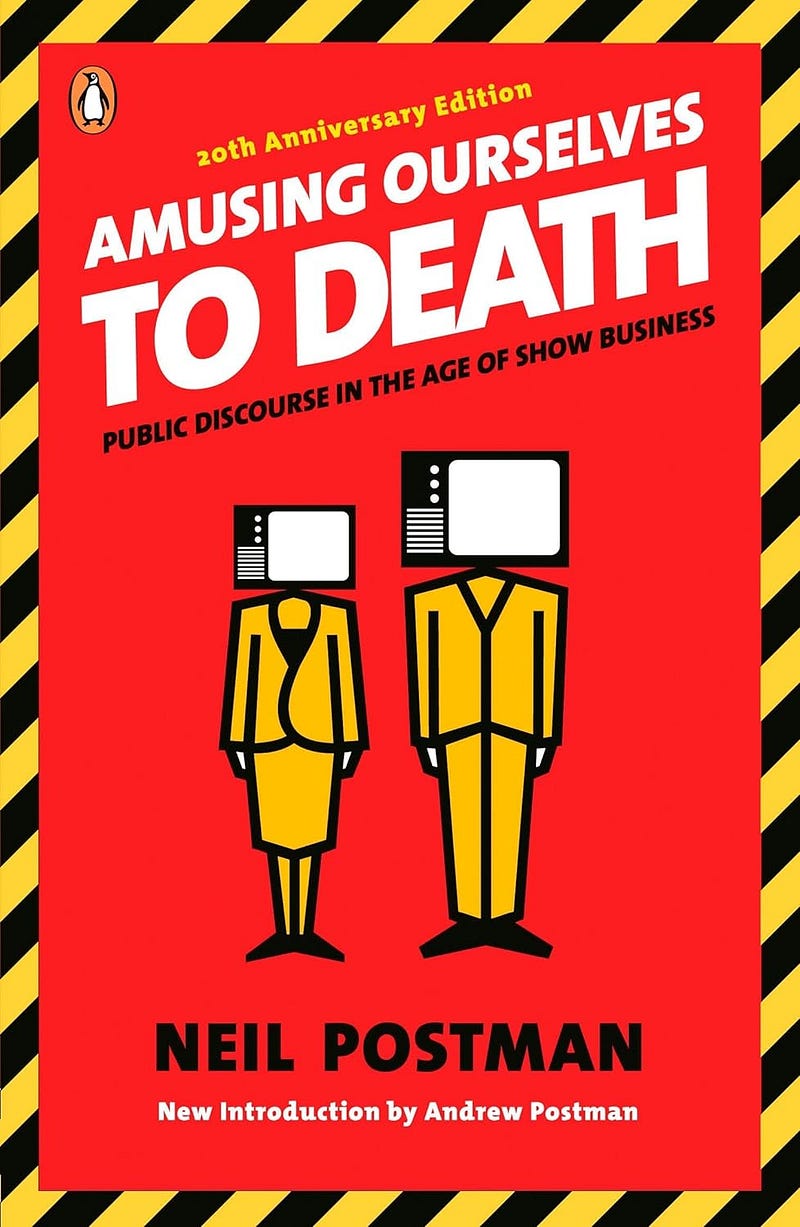
Reference: Amazon books

As you can gather from the cover, this is a book about how our visual culture affects the more serious aspects of society. Our thought life and political discourse.

Watching TV is how a large proportion of people relax and unwind these days.

I haven’t reached the main bulk of the book’s argument yet.

But for now, I just want to share with you an interesting account on a debate that took place in 1854.

It was between Abraham Lincoln and Stephen A. Douglas.

(Everyone knows Abraham Lincoln. Douglas was his political rival from the Democratic Party.)

I can draw 3 points of conclusion from the story as I tell it. Then I’ll end with 3 reflections.

1. People sat through a long debate, but they were emotionally engaged

A teacher once told me, you fall asleep in class not because you’re tired, but because the content is boring.

Photo by Shane on Unsplash

(I never fell asleep in his classes.)

The debate between Lincoln and Douglas in 1854 lasted seven hours.

It took place on October 16, 1854, in Peoria, Illinois.

Postman recounts:

“Douglas delivered a three-hour address to which Lincoln, by agreement, was to respond. When Lincoln’s turn came, he reminded the audience that it was already 5 p.m., that he would probably require as much time as Douglas and that Douglas was still scheduled for a rebuttal.

He proposed, therefore, that the audience go home, have dinner, and return refreshed for four more hours of talk.”

What sort of people were they?!

I will say more about their attention span later. But for now, it’s worth noting that they didn’t just passively sit through the event.

Not like some events I attend these days where the speaker would dispassionately speak about the subject, and people would really feel the urge to fall asleep.

No. Postman goes on:

“Although audiences were mostly respectful and attentive, they were not quiet or unemotional.

Throughout the Lincoln-Douglas debates, for example, people shouted encouragement to the speakers (“You tell ’em, Abe!”) or voiced terse expressions of scorn (“Answer that one, if you can”).

Applause was frequent, usually reserved for a humorous or elegant phrase or a cogent point.”

Some of Abraham Lincoln and Douglas’s debates later included more ‘entertaining’ elements:

“All of the Lincoln-Douglas debates were conducted amid a carnival-like atmosphere. Bands played (although not during the debates), hawkers sold their wares, children romped, liquor was available”

So it does sound a bit like the Super Bowl today, or the Rugby Sevens.

2. Reading was ‘entertainment’ in their literary culture, so they spoke like they wrote, and people were used to it.

Nonetheless, the way Lincoln and Douglas spoke were extremely literary.

Photo by Prateek Katyal on Unsplash

For most people, something like this would put them to sleep, even though the speaker was Lincoln, the 16th president of the US:

“It will readily occur to you that I cannot, in half an hour, notice all the things that so able a man as Judge Douglas can say in an hour and a half; and I hope, therefore, if there be anything that he has said upon which you would like to hear something from me, but which I omit to comment upon, you will bear in mind that it would be expecting an impossibility for me to cover his whole ground”

This would not count as ‘plain language today’.

That’s pure print language.

(If you tried to read through that, well done. You may leave a comment and be commemorated in the hall of fame.)

The book mentions a few reasons why people were used to such literary language:

  • The pilgrim fathers’ faith — they understood the Bible as central and people needed to be able to read it.
  • The migrants from England all came from segments of the population that were more literate.
  • Reading was seen as essential and they ensured education served that end. Learning was book-learning, and book-learning is true learning.
  • Since everyone could already read, the whole culture in New England was one of reading. That was their ‘language’.

As an example, Postman mentioned Thomas Paine’s Common Sense (1776). It sold about 100,000 copies in two months. In 1985, that would be equivalent to about 8 million copies.

Later on, it is estimated 300,000 copies were circulating in New England. That would be equivalent to 24 million or so copies. That audience would be indeed similar to today’s Superbowl.

3. As a result, people were indeed better at sitting still

What’s the consequence of a literary and reading culture back then? (Even in their entertainment?)

Photo by Sam Moghadam Khamseh on Unsplash

Well, people had to have some baseline skills to be able to engage with things.

As mentioned, they all read lots. That was what they did.

“Entertainment” was more like going back home and reading a story. When it grew dark, it would be bed time, because there was no electricity yet for late night bedtime reading (or late night article writing…)

But there were other skills involved.

To be able to evaluate the oratory involved, they had to be somewhat serious.

Postman puts it:

“A written sentence calls upon its author to say something, upon its reader to know the import of what is said. And when an author and reader are struggling with semantic meaning, they are engaged in the most serious challenge to the intellect.”

He summarises the skills involved:

  • inference-making
  • reasoning
  • telling lies apart from truth
  • evaluating language itself without aid from images
  • distancing themselves from the text/speech

With all that going on, it meant people didn’t have time to cheer or applaud. They were too busy for that!

Reflections

1. Constant training

Someone once said to me, reading is like training a muscle.

Photo by Victor Freitas on Unsplash

You can’t expect to start off reading The Iliad in the original Greek in one sitting for 8 hours.

Instead, you build up from 10 minutes, 15 minutes, 25 minutes… You learn to put distractions away. Chuck the phone somewhere else, in a corner of a room perhaps.

And don’t be surprised if the corner of your room suddenly becomes very interesting, so that you gaze at it blankly. Your mind entirely elsewhere.

People had the luxury of a reading culture so they were “automatically” trained. Or at least it was much easier.

But we have to fight for such opportunities and be consistent.

2. Engage the emotions

People did enjoy the debates! While they were long, people like Lincoln and Douglas did speak engagingly and their prose was elegant.

Photo by Nicholas Green on Unsplash

The content of what they said was engaging. It did touch people’s lives. People did disagree with what they said. They tried hard to be cool and rational, but it wasn’t just cold logic that was involved.

My reflection is, read things that you care about.

An English teacher of mine cast doubt on why people would ever persevere through a book they didn’t like. They’d feel guilty for not finishing a book and so they’d carry on with it.

Why not be ruthless drop the book and pick one you actually like?

What are some causes you’re excited about? What are some things you’d like to learn more about?

Simply google a good book recommendation on that topic and you can start reading. It’s so much easier these days — at least — in terms of getting a book.

3. You will gain skills

The people who sat through the debates and were immersed in the literary culture did gain lots of skills.

Photo by Austin Ban on Unsplash

Skills in thinking, reasoning, winnowing opinion from facts.

There are fringe benefits to reading that are unique, and which TV can’t provide.

TV feeds us with an image and effect ‘in our face’ and our brain is so stimulated that it is forced to give a response.

But reading or listening gives us more distance from the source. We have time to evaluate that.

Ever heard something from a podcast where you go, wait a second, that didn’t sound right?

But in a TV programme, I find that when there’s a visual effect in a scene, I simply react to it. Just as I realise what’s happening, the next thing is on.

Which point will you take away?

The most important thing in learning a skill is, of course, to put it into practice.

For me, my biggest take away is point 1 — constancy is so important.

Which one is yours?

Check out my other articles on diverse topics:

Reading
Self Improvement
Productivity
Life Lessons
Inspiration
Recommended from ReadMedium