
A Brand New Taste is Born
And why Umami is known as the Asian Flavor

Our tongue has special receptors to identify all four basic flavors — salt, sweet, sour, and bitter.
Or… wait? …were they only four? Is anything else more like… savory?
Yupp! Usually referred to as savory or delicious, Umami was officially coined in 1908 by a chemist at Tokyo University called Kikunae Ikeda — but still referred to as savory in the West ever since — and it has recently been recognized as an own flavor by itself.
So let’s start again!
Also known as the fifth taste, after salt, sweet, sour, and bitter — Umami is a fascinating piece in the jigsaw of our gastronomic evolution. It has been over a century since Umami was discovered in Japan, but it is just now attracting global attention, primarily from chefs and people with a strong interest in food. Recent studies by Paul Breslin officially confirmed that our mouths do contain Umami taste receptors — which really makes it to be a taste by itself. But what does this really mean?
The 5 primary flavors
An own flavor by itself is unique tastes that cannot be created by mixing others. The main reason is that each of these flavors stimulates specific taste receptors in our tongue — making them our basic taste unit. Hence, they are usually referred to as the basic or primary tastes.
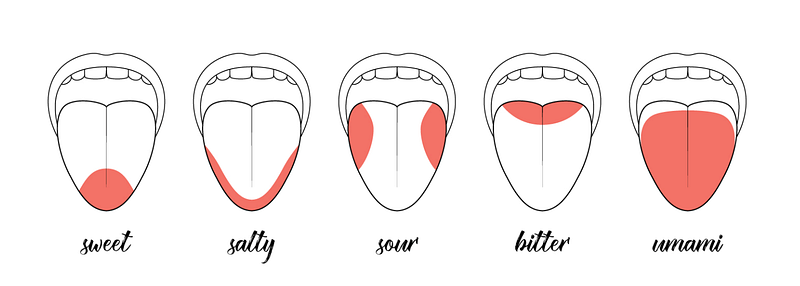
What are these 5 primary flavors for?
All animals — including us — need to eat to survive. However, we cannot eat just anything — we do need to eat nutritious food. This is exactly the key role of these primary flavors: Taste works as an indicator to tell us what should we eat and what — under no exception — we should not. Every basic taste — sweet, sour, salty, bitter, and umami — is a message that tells us something about what we put into our mouth, so we can decide whether it should be eaten.
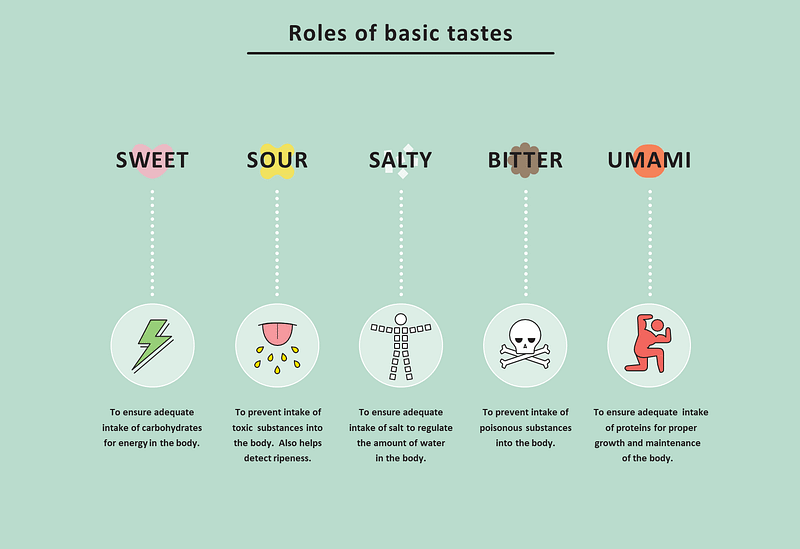
We are evolved to crave the sweetness of sugars to gain more energy and avoid bitter tastes which usually contain toxins. Umami is usually related to proteins. Hence, humans have been biologically adapted to crave Umami as it is an indicator of proteins and amino acids — the building blocks of life.
Now that we know what are the 5 flavors… what is Umami?
Umami — Briefly explained
Umami is a general term used mainly for substances combining Glutamate, the nucleotides inosinate, and guanylate, with minerals such as sodium and potassium. However, the real — and exceptional — thing about Umami is how it stacks. Glutamates occur naturally in a number of foods, so when you add them together, like meaty ragout and parmesan cheese, or a cheeseburger with ketchup, you get an Umami flavor bomb. The ingredients enhance one another so the dish packs more flavor points than just the sum of its parts — and then you are extremely craving for more.
The Asian flavor
Umami is the inimitable taste of Asian foods. Many traditional prepared foods and condiments of Asia are extremely rich in Umami, which can be found in fermented animal-based products such as fermented and dried seafood, and plant-based products from beans and grains, dry and fresh mushrooms, and tea. However, most important is that the existence of Umami as a basic taste seems completely new to the Western palate. Even though Umami is traditionally contained in cuisines all over the world — even Romans loved garum, which contained high levels of Umami—the recognition of this fifth flavor has followed the spread of Asian cuisine in the US and Europe. After thousands of immigrants from East Asians — including Japan, China, and South Korea — these immigrants brought a variety of new cultural influences to the USA. Years later, the same pattern took place in Europe. This caused rapid assimilation of East Asian flavors into the western palates. Yet, it still took until the early 2000s for the scientific community to actually recognize Umami as the fifth taste.
Umami in our daily life
The Umami taste can be found widely in a great number of foods, so you do not have to go to a specialty store to enjoy the taste of Umami. Foods with Umami elements that can be found at your local grocery store include beef, pork, gravies, broths, tomatoes, aged cheese, mushroom, avocado, soy sauce… and so on!
You can observe HOW MUCH FOOD does contain Umami in our daily life and cuisine below! 😯
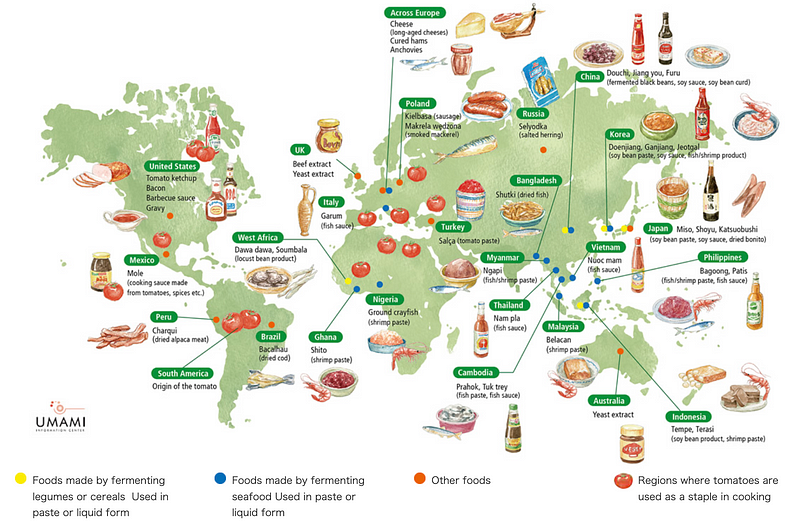
Fun fact! Umami has its own information center webpage. You can just visit it below and find much more information about it!
Feel free to share your thoughts and experiences in the comments! ✨
You can suscribe to my Medium Newsletter to stay tuned and receive my content. I promise it will be unique!
If you are not a full Medium member yet, just check it out here to support me and many other writers. It really helps :D
Some other nice medium-related articles you should go check out! :D


