
When the Grace of Age Brings Creative Success
The remarkable life and art of Luchita Hurtado
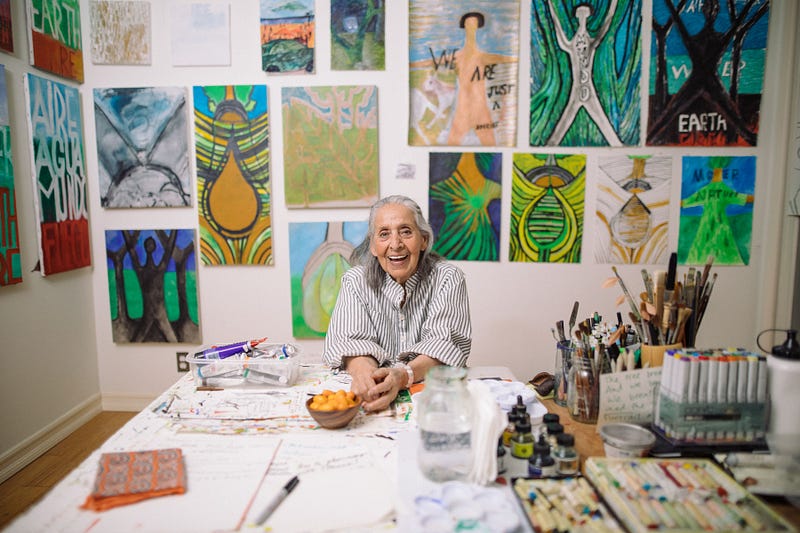
There is something hypnotic about the artwork of Luchita Hurtado. When I saw them I found myself hooked in, compelled to look beyond the layers of paint.
Driven by the spark of creativity from a young age, Hurtado created numerous tantalising works yet only won public recognition as an artist whilst she was in her 90s.
In her long life she mastered the art of suggestiveness. Much like the sensation you find in dreams, her paintings seize our attention because of their unconventional logic.
Hurtado died in 2020, three months shy of her 100th birthday. The story of her life in art reveals the ultimate power of persistence, and demonstrates that it’s never too late to realise your creative ambitions.
Unconventional Perspectives
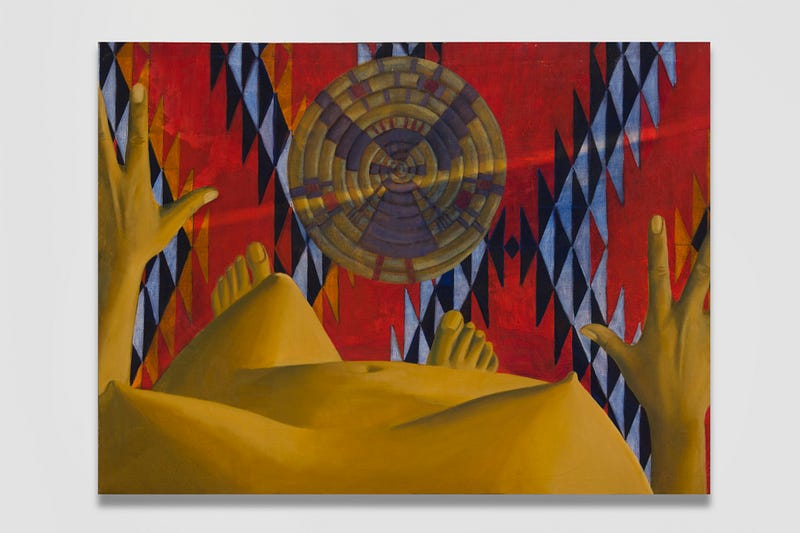
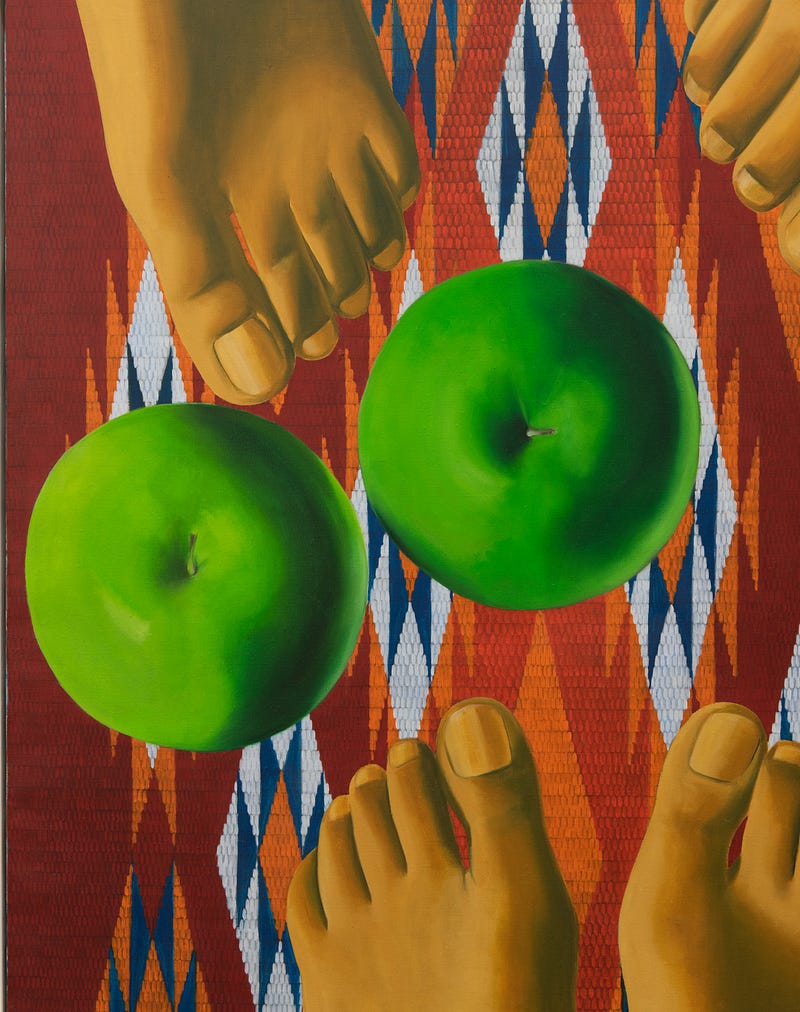
Take this painting, made by Hurtado in 1969.
It’s part of her “I Am” series of works, and adopts a first-person vantage point, looking downwards at her own body as she walks (apparently cautiously) across a Latin-American woven rug.
As with other paintings in the same series, portions of body parts break in through the edges of the picture frame — hands, wrists, toes, feet and breasts. The figure stands above a floor crisscrossed with diamonds, zigzags and chevrons, only adding to the sense of surreal, dreamlike disorientation.
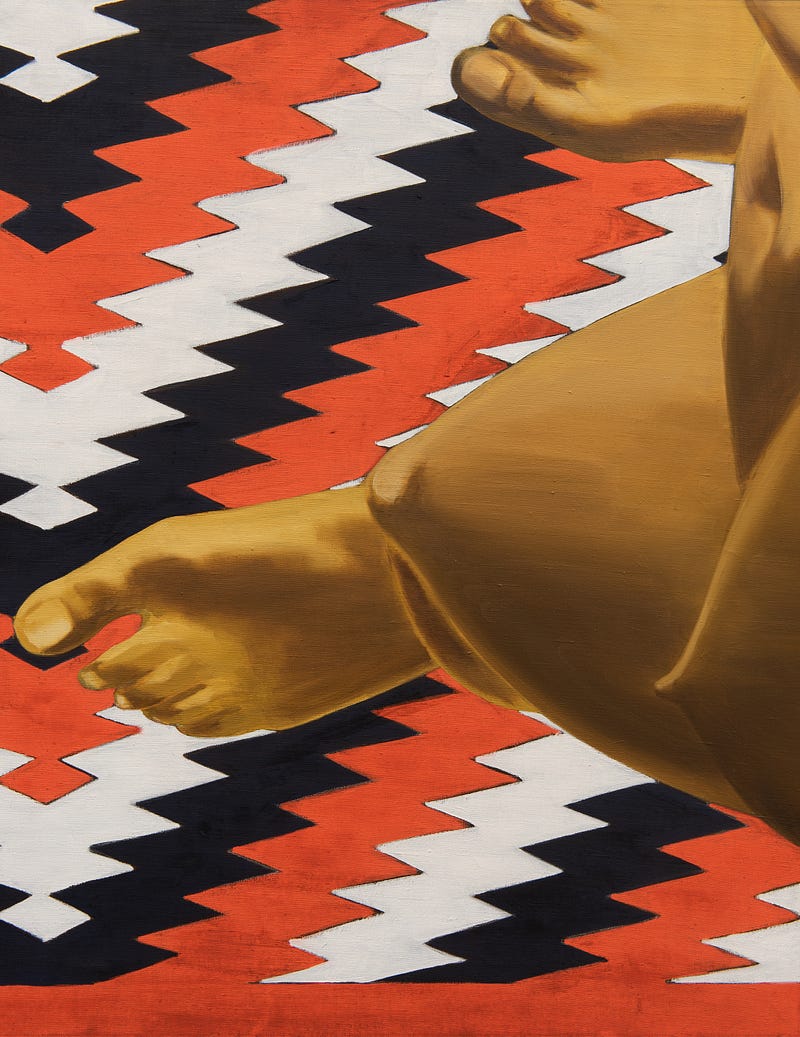
Tightly cropped, these private views contain few spatial clues and no definite protagonists — but rather offer an idiosyncratic experience of the world.
“This is a landscape, this is the world, this is all you have,” Hurtado said of her immediate environment, “this is your home, this is where you live. You are what you feel, what you hear, what you know.”
Early Fascinations
Hurtado was born in Maiquetía, Venezuela in 1920. At the age of eight, she emigrated with her mother to New York where she was delighted to see snow for the first time.
Recollections reveal how a fascination with details — both large and small — fed a burgeoning imagination. “When I was a child I had a great sense of smell. I could smell a butterfly when it was breaking the cocoon. I watched the whole procedure, and I think that was a great influence, to see this magic.”
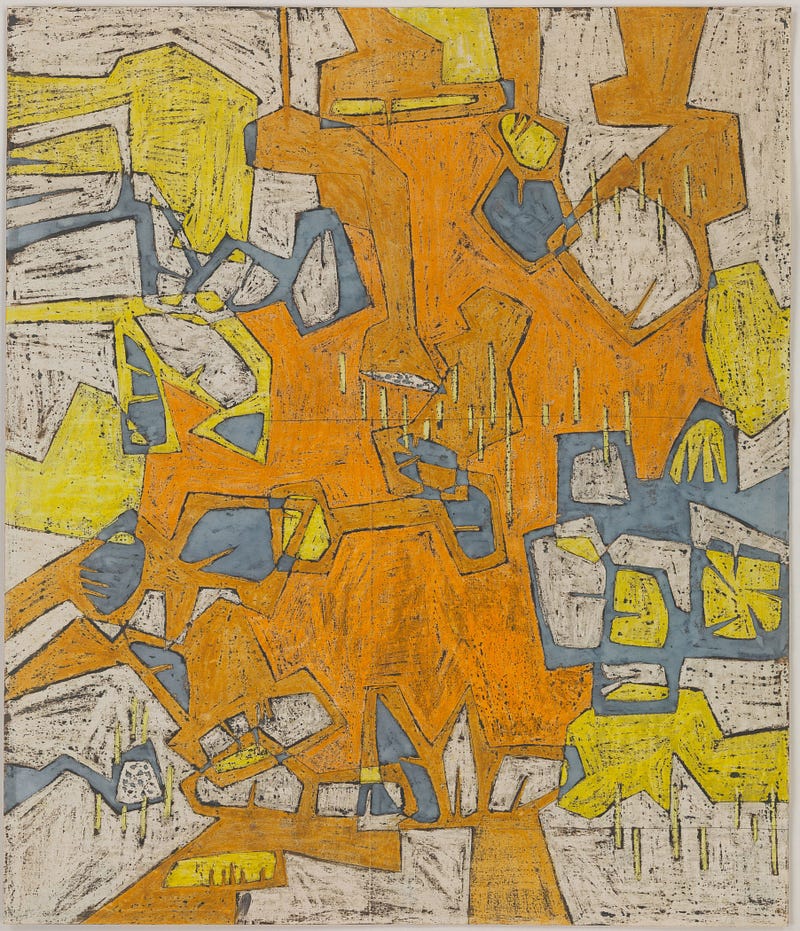
Hurtado’s early paintings from the 1950s appear to belong to the post-cubist search for a deeper resonance between figuration and abstraction.
These paintings are filled with colourful, angular geometries, like rocks split open with a hammer to reveal the crystallised minerals inside.
Her forays into near-abstraction later drew upon the interlocking patterns of woven fabrics, such as the diamond patterns you find in Mexican rugs or the granular motifs of South American textiles.
The arc of artistic output took a meaningful shift at the end of the 1960s when she began painting in a more surrealist manner, with the most memorable visions that take an artist’s-eye-view of her own body.
Yet she rarely exhibited her work and remained largely unseen for most of her life.
Connections to the North American Art Scene
Despite not exhibiting her paintings, Hurtado was intimately connected with the North American artistic scene, having formed long-lasting friendships with many famous names of the last century, from Isamu Noguchi to Frida Kahlo, Robert Motherwell, Willem de Kooning and Judy Chicago.
Man Ray took her portrait. Marcel Duchamp rubbed her feet.
And that’s just the beginning. Her marriage to the artist Wolfgang Paalen placed her at the centre of the Surrealist scene in Mexico City — albeit somewhat accidentally. ”It was very strange,” she said. “My trip to Mexico. We went there and got married and then I realised that it was a kind of group. I’d married a group.”
Later, with her second husband, the painter Lee Mullican, she was involved with the progressive Dynaton movement in California, a utopian collective that asserted that Western art could provide a new-world equivalent for Eastern meditation.
Late-Life Success
Hurtado only gained wider recognition as an artist when she was included in the 2018 Hammer Biennial exhibition in Los Angeles. A year later, with her name spreading, she had her first solo show in a public institution at London’s Serpentine Gallery.
As such, her career might be thought of as existing in retrospect, but that’s not the impression I took from the exhibition in London when I visited. The halls of paintings at the Serpentine pulsed with an energy that seemed to persist through 70 years until the present day.
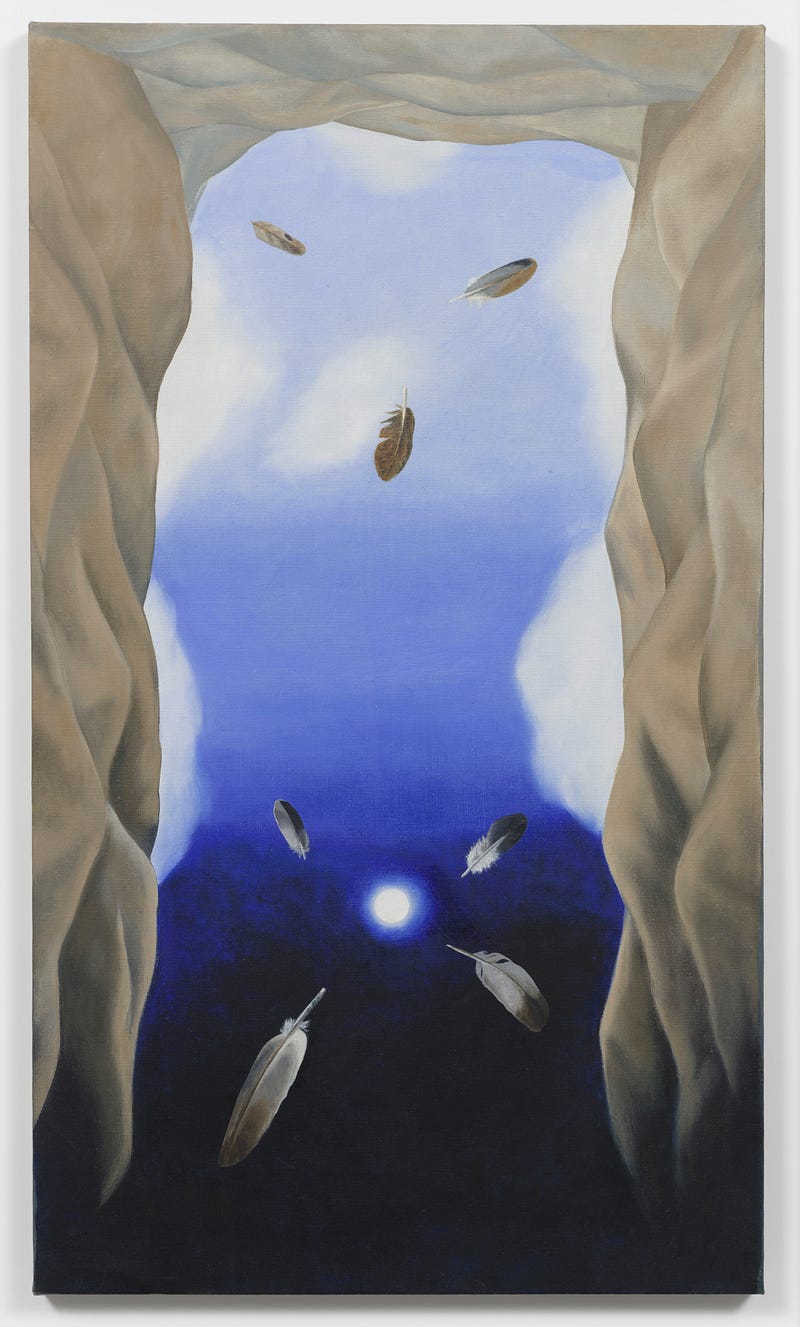
The underlying assertion of her art seems to be that the synthetic and the organic are equally meaningful. Forms of life are interconnected and overlapping, and in that primordial dialogue, unusual things are bound to occur.
“I am part tree,” Hurtado once said. “And I’m part of anything that’s on this planet.”
Her paintings are affable, and have a gentle, coaxing quality to them. They take you with them, exploring all the different ways that the human senses are woven into the fabric of worldly textures.
And although public recognition came late for Hurtado, she firmly disavowed any feelings of resentment, once commenting “I don’t feel anger, I really don’t. I feel, you know: How stupid of them.”

Image credits: “Luchita Hurtado: I Live I Die I Will Be Reborn” appeared at the Serpentine Gallery in London from 23 May to 20 October 2019.
Christopher P Jones is the author of What Great Artworks Say, an examination of some of art’s most enthralling images.
Would you like to get…
A free guide to the Essential Styles in Western Art History, plus updates and exclusive news about me and my writing? Download for free here.
Join me…
On Instagram for more great paintings on the go!


