
ART CONSUMERISM
The Art That Fooled The World
A Banksy masterclass that revealed our madness over nothing
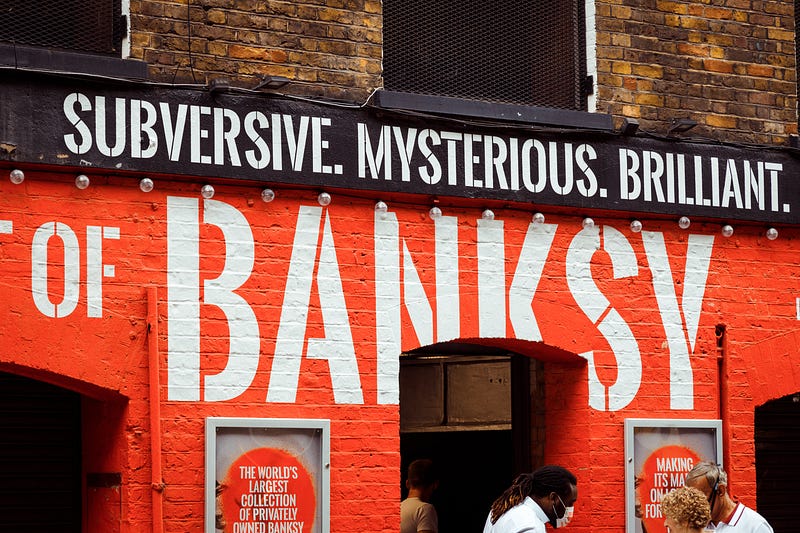
It was supposed to be another ordinary day at the auctions. Only this time street artist and political activist Banksy was putting up a painting for auction. Banksy is a man of mystery. His real name and identity remain the subject of speculation. His work however, is easy to identify. You may recognize ‘Girl With Balloon’, ‘Flower Thrower’, ‘Slave Labor’ and ‘Kissing Coppers’ the moment you see them (or versions of them).
In 2018, at Sotheby’s London, Banksy’s lot was the last of the evening. He took a version of his 2006 ‘Girl With Balloon’ and placed it within his own custom-made frame. His piece was sold for over a million US dollars (to be precise it was $1,290,620.16). But as the gavel came down, an alarm sounded inside of the picture frame, and the picture started to fall through the frame. It shredded as it came down and halted midway. There was bewilderment at the sudden change. Spectators watched in horror as Banksy’s art was destroyed.
Except it wasn’t, depending on how you look at it.
Media coverage the world over described the incident as the greatest prank the art world had ever seen. Nothing like that has ever happened in the land of art auctions. Clearly, Banksy was making a statement of some sort. At the time, no one knew what it was. The suspense was killing everyone.
Here’s where it gets interesting. In the midst of all the chaos and speculation, Banksy’s artwork — after being shredded was retitled ‘Love in the Bin’ — increased in value up to $7 million. Struggling artists would be kicking themselves silly and screaming into the void. And this is the perplexing world of art and commodified value we live in.
Today, I question the value of everything around us. Banksy’s self-destructing art was a stunt that played with people’s fears and emotions that uptick its value. But who exactly? And how did that occur?
As an art enthusiast (but hardly an expert) reading about the incident, I asked myself: Where do we place value in society? Who does art belong to? The Banksy incident gradually unfolded but it only spiraled me into the world of bizarro.
According to Banksy, he wanted the artwork to be completely destroyed.
The fact the painting stopped midway was not part of Banksy’s plan (that’s what he says). He constructed the frame himself, inserting an automated mechanism to destroy the painting as soon as it’s sold. He claimed it always worked during “rehearsals”. However, as witnessed at the auction, only half the painting was shredded. But it was enough to illustrate his political statement. And yes, he had one.
Banksy, known for his seditious humor, pokes fun at high-minded art world savoir faire. The prank was an emblem of pathos. While the girl with the bright red balloon represents a contemporary expression of sanctity and a vivid symbol of hope everlasting (the floating of the balloon is a metaphor for the inevitable loss of childhood and innocence), the shredding symbolized our short-attention span of our social media age.
In the upper echelons of society, a different frenzy was happening. Banksy’s piece was no longer just about the artwork, it was about the stunt, the performance, that came with it. It was not about ownership of subject matter, it was about being part of a historical moment.
Banksy was already a man of mystery. The live art disruption that took audiences by surprise increased its potency of demand. Art pundits were horrified but they also loved it. Humans are mad creatures that way.
And if you ask me, I think Banksy orchestrated this fiasco to get us excited over nothing. Some people think the auction house was in on it, but upon investigation, they weren’t.
I’m saying this because in interviews Banksy revealed that not only did he intended the piece to be destroyed, he made reference to Pablo Picasso who said, “The urge to destroy is also a creative urge”. It was a hint that perhaps Banksy was not out to devalue, but to create anew. He demonstrated how his mind works with an art in progress — without being present. That’s ingenuity.
In a way, he raised the benchmark for artist creativity. I look at my finger paintings in my studio and sit in despair at how infantile they are. Damn you, Banksy.
But you have to admit, Banksy gave us a Masterclass on how to create value. He did it while thumbing his nose at us.
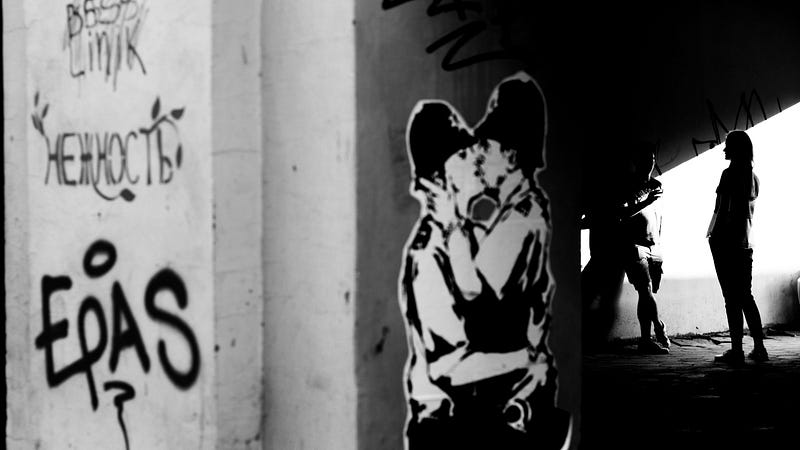
Banksy created ‘Love in the Bin’ as a live art work to criticize value, hypocrisy and capitalism.
On that note, I was not wrong to question the value of art against our sanity. Perhaps part of Banksy’s mischievous plan is to intentionally provoke such disconcerting thoughts out of folks like me — folks who can’t afford expensive art.
But if I had millions lying around to burn as firewood, and more coming out of my ears, would I consider art as investment, or as my passport to fit in with the crème de la crème of society?
But since I’m in the 90% of the greater population who aren’t, such provocation would be more impactful compared to the wealthy 10% who would flash a smile at the stunt and compete to purchase. Upping the value of ‘Love in the Bin’ would drive me more determined to strike oil, flash my Bulgari jewelry at art auctions, and compete against the highest bidder.
According to reports, the woman who won the bidding at the auction decided to go through with the purchase. Who in their right coherent mind wouldn’t? It’s a Banksy.
On the subject of coherent minds, during the pandemic, the selling of art slowed down, including available works at auction, but it didn’t destroy the market. In fact, by 2021, the market was revived with a vengeance. Today, more sales than before are taking place, in part because there’s a lot of objects available.
While COVID-19 was savage to businesses and stalled supply delivery around the world, the virus was strangely kind to the arts. According to art market reports, in 2021, Christie’s sales totalled $7.1 billion, an increase of 54 percent from a year earlier. Sotheby’s sold $7.3 billion in 2021, highest in the company’s history, and Phillips’ global sales rose to $1.2 billion, a 30 percent increase from 2019.
Jonathan Crockett, chairman for Asia and head of 20th-century and contemporary art in Asia at Phillips, has this to say:
“When the world shut down and no one could travel [due to COVID-19], we found there was a lot of money in the market and people wanted to acquire art. Partly because they were at home, they were buying to make themselves feel better. Virtual and online auctions became increasingly prevalent. Several people began participating in auctions for the first time. Half of all buyers across Phillips’ auctions worldwide in 2021 alone were new. We’re seeing clients we’ve never heard from before engage with us and buy at a very high level.”
These days when people tell me they’re poor, I’m inclined to ask, “How poor is poor?” You’re not poor if you’re out buying art. Saying you’re poor for the sake of feeling inclusive because you see famine, people looting, and tightening their belts in different parts of the world, is not the same thing as “not eaten for days” poor.
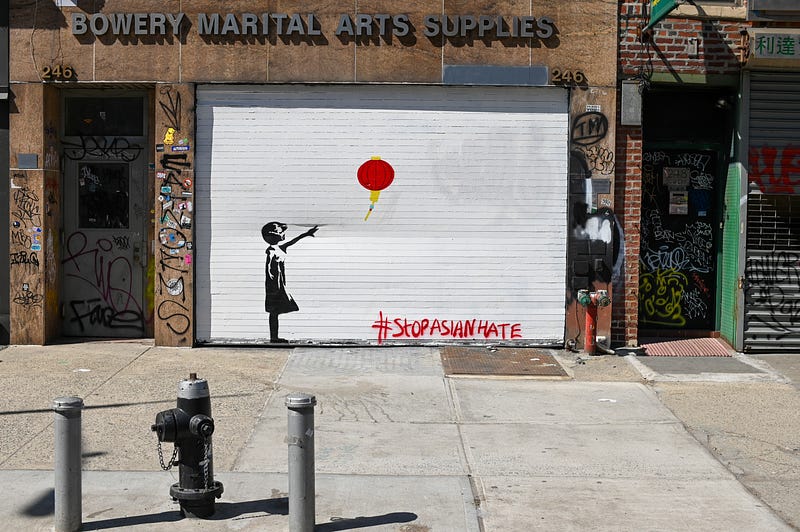
Banksy has a point with his social criticism. His stunt made me examine how different layers of society perceive the value of “art” — and whatever art means these days.
Given a chance, most folks prefer to be perceived as well-to-do rather than be “simple and basic” (folks who make just enough for a living). That explains why the counterfeit industry continues to thrive despite reports of slavery, cruelty and labor law violation. In 2019, the counterfeit industry worldwide is estimated to be worth $509 billion. During and after the pandemic the number is said to have skyrocketed. I checked. According to OECD data (The Organization for Economic Co-operation and Development) on counterfeiting and international trade, the total value of counterfeit and pirated goods was close to $3 trillion in 2022.
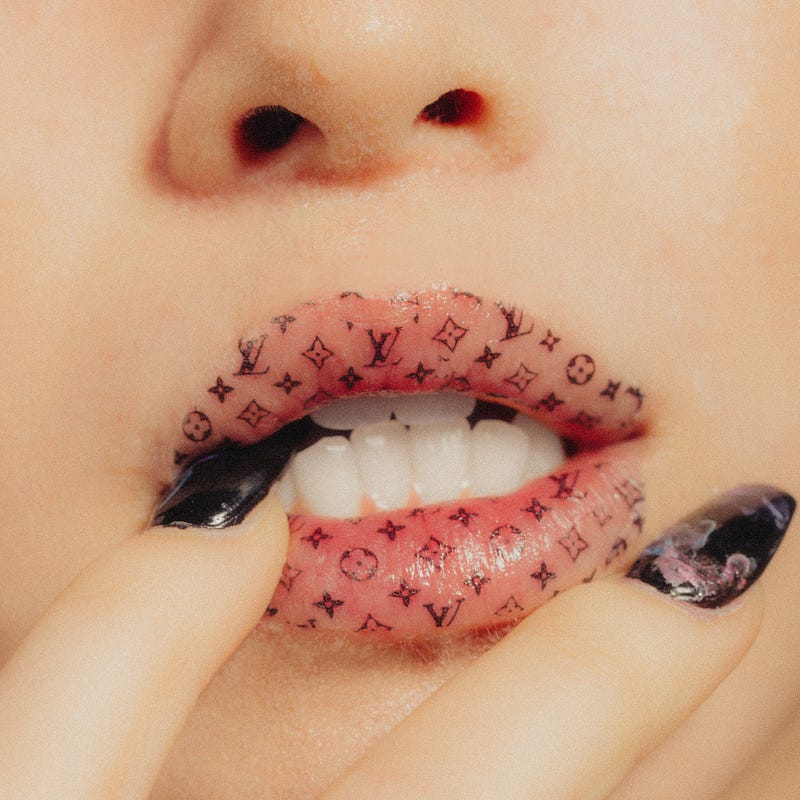
Despite knowing a product is fake, we are adamant to create an illusion to others that it’s real. We are willing to manipulate others into thinking that our net worth is tied to our possessions. We create, manipulate and inflate value accordingly, flashing PVC as leather, Vercase as Versace, Luois Vuitton as Louis Vuitton.
On social media, countless videos show people either flashing, bragging about, or advising others how to achieve the life of the rich and famous. It’s the selling of dreams. The dream touted is to own many cars and properties, travel the world, and retire by 30. I’m tempted to ask these influencers what they plan to do when they retire by 30. Where do they go from there? I wonder because the actual wealthy and powerful remain busy working despite their billions.
On the same token, many social media influencers have been flagged as imposters. They pretend to be rich, alluding to their followers a lifestyle of high living that’s actually non-existent. Their effort to rent helicopters, private jets, an entourage of chefs and assistants, lying about their identity are as remarkable as their narcissistic traits.
In that sense, social media content is no different than Banksy’s prank to show nothing — not even his art — is worth anything except for the clout it creates. And that’s exactly what art is — clout and clout-chasing. So is social media where sadly, many people chose to live. Banksy’s prank proved that it’s not so much the subject, but the narrative that surrounds it that determines the price tag.
As for those who tell me they’re rich (and they are), I ask them if they would buy a piece of art by Banksy. So far no one has said no. “It’s Banksy,” they tell me.
Banksy’s auction story does not end there. In October 2021, the now legendary artwork ‘Love is in the Bin’, went under the hammer for a whooping $25.4 million. I’m not kidding. I’m laughing at the thought of it, although nothing about our delusion with art and its social values is funny at all.
Meanwhile, my finger paintings are up for sale. Starting price is $5. My mum/agent said it’s lovely to hang in the bathroom. I need to get an agent like Kris Jenner, but I’m scared she’ll urge me to take my clothes off, chisel my face, and enlarge my buttocks. But look at the Kardashian empire…
For more about art and consumerism from the author:


