
The Art of taking Notes
A reflection on scribbling
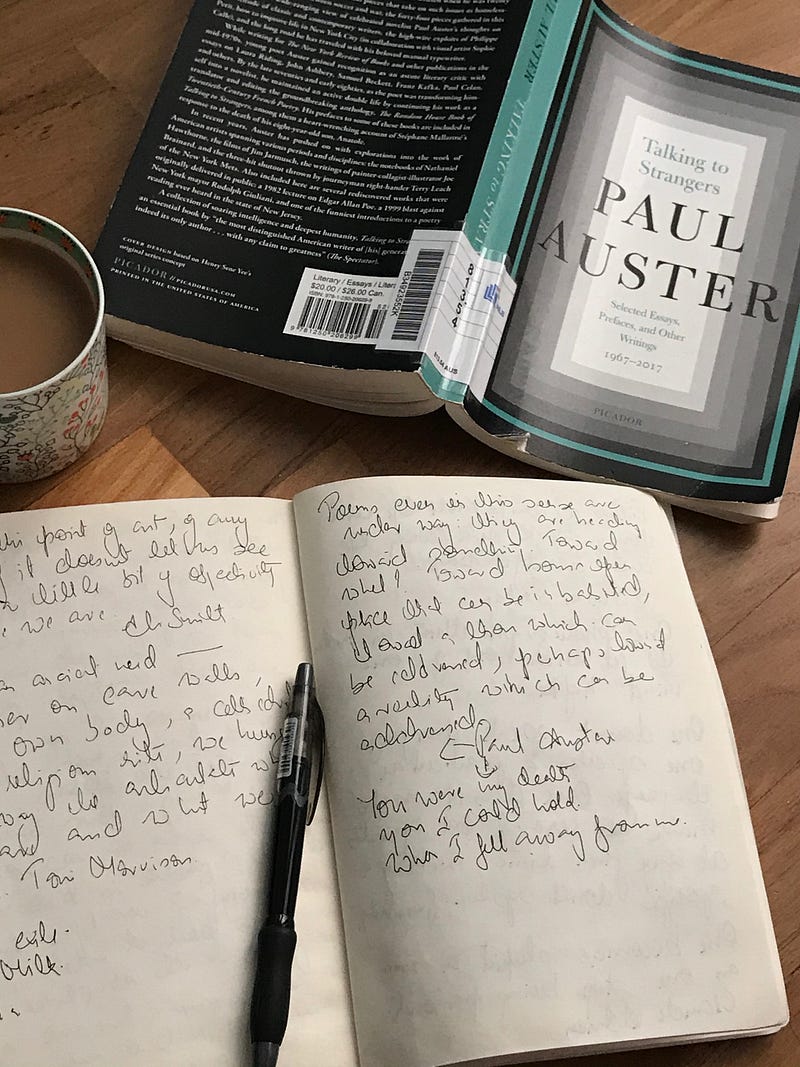
- that some notes are nothing more than desperate attempts to “latch” on
- that the writer is the person on whom nothing is lost but who also, in order to write anything, needs to act on what’s important, i.e., to choose
- that the note is a diminutive genre or minor literature — I mean, would anyone’s claim to fame be that they were an accomplished note taker? That they had created in the little lives we’re given not the consummate book or film or painting but the consummate note? This is a good thing — too much pressure would kill the note and keep it from holding thought in suspension; plus, ask any essayist you know and they are always more happy to be listed as a “notable” essayist, and thus an essayist of interest, than be marred by the finality of a “best”
- that footnotes, endnotes, and liner notes each are different types of steps on an Escher-esque ladder of knowing
- that the only definition of note worth retaining for our purposes is “any of the basic components of the fragrance of a perfume which give it its character: a component of aroma of food or a flavor, drink, esp. wine.” The best notes, the etymology instructs us, are those that combine the musical sense, a sounding, and the hidden comportment of a scent or flavor: a tinge or a tang. — MARY CAPPELLO
I have many journals in which I scribble, I believe the art of writing starts from taking notes, when we start observing the insignificant things. Those raindrops which stir our soul or those butterflies which linger on the flowers. If we are conscious about these simple moments we will take a note and if really want to trap the moment we will scribble something on the pages. That’s the best way to talk to the beauty looking back, sometime we scribble other time we illustrate and that page becomes precious for us. The art of note taking starts from a dot but always leads to a story within.
Thanks to Suntonu Bhadra for this space for my ramblings.