
The Art of “Not-Knowing” and Uncovering the True Self
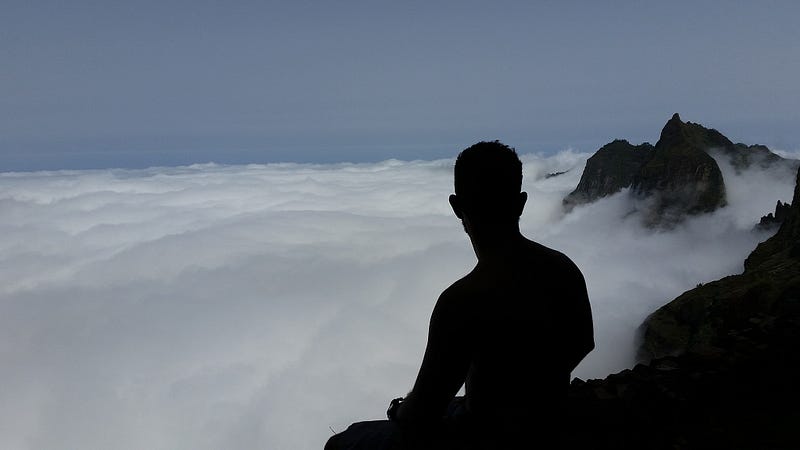
In a world of information, where rationality has shone light upon the dark ages of faith and belief, I have found grace in the fact that I am unable to assert any convictions as truth. I have discovered an unexpected power in admitting that I don’t know. Unbiased facts and opinions are increasingly hard to come by, and anyone can find evidence to support the assumptions they hold true. Yet, time and time again, opposing forces partake in a battle of convictions, as peoples “truths” are threatened and disproved.
As you can imagine, not-knowing poses quite the challenge for a critical theorist and writer who is expected to make consumable articles that assert hard and fast commentaries. I have chosen to put critical theory behind me, and write on my spiritual experiences and musings as I indulge in this experience of the unknown.
The Art of “Not-Knowing”
The art of not-knowing is as simple as admitting that we don’t know the full story. It arises as a profound force within the seeker as they remove themselves from the comfort of all that they believe to be true.
To enter the not-knowing, a seeker must commit to the observation of their material lives from a detached state, as if they are floating above and watching themselves from a divine perspective. This process of observation often highlights the absurdity of humanity’s collective images of “what is true.” This ancient and universal practise causes an interior solitude that challenges the illusions of knowing in the material world. There are truths to be found in experience that cannot be debated or shared with others. By becoming an observer, the spiritual journey within can begin.
“By not knowing, not hoping to know and not acting like we know what’s happening, we begin to access our inner strength.” — Pema Chödrön
Rene Descartes, the “father of modern philosophy” is deemed one of the first major rational thinkers in the Western tradition. Yet, his knowing is rooted in a radical confrontation with knowledge as found in his famous work “Meditations on First Philosophy”. This reflective essay is a journey through the a meditator’s experience as they come to doubt every truth in which they once believed. Descartes’ meditator resolves these doubts by tearing down all that they claim to know in order to rebuild their convictions from the grounds of certainty.
Uncovering the True Self
Through this process, Descartes’ meditator reaches a point of clarity by stripping away everything beyond their own essence of being. They conclude that the point of certainty in which we can start to build our knowledge is by realizing “cogito ergo sum” (I think therefore I am). Beyond Descartes, in the realm of mysticism, one can come to the point of simply asserting I am. For a meditator aims to transcend the experience of thought and access the pure essence of being.
This process of emptying, not just our assumptions but also our thoughts, is most clearly demonstrated in the practise of Zen Buddhism. As defined by the Cambridge Dictionary, Zen “emphasizes that religious knowledge is achieved through emptying the mind of thoughts and giving attention to only one thing.” That being said, this process is a hidden secret of many of the great mystic traditions. The Christian mystic Thomas Merton also writes on the essential process of emptying one’s thoughts to reach an inner solitude where the true self is found.
“If I am, then He is. And in knowing that I am, if I penetrate to the depth of my own existence and my own present reality, the indefinable ‘am’ that is myself in its deepest roots, then through the deepest center I pass into the infinite ‘I am’ which is the very name of the almighty” — Thomas Merton in “Thoughts in Solitude”
By entering this process, we, the seekers, are aiming to empty our false-selves, our egos, our misconceptions. Yet there is little to be said about the process of refilling with truth. Entering this new life as an observer, is a surrender onto the unknown that is full of immediate experience rather than thoughts and assertions. No one can tell you what your truth will be.
Once discovering pure essence, the spiritual seeker enters into a paradox of knowing and not-knowing. Where their existence becomes crystal clear, and the battles of convictions are but a muddy turbulence to the simplicity of their truths.
I don’t know what this means for my writing. I don’t know what I will find.
I hope that I will have words of clarity to share as I rebuild my convictions from a point of discovering that I am.
For now, all that I that I am left with is “I don’t know,” and I leave you with this:
“And God said unto Moses, I AM THAT I AM: and he said, Thus shalt thou say unto the children of Israel, I AM hath sent me unto you.” Exodus 3:14