
The Art of Making a Difference
Speak Up!
It is quite often that we hear people, complaining about lack of opportunities to make a difference or to contribute to the well-being of their society. Their grievances are either based on the argument that they don’t have enough influence or they don’t have the avenues to get themselves heard.
To an extent, they are right. Although most of us want to make a difference and change the world for good, yet only a few of us get the chance to actually do it. No denying that.
However, the issue is that our perception of ‘making a difference’ is skewed. For most of us, making a difference only accounts for changing the world in a drastic manner or bringing some kind of revolution. But in reality, that’s not the case; even speaking up for a cause is enough for contributing and making a difference.
I get it that it is difficult to get yourself heard, when you don’t have enough influence, but still, just being vocal against injustices and wrong practices, your message can be conveyed.
I mean — irrespective of the magnitude of our contributions—our society needs us and we, as an integral part of the society, have this obligation to help in reshaping the socio-cultural landscape of our society.
Moreover, a few of us are not ready to even make a minute contribution because we have this tendency to ask what society has done for ourselves instead of holding ourselves accountable for not playing our part.
To make things worse, our society is also bearing the burden of some ‘influential beings’, who are so heartless and self-centered that they tend to remain indifferent to the plight of their fellow humans.
Yes, influence is an essential tool in getting yourself heard but you can leave your mark, even without it. So, please don’t stop yourself from trying to make a difference.
Let me explain you through an example.
Growing up, we all have witnessed these great writers, extraordinary artists and especially sports stars being vocal about the injustices and using their stardom and influence for changing their society for good.
From Muhammad Ali to LeBron James, over the years, all these sports moguls have efficiently used their influenced to bring socio-cultural changes and make a difference.
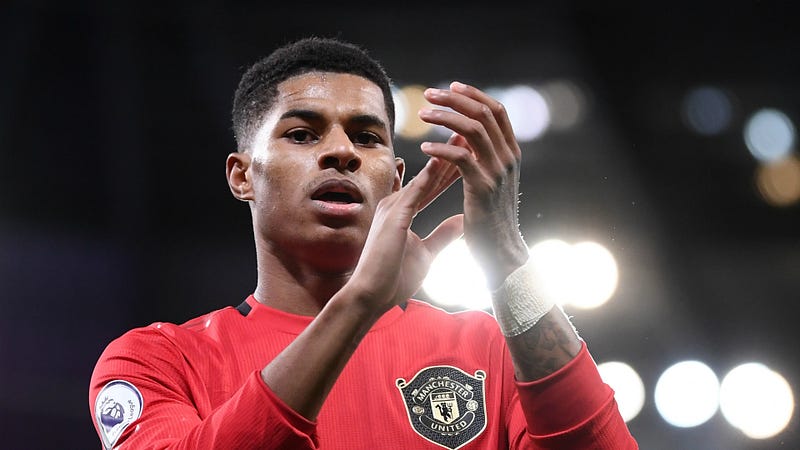
Marcus Rashford, 22, who plays for Manchester United, is the latest character in this episode of sports stars, giving back to their society and making their voices heard.
Almost two weeks ago, UK’s government decided to end the National Voucher Scheme, which was introduced in March for the lower-income families with the aim of helping such families in feeding their children.
However, the government decided to suspend the scheme, which is worth £15 a week to recipients, during summer holidays, resulting in pubic outcry against this decision.
So, Marcus Rashford wrote a letter to the MPs and demanded for the reversal of the decision, stating, “The system isn’t built for families like mine to succeed”.
In his letter, he was quite vocal about the plight of the poor families and urged the government to reverse its decision to support lower-income families in this chaotic time of uncertainty and fear. He added, “This is not about politics; this is about humanity.”
In addition, 22 years old English forward helped in raising about £20m to supply three million meals to vulnerable people with the help of FareShare UK.
As a result, Marcus Rashford’s actions led Boris Johnson to take a u-turn and reverse the decision of suspending National Voucher Scheme for the summer holidays.
Now, the point is, it’s not as difficult as it appears, when it comes to making a difference. Yes, one need to have some kind of influence to contribute in such a magnanimous way but the important thing is, even without influence, you can do it just by standing for the right cause and speaking up.
Marcus Rashford could’ve stayed silent just like all these influential figures, who didn’t say anything for the sake of their reputation but fortunately, he chose not to.
He, on the other hand, decided to speak up against this unjust decision of the government and showed compassion to help the needy ones. Marcus also taught us the significance of our voice and made us realize that our voice is the most valuable tool — not influence — for bringing the required changes.
I know, his influence helped him to get his voice across the room but having no influence doesn’t relieve us of our duty towards the society. If we want to see the change — in one way or the other — we all have to play our part.
The bottom line is, sometimes, all you have to do is to speak up. Because, if you’re not ready to speak against the injustices and you’re too worried about your reputation, you can’t expect yourself to make a difference.
Speak up and — sooner or later — you’ll get heard!


