
The Art of Imperfection: Embracing Blur and Shadows in Street Photography
A day in the lifetime of a Street Photographer (Bilbao)
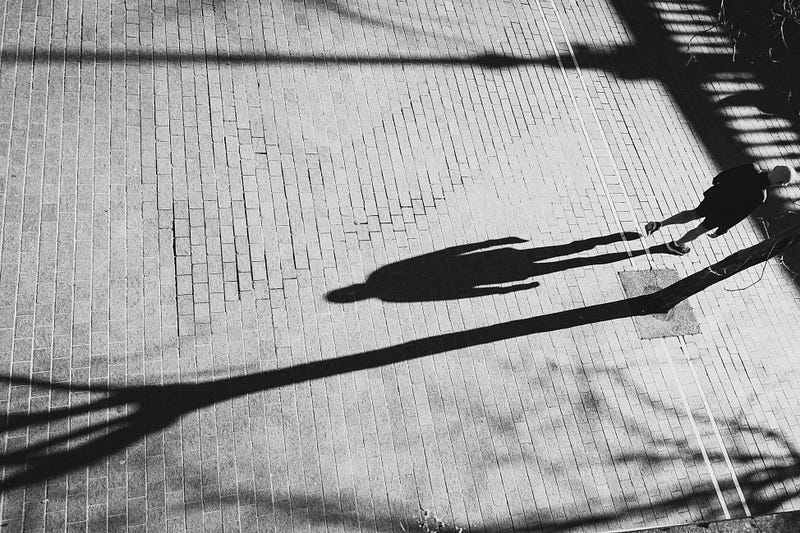
Shadows are an important part of photography. Indeed, the very concept of photography was born out of the desire to “fix the shadow” in the early nineteenth century.
Shadows of people on the street can be approached as something quite literal or as another version of our world. A “shadowy world”.
Similarly, when blurring is applied with intention while doing a photograph it can open up creativity on the street.
Read along.
The scene was set, but…
I had a two-day business trip to Bilbao in January last month. As usual, I try to allocate some personal time for street walking in the city’s center during these international trips and bring something home.
I arrived on a Monday evening with a business dinner on the agenda and no time to focus on my camera. Naturally, the same happened on Tuesday most of the day with site visits and working meetings with clients and my colleagues in Spain.
My flight back to Amsterdam was scheduled for after lunchtime, so I had some time in the evening and part of Wednesday morning to dedicate to my craft. 👆🏻.
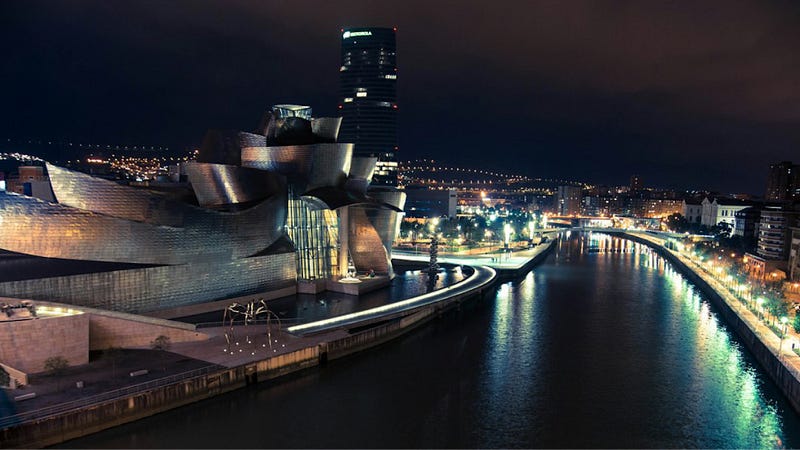
Bilbao is a beautiful city with the part of downtown crossed by the river Nervión. Along its banks, one can enjoy scenic promenades offering cool views of the city’s iconic landmarks reflected in the river’s waters.
One such landmark is of course the Guggenheim Museum, designed by architect Frank Gehry.
A promising place to make my preferred type of street photography, including a futuristic city background and a busy river promenade.
Blur does not need to be a mistake
Well…during the evening I worked for a couple of hours to get something, but the results were not entirely satisfactory. Not sure if was tiredness, lack of inspiration, maybe both, or also the pressure that you are there, you have the opportunity to make something out of it, the time passes by and nothing special happens. You start to get anxious, but that doesn’t help.
I made some attempts for example using a slow shutter speed to capture the movement in one of the striking bridges crossing the river.
This technique allows us to visit this other world of photography, which all comes out of the same camera. The shutter speed on the camera determines this; it is usual at 1/250, which can cope with normal walking movement, but altering it to 1/8, changes everything.
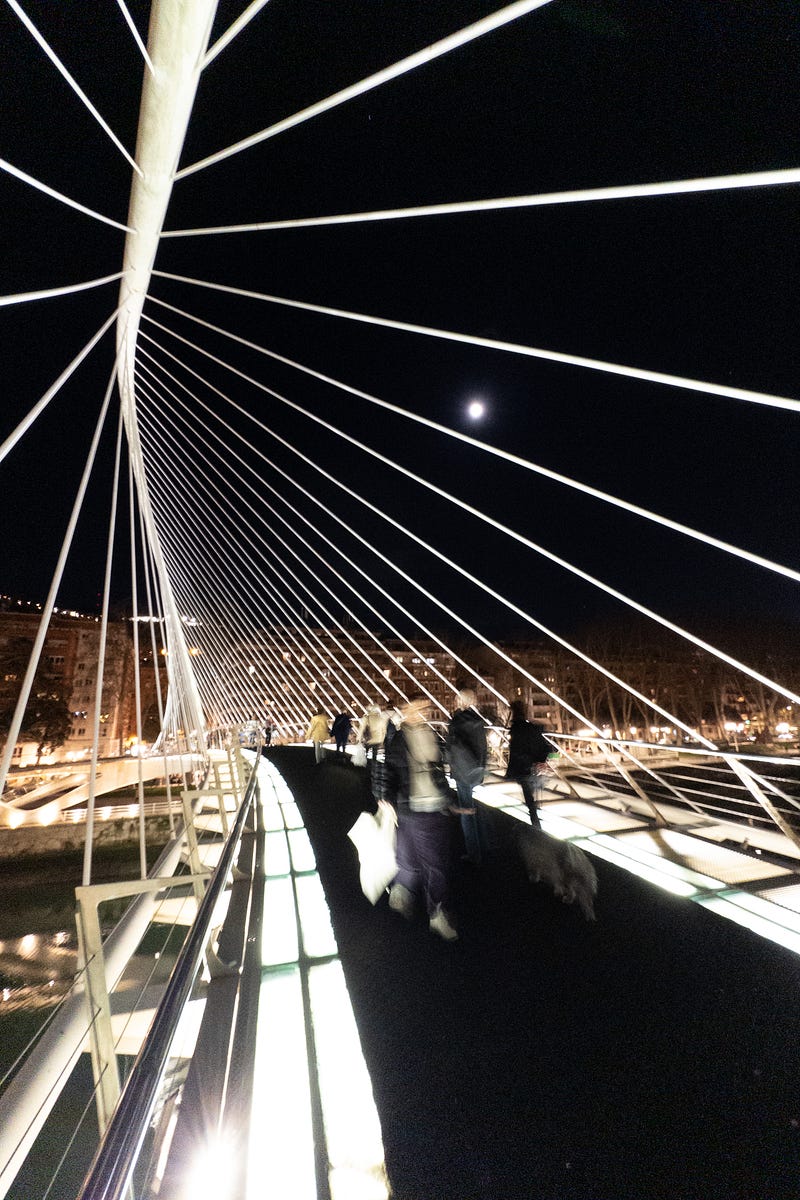
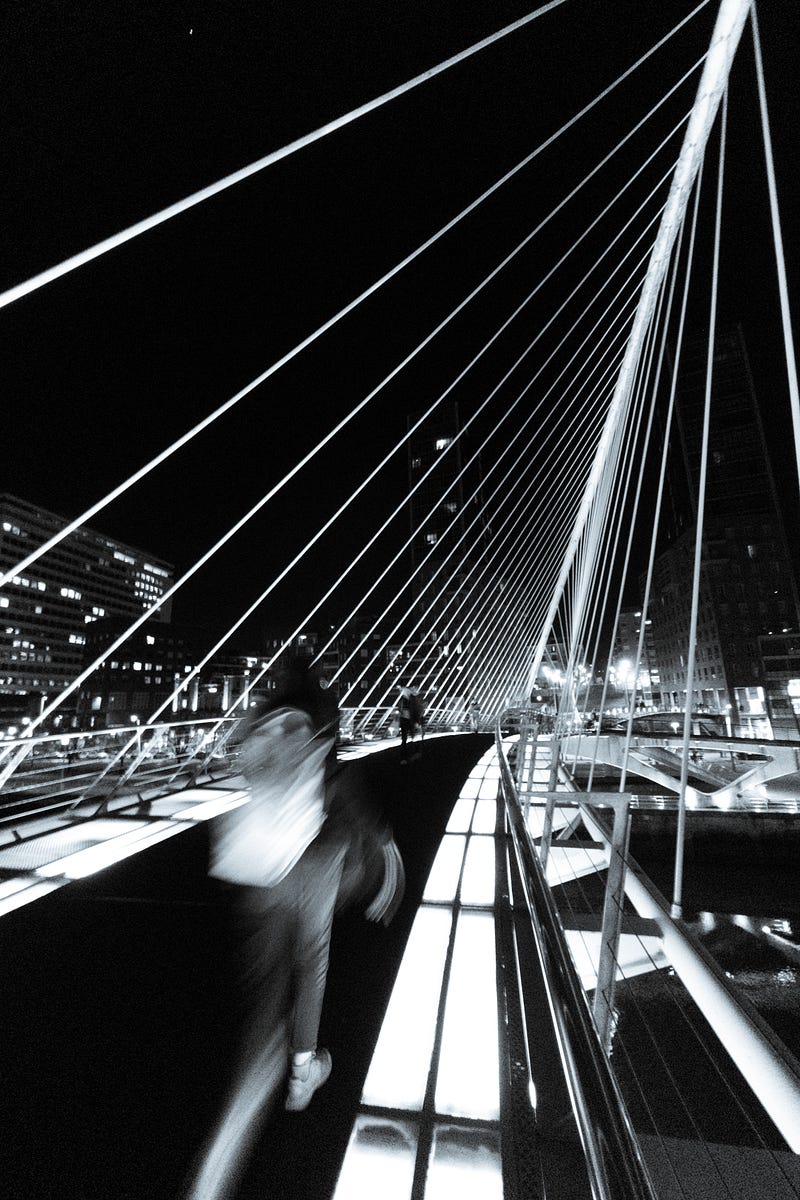
From the sample above, the one processed in black and white is the more successful one, but again nothing too special, also due to the “noisy” city buildings in the background.
I have used in other occasions this “blurred” technique, sometimes also adding camera shaking and rotation while the shutter is open, with more pleasant results.
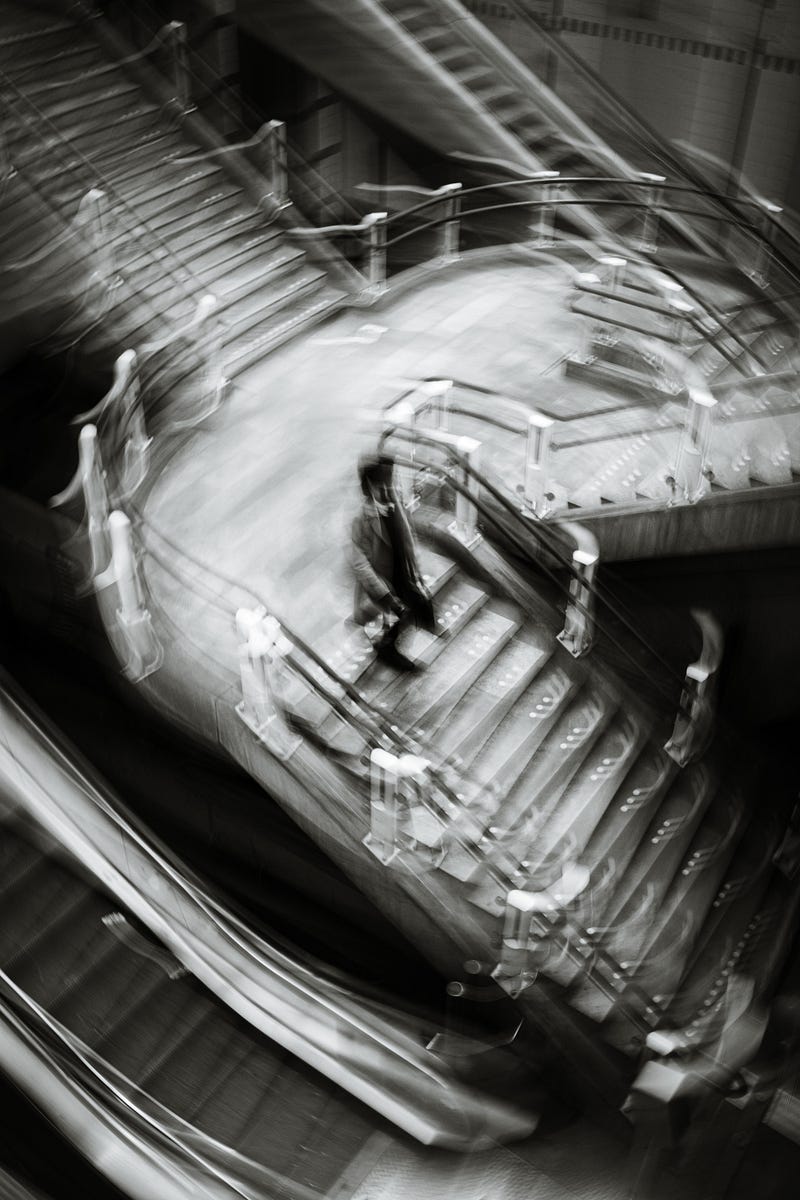
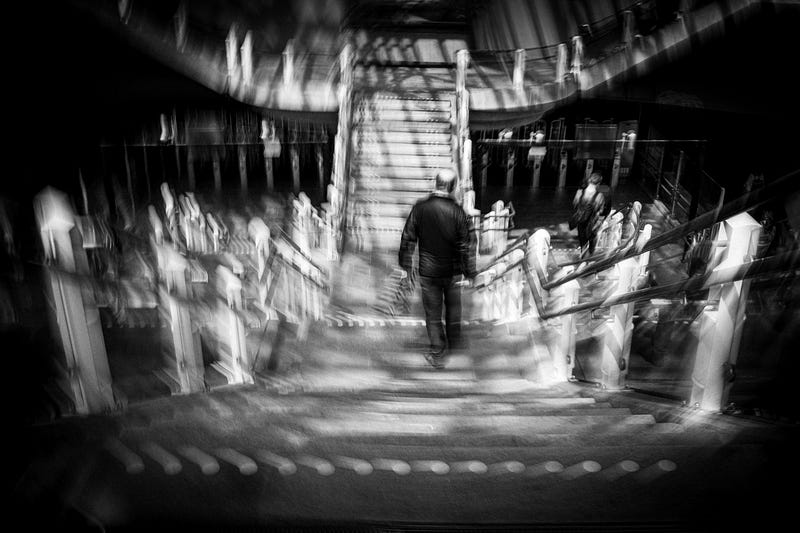
The examples below are photographs taken at the main entrance of the metro station close to the Markthal in Rotterdam.
In the first photo, I aimed to depict movement by intentionally blurring the image through a slow shutter speed, while also rotating the camera to create a circular motion that matches the path of the subject. This technique brings the photos to life, presenting an illusion of a short film made up of a sequence of frames.
The second photo was captured using the same technique, but this time, the camera was rotated horizontally with rapid left and right movements, creating a strong sense of instability as the senior citizen went down the stairs.
So that Tuesday evening in Bilbao was not the most fruitful for my craft.
It was getting late. It was an intense working day and already walked a lot without so much in my memory card. 9 PM, time to have dinner (quite late, but I was in Spain). Those idle moments after street walks always give me some rush of adrenaline caused by the expectation that after a shooting session on the street, eventually, you discover some hidden gem. Not the case this time.
But, life is long and the next day would be another day.
I woke up early on Wednesday, committed to flipping the coin in Bilbao downtown!
Play with the shadows and leave questions unanswered
I love to play with shadows and high-contrast scenes and…eventually turn things upside down.
It was a beautiful, sunny day and I felt energized. I smiled and left the hotel, leaving behind the frustrations of the previous evening.
What is special these days during the winter, is that the sun is low in the sky even during the morning.
Shadows get long and majestic in the street pavements and walls of buildings. You get a playground for your fine art creativity.
Predominant and large shadows in a frame can trick the viewer’s eyes as well.
Often it is difficult to make sense of composition where real-life objects or subjects have a disproportionate size and unexpected orientation.
That is when magic happens. When you can glue the viewer, who keeps asking her/himself:
What the heck is going on here?!
An effective approach to achieve these zen moments is to keep only the shadow of your street actors in the frame and omit them in the composition, or diminish their preponderance in comparison with their dramatic shadows.
And, again, we all have this at our reach in the streets.
As my friend John Free used to say:
To make a good photo you just need to align your eyes, mind, and heart
In this case, you also need to make good use of the weather and those enigmatic shadows, only possible because you have the sun running low in the sky above your head.
I took dozens of pictures in the morning. Looking for shapes, shadow areas, bright areas, and, most importantly people’s shadows.
After experimenting with several approaches, I settled indeed on compositions where the subjects were omitted from the frame, leaving their shadows as the scenes’ protagonists.
Let me give you some examples and walk you through the process.
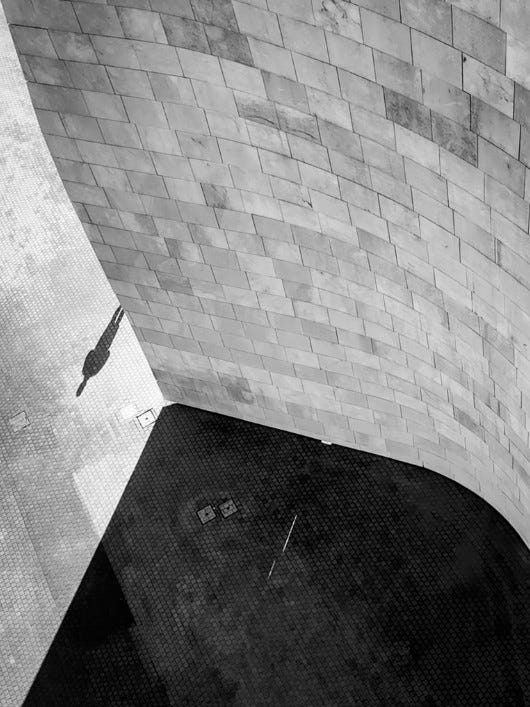
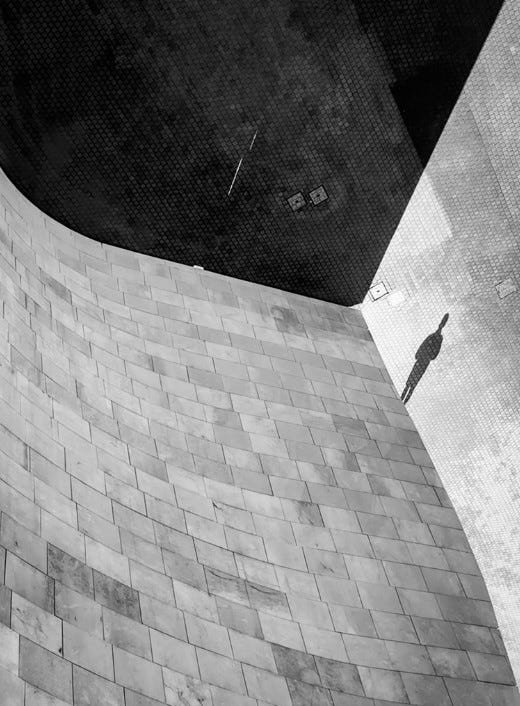
The photograph below was taken from a high POV with my camera vertically oriented. I took several shots of the subject and the human shadows “printed” in the pool of light. By controlling the timing of the shoot, I end up with compositions where the subject’s shadow is just entering the scene.
The original shoot is the first. By rotating the photo 180 degrees I got a more surrealistic look and at first sight is more difficult for your brain to solve the “puzzle” immediately.
The photo when turned upside down works better.
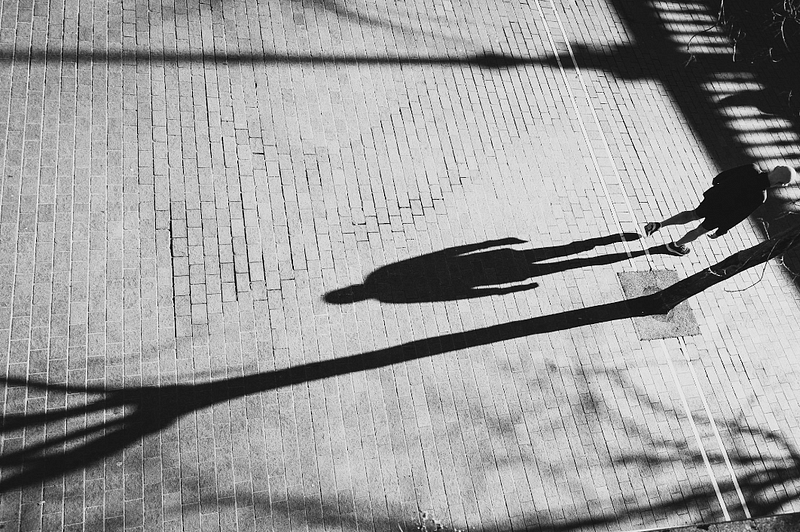
Another illustrative example is the photograph that I took at an elevated point in the river promenade.
My intention was to capture the shadows of the subject and the naked tree in a harmonious composition. The landscape orientation of the photo works well, but when I turned it 90 degrees, it revealed a completely different world. The pavement looked like a wall, and the shadows distorted the perspective, creating a dramatic effect. At first glance, it was difficult to make sense of the composition, making it more effective.
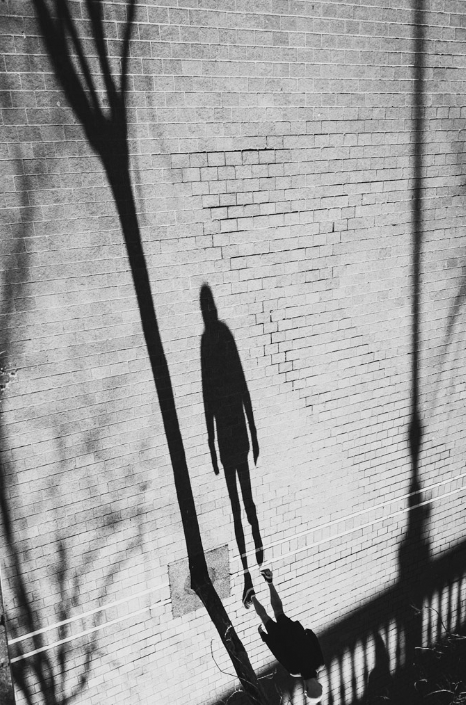
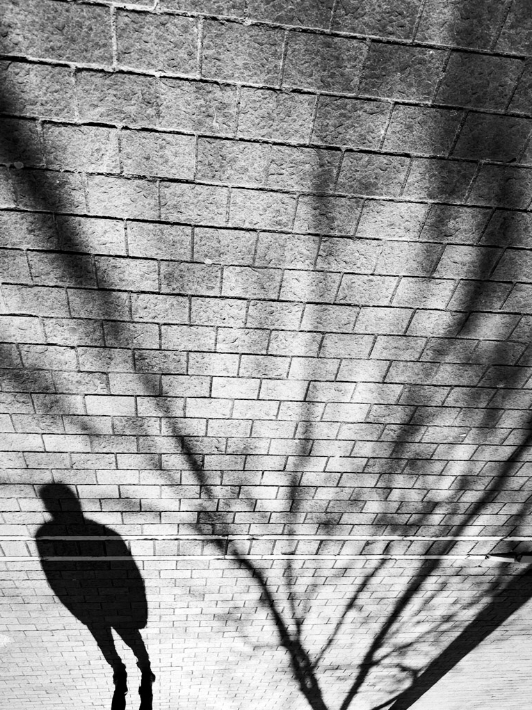
Still another example where I have made use of the same technique.
Conclusion
- Sometimes the shadow is better than the thing or person that casts the shadow.
- Deliberate blur photographs can add all new dynamics to the composition and to the story we want to convey.
- We should celebrate both on the street and not just have them as incidental in the frame; they should leap out.
- When we rotate our photos we can eventually enhance the dynamics and tell a completely different story.
- And finally, we shouldn’t give up after a frustrating day. The street is there every day for us to grab.


