avatarChristopher P Jones

Free AI web copilot to create summaries, insights and extended knowledge, download it at here

4444

Abstract

re just a few feet apart.</p><p id="fb54">It’s sometimes said that for the Romans the hole was a direct connection between the temple and the gods above. The actual truth may be more prosaic — that the hole serves to allow light and ventilation into the enormous space below.</p><p id="4e32">But who could not doubt its aesthetic power?</p><figure id="e01d"><img src="https://cdn-images-1.readmedium.com/v2/resize:fit:800/1*Ns82sjs5XNA9fIrwMs5HnQ.jpeg"><figcaption><i>“Camera degli Sposi” (ceiling detail) (1465–1474) by Andrea Mantegna. Fresco. Diameter: 270 cm. Palazzo Ducale, Mantua, Italy. Image source <a href="https://commons.wikimedia.org/wiki/File:Mantegna.jpg">Wikimedia Commons</a></i></figcaption></figure><p id="5850">Certainly not Andrea Mantegna, the Italian Renaissance artist, who achieved the same effect in paint when he punctured the ceiling of the Ducal Palace in Mantua<i> </i>with light and cloud.</p><p id="65b8">Interestingly, this remarkable <i>trompe-l’œil</i> artwork was painted in the palace’s bridal chamber, so that not only could the newlyweds look up to an everlasting blue sky, but cherubs, peacocks and other onlookers might also peer into the bedroom below.</p><h1 id="6a77">Personal Skies</h1><blockquote id="df25"><p>“The sky is always there for me, while my life has been going through many, many changes. When I look up the sky, it gives me a nice feeling, like looking at an old friend.”</p></blockquote><p id="d0a7">Yoko Ono’s relationship with the sky is perhaps one we can all identify with: a connection that is personal, despite the sky’s immensity.</p><p id="d073">Few artists were able to see the sky with such personal affiliation as Yves Klein. Born in 1928 in the south of France, Klein grew up near the Riviera town of Nice.</p><figure id="2d10"><img src="https://cdn-images-1.readmedium.com/v2/resize:fit:800/1*vAA7uwwgPDBmH8ICtfzQYQ.jpeg"><figcaption><i>IKB 191 </i>monochromatic painting (1962) by Yves Klein. Dry pigment and synthetic resin on canvas laid on panel. 65.5 × 49 cm. Image source <a href="https://commons.wikimedia.org/wiki/File:IKB_191.jpg">Wikimedia Commons</a></figcaption></figure><p id="bec5">As a youth, he would lie on his back on the beach and gaze up at the flawless blue sky. It was a vision he would revisit again and again in his monochrome blue paintings, canvases immersed in a single and pure ultramarine colour.</p><p id="62c9">These paintings are at once abstract compositions with immediate impact and also conceptual bids to capture something infinite and incorporeal. “I wrote my name on the back of the sky,” Klein later recorded, claiming the sky to be his greatest work of art.</p><p id="3065">I like the idea of an artist “claiming” the sky as their own — reminding us that the sky really can have no permanent owners.</p><p id="148c">This is perhaps what the philosopher Albert Camus meant when he described the sky as “a gift of infinite grace”.</p><h1 id="498e">Twilight to Night Skies</h1><p id="5063">Twilight conditions can incite a different emotional effect from the sky, as a new band of actors arrives: the distant stars and the moods of the moon.</p><figure id="aa53"><img src="https://cdn-images-1.readmedium.com/v2/resize:fit:800/1*YvEDLmkMCpWOoA3Xp8He0w.jpeg"><figcaption>Moonrise (1884) by Stanisław Masłowski. Oil on canvas. 124 × 220 cm. National Museum of Poland, Kraków, Poland. Image source <a href="https://commons.wikimedia.org/wiki/File%3AStanis%C5%82aw_Mas%C5%82owski_-_Wsch%C3%B3d_ksi%C4%99%C5%BCyca_(ol_n_p%C5%82_1884).jpg">Wikimedia Commons</a></figcaption></figure><p id="7309">The Polish artist Stanisław Masłowski brilliantly identifies the passage from day to night in his painting <i>Moonrise</i>. Trees silhouetted against the final breaths of daylight are charged by a gleaming golden moon reflected on a lake. Look closely and you’ll find a small flock of ducks taking wing from the water — returning home before night sets in.</p><p id="b232">Masłowski’s painting brings to mind the liminal quality of twilight — that is, the transitional passage from one stage of life to another, echoed in day’s slide into night.</p><figure id="e50f"><img src="https://cdn-images-1.readmedium.com/v2/resize:fit:800/1*SKYViZ4H9bHAJQgkRumT5Q.jpeg"><figcaption>Twilight at Seaside (1819) by Caspar David Friedrich. Oil on canvas. Hermitage Museum, Saint Petersburg, Russia. Image source <a href="https://www.wikiart.org/en/caspar-d

Options

avid-friedrich/wc-cr-puscule-en-bord-de-mer-1819-1819-hermitage-museum-135-170-cm-53-1-66-9-in-oil-on-canvas">WikiArt</a></figcaption></figure><p id="ab5b">Caspar David Friedrich undoubtedly had such philosophical reflections in mind when he painted <i>Twilight at Seaside</i>, showing four figures on the edge of the Baltic Sea, gazing at the setting sun.</p><p id="f632">The sky here is enormous, promising to deliver so much through the theatre of sunset. But remember — Friedrich is telling us — it will soon be dark and the vast sea and sky will be one.</p><p id="8d7e">When night fully arrives, its qualities can play host to a fresh range of projected thoughts and mysteries — which is probably why ancient civilisations often looked to the night sky for guidance in the stars.</p><figure id="a3a6"><img src="https://cdn-images-1.readmedium.com/v2/resize:fit:800/1*JAgQH773vuWDWCjcSgFkZA.jpeg"><figcaption>Landscape with the Rest on the Flight into Egypt (1606–1669) by Rembrandt van Rijn. Oil on wood panel. 34 × 48 cm. National Gallery of Ireland, Dublin, Ireland. Image source <a href="https://commons.wikimedia.org/wiki/File:Rembrandt_van_Rijn,_Landscape_with_the_Rest_on_the_Flight_into_Egypt.jpg">Wikimedia Commons</a></figcaption></figure><p id="1f7c">In Rembrandt’s <i>Landscape with the Rest on the Flight into Egypt</i>, which captures the story of the holy family’s nighttime escape from King Herod, an untamed moonlight scatters over the treetops, throwing into silhouette a shadowy and brewing landscape — representing notions of danger and dread, for which the dark sky has often stood.</p><p id="e2b5">All is wild in the sky overhead, whilst the blaze from the campfire creates a glowing cocoon, symbolising not only goodness and security in troubled times, but also Joseph’s wisdom to take the journey from Egypt.</p><h1 id="f6b7">New Dawn Skies</h1><p id="796d">Nothing in the sky stays the same for long.</p><p id="a49c">Ernest Hemingway’s line about the night being darkest before the dawn captures the metaphorical potency of a new day. The full quote runs:</p><blockquote id="2bbb"><p>“Night is always darker before the dawn and life is the same, the hard times will pass, every thing will get better and sun will shine brighter than ever.”</p></blockquote><figure id="752b"><img src="https://cdn-images-1.readmedium.com/v2/resize:fit:800/1*9MJOtKHn27WVgW2wmvm4Gg.jpeg"><figcaption><i>Impression, Sunrise (</i>1872) by Claude Monet. Oil on canvas. 63 × 48 cm. Musée Marmottan Monet, Paris, France. Image source <a href="https://commons.wikimedia.org/wiki/File:Monet_-_Impression,_Sunrise.jpg">Wikimedia Commons</a></figcaption></figure><p id="3da4">With its smoking chimneys and dockside cranes, Claude Monet’s <i>Impression, Sunrise</i> is less sentimentally optimistic about daybreak than Hemingway’s dictum — though perhaps no less provoking.</p><p id="0a42">Notably, it was one of the most improvised paintings Monet ever made. The smog and mist of the early morning sky over Le Havre are captured with rapid and elemental brush marks. It couldn’t have been made otherwise if the artist was going to faithfully represent a view that in a few minutes’ time would disappear.</p><p id="8bf3">And so it goes for the sky. Clouds roll up, rain bruises the landscape, the sun shines and sets and rises again, the moon and other celestial events come and go.</p><p id="b2e2">I think the sky is worth looking at for all these things and more. Grey or bright, silent or raging, ominous or sanguine, the sky is an ever-revolving source of invention — and therefore of limitless inspiration.</p><figure id="4957"><img src="https://cdn-images-1.readmedium.com/v2/resize:fit:800/1*igQbKCOI4qGLg6JzYP7H9w.png"><figcaption></figcaption></figure><p id="6ae7">If you liked this, you may also be interested in my book <a href="https://www.chrisjoneswrites.co.uk/how-to-read-paintings/"><i>How to Read Paintings,</i></a><i> </i>an examination of fifteen of art’s most enthralling images.</p><h1 id="84b6">Would you like to get…</h1><p id="b431">A free guide to the <i>Essential Styles in Western Art History</i>, plus updates and exclusive news about me and my writing? <a href="https://www.chrisjoneswrites.co.uk/sign-up-art/">Download for free here</a>.</p><h1 id="57b8">Join me…</h1><p id="5763">On <a href="https://www.instagram.com/greatpaintingsexplained/">Instagram</a> for more great paintings on the go!</p></article></body>

The Art of Looking at the Sky

Finding wonder in the world overhead
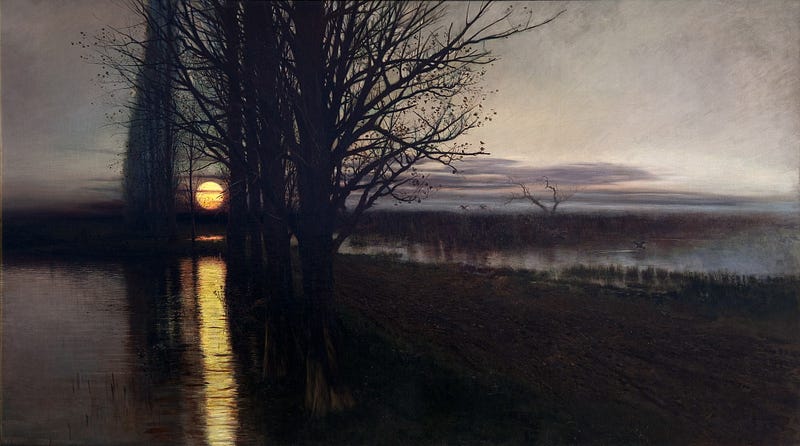
Moonrise (1884) by Stanisław Masłowski. Oil on canvas. 124 × 220 cm. National Museum of Poland, Kraków, Poland. Image source Wikimedia Commons

The sky above us takes up a vast portion of our visible world, yet how often do we look at it closely?

Lift your eyes above the trees and rooftops, and you will see a domain of fleeting episodes and perpetual revisions, a forever evolving picture of light, shadow, colour and form.

In short, the sky is a feast for the eyes — and artists have done much to encourage us to take more notice.

In a culture that is determined to measure everything, to pin it down and contain it, the sky teaches us that some things lie beyond our grasp.
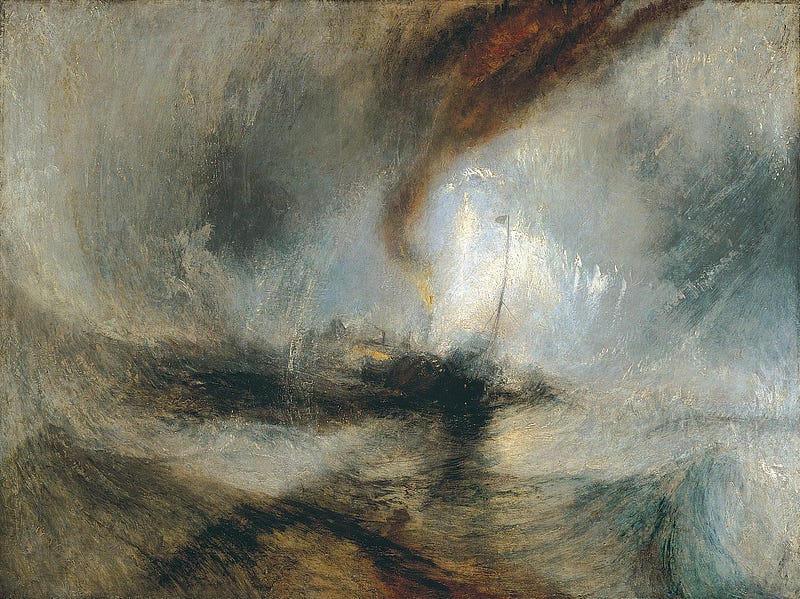
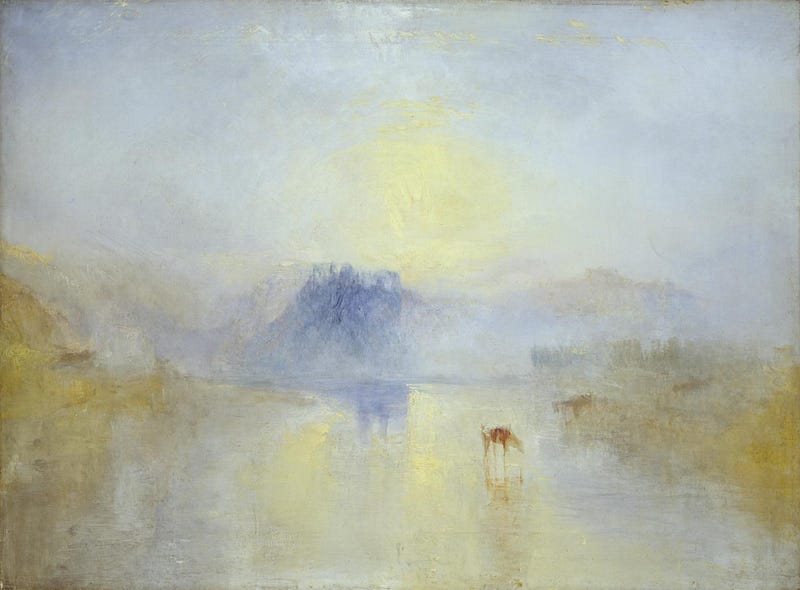
Left image: Snow Storm: Steam-Boat off a Harbour’s Mouth (c.1842) by J. M. W. Turner. Oil on canvas. 91 × 122 cm. Tate Britain, London, UK. Image source Wikimedia Commons. Right image: Norham Castle, Sunrise (1845) by J. M. W. Turner. Oil on canvas. 91 × 122 cm. Tate Britain, London, UK. Image source Wikimedia Commons

One artist who understood this well was J. M. W. Turner, who in the 19th century captured the sky in all its most terrifying and placid states. He was especially intent on painting the effects of sunlight as it interacted with rain or mist. For Turner, it was the very ephemerality of the sky that gave rise to a challenge to record it — to memorialise it.

These dramatic images may give the impression of extraordinary encounters. Indeed, there’s a story that Turner once had himself tied and bound to the mast of a ship in order to experience firsthand the feel of a storm crashing down from the sky.

But in every sky, dramatic or not, there’s value in taking the time to look.
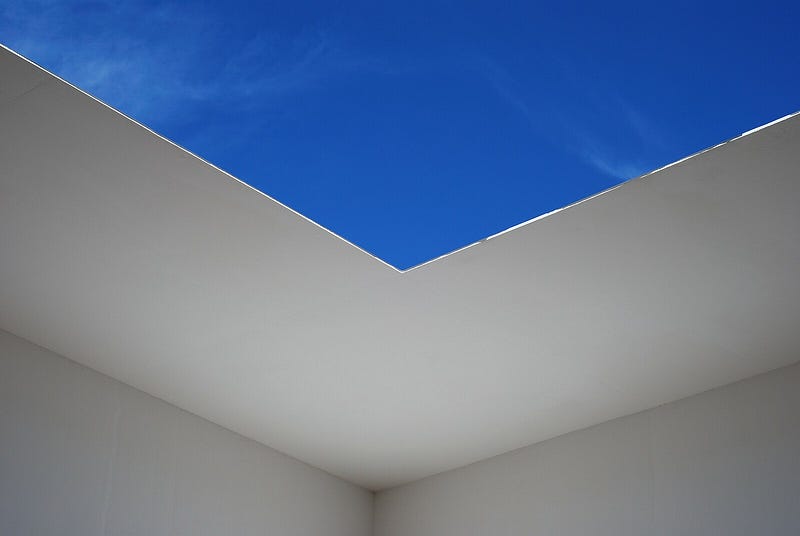
Space that sees (1992) by James Turrell. Grey and white concrete, limestone, fluorescent light with dimmers. 700 × 1000 × 1000 cm. Israel Museum Jerusalem. Image source Wikimedia Commons

I recently learned of the contemporary artist James Turrell, who makes this point well in his “Skyspace” artworks. Born in California in the 1940s, Turrell came to prominence in the 70s with a series of enclosed architectural spaces containing a simple aperture in the roof, isolating a defined portion of the sky for contemplation.

Visitors sit beneath the roof opening and look up. It’s the same sky that was above them when they were outside — except that this time a frame has been put around it. The viewer’s attention is seized by this cropped perspective.
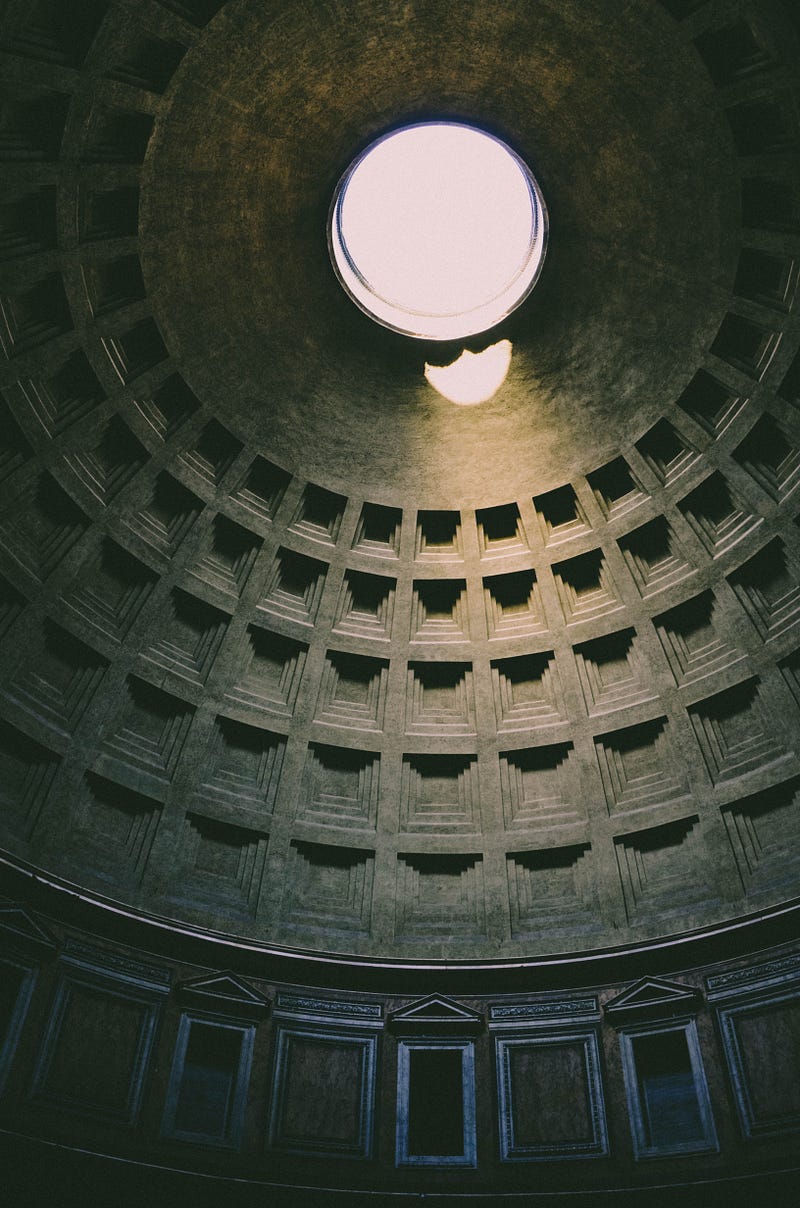
Photo by Lode Lagrainge on Unsplash

Turrell’s Skyspaces recall the ancient architectural masterpiece in the centre of Rome, the Pantheon. Anyone who has visited this extraordinary building will remember the elemental circular hole in the centre of the domed ceiling. Sunlight and rain pour through the oculus, reminding us that the outside and the inside are just a few feet apart.

It’s sometimes said that for the Romans the hole was a direct connection between the temple and the gods above. The actual truth may be more prosaic — that the hole serves to allow light and ventilation into the enormous space below.

But who could not doubt its aesthetic power?
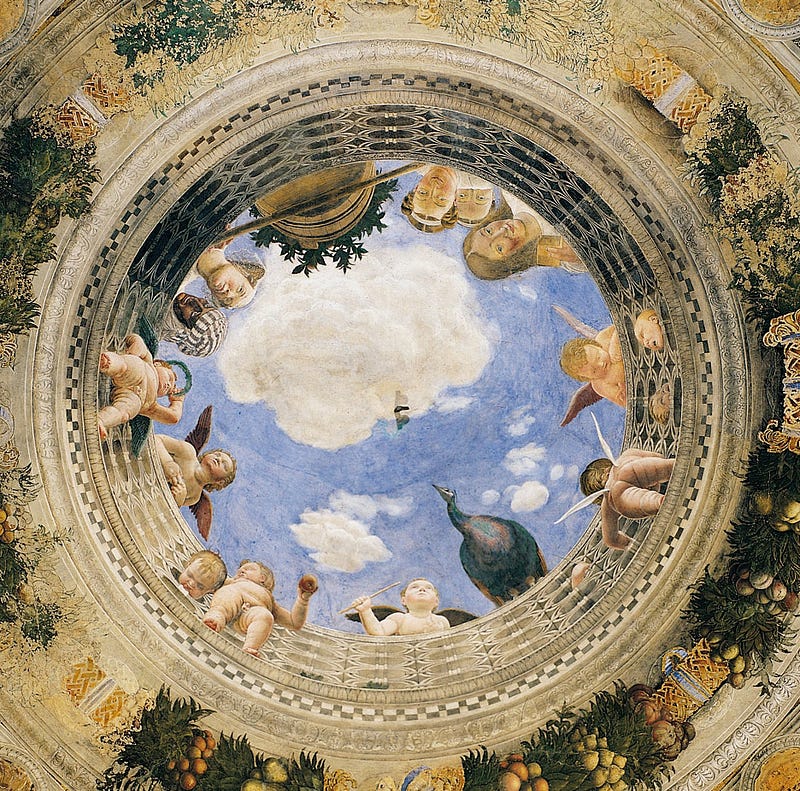
“Camera degli Sposi” (ceiling detail) (1465–1474) by Andrea Mantegna. Fresco. Diameter: 270 cm. Palazzo Ducale, Mantua, Italy. Image source Wikimedia Commons

Certainly not Andrea Mantegna, the Italian Renaissance artist, who achieved the same effect in paint when he punctured the ceiling of the Ducal Palace in Mantua with light and cloud.

Interestingly, this remarkable trompe-l’œil artwork was painted in the palace’s bridal chamber, so that not only could the newlyweds look up to an everlasting blue sky, but cherubs, peacocks and other onlookers might also peer into the bedroom below.

Personal Skies

“The sky is always there for me, while my life has been going through many, many changes. When I look up the sky, it gives me a nice feeling, like looking at an old friend.”

Yoko Ono’s relationship with the sky is perhaps one we can all identify with: a connection that is personal, despite the sky’s immensity.

Few artists were able to see the sky with such personal affiliation as Yves Klein. Born in 1928 in the south of France, Klein grew up near the Riviera town of Nice.
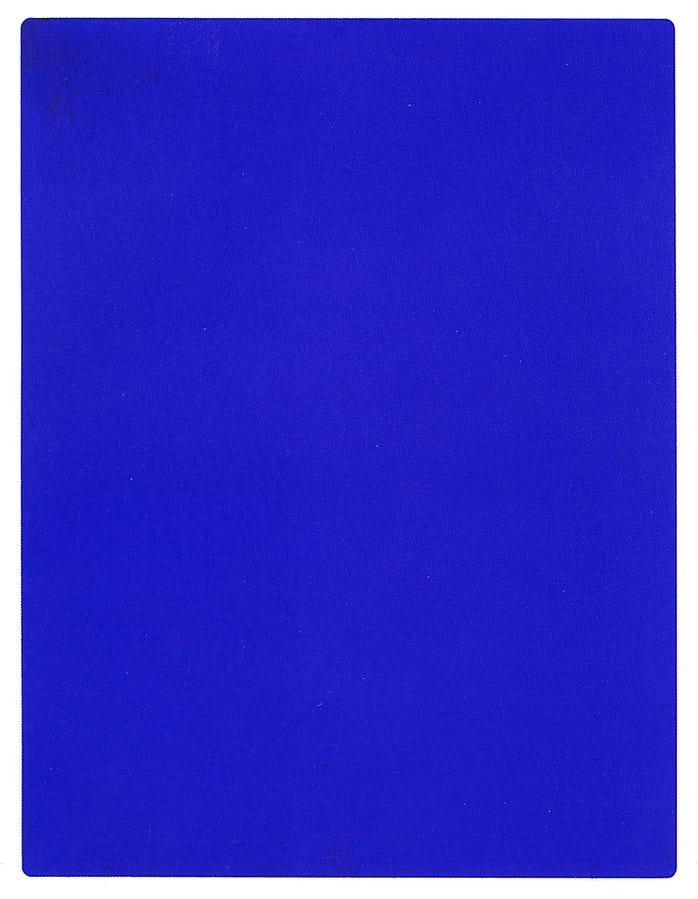
IKB 191 monochromatic painting (1962) by Yves Klein. Dry pigment and synthetic resin on canvas laid on panel. 65.5 × 49 cm. Image source Wikimedia Commons

As a youth, he would lie on his back on the beach and gaze up at the flawless blue sky. It was a vision he would revisit again and again in his monochrome blue paintings, canvases immersed in a single and pure ultramarine colour.

These paintings are at once abstract compositions with immediate impact and also conceptual bids to capture something infinite and incorporeal. “I wrote my name on the back of the sky,” Klein later recorded, claiming the sky to be his greatest work of art.

I like the idea of an artist “claiming” the sky as their own — reminding us that the sky really can have no permanent owners.

This is perhaps what the philosopher Albert Camus meant when he described the sky as “a gift of infinite grace”.

Twilight to Night Skies

Twilight conditions can incite a different emotional effect from the sky, as a new band of actors arrives: the distant stars and the moods of the moon.

Moonrise (1884) by Stanisław Masłowski. Oil on canvas. 124 × 220 cm. National Museum of Poland, Kraków, Poland. Image source Wikimedia Commons

The Polish artist Stanisław Masłowski brilliantly identifies the passage from day to night in his painting Moonrise. Trees silhouetted against the final breaths of daylight are charged by a gleaming golden moon reflected on a lake. Look closely and you’ll find a small flock of ducks taking wing from the water — returning home before night sets in.

Masłowski’s painting brings to mind the liminal quality of twilight — that is, the transitional passage from one stage of life to another, echoed in day’s slide into night.
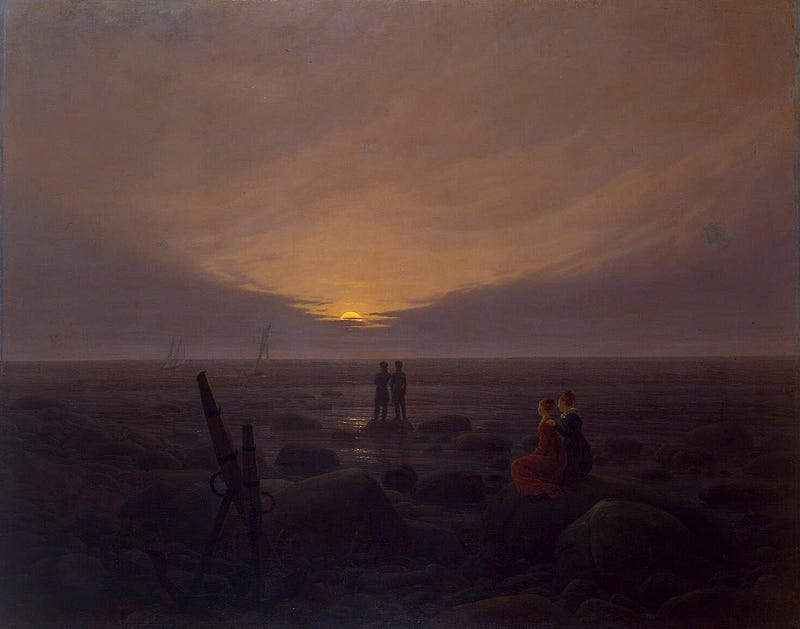
Twilight at Seaside (1819) by Caspar David Friedrich. Oil on canvas. Hermitage Museum, Saint Petersburg, Russia. Image source WikiArt

Caspar David Friedrich undoubtedly had such philosophical reflections in mind when he painted Twilight at Seaside, showing four figures on the edge of the Baltic Sea, gazing at the setting sun.

The sky here is enormous, promising to deliver so much through the theatre of sunset. But remember — Friedrich is telling us — it will soon be dark and the vast sea and sky will be one.

When night fully arrives, its qualities can play host to a fresh range of projected thoughts and mysteries — which is probably why ancient civilisations often looked to the night sky for guidance in the stars.
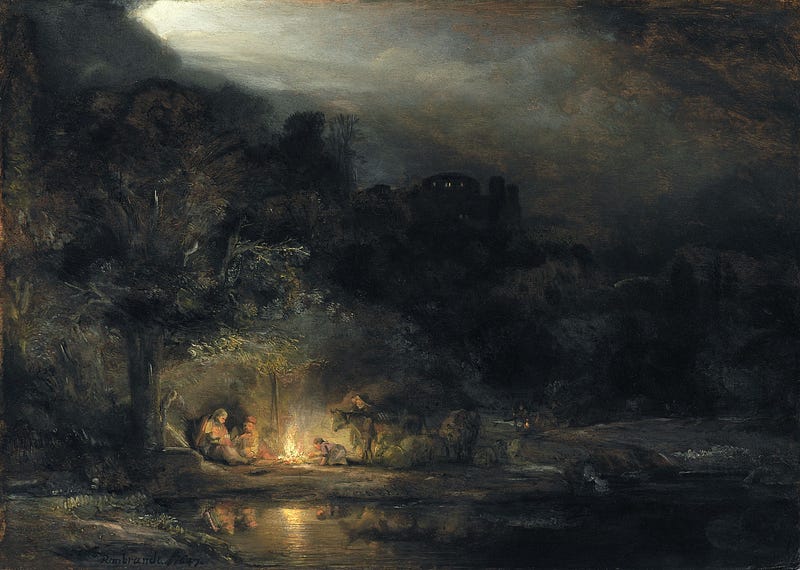
Landscape with the Rest on the Flight into Egypt (1606–1669) by Rembrandt van Rijn. Oil on wood panel. 34 × 48 cm. National Gallery of Ireland, Dublin, Ireland. Image source Wikimedia Commons

In Rembrandt’s Landscape with the Rest on the Flight into Egypt, which captures the story of the holy family’s nighttime escape from King Herod, an untamed moonlight scatters over the treetops, throwing into silhouette a shadowy and brewing landscape — representing notions of danger and dread, for which the dark sky has often stood.

All is wild in the sky overhead, whilst the blaze from the campfire creates a glowing cocoon, symbolising not only goodness and security in troubled times, but also Joseph’s wisdom to take the journey from Egypt.

New Dawn Skies

Nothing in the sky stays the same for long.

Ernest Hemingway’s line about the night being darkest before the dawn captures the metaphorical potency of a new day. The full quote runs:

“Night is always darker before the dawn and life is the same, the hard times will pass, every thing will get better and sun will shine brighter than ever.”
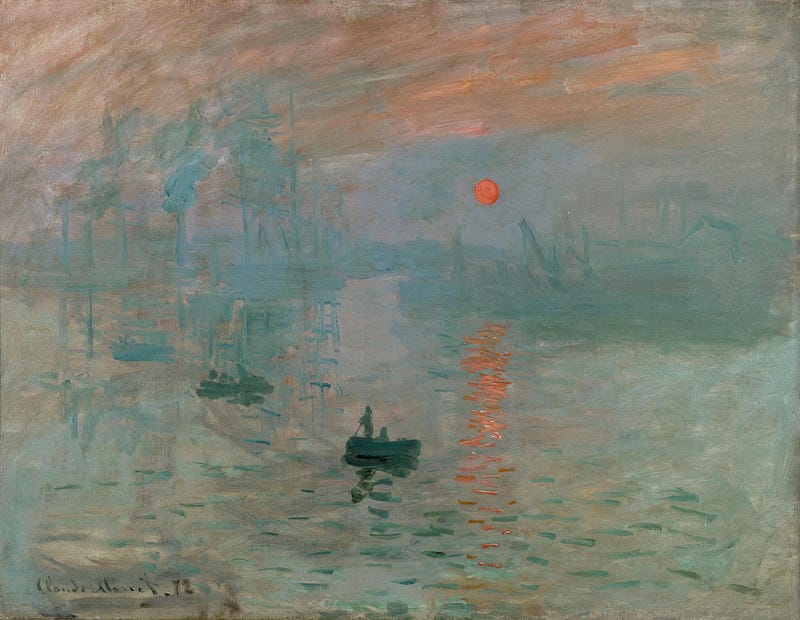
Impression, Sunrise (1872) by Claude Monet. Oil on canvas. 63 × 48 cm. Musée Marmottan Monet, Paris, France. Image source Wikimedia Commons

With its smoking chimneys and dockside cranes, Claude Monet’s Impression, Sunrise is less sentimentally optimistic about daybreak than Hemingway’s dictum — though perhaps no less provoking.

Notably, it was one of the most improvised paintings Monet ever made. The smog and mist of the early morning sky over Le Havre are captured with rapid and elemental brush marks. It couldn’t have been made otherwise if the artist was going to faithfully represent a view that in a few minutes’ time would disappear.

And so it goes for the sky. Clouds roll up, rain bruises the landscape, the sun shines and sets and rises again, the moon and other celestial events come and go.

I think the sky is worth looking at for all these things and more. Grey or bright, silent or raging, ominous or sanguine, the sky is an ever-revolving source of invention — and therefore of limitless inspiration.

If you liked this, you may also be interested in my book How to Read Paintings, an examination of fifteen of art’s most enthralling images.

Would you like to get…

A free guide to the Essential Styles in Western Art History, plus updates and exclusive news about me and my writing? Download for free here.

Join me…

On Instagram for more great paintings on the go!

Art
Art History
Inspiration
Creativity
Self
Recommended from ReadMedium