The Art of Facilitating Change Processes
There are a great number of effective and tested ways to facilitate individual and social change processes in communities, organizations, and culture. To effectively employ some of these methods and tools requires in depth training. They become more effective if they are based on experience that is built up by applying them in more and more challenging contexts, willing to learn from mistakes and open to constructive feed-back from the people we are working with. Other methods can be explored in a day-long or weekend workshop and can then already be used to build up experience as we go along. [This article is an excerpt from the Worldview Dimension of Gaia Education´s online programme in Design for Sustainability.]
There is a lot of good literature and Internet resources on facilitation methods and social change processes. This section will introduce you to a few examples, and it is up to you to explore the ones that draw your attention. Some people dedicate their entire lives to the path of becoming effective and compassionate facilitators of social change. The learning never stops, as each new situation and context offers new challenges and opportunities to grow and learn.
Worldwork, Deep Democracy, and Process Oriented Psychology:
“Process Work is an innovative approach to individual and collective change that brings psychology, group dynamics, spirituality, and creative expression together in a single paradigm. An offshoot of Jungian psychology, Process Work was developed by Jungian analyst Arnold Mindell in the 1970s” (Process Work Institute, 2012). Arne Mindell and this wife Amy Mindell have since taken process work a step further into what they call worldwork, and deep democracy.
Theory U:
The U-process and Theory U is a method for change management that understands leadership as a process of inner knowing and social innovation. It was initially developed in the late 1960s by Friedrich Glasl and Dirk Lemson,but has reached widespread application since the 2009 publication of Otto Scharmer’s book Theory U — Leading from the Future as it emerges and through the previous work of Otto Scharmer, Jospeh Jaworski, Peter Senge, and Betty Sue Flowers, which is described in Presence — Exploring profound change in people, organizations and society.
“Theory U explores a whole new territory of scientific research and personal leadership. By moving through the “U” we learn to connect to our originating Self. We travel down the left side of the “U” to find ourselves in the realm of presencing, where we learn to sense the future that is seeking to emerge. At that level of operating, we experience the opening of our minds, our hearts and our wills. Yes, this is an intellectual journey, but it’s one that is grounded in real life experience and shared practices. On this journey of sensing, presencing and realizing, we learn new ways of being — ways crucial for each of us at this chaotic time.”— Presencing Institute, 2012
The ‘Oasis Game’ and ‘Warriors without Weapons’:
The Oasis Game and the Warriors without Weapons training programme for social entrepreneurs have both been developed within the Instituto Elos in Brazil, an NGO founded in 2000 by a group of urban architects.
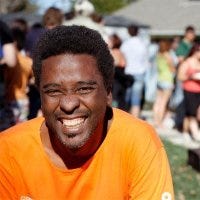
“The Oasis game is a two day event that invites a community to project and build in a cooperative way a challenging project chosen by the members of the community to suit their needs. Projects can range from a square, a park, a kindergarten to a cultural center. The game considers a broad definition of the community and involves representatives from different sectors of the society — NGO’s, Government as well as community members from other parts of the city.”
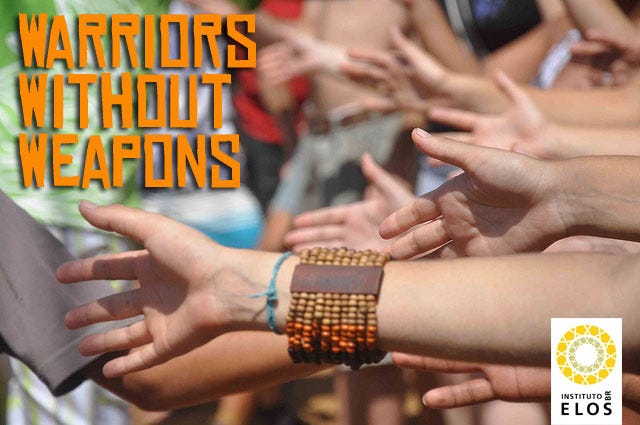
“Warriors without Weapons is a biennial learning program where youth social entrepreneurs from all over the world are immerged for 30 days. The objective of the program is to get participants to return to their communities inspired, armed with efficient techniques to work in groups. In a strengthened cooperative spirit, they will be able to act in their own communities.”— Elos Institute, 2012
Dragon Dreaming:
The Dragon Dreaming process was developed by John Croft and Gaia Foundation Australia. It is an effective way to support communities in turning vision into reality based on a 12-step project management process.
“How do you make your own, or other people’s dreams come true? Leaders are often required to get things happening that have never happened before. Everywhere there is a gap between how things are and what they might become. Effective leadership is often a question of bridging this gap, of building a bridge, that enabling others to come to work together with the leader to achieve their own or the group’s vision. This is what the process of project building is all about. A project is defined as any planned undertaking designed to achieve a goal of specified results within a given time.”— John Croft, 2008 (Dragon Dreaming website)
The Art of Hosting:
This approach offers an effective way to access and harvest collective wisdom and group intelligence, as well as, a path to enhancing the self-organizing capacity of groups of any size. A range of powerful conversational processes invite people into shared leadership and responsibility for the changes they wish to see. “The Art of Hosting is an approach to leadership that scales up from the personal to the systemic using personal practice, dialogue, facilitation and co-creation of innovation to address complex challenges.” (Art of Hosting, 2015).
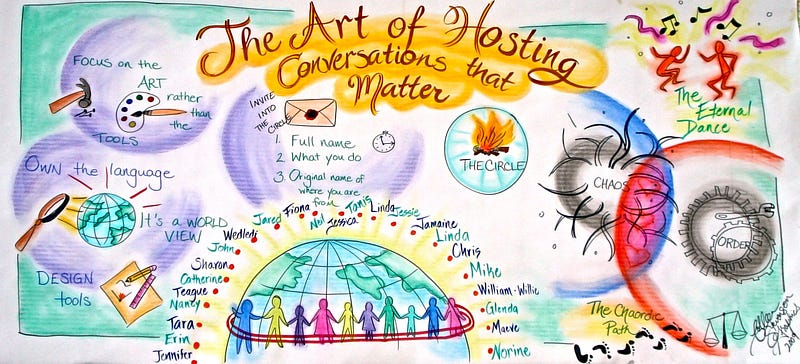
The Four Fold Practice at the core of this approach begins with presence to oneself and once hopes and fears. The second step is to become an active participant and enter into dialogue with others, to practice conversation. The third step is to host conversations that matter in your community and move from participant to practitioner. The fourth practice is co-creation based on mutually supportive space of exchange and collaboration in ways that acknowledge that none of us have all the answers or could implement them alone. Here is a short video (5mins) explaining the approach.
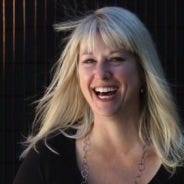
Mary Alice Arthur is one o the growing number of stewards of the Art of Hosting around the world — see list of stewards (image)
Possibility Management:
This approach and its associated practices have been created by Clinton Callahan and colleagues over the last 40 years. They offers a path towards up-grading our own thoughtware (our patterns of thinking, feeling and reacting to those thoughts and feelings).
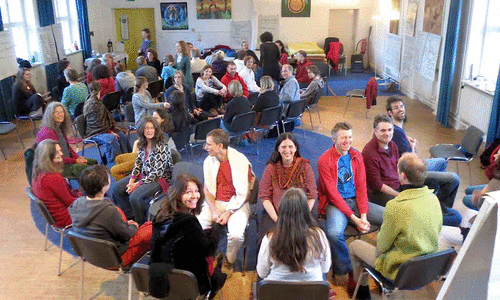
A series of challenging individual and group practices invite people to shift their context and reflect on how this context affects their worldview and value system, ultimately driving their decision-making and behavior patterns in a given situation.
Possibility management offers people a pathway to radical responsibility and effective wise action in the world by helping them to overcome limiting thought and behavior patterns.
For nearly 20 years, Clinton Callahan and the guild of trainers in Possibility Management have worked with many businesses, individuals and communities offering the ‘Expand the Box Training’ and ‘Possibility Labs’. Their collaboration with different member communities of the Global Ecovillage Network has greatly supported these communities.
Here is a link to an introduction to this approach that Clinton has kindly written for students on Gaia Education’s EDE and GEDS programs. The video (4 mins) above offers a brief introduction to the ‘Expand the Box’ training and this animation (3:35 mins) explains in some more detail what the “box” is. You can find out more on the Next Culture website.
…
[Note: Throughout Gaia Education´s online programme in Design for Sustainability many other techniques and approaches to facilitating culture change are introduced. If you are missing particular ones like Joanna Macy’s ‘The Work That Reconnects’, the Ojai Foundation’s ‘The Way of Council’, or decision making and collaboration tools like ‘Sociocracy’ or ‘Holocracy’, rest assured that these are introduced either in the worldview or social dimension of the course. This piece is an excerpt from the Worldview Dimension. I wrote the new version of the Worldview dimension for Gaia Education in 2012 and revised and updated it in 2016. … You might also enjoy my book Designing Regenerative Cultures published by Triarchy Press in 2016.]
Post-script: Wout-Jan Koridon has kindly contacted me to offer some additions to this introductory piece. Since they might be useful to the reader, I decided to add his comments here:
Appreciative Inquiry — https://appreciativeinquiry.case.edu/ and Liberating Structures — http://www.liberatingstructures.com/ls/ Another usefull overview might be ‘Mapping Dialogue — A research project profiling dialogue tools and processes’ commissioned by GTZ and created by the Pioneers of Change Associates as an initial toolbox for the Nelson Mandella Foundation, this project aimed to map varying dialogue processes for use by social change practitioners. http://www.mspguide.org/sites/default/files/resource/mapping_dialogue_-_a_research_project_profiling_dialogue_tools_and_processes.pdf