
The Art of Being Where You Are
How to Find Peace in the Present Moment
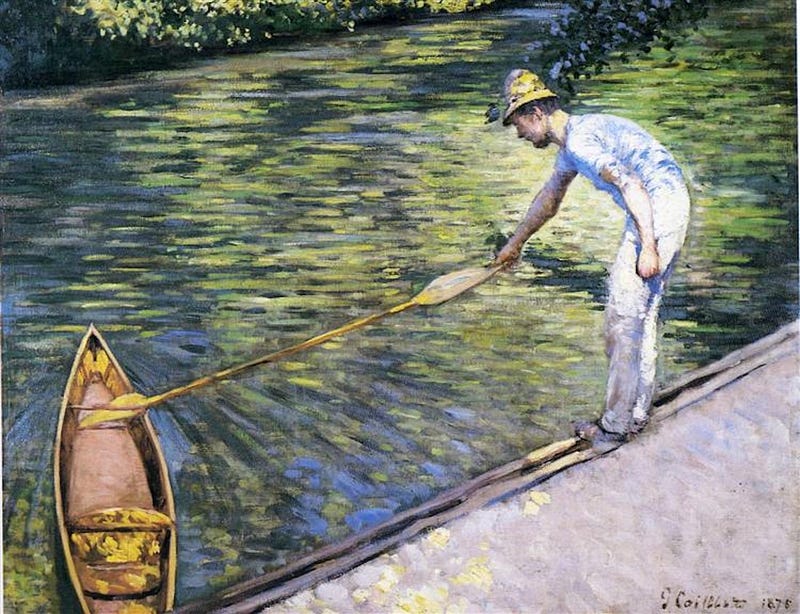
“If you are depressed, you are living in the past. If you are anxious, you are living in the future. If you are at peace, you are living in the present.” — Lao Tzu
Peace is in the present moment. But to be in the present, as the Chinese philosopher Lao Tzu highlighted, one must learn to let go of the past and manage their anxiety about the future. Cultivating these skills begins with training the mind. The Buddha declared, “I do not see even one other thing that, when untamed, unguarded, unprotected, and unrestrained, leads to such great harm as the mind.”
However, the wisdom of being present is not unique to Eastern philosophy.
Training the Mind
In his Meditations, the Roman emperor Marcus Aurelius recommends that we strengthen our attachment to the present moment. “Every hour of the day,” he writes, “give vigorous attention . . . to the performance of the task in hand with precise analysis, with unaffected dignity, with human sympathy, with dispassionate justice — and to vacating your mind from all its other thoughts.”
Aurelius advocates the restorative powers of emptying our minds and withdrawing into the self. It is not necessary to flee to the country, the sea, or the hills when we can retreat into our own selves at any time. “No retreat offers someone more quiet and relaxation than that into his own mind,” observed Marcus Aurelius in his journal, “especially if he can dip into thoughts there which put him at immediate and complete ease.” For this reason, we should seek to achieve such a withdrawal into the mind, this retreat enabling us to “renew” ourselves.
The writer and professor of cultural history, Anna Katharina Schaffner, explains in her book The Art of Self-Improvement,
The French philosopher Jean-Jacques Rousseau also cherished the power of the now. For him, being present is a means by which to free ourselves from toxic cultural norms, reconnecting with our authentic self, and reaching a state of heightened sensibility.
In such a state, Rousseau writes, “My soul can find a position solid enough to allow it to remain there entirely and gather together its whole being, without needing to recall the past or encroach upon the future.” For Rousseau, training our minds to be present requires us to block our restless minds from time-traveling and anchoring them to the here and now.
On Being Time
The American Essayist Ralph Waldo Emerson warned against our problematic relationship with time. Emerson advised that instead of privileging the past or worrying about the future, we must relearn to honor the present.
“But man postpones or remembers,” Emerson complains, “he does not live in the present, but with reverted eye laments the past, or, heedless of the riches that surround him, stands on tiptoe to foresee the future. He cannot be happy and strong until he too lives with nature in the present, above time.”
Schaffner writes that the command to “be present” does not sound like a theatrical strategy for self-improvement. And yet, considering how hard we find it to do so, how many of our thoughts tend to revolve around our past, future, or faraway people and events? Learning to be present is one of the most challenging and radical techniques for self-transformation imaginable.
Do you find yourself more often pulled to the past or the future? What does it mean to live beyond time?
Have you ever heard someone say, “Kids grow up so fast?” As a parent, I understand the statement. Life can feel like time is flowing, and we are on the bank of that river of time (watching things grow and age around us). But in truth, time is flowing like a river, and we (and everything else) are part of that river — inextricably linked.
In the classic Zen Mind, Beginner’s Mind, Shunryu Suzuki wrote, “The true purpose of Zen is to see things as they are, to observe things as they are, and to let everything go as it goes… Zen practice is to open up our small mind.” It is difficult to see (and accept) that the river of time is moving forward — despite our desires to go back or ahead. As Alan Watts put it: If we open our eyes and see clearly, we discover there is no other time than this instant and that the past and the future are abstractions without concrete reality.
The Art of Attention
Our attention is our most valuable resource. The Big Tech companies know this too well and even vie for our attention. The term “attention economy” was coined by psychologist, economist, and Nobel Laureate Herbert A. Simon.
The Stoics knew the importance of attention over two thousand years ago. Epictetus, the slave turned Stoic philosopher, stressed to his students,
“You become what you give your attention to. If you yourself don’t choose what thoughts and images you expose yourself to, someone else will.”
But someone who urged us to think deeply about attention even more than the Stoics was the French philosopher Simone Weil. In his book, The Socrates Express, Eric Weiner (a previous podcast guest) writes that Weil demands we pay attention. “Not any sort of attention, either. Weil’s notion of attention is unlike any I’ve encountered.”
Weiner explains,
Attention matters. More than anything else, it shapes our lives. ‘For the moment, what we attend to is reality,’ said the American philosopher William James. Something only exists for us if we attend to it. This is not a metaphor. It is a fact. As many studies reveal, we do not see that to which we don’t pay attention. The quality of our attention determines the quality of our lives. You are what you choose to pay attention to and, crucially, how you pay attention.
For Weil, attention was a moral virtue, no different from courage or justice. However, attention is not concentration, observed Weil. Concentration constricts. Attention expands — concentration tires. Attention rejuvenates. Concentration is focused thinking. Attention is thinking suspended.
“We do not obtain the most precious gifts by going in search of them but by waiting for them,” according to Weil.
Speed is the enemy of attention. “Patience is a virtue. It is also good for you, as the latest research shows. Patient people are happier and healthier than impatient ones, studies find. Patient people are more likely to act rationally. They have better coping skills,” writes Weiner. Similarly, Weil believed that all of our mistakes are due to a thought seizing upon some idea too hastily.
Attention is difficult, but not the way judo or archery is difficult. “It’s hard the way meditation or parenting is hard. It’s hard the way waiting for a train is hard,” writes Weiner. Attention is not a skill we acquire but a state of mind — an orientation. We don’t so much learn attention as we turn toward it. “This pivot only happens when we pause, like Socrates, and get out of our own head.”
Final Thoughts
The art of being where you are is recognizing that peace is the project. Tranquility is found by learning to relax, navigate our anxiety, and begin to live in the here and now. As the Russian writer Leo Tolstoy wisely observed, “Remember then: there is only one time that is important — Now! It is the most important time because it is the only time when we have any power.”
Thank you for reading; I hope you found something useful.
P.S. If you like daily meditations on the art of living, check out the Perennial Meditations newsletter.