
The Art of Becoming You
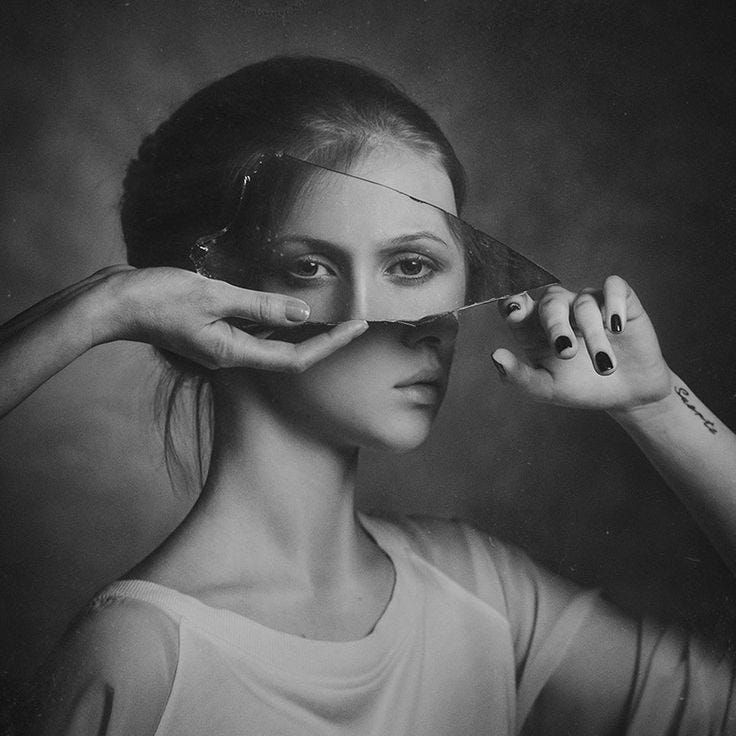
“Stars, hide your fires; Let not light see my black and deep desires.”
― William Shakespeare
We exist in the deep, beyond our bodies of meat and muscle and bone. Lost somewhere in the wildering tangle of neurons and electrical sparks of our being.
No one knows precisely how we came to be, or when we begin and where we end. To do so, we would first need to define who we refer to; to understand what exists behind our emotions and thoughts.
All we can say with certainty is that a subjective and conscious self exists, experiencing its own version of the universe.
We expect others to know who we are when we do not. We cannot know who we are, because we don’t know which part of us is not us. We, who expend so much of ourselves attempting to explain the complexities of existence, the ineffable and unfathomable
“The quest for identity becomes a search for a suitable mask.”
— Alan Watts
Some of the time, we are required to be like other people. At other times, they are required to be like us. So we all settle on being someone different than ourselves. Our thoughts become someone else’s opinions, our lives a copy, and our passions no more than copied quotations.
We hope to be liked and loved and accepted by the other people we encounter. Of course, it feels good to be liked. Our well-being, to a certain degree, depends on solid relationships.
The desire to be liked is an evolutionary need to cooperate, reproduce, and belong. We wear masks because there is a clear sociological purpose to being concerned with what others think of us.
We want to be thought of as being happy most of the time, no matter how improbable that is. We worry about how other people view some strange foolishness of ours from the past. About deeds done or not done, items owned or not owned.
The maintenance of a good image is stressful. The fear of not living to expectation, of judgment and rejection, and of missing out, it can all become overwhelming. And yet these feelings grow from little more than a pretence.
We spend vital energy trying to please others and we forget what we need to be happy. This creates a disconnect in us, and we feel unable to find a way back to ourselves.
Many of us begin life conditioned by parents and teachers to believe we are the centre of attention. Each one of our small achievements is adjudged to be impressive or significant by those who love us.
We are told that it is important to smile, no matter how sad we feel, and to not crayon the walls. We enter an adulthood surrounded by bare walls and forced smiles.
The cosmos does not care if we smile or cry or paint pictures of our friends on walls. As we age and are socialised, a faint voice grows louder, reminding us that nearly all of life — past, present, and future — is indifferent to our successes and failures.
We are not at the centre of anything at all, not even within our own minds. We are unimportant in any grand sense of the word. Hardly anyone or anything truly cares about what we want.
How often do we think about strangers? How often do we think about the mistakes, missteps, and strangeness of those we know?
The ones we love, our friends and colleagues and family, they all deserve attention. But, we are so engrossed in our own fears that it leaves almost no time or emotional energy to worry much about anyone else.
We are concerned that others pay close attention to our thoughts and behaviour. In reality, they are most likely thinking about their own mistakes or wondering what others think of them. Just like us, they have little time to worry about the minor mistakes of others.
Understanding how little others care removes the self-importance that prejudices our judgment. When we can be objective, it gives us greater freedom to do what we want.
We each have concurrent lives. The life we live and the unlived life within us. The two exist in contradiction to each other.
Over time, our understanding of ourselves becomes more limited by the masks we wear. Our view is restricted. We search for a suitable identity, a sense of self to cling to, but in doing so, we only further obscure the truth of who we are. It is too easy to live through an entire life in this half-blinkered state.
Even in the understanding of this self-deception, we feel misunderstood, as if people, even those we love most, don’t know us; the concern is always about how others experience us and never how we experience our own minds.
We want to be liked and remembered as competent and beautiful and agreeable and kind and successful. Even if that means never being ourselves. We accept, as a sacrifice paid for acceptance, that our true self will never synchronise with the minds of others, that they cannot know our naked candour.
We wear masks to hide from the feelings that hurt most and the emotions that sting most. A longing for impossible things, precisely because they are impossible; the desire for what could have been and regret over not being someone else; a dissatisfaction with the world’s existence, with our own existence.
We can spend our lives letting others tell us who we are. Perfect or flawed. Rational or irrational. Victors or losers. Or we can decide. And maybe, in finding ourselves, we can create something better in the form of our own authenticity.
“We all have two lives: The true, the one we dreamed of in childhood And go on dreaming of as adults in a substratum of mist; the false, the one we love when we live with others, the practical, the useful, the one we end up by being put in a coffin.”
― Fernando Pessoa


