
Running is One of My Antidepressants
The Effects of Exercise on Mental Health

Searching the limits of the body and mind, one step at a time. Running into darkness to find the light.
— Rob Krar
Rob Krar is an ultra runner. A former college athlete and pharmacist, his track record for winning some of the most iconic long-distance races is impressive. He is the two-time winner of the Leadville 100M (2014, 2018) and also the Western States Endurance Run (2014, 2015). Rob has topped the podium on three occasions at the TransRockies Run and was named Ultra Runner of the Year in 2013 and 2014. That honor was also given to him by Trail Runner magazine in 2015 and 2016. While these are some of the highlights, he’s also won numerous other races throughout his career and across the globe.
While everything above is remarkable, what I admire most about him is his willingness to talk about his mental health. He readily admits he battles depression, and he often shares his story. In fact, it’s become part of his platform to help raise awareness and lessen the stigma so often acquainted with mental illness. He’s not ashamed like many of us are.
In an interview with Runner’s World, Rob estimated that of the people who reach out to him to discuss mental health issues, “about 80 percent are male.” “Almost all of what I hear is, ‘I don’t have anybody to talk to.”
To me, that is so incredibly sad. And while I believe men are more likely than women to reach out to someone like him who is honest and open about his struggles, there is still a stigma attached for everyone when seeking help.
But I get it. I was one of that 80%. I was ashamed I was depressed and hid my extreme bouts of anxiety. I didn’t tell anyone because of that shame. I certainly couldn’t talk to other men about how I was feeling, and I was afraid that being vulnerable with a woman would lead to me being seen as weak. I held it all in because talking about my feelings wasn’t something I was raised to do. Society wasn’t much help in learning that lesson either. Because being a man was more important than being real with myself and my feelings. I was a silent sufferer, and that silence ate at my core.
Until I found running.

I don’t recall why I picked running. I used to run track and field as a kid and would lace up the shoes in my mid-20’s occasionally. But it was never something I always thought or read about as I do now. I ran to keep in shape, nothing more.
However, that day I decided to do something about my depression and go for a run is ingrained in my memory. That run changed my life. Because it started me on the path of regaining control.
Running gave me the confidence to write and share my story. It gave me the strength to seek help for the depression and anxiety through medication and therapy. It gave me hope when I had none.
I believe running saved me. And I don’t say that lightly.
I know I will never conquer depression and anxiety. It will always be there waiting for the perfect opportunity to come back and take hold. Those aren’t things which just go away. They linger, and a myriad of the issues which life brings can trigger them. But like Rob, running helps me deal with those issues I will face.
And some of the research shows what I’m experiencing. In a study conducted with 156 clinically depressed persons aged 50 to 77, three groups were tested to see if aerobic activity can reduce depressive symptoms. A third of the subjects were given antidepressants (Sertraline), another third were placed in a cardio exercise program which involved exercising 45 minutes per day, 3 times per week, and the last third were assigned to take both the medication and participate in the exercise program.
After the 16-week trial, “the percentage of patients who were no longer classified as clinically depressed at the end of the 4-month treatment period did not differ across treatment groups,” however, all three groups showed improvement with more than 60 percent in each group no longer considered clinically depressed. The main and most important finding occurred at the 10-month follow-up though.
According to the authors of the study, “a follow-up examination of these participants conducted 10 months after the completion of the treatment period showed that participants in the exercise group showed lower rates of depression relapse in comparison with both the sertraline and combined groups. Moreover, participants who reported engaging in regular exercise during the follow-up period were more than 50% less likely to be depressed at their 10-month assessment compared to non-exercisers.”
The researchers also conducted another assessment one year after the initial enrollment and found that “regardless of initial treatment group assignment or background characteristics, those individuals who reported regular exercise following completion of the intervention were the least likely to be depressed at follow-up.”
Another meta-analysis of 11 studies found “that exercise can be a powerful intervention for clinical depression.” The authors also suggest that exercise be recommended by clinicians as a strategy in the treatment of depression, along with the standard therapy and medication interventions.
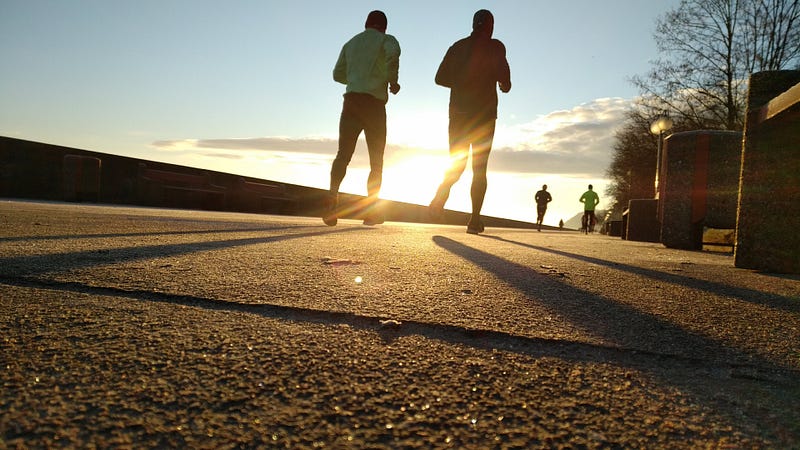
When I first started running seriously about three years ago, depression and anxiety were a part of me. To put it mildly, my mental health was poor. There were a lot of factors which contributed to feeling the way I did but I also did nothing to change any of my issues. I was comfortable being miserable from day-to-day. It became my routine — suffer from extreme anxiety, become depressed because of that anxiety, and then repeat the process over and over.
I used to be ashamed of it too. I was scared to talk about any of it, and I didn’t want to admit I took antidepressants. I didn’t want anyone to know I go to therapy. But not anymore.
I want to be like Rob Krar. I know I will never win any of those races he has. I will never be as accomplished as him in the ultra-running world and I will probably never complete the distances he has. But I don’t want to be like him because of his accolades or his prowess as a runner.
I want to be like Rob Krar and raise awareness of mental health. I want to be like him and no longer be ashamed of sharing my story. And I want others to know they aren’t alone. Like Rob, I battle with my mental health, and I’m tired of the stigma attached to that.
So I will talk about it. And I hope it gives someone the courage to talk about their struggles as well. Because we could all use a little help.
Most of the studies I’ve looked at have a similar conclusion — exercise is good for your mental and physical health. I know it’s hard to get started, trust me. When you are battling mental health issues, it can feel almost impossible to even get out of bed. I know because I’ve been there. So any advice is relative to the situation and often isn’t useful for someone in the midst of a deep depression. But I’ve gained so much from running I feel I have to spread the message. I have to try to increase awareness.
However, I want to stress that running is not a replacement for medication, therapy or any other type of mental health treatment. I still go to therapy and I used to take medication for my depression and anxiety. And if I need to, I will go back on medication.
Yet, I find my mental health getting poorer if I can’t run. I find my mood is unpleasant more often and my emotions get the best of me. I notice the impact that the lack of exercise has, and I struggle more. This is my experience and not a call to quit your medication, stop going to therapy and start running. Everyone has to find what works for them, and it may be a combination of many things.
But exercise, and particularly running, has kept me from these bouts of depression and anxiety more than anything else it seems.
I have found one of the things which help keep me whole. That is running. Running is one way I cope. Running is one of my anti-depressants.
I hope you find yours.
Below is a video of Rob Krar discussing depression.