
The Anime Girl Who Took on ISIS
The true secret behind viral success is darker than anyone dares admit

In 2015, ISIS captured and executed two Japanese civilians, instantly sending shockwaves throughout every social media platform.
Numerous activists pleaded with the public to stop sharing the graphic images and videos. If everyone collectively decided to ignore this terrorist organization, ISIS would lose its power to strike fear into our hearts. But the propaganda only continued to spread.
Finally, a group of anonymous illustrators decided to go on the offensive. Intending to create a viral marketing campaign designed to drown out ISIS, they revealed ISIS-chan, a teenage girl who teaches “knives are for melons.”

The illustrators depicted ISIS’ leaders as a confused group of delinquents who misunderstood how to use a knife. But of course, the kind-hearted ISIS-chan is willing to come alongside her comrades and educate them on the proper way to utilize weapons without hurting anyone.
ISIS-chan belongs to the public domain, which means anyone can legally draw her. As the movement gained traction, supporters became filled with anticipation that everyone would soon laugh at the absurdity of terrorist propaganda.


The team of volunteers labored tirelessly to produce countless images. Dedicated fans worked their hardest to promote ISIS-chan. But still, the campaign never went viral.
Everyone knows about ISIS. But who has heard of ISIS-chan?
The movement had incorporated every one of the secrets required for viral success. The images and videos were funny, cute, and professionally edited. Creators worked consistently to build a brand that inspired a core group of dedicated fans. What could have possibly gone wrong?
As it turns out, going viral is much, much more difficult than we’d like to believe.
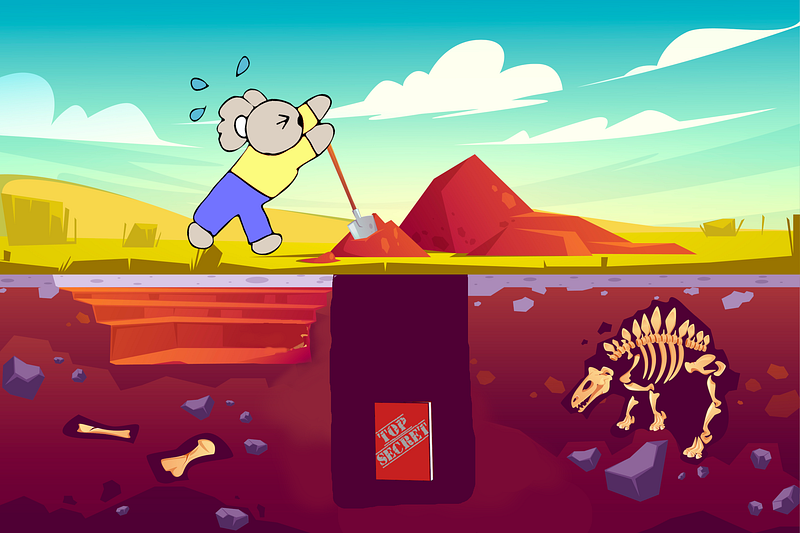
When we see two campaigns — and notice how one succeeded and the other failed — it’s tempting to draw comparisons to determine what they did right or wrong. But uncovering the truth requires us to dig far deeper.
In 1988, mathematics professor John Allen Paulos proposed a thought experiment. If a crooked stockbroker collected a few thousand addresses, he could tell half of them a certain stock would skyrocket, while the other half would be warned the same stock would plummet.
Regardless of whether the stock rose or fell, the broker would contact the people who had received the correct prediction. One again, half of them would receive a letter predicting a different company’s rise, while the remainder would be warned about its demise.
Without knowing which one of his predictions would come true, the broker could lead a small group of people to believe he could tell the future with 100% accuracy.
Dr. Palos pleaded with educators not to remove statistics from their curriculums. If mathematical illiteracy continued to spread, versions of this scam might become commonplace. The public may even become deceived into believing bogus explanations behind why random events occurred.
We’re now living in the world Dr. Palos had desperately tried to prevent. Every time a campaign goes viral, creators will publish stories revealing how they had succeeded, often charging exorbitant rates for their conclusions.
But judging from how most influencers know little more about marketing than what is already common sense, it seems that even those who have experienced viral success fail to understand the real reason behind why they became popular.
Every year, millions of stary-eyed individuals will join the creator community. But when they fail to gain traction, most newcomers will burn out and conclude they must have done something wrong.
In reality, publishing an article or uploading a video is akin to buying a lottery ticket. You can’t win without entering — but nobody is guaranteed success, even if you’ve done everything right.
As much as we’d like to believe there are shortcuts to the top, growing an audience requires a painfully slow process. Because success is largely random, even the best of creators can still fail.
Sadly, every artist who had once joined the ISIS-chan movement ultimately abandoned their accounts. Isisviper, the most persistent artist, uploaded original images and videos multiple times every week for six years before calling it quits.
Content creation is a marathon. And just like any race of endurance, only a select few of a hundred qualified athletes can take the prize.
But still, those who quit will never know whether they could have made it.
My purpose is not to discourage anyone from joining the creator community. Rather, I want to ensure any would-be creators approach it with realistic expectations. If you’ve done everything right but only experienced meager success, don’t despair. Even if you didn’t hit the jackpot this time, keep trying.
Most importantly, keep entering the lottery. Because you can’t win unless you pay to play.