The Angelic Father
Sayings 15 and 16 of the Gospel of Thomas — Part Two
This article focuses on the hidden reading within Sayings 15 and 16. I recommend that anyone reading this article review the article below first.
The first part of this article dealt with Saying 16. This one is going to examine Saying 15 to see how it interacts with 16. This examination of the sayings in reverse order is part of my usual methodology.
Jesus said, “Maybe people think that I’ve come to cast peace on the world, and they don’t know that I’ve come to cast divisions on the earth: fire, sword, and war. Where there are five in a house, there’ll be three against two and two against three, father against and son and son against father. They’ll stand up and be one.” (Gospel of Thomas Saying 16)
And
Jesus said, “When you see the one who wasn’t born of a woman, fall down on your face and worship that person. That’s your father.” (Gospel of Thomas Saying 15)
The keyword shared by these two sayings is ‘father.’ Saying 16 has the numerical phrase “there’ll be three against two and two against three.” I can’t help but think that this has something to do with how the sayings are to be interpreted.
Throughout this series, I have been examining the sayings in groups of two. However, this saying seems to suggest that this time we should deviate from that pattern. It could indicate that these sayings can be grouped as two and as three.
We have Saying 15 paired with 16. What sayings would make up the three-saying triad?
Saying 15 also goes with Sayings 13 and 14.
This gives us 13, 14, and 15. Plus 15 and 16.
Those of you who read my article on Sayings 13 and 14 will remember that I was rather uncomfortable with the hidden reading, which indicated that Simon Peter was an angel. Now we have Saying 15 which tells us that when we see the one who wasn’t born of a woman we should worship that person because that person is our father.
If Simon Peter was indeed an angel, then, given our understanding of angels, he wasn’t born of a woman. So what does it mean that he is our father? I believe that Thomas is indicating that Simon Peter was an angel and that he was the father of Jesus.
This seems absurd. Still, to confirm that it isn’t true, we should examine the Gospels for any instances where Jesus might be referring to Simon Peter as his father. Then we can check any references to angels.
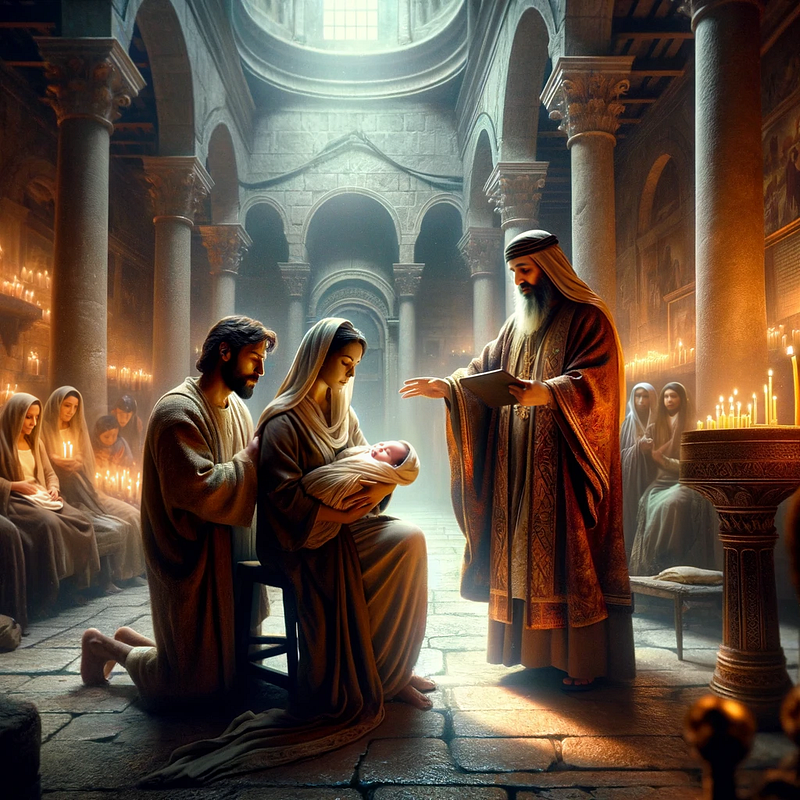
We begin with the story from Luke when the parents of Jesus brought him to the temple in Jerusalem to be presented to the Lord. They meet a man named Simeon who blesses Jesus:
34 Then Simeon blessed them and said to Mary, his mother: “This child is destined to cause the falling and rising of many in Israel, and to be a sign that will be spoken against, (Luk 2:34 NIV)
Years later, The family returns to Jerusalem:
43 After the Feast was over, while his parents were returning home, the boy Jesus stayed behind in Jerusalem, but they were unaware of it. (Luk 2:43 NIV)
When they return to Jerusalem they find him in the temple. The same temple where Simeon had blessed him.
49 “Why were you searching for me?” he asked. “Didn’t you know I had to be in my Father’s house?” (Luk 2:49 NIV)
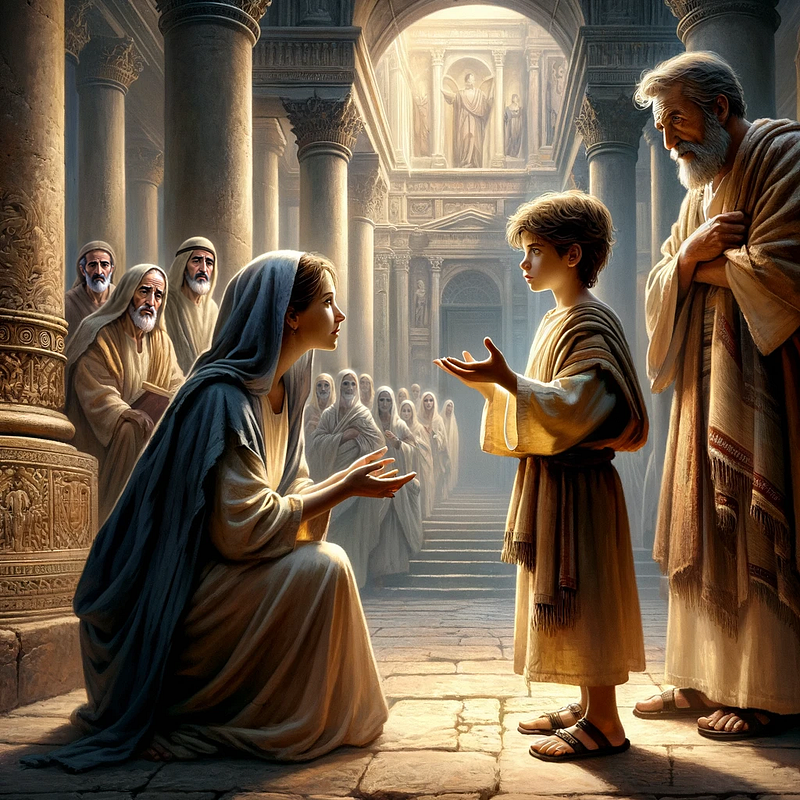
There are two ways to interpret this, of course. The usual way, is where Jesus means God’s house. However, after piecing together the clues from Thomas another possibility appears. Jesus could be telling his mother that the priest named Simeon (a variation of Simon), who blessed him when he was an infant, is his physical father. Jesus returned to the temple that his father led.
The next example is from Matthew:
24 After Jesus and his disciples arrived in Capernaum, the collectors of the two-drachma tax came to Peter and asked, “Doesn’t your teacher pay the temple tax?” 25 “Yes, he does,” he replied. When Peter came into the house, Jesus was the first to speak. “What do you think, Simon?” he asked. “From whom do the kings of the earth collect duty and taxes — from their own sons or from others?” 26 “From others,” Peter answered. “Then the sons are exempt,” Jesus said to him. (Mat 17:24–26 NIV)
So Peter comes to Jesus to get the temple tax. Jesus calls him Simon and asks him whether the kings of earth collect taxes from their sons or from others. Simon answers ‘from others’ and then Jesus replies ‘then the sons are exempt’.
This exchange makes little sense unless Jesus is telling his father that the kings of the world don’t take taxes from their sons, but here is Simon, a powerful angel coming to his son and bothering him for two drachmas.
The next example occurs after the last supper:
32 They went to a place called Gethsemane, and Jesus said to his disciples, “Sit here while I pray.” 33 He took Peter, James and John along with him, and he began to be deeply distressed and troubled. 34 “My soul is overwhelmed with sorrow to the point of death,” he said to them. “Stay here and keep watch.” 35 Going a little farther, he fell to the ground and prayed that if possible the hour might pass from him. 36 “Abba, Father,” he said, “everything is possible for you. Take this cup from me. Yet not what I will, but what you will.” (Mar 14:32–36 NIV)
Here Jesus asks his father to take this cup from him. The way this is usually understood is Jesus asked God to change the plan so that Jesus wouldn’t suffer and die on the cross.
The other interpretation is that Jesus had a goblet of wine left over from the Last Supper. Even though Jesus had told Peter, James, and John to stay and watch while Jesus went a little farther to pray, Simon Peter went to comfort his son.
In Luke, the following occurs:
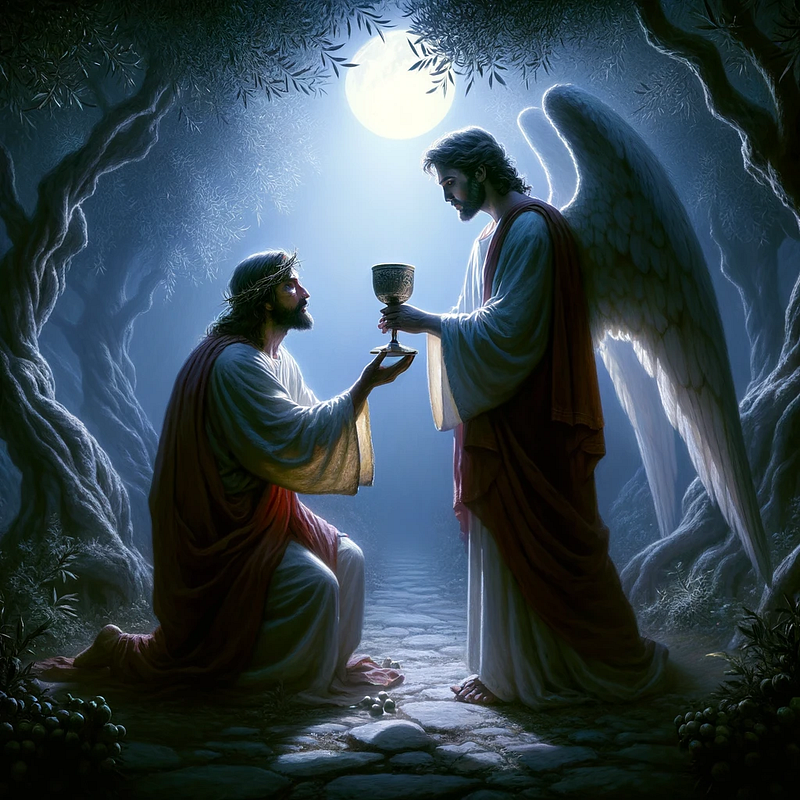
42 “Father, if you are willing, take this cup from me; yet not my will, but yours be done.” 43 An angel from heaven appeared to him and strengthened him. 44 And being in anguish, he prayed more earnestly, and his sweat was like drops of blood falling to the ground. (Luk 22:42–44 NIV)
Jesus asks his father to take the cup from him and then an angel appears. Jesus’ sweat is described as drops of blood. During the Last Supper Jesus declared that the wine was his blood. Jesus is asking Simon the angel to take the cup of wine from him if Simon wants.
37 Then he returned to his disciples and found them sleeping. “Simon,” he said to Peter, “are you asleep? Could you not keep watch for one hour? (Mar 14:37 NIV)
Simon had taken the wine and shared it with James and John. They then all fell asleep.
42 He went away a second time and prayed, “My Father, if it is not possible for this cup to be taken away unless I drink it, may your will be done.” (Mat 26:42 NIV)
Simon returns to Jesus and this time he insists that Jesus drink from the goblet of wine before Simon takes it back to the others.
43 When he came back, he again found them sleeping because their eyes were heavy. 44 So he left them and went away once more and prayed the third time, saying the same thing. 45 Then he returned to the disciples and said to them, “Are you still sleeping and resting? Look, the hour is near, and the Son of Man is betrayed into the hands of sinners. (Mat 26:43–45 NIV)
Before we search for suspicious angels I want to reexamine the part of Saying 16 that goes:
… Where there are five in a house, there’ll be three against two and two against three, father against and son and son against father. They’ll stand up and be one. (Gospel of Thomas Saying 16)
In part one of this article, we learned that a father, a mother, a daughter, a son, and the son’s wife made up the five in the house.
I think this is meant to represent the family of Jesus. Consider the following text from the Gospel of Philip, a Valentinian Gnostic text found together with Thomas at Nag Hammadi.
Three women always walked with the master: Mary his mother,
sister, and Mary of Magdala, who is called his companion. For “Mary” is the name of his sister, his mother, and his companion. (Gospel of Philip)
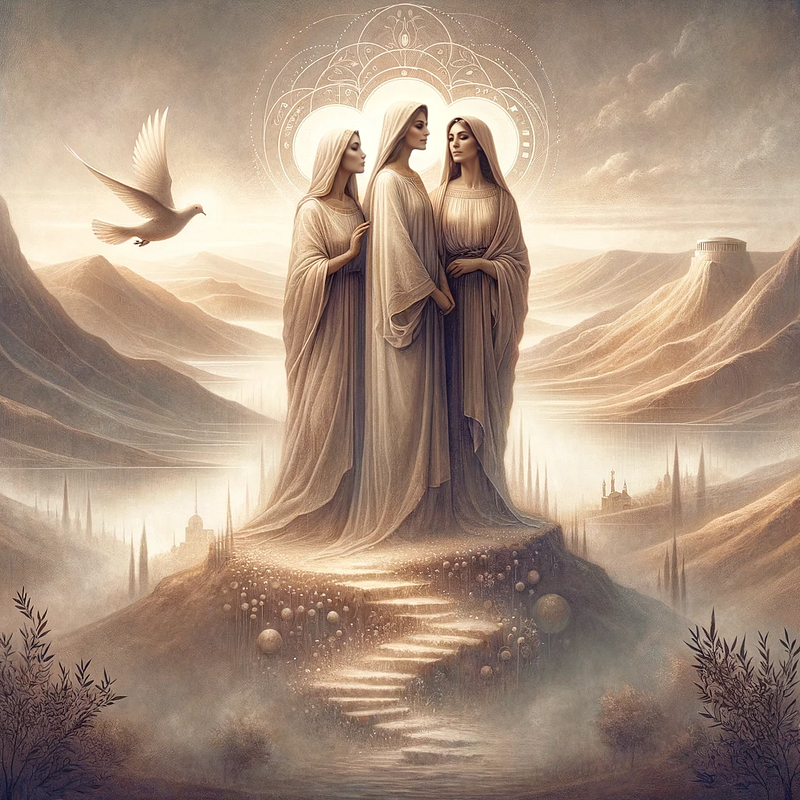
Let’s just suppose that Simon is an angel. And this angel impregnated Mary and fathered Jesus. According to Philip, Jesus had a sister named Mary which seems like a major error, but we’ll deal with that in a bit. And we have Mary Magdalene.
So Jesus and Simon Peter live with Mary the mother of Jesus, Mary the sister of Jesus, and Mary Magdalene, the, um … girlfriend of Jesus. Then they will stand and be one, whatever that means.
Another apocryphal text deals with the birth of Mary, the mother of Jesus. This text is called The Gospel of James.
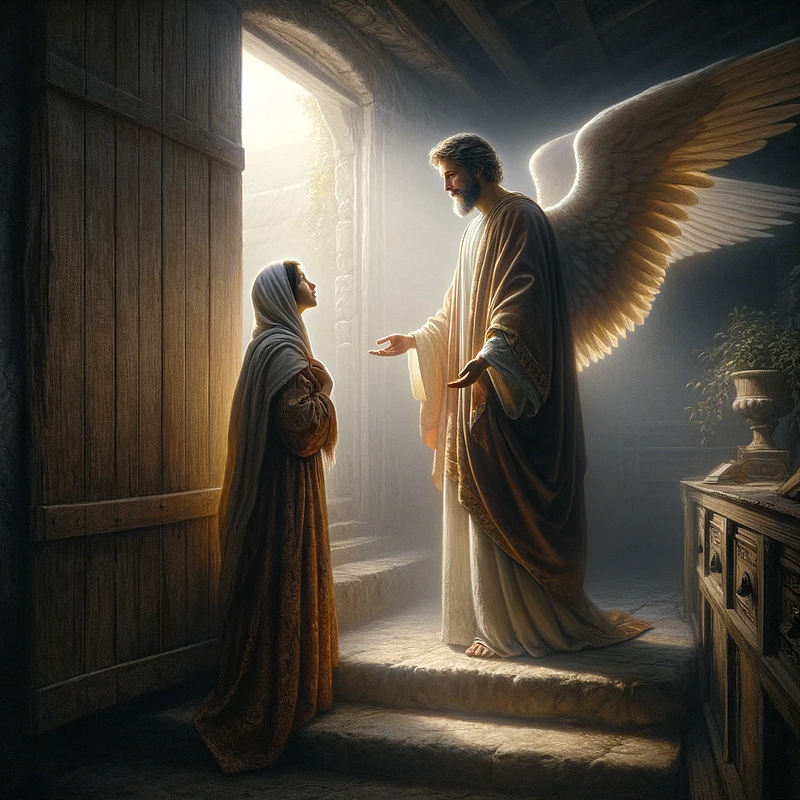
In this gospel is the story of Joachim and Anna, a couple that are trying unsuccessfully to have a child. Anna puts on her wedding dress and prays for a child when an angel appears.
And, behold, an angel of the Lord stood by, saying: Anna, Anna, the Lord hath heard thy prayer, and thou shalt conceive, and shall bring forth; and thy seed shall be spoken of in all the world. (The Gospel of James, Chapter 4)
Nine months later:
And her months were fulfilled, and in the ninth month Anna brought forth. And she said to the midwife: What have I brought forth? and she said: A girl. And said Anna: My soul has been magnified this day. And she laid her down. And the days having been fulfilled, Anna was purified, and gave the breast to the child, and called her name Mary. (The Gospel of James, Chapter 5)
Sixteen years later:
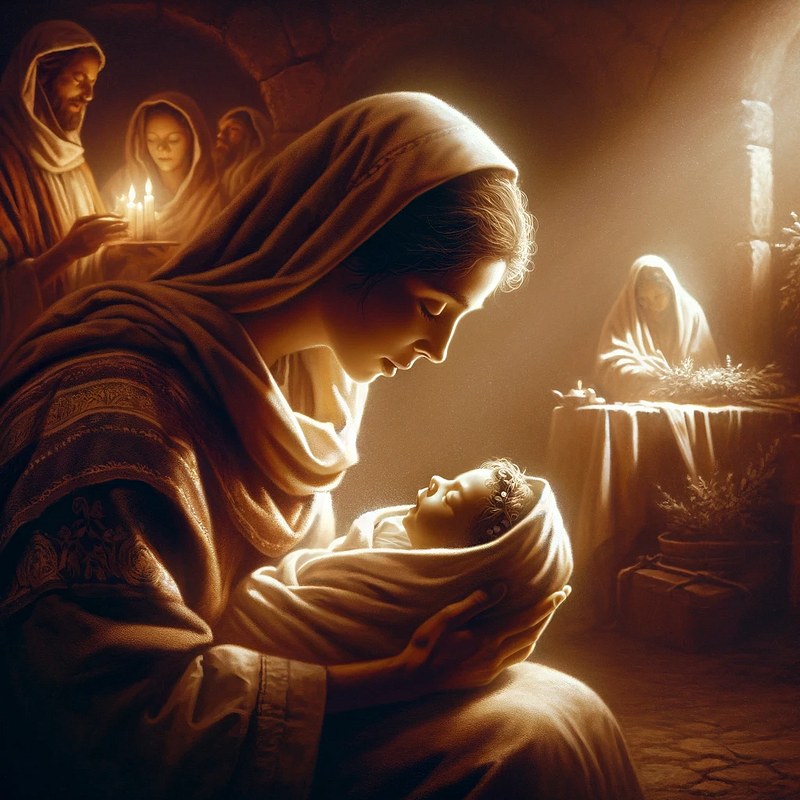
And, behold, an angel of the Lord stood before her, saying: Fear not, Mary; for thou hast found grace before the Lord of all, and thou shalt conceive, according to His word. … the power of the Lord shall overshadow thee: wherefore also that holy thing which shall be born of thee shall be called the Son of the Most High. And thou shalt call His name Jesus, for He shall save His people from their sins.
Let’s suppose the same angel visited both Mary’s mother and Mary and that this angel impregnated them both. This would mean that Jesus is the son of Mary, but he is also the half-brother of Mary as they both share a father.
More than this, let us suppose that, just as with Egyptian dynasties, brother marries sister to preserve the purity of the angelic bloodline.
Three women always walked with the master: Mary his mother,
sister, and Mary of Magdala, who is called his companion. For “Mary” is the name of his sister, his mother, and his companion. (Gospel of Philip)
The three Marys are one Mary: mother, sister, and partner.
In the next article in this series, we will look at the following sayings:
Jesus said, “I’ll give you what no eye has ever seen, no ear has ever heard, no hand has ever touched, and no human mind has ever thought.” (Gospel of Thomas Saying 17)
And
The disciples said to Jesus, “Tell us about our end. How will it come?” Jesus said, “Have you discovered the beginning so that you can look for the end? Because the end will be where the beginning is. Blessed is the one who will stand up in the beginning. They’ll know the end, and won’t taste death.” (Gospel of Thomas Saying 18)