
TRAVEL, PHOTOGRAPHY, LIFE EXPERIENCE
The Ancient Town with Gentle Giants Carved in Stone
In response to Dancing Elephants Photography January Prompt — Elephants
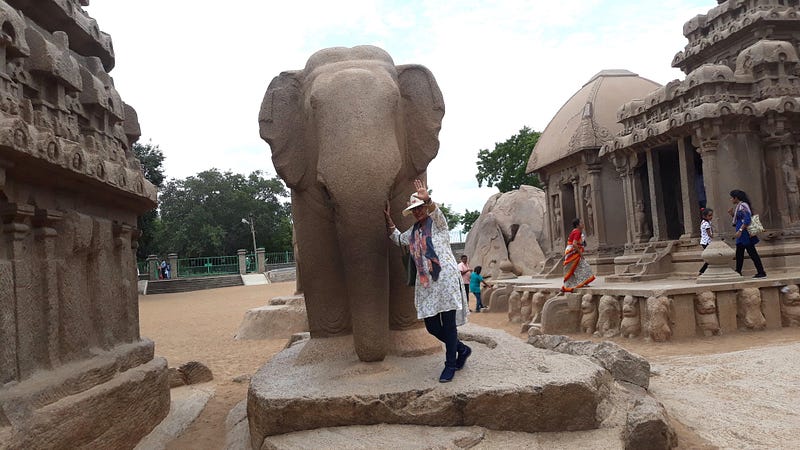
I am new to this beautiful publication, just a few days old! And the moment I bump into Vidya’s DEP Photography column with the first theme as Elephants, I was grinning from ear to ear.
The reason?
Well, I knew that I would participate with the picture I shared above along with a few more.
Elephants are quite enough- Agatha Christie
The Backstory
I was on a two-day visit to the coastal town of Mahabalipuram or Mamallapuram, around 60 km south of Chennai in Tamil Nadu, India.
Mahabalipuram/Mamallapuram grabbed the honor of being the first stone carving city in the world.
The ancient town of Mahabalipuram was founded by King Narasimhavarman I of the Pallava dynasty in the 7th century CE.
Perched with 7th- and 8th-century Hindu group of scintilating stone-cut temples and majestic monuments with awe-inspiring architecture and spellbound sculptures, it gained popularity far and wide with the UNESCO World Heritage site tag.

One of the major port towns during Pallava reign, Mahabalipuram was also known as Mamallapuram named after the founder king, Narasimhavarman I who was also known as Mamalla. The word ‘Pallava’ in Sanskrit means ‘sprout’.
It rose to prominence heralding in economic prosperity along with the foundation of a group of intricately designed group of royal monuments.
The entire site of historical importance is now managed by Archaeological Survey of India (ASI).
According to mythology, Ashvatthama, the son of Drona and a character in the epic Mahabharatha, fathered a son through his liaison with a snake princess. The child was named Pallava after the lotus ‘sprouts’ upon which he was laid at birth. Hence, the dynasty which this Pallava established became the Pallava dynasty.
Elephants are like humans. They are very smart, very logical- Peter Beard
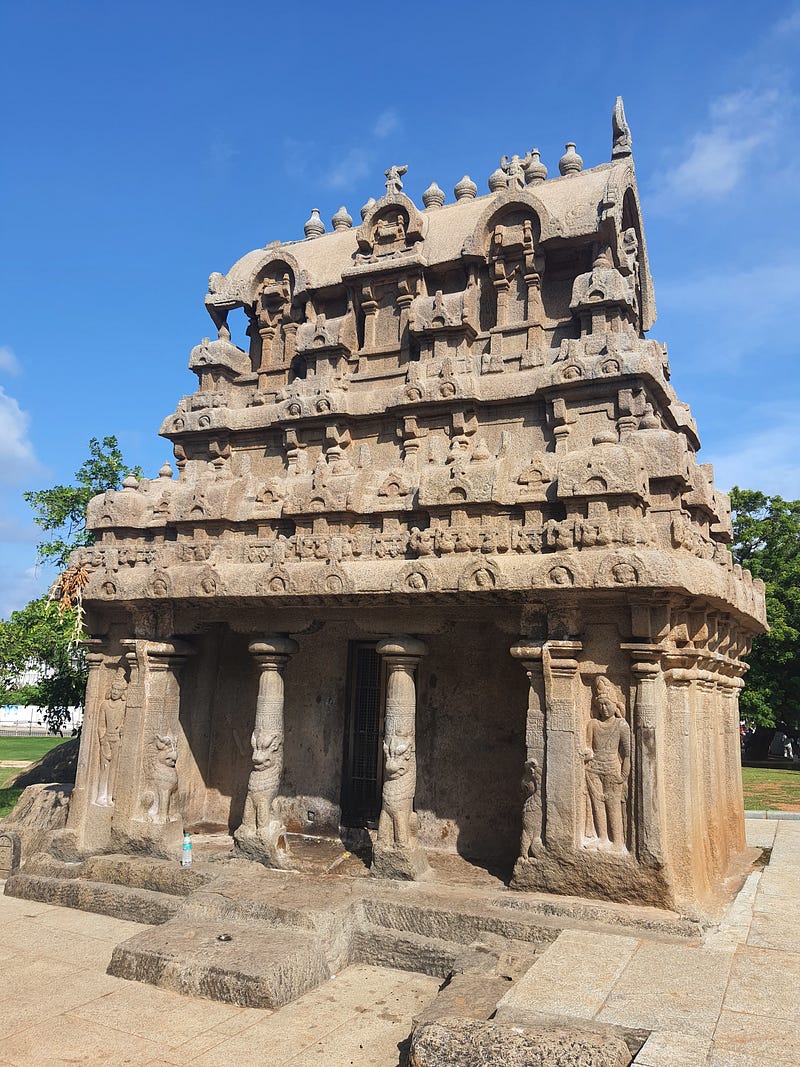
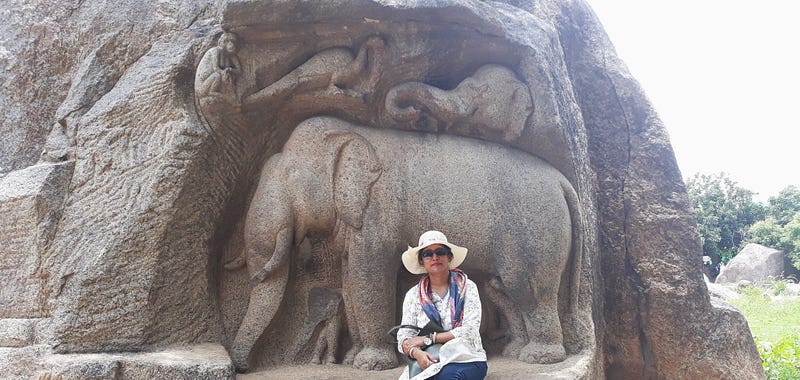
You would find the happy-go-lucky elephant with or without family dominating the magnificent sculptures around the town. Be it a giant open-air bas relief, monolithic rock-cut structures, cave temples, masonry temples, elephants rule the show.
The mastery of the craftsmen of the Pallava dynasty is par excellence and it is showcased in the crease around the necks and calm and gentle eyes of the elephants.
The Imperial Pallavas ruled from the 6th century AD for about 400 years. Their capital city was Kanchipuram and Mamallapuram was their seaport.
There are basically four types of sculptures as found in the town — rathas or temples shaped like chariots and carved from a standing block; mandapas or temples carved into a rock face; bas relief carvings on rocks; and temples built from stone blocks.
There is no creature among all the beasts of the world which hath so great and ample demonstration of the power and wisdom of almighty God as the Elephant- Edward Topsell
Working in India and Sri Lanka, the 20th-century British archaeologist and art historian, Albert Henry Longhurst described Pallava architecture, including those found at Mahabalipuram, into four chronological styles named after the kings of the respective era:
# Mahendra (610–640),
# Mamalla (640–670, under Narsimhavarman I),
# Rajasimha (674–800) and
# Nandivarman (800–900)
Mahabalipuram invokes a certain kind of mystery with its sculptural extravaganza depicting the powerful artistic temperament of the imperial Pallavas, who were the torchbearers of South Indian art.
Nature’s great masterpiece — an elephant — the only harmless great thing- John Donne
Heart thanks to Dr. Gabriella Korosi and her prolific DEP Team for such a warm and happy space.
You may would like to glance through an article that I shared about the Elephant God, Lord Ganesha.
To all my friends out there, sending across virtual jumbo hugs and good wishes, jumbo way. Let there be light and love everywhere.


