
The Ancient Secrets To Complete The CONSCIOUSNESS Simulation
(The Simulation Hypothesis and Its Philosophical Implications)
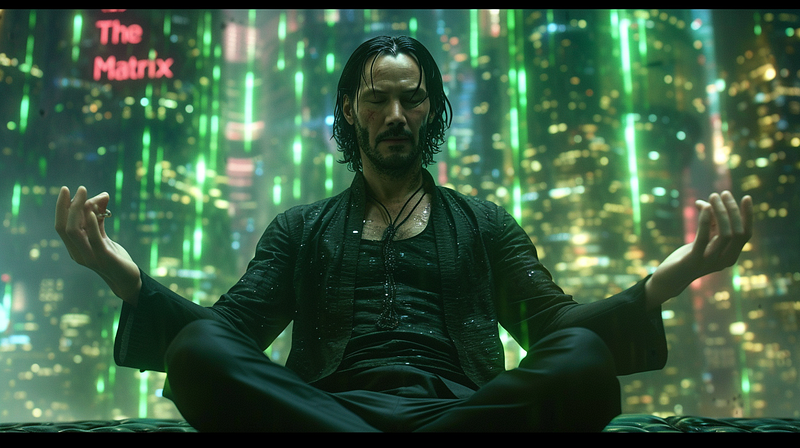
The Simulation Hypothesis presents a captivating and thought-provoking idea that our perceived reality might be an advanced digital simulation, orchestrated by some higher intelligence. This hypothesis, which has gained traction in both scientific and philosophical circles, suggests that what we experience as reality could be akin to a highly sophisticated virtual reality. The philosophical implications of this hypothesis are profound and far-reaching, touching upon our understanding of existence, consciousness, and the nature of reality itself.
At its core, the Simulation Hypothesis posits that the universe and everything in it could be a product of an advanced computational system, created and maintained by an entity or entities unknown to us. This idea is not entirely new; it resonates with several philosophical and spiritual concepts that have been explored throughout history. However, the modern version of this hypothesis brings these ideas into the realm of technological possibility, suggesting that our advancements in computing and virtual reality might be leading us to a similar capability.
One of the key philosophical implications of the Simulation Hypothesis is the question of reality itself. If our experiences are the result of a simulation, then what is ‘real’? This leads to a re-examination of what we consider to be the fundamental nature of our existence. It challenges the traditional physicalist view of the universe and opens up discussions about the nature of consciousness. Is consciousness something that arises from within the simulation, or is it a separate entity that interacts with the simulation?
The hypothesis also revitalises age-old philosophical questions about the possibility of an external creator or creators. In this context, the creator is not necessarily a deity in the traditional religious sense but could be an advanced civilization or intelligence responsible for creating the simulation. This idea intersects with theological and metaphysical discussions about the nature of God or gods and the creation of the universe.
Furthermore, the Simulation Hypothesis has significant implications for our understanding of free will and determinism. If our universe is a simulation, to what extent are our actions predetermined by the code of the simulation? This question invites a re-examination of the age-old debate about free will versus determinism, placing it in a new and potentially unsettling context.
Another philosophical area impacted by the Simulation Hypothesis is the concept of identity and self. In a simulated reality, the traditional boundaries of self — defined by our physical bodies and personal experiences — may no longer hold true. This leads to existential questions about the self and what it means to be an individual. It also raises intriguing possibilities about the nature of death and the continuation of consciousness beyond the physical realm.
In conclusion, the Simulation Hypothesis, while a modern concept, taps into some of the most fundamental philosophical questions about reality, existence, and consciousness. It challenges us to rethink our understanding of the world and ourselves, blurring the lines between physical and simulated realities. Whether or not this hypothesis is true, its exploration undoubtedly enriches the philosophical discourse, encouraging deeper inquiry into the nature of our existence and the universe.
Historical Philosophical Perspectives on Reality as an Illusion
The concept that reality might be an illusion is a profound theme that has been explored in various philosophical traditions throughout history, both in the East and the West. This idea challenges our conventional understanding of what is real and what is merely a semblance of reality, leading to deep inquiries into the nature of existence, perception, and consciousness.
In ancient Indian philosophy, particularly within Hinduism and Buddhism, the concept of reality as an illusion is a central theme. In Hindu philosophy, this idea is encapsulated in the concept of Maya. Maya is often interpreted as the cosmic illusion, wherein the material world, with all its complexities and appearances, is perceived as real, thereby masking the true, unchanging reality of Brahman, the Ultimate Reality. According to this viewpoint, the world we experience through our senses is merely a temporary and deceptive aspect of a much larger, transcendent reality.
Buddhism shares a similar perspective, particularly in its emphasis on the concept of Sunyata, often translated as emptiness or voidness. This concept suggests that the phenomenal world is void of inherent existence, meaning that the things we perceive around us do not possess an independent, enduring essence. This aligns with the idea of the material world being an illusory construct, a transient show that distracts from a deeper understanding of reality.
In Western philosophy, similar notions have been explored, most notably in Plato’s allegory of the cave, found in his work “The Republic.” In this allegory, Plato describes prisoners who have been chained in a cave all their lives, facing a blank wall. The shadows cast on the wall by objects behind them are perceived as reality by the prisoners. This allegory is a profound metaphor for the human condition: our perceptions of reality are like shadows on a wall, mere representations of true forms that we cannot directly perceive.
René Descartes, a key figure in Western philosophy, also delved into the nature of reality and illusion. In his “Meditations on First Philosophy,” Descartes employs methodical doubt, questioning the reliability of his senses and the existence of the physical world. He concludes that while he can doubt the existence of the physical world, he cannot doubt the existence of his own mind. This led to his famous conclusion, “Cogito, ergo sum” (I think, therefore I am), asserting the undeniable reality of one’s own consciousness.
These historical philosophical perspectives, both Eastern and Western, share a common thread in questioning the nature of perceived reality. They suggest that what we perceive as real may be an elaborate illusion, a construct that veils a more profound and enduring reality. This line of thought has not only shaped philosophical discourse but has also influenced spiritual practices aimed at transcending the illusory nature of the material world to attain a deeper, more authentic understanding of existence.
In summary, the historical philosophical perspectives on reality as an illusion, from ancient Indian philosophy’s concepts of Maya and Sunyata to Western explorations by Plato and Descartes, represent a rich and diverse exploration of the nature of reality. These perspectives invite us to question our perceptions and to consider the possibility that our understanding of the world might be fundamentally limited, opening the door to a deeper exploration of the true nature of existence.
Spiritual Awakening in the Context of a Simulated Universe
The concept of spiritual awakening within the context of a simulated universe is a fascinating fusion of ancient spiritual traditions and modern philosophical thought. This idea, which posits that our perceived reality might be a sophisticated digital simulation, offers a unique lens through which to view the journey of spiritual awakening.
In traditional spiritual contexts, particularly those rooted in ancient Indian wisdom, spiritual awakening is understood as the process of realizing one’s true nature beyond the physical and mental realms. It involves transcending the ego, understanding the illusory nature of the material world, and experiencing a profound connection with a higher, more fundamental reality. This process is often described as a journey from ignorance to enlightenment, where one awakens to the ultimate truth of their existence.
When this concept is explored within the framework of a simulated universe, it adds an intriguing layer to the idea of reality being an illusion. If our physical reality is indeed a simulation, this could imply that the material world we interact with is not the ultimate reality but a construct designed by a higher intelligence. This perspective aligns closely with the notion in many spiritual traditions that the world we perceive through our senses is a temporary, illusory experience, masking a deeper, more enduring truth.
In such a scenario, spiritual awakening could be viewed as the process of recognizing and transcending the limitations of the simulated world. It involves realizing that our experiences, emotions, and physical existence, while seemingly real, are part of a larger, orchestrated virtual play. The ultimate goal of this awakening is not just to understand the nature of the simulation but to connect with the consciousness or intelligence that lies beyond it.
This raises profound questions about the nature of consciousness and its role in the simulated universe. Is consciousness a byproduct of the simulation, or is it an independent entity that exists outside of it? In many spiritual traditions, consciousness is seen as the fundamental aspect of existence, the unchanging reality behind the changing phenomena. If our universe is a simulation, this view of consciousness suggests that our true essence is not bound by the constraints of the simulation, offering a pathway to spiritual liberation.
Furthermore, the idea of a simulated universe challenges and expands traditional concepts of enlightenment and awakening. It suggests that awakening involves not only realizing the illusory nature of our immediate reality but also understanding our place within a potentially vast and complex hierarchy of realities. This expanded view can lead to a deeper exploration of the meaning of existence, the purpose of life within the simulation, and the nature of the creator or creators of the simulation.
In conclusion, the concept of spiritual awakening in the context of a simulated universe is a thought-provoking blend of ancient spiritual insights and contemporary philosophical speculation. It invites us to reconsider the nature of reality, the purpose of our existence, and the path to spiritual enlightenment. By exploring these ideas, we can gain a broader understanding of our place in the cosmos, whether it is a physical reality, a simulated construct, or something even beyond our current comprehension.
The Nature of Consciousness in a Simulated Reality
Exploring the nature of consciousness within the framework of a simulated reality is a topic that intertwines modern technological hypotheses with age-old philosophical inquiries. The idea of a simulated reality, where our perceived world is potentially an advanced digital construct orchestrated by a higher intelligence, prompts profound questions about the nature and origin of consciousness.
In the context of a simulated reality, consciousness could be perceived in several ways. One perspective is to view consciousness as an emergent property of the simulation itself. In this view, consciousness arises from the complex interactions and processes within the simulation, much like the theory in neuroscience that sees consciousness as emerging from neural activities in the brain. However, this perspective extends the concept further by suggesting that if our brains and the reality we perceive are part of a simulation, then consciousness might be a second-order emergent property. It’s not just a byproduct of neural activity but also of the underlying code that constitutes the simulated universe.
Another intriguing possibility is that consciousness exists independently of the simulation. This perspective aligns with certain spiritual and philosophical traditions from ancient India, which view consciousness as a fundamental aspect of reality. In these traditions, consciousness is not seen as a product of the material world but as an eternal, unchanging essence that transcends physical existence. If our universe is a simulation, this view would suggest that consciousness is not confined by the parameters of the simulation but is part of a more profound, transcendent reality.
This leads to the question of the relationship between the simulated world and consciousness. If consciousness is independent of the simulation, does it interact with the simulation, and if so, how? This question touches on the ancient philosophical debate about the relationship between mind and matter, consciousness and physical reality. In a simulated world, this relationship might be even more complex, as the physical reality itself is a construct.
Furthermore, the idea of a simulated reality challenges our understanding of personal identity and the self. In a world where experiences, memories, and perceptions could be part of a simulation, what does that mean for the self? Is the sense of ‘I’ or ‘self’ an illusion generated by the simulation, or is there a true self that exists independently of the simulation? These questions resonate with the inquiries made in ancient Indian philosophy, where the nature of the self and its distinction from the material world is a central theme.
In conclusion, the nature of consciousness in a simulated reality is a multifaceted topic that bridges modern scientific hypotheses with ancient philosophical wisdom. It challenges us to rethink our understanding of consciousness, its relationship with the material world, and the very nature of reality itself. Whether consciousness is a product of a simulated reality or an independent entity, exploring these ideas can provide deeper insights into one of the most profound mysteries of human existence.
The Search for Base Reality and the Role of Spiritual Practices
The search for base reality and the role of spiritual practices in this quest is a profound journey that has been at the heart of human inquiry for millennia. This search is not just about understanding the physical world we inhabit, but about delving into the deeper layers of existence to uncover what is fundamentally real. In this context, spiritual practices from various traditions, especially those rooted in ancient Indian wisdom, play a crucial role.
Base reality, in many spiritual and philosophical contexts, refers to the underlying truth behind the observable universe. It’s the quest to understand what remains when layers of perception, illusion, and physical phenomena are peeled away. This pursuit is central to many spiritual traditions, which often describe the material world as transient, ever-changing, and, in a sense, illusory.
In ancient Indian philosophy, for instance, the concept of Maya describes the world as a kind of cosmic illusion. The physical universe, with all its complexity and beauty, is seen as a temporary manifestation that obscures the true, unchanging reality. The ultimate goal of many spiritual paths in this tradition is to transcend Maya, to see through the illusion, and to experience the base reality, often described as Brahman — the eternal, unchanging, and all-encompassing existence.
Spiritual practices such as meditation, yoga, and self-inquiry are seen as vital tools in this quest. Meditation, for example, is more than just a method for relaxation or stress relief; it’s a practice for quieting the mind and transcending the ordinary, surface-level consciousness. Through meditation, one can delve deeper into the inner self, gradually stripping away the layers of ego and illusion, and moving closer to experiencing base reality.
Yoga, in its truest sense, is not just a physical exercise but a comprehensive spiritual discipline that combines physical postures, ethical precepts, breath control, and meditation. The purpose of yoga is to harmonize the body, mind, and spirit, preparing the practitioner for deeper spiritual insights and experiences.
Self-inquiry, particularly as taught in the Advaita Vedanta tradition, involves a direct investigation into the nature of the self. It’s a practice of asking fundamental questions like “Who am I?” and meticulously examining one’s own existence and consciousness. This practice leads to a profound understanding of the self as not separate from the base reality.
The search for base reality is not just an intellectual exercise; it’s a transformative journey that changes how one perceives the world and themselves. It often leads to a sense of deep interconnectedness with all of existence and a realization that the individual self, or ego, is an illusionary construct.
In conclusion, the search for base reality is a key aspect of many spiritual paths, especially those rooted in ancient wisdom. Spiritual practices like meditation, yoga, and self-inquiry are not just rituals or exercises; they are tools for peeling back the layers of illusion and experiencing the true nature of reality. This journey is deeply personal and transformative, offering insights not just into the nature of the universe, but into the deepest aspects of the self.


