
The ancient Jews revolted, defeated the Greeks, and established their own state for the second time
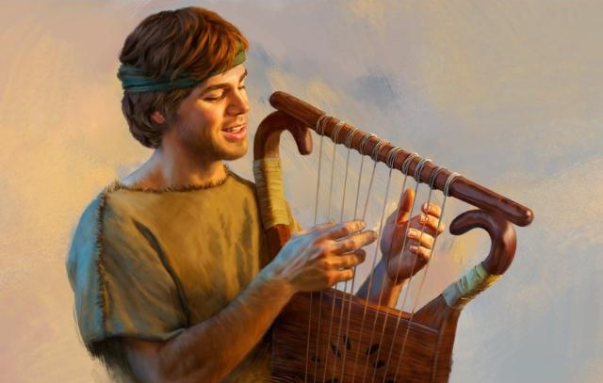
The ancient kingdom of Israel, founded by the house of David, split into the kingdoms of ancient Israel and Judah around 930 BC. In 721 BCE, the Kingdom of Israel fell to the Assyrian Empire. In 586 BCE, the Kingdom of Judah was conquered by the Neo-Babylonian Empire. Since then, ancient Israel has been completely destroyed, and a large number of Jews have been taken into captivity and forced to move elsewhere.
After the establishment of the Persian Empire, Cyrus the Great released some 40,000 Jews and returned to Palestine out of gratitude to the Jews for helping to conquer Babylon. When they returned, they rebuilt the temple in Jerusalem and were free to practice their religion and obey the Jews’ own laws.
However, the good times were short-lived, and the Greeks came and brought with them their culture and religion. As a result, the ancient city of Jerusalem has become full of smoke again, and it has once again become a political stage for you to sing and I will appear. However, surrounded by powerful enemies, the Jews staged a great revolt and eventually gained their independence and established the independent Hasmonean dynasty. The Jewish uprising, also known as the Maccabeean Revolt, produced a family of brave commanders, who were brave, resourceful, resilient, and daring. Now, let’s talk about the Maccabeean uprising and the stories of those leaders.
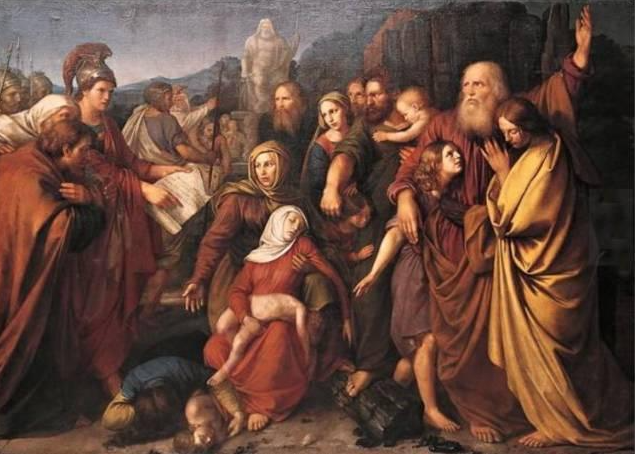
1. The background of the Maccabeean uprising
With the rise of Macedonian Greece, the Persian Empire gradually became unable to resist its edge. Alexander the Great eventually destroyed the once dazzling world empire. During the conquest of the Persian Empire, Alexander visited Jerusalem. After being warmly welcomed by the Jews, he came to the temple to offer sacrifices to God.
It is said that at the gates of Jerusalem, Alexander saw the high priest in the procession dressed in purple-blue and gold robes and wearing a crown with the name of God on his head, and he knelt down. When he was stopped by his subordinates, he said that he did not kneel to the high priest, but to the god who had given the high priest the priesthood.
The next day, Alexander summoned the Jews and asked them what they wanted. The high priests offered that they wanted to be exempted from the tribute for that year every seven years, and that the Jews would be able to live according to the laws of their people. Alexander readily agreed.
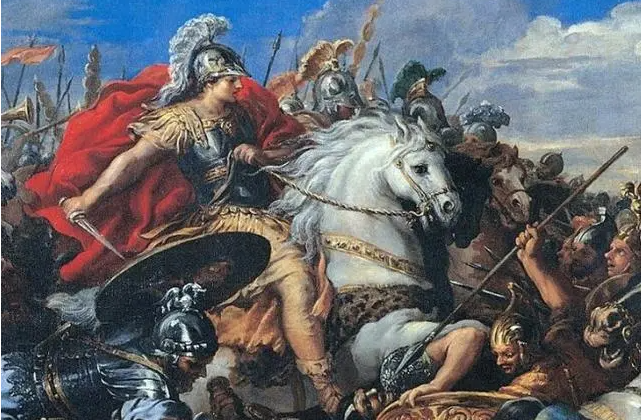
Alexander the Great does not seem to have converted to Judaism, but it can be seen that he was rather liberal and open-minded. Unfortunately, in 323 BC, the Greek commander Alexander died suddenly at the age of 33. The vast military-political legacy he had built was divided among his generals.
In 301 BC, Ptolemy, Seleucus, and Antiochus I each received their own dominion, which later evolved into the Hellenistic kingdoms of Ptolemy, Seleucus, and Pergamum, both of which were related to the Jews.
The Jews were first ruled by the Ptolemaic kingdom. When Ptolemy first conquered Palestine, he also sacked Jerusalem and exiled thousands of Jews to Egypt. However, when he heard of the good reputation of the Jews during the time of Alexander the Great, he allowed them to preserve the traditional law and establish a self-supporting community in Alexandria.
Ptolemy II not only liberated about 120,000 Jews, but also financed the decoration of the temple by the Jews, and the Greek Old Testament was translated into Alexandria. In 241 BCE, Ptolemy III visited Jerusalem and respectfully offered sacrifices in the temple.
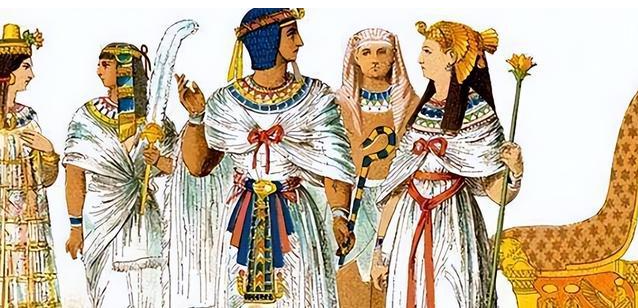
Such tolerance of Jews may also have something to do with the Ptolemaic dynasty’s distrust of the natives of Egypt. They always believed that the native Egyptians were large and unreliable, and that there was a risk of riots at any time, so they trusted the Jews more. The Ptolemaic army consisted mainly of mercenaries, with Jews but no Egyptians.
In general, Jewish life during the reign of the Ptolemaic dynasty was relatively peaceful. But when another Greek dynasty is about to rule the land, what will happen so dramatically?
2. The tyrannical rule of the Seleucid dynasty
Originally, the Jews were not under the jurisdiction of the Seleucid kingdom, but with the death of Ptolemy III and the emergence of Seleucus Antiochus III, the situation changed dramatically. Antiochus III considered him to be the second Alexander.
In 201 BC, a war broke out between Antiochus III and Ptolemy V, which was eventually defeated. As a result, Antiochus III occupied Palestine, and the Jews became subjects of the Seleucid kingdom.
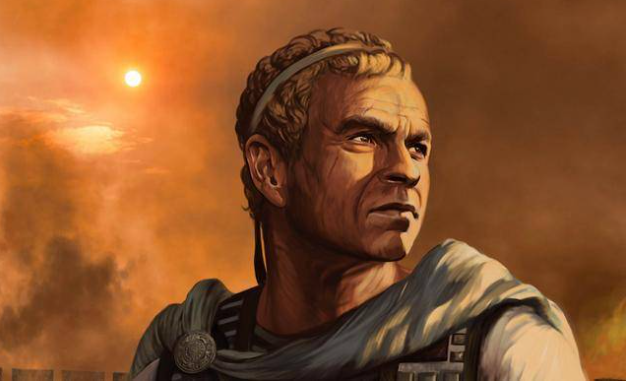
Since many Jews served in Antiochus III’s army, he granted them autonomy and the privilege of obeying Jewish law after the war, and granted Jews a three-year tax exemption and a permanent tax exemption for priests and scribes.
In addition to this, he also forbade the bringing of any unclean animals into Jerusalem as a sign of respect for its religion and culture. However, with the death of Antiochus III, everything changed.
At that time, Judaism, the core belief of the Jews, was facing challenges from Greek culture. In 175 BC, a Jew named Jason “bought” the position of high priest by giving the king 15 tons of silver. After becoming high priest, he was eager to implement the Hellenistic reforms. Jason built a sports field in Jerusalem to guide Jewish youth in sports; He modeled the Greek city-state democracy and formed a civic system; The Senate was established and a series of political system reforms were carried out. However, Jason’s Hellenistic reforms did not work well because they did not fit well with Jewish tradition.

Later in the reform, Jason broke out into a civil war with other aristocratic forces, which eventually led to the failure of Jason’s Hellenistic reforms. Antiochus IV of the Seleucid kingdom reversed his previous tolerance and attributed the failure of the reform to the religion of the Jews, and from then on strictly forbade the belief in Judaism.
In 168 B.C.E., Antiochus IV decreed that all Jews in his territory must observe Greek customs Xi customs, forcing them to work on the Sabbath, forbidding circumcision, and sacrificing unclean animals. These decrees were a heavy oppression for Jews who practiced Judaism and forbade idolatry.
Despite the opposition of the Jews, Antiochus IV entered the Holy of Holies in the Temple and plundered the gold there, and he even commanded the Jews to worship him as a god. These acts are simply the most terrible and blasphemous for the Jews. Therefore, those devout Jews rejected this command.
Upon hearing the news, Antiochus IV decided to eliminate Judaism in order to prevent a Jewish rebellion. In 167 B.C.E., Antiochus IV launched a surprise attack on the Sabbath, killing the entire city of Jerusalem.
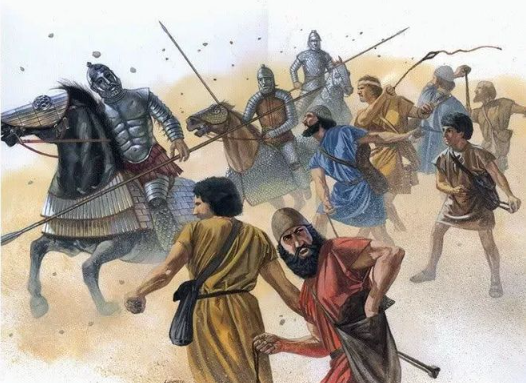
He then forbade worship and sacrifice in the temple, and those who violated it were put to death. Whoever is circumcised, who keeps the Sabbath, and who possesses the Torah of Moses is to be put to death. All those who violated the ban were brutally executed, even using the most terrible criminal law — crucifixion.
However, not all Jews were intimidated. Some people would rather die than eat pork, and some would rather be put to death than circumcised their children… There was a wave of martyrdom among the Jews. When Antiochus IV returned to the Seleucid kingdom, the persecution in Jerusalem continued. After returning to China, Antiochus IV lived a life of singing and singing night after night, and living in poverty and luxury. Little did he know that the Jewish region was already full of dry wood and that an uprising of unprecedented scale was brewing among the Jews.
3. The Maccabeean Revolt broke out
An elderly priest who lived in the village of Mord’ain, near Jerusalem, was dissatisfied with the king’s order, and his name was Matthias. When ordered to sacrifice to Antiochus IV, he said impassionedly: “Even if all the nations under the king’s rule obey his commands, my sons and I will do according to the covenant of our ancestors.” ”
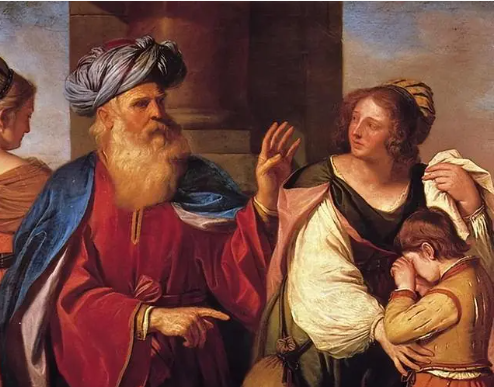
Under such brutal oppression, an armed uprising of the Jews was inevitable. Matthias was the first to rise with his five sons and a number of devout Jews. Due to the disparity in strength, they hid deep in the mountains to conduct guerrilla warfare. Soon, more and more Jewish patriots and people fleeing persecution joined the ranks. They were all devout Jews.
As their strength grew, they first targeted the apostates. Many no longer obey Jewish law and practice circumcision. Seeing this, Matthias forcibly circumcised the Jews in Judea and reinstated the Jewish tradition. For these devout Jews, Judaism was the whole of their lives, and the restoration of the Jewish faith was the main motivation within them.
After Matthias’s death, his son, Judah Maccabees, continued to lead the revolt. Judas was an excellent military general, and he led his army to great success. He is weak and strong, and often wins in defeat. Judah was nicknamed “The Hammer” and the Hebrew word for “Maccabees”, which is how the name of the Maccabeean revolt came from.
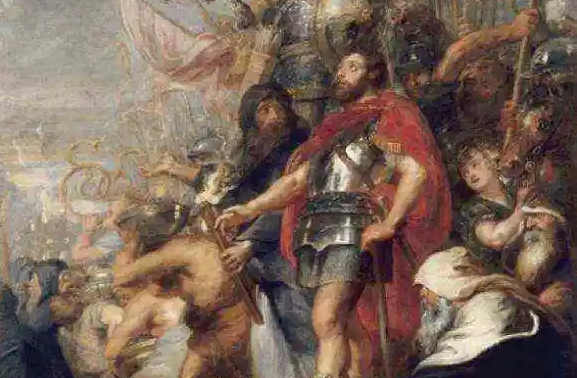
Judas led the rebels to victory, and in 164 BCE, Antiochus IV had to compromise with the Jewish rebels and allow the Jews to live according to their laws.
However, the Maccabeean revolt did not subside, and they moved further from the original pursuit of religious freedom to the pursuit of complete political freedom. The Jews’ goal now was to establish an independent dynasty. In 161 B.C., Judah was defeated and killed, and the Maccabeean revolt seemed to be about to fail, but Judah’s brothers stepped up and finally fulfilled Judah’s unfinished business.
4. The establishment of the Hasmonean dynasty
After the death of Judah, his brother Jonathan became the new leader and once again routed the Seleucid army. In 152 BCE, Jonathan was appointed high priest and recognized by the Seleucid kings. The Seleucid kingdom began to see this regime as its ally, rather than as an enemy or traitor.
Jonathan was very good at diplomacy. While maintaining friendly relations with the Seleucid kingdom, he also actively concluded treaties of friendship and alliance with Rome and Sparta. Later, Jonathan was seduced and killed by the Greeks. But the Maccabees were not depressed, and they also had a prominent figure in their family, Simon.
Simon succeeded him as high priest and maintained friendly relations with the Seleucid king, who in turn exempted the Jews from taxes. In the spring of 141 BC, Simon led his army to capture the city of Accra, a Hellenistic city. The capture of Accra by the Jews marked the realization of Jewish political independence and the formal establishment of the Hasmonean dynasty.
The establishment of the Hasmonean dynasty greatly encouraged the Jewish people, not only to restore the Jewish religion, but also to perpetuate a distinct Jewish culture that avoided assimilation by the Greeks. At the same time, the establishment of the Hasmonean dynasty was also the first attempt at Jewish reunification. Although the Hasmonean dynasty existed for a relatively short period of time, less than a hundred years ago, the Maccabeean revolt became a spiritual force that continued to inspire the Jews.
Wen Shijun said
Under Matthias and his 5 sons, the ancient Jews founded the Hasmonean dynasty and gained a brief period of independence. During this time, they were politically independent, religiously free. The Maccabeean revolt did not target those who embraced Greek culture, but focused on preserving Judaism. The leaders of the Maccabeean uprising made the pursuit of national independence the ultimate goal. After the successful establishment of the Hasmonean dynasty, the Maccabees did not continue to be hostile to the Seleucid kingdom that had persecuted them, but formed an alliance with it, which not only better protected the Jewish state, but also increased the international influence of the Jews. It can also be seen that the Maccabees were not fanatical religious believers, but pragmatic patriots.