avatarCristina Miceli

Free AI web copilot to create summaries, insights and extended knowledge, download it at here

2410

Abstract

<i>An Informal History of Bonsai</i></a>’ by Charles R. Long, in the Japanese culture, bonsai used to be kept in temples to represent Horai-san, the sacred Taoist mountain of eternal youth.</p><figure id="582f"><img src="https://cdn-images-1.readmedium.com/v2/resize:fit:800/0*EkZmKjX9vhWAeQKx"><figcaption>Photo by <a href="https://unsplash.com/@delaneyvan?utm_source=medium&amp;utm_medium=referral">Delaney Van</a> on <a href="https://unsplash.com?utm_source=medium&amp;utm_medium=referral">Unsplash</a></figcaption></figure><h2 id="5302">How Bonsai are created: choosing the right tree, ‘growing’ your bonsai and different styles</h2><p id="303d">But how are these beautiful miniatures created? First and foremost it is important to choose the right tree. According to Mr Long, the leaves of a bonsai tree, grown in a shallow container, will miniaturise naturally. However, it is still important to choose a tree with relatively small leaves, for instance, avocado trees should be avoided. It is also fundamental to choose a trunk that gives the illusion of maturity. Lastly, it is better to choose a tree with buttress roots. Some of the trees that work well as bonsai are: ginkgo, oak, beech, wisteria, azalea, pomegranate, spruce and maple.</p><p id="56e1">After choosing the right tree, it‘s time to start taking care of its growth. According to Mr Long, bonsai are shaped by pruning, wiring and pinching. Pruning refers to the act of cutting the wooden parts of your bonsai to keep it to the right size. This may refer to cutting both roots and branches. Wiring is useful to give your bonsai the right shape. By wiring the right branches of your bonsai you will be able to create movement and give your dwarf tree the perfect style. Lastly, by pinching is meant the act of removing leaves. Similarly to wiring, this enables you to give your bonsai a perfect shape.</p><p id="86f0">Different bonsai styles emerged based on the chosen tree as well as the pruning, wiring and pinching technique used. Here are some of the most popular:</p><ul><li><b>Formal upright style: </b>if you are a beginner this is the style you should choose. The trunk extends vertically without too much movement and the branches extend further at the bottom of your bonsai to then become shorter at the top.</li></ul><figure id="817d"><img src="https://cdn-images-1.readmedium.com/v2/resize:fit:800/0*Ng2Z-t-V62V0v0LP"><figcapt

Options

ion>Photo by <a href="https://unsplash.com/@bennybishop?utm_source=medium&amp;utm_medium=referral">Benjamin Dehant</a> on <a href="https://unsplash.com?utm_source=medium&amp;utm_medium=referral">Unsplash</a></figcaption></figure><ul><li><b>Informal upright style: </b>like the formal upright style the trunk is upright, however, instead of a straight shape, the trunk should bend creating a zig-zag structure. Branches depart from the angles where the trunk bends. The top of the dwarf tree should be aligned over the base of the trunk.</li></ul><figure id="ae38"><img src="https://cdn-images-1.readmedium.com/v2/resize:fit:800/0*eLmhLqLzuICAHmi3"><figcaption>Photo by <a href="https://unsplash.com/@ttrapani?utm_source=medium&amp;utm_medium=referral">Todd Trapani</a> on <a href="https://unsplash.com?utm_source=medium&amp;utm_medium=referral">Unsplash</a></figcaption></figure><ul><li><b>Slanting style: </b>in this style the trunk tends to take a direction instead of going upright, creating an angle with the base. The lower branches must spread in the direction opposite to the trunk.</li></ul><figure id="7dde"><img src="https://cdn-images-1.readmedium.com/v2/resize:fit:800/0*um0vqvLnF3xtlDr7"><figcaption>Photo by <a href="https://unsplash.com/@mbriney?utm_source=medium&amp;utm_medium=referral">Matt Briney</a> on <a href="https://unsplash.com?utm_source=medium&amp;utm_medium=referral">Unsplash</a></figcaption></figure><ul><li><b>The cascade style: </b>opposite to the formal upright<b> </b>style<b>, </b>the trunk tends to stretch down towards the vase. In this case, it is better to adopt a deep round vase or a hexagonal container.</li></ul><figure id="7b99"><img src="https://cdn-images-1.readmedium.com/v2/resize:fit:800/0*YA83S5IDu0Jit7b4"><figcaption>Photo by <a href="https://unsplash.com/@globencer?utm_source=medium&amp;utm_medium=referral">GLOBENCER</a> on <a href="https://unsplash.com?utm_source=medium&amp;utm_medium=referral">Unsplash</a></figcaption></figure><p id="df31">The ancient art of bonsai can still teach us a lot. In the ultra-urbanised world we live in, bonsai have never been so necessary. The slow growth of your dwarf tree will reconnect you with the calming pace of nature and release your daily stress. Spend your free time wiring, pruning and pinching the many trees of your miniaturise forest and create your own calm private landscape in a pot.</p></article></body>

The Ancient Art of Bonsai

Bonsai: history, philosophy and styles

In today’s busy world, we often don’t spend enough time connecting with nature. I live in a small apartment and, like many others, the only trees I see, are the ones enclosed in a square of land and dirt, surrounded by concrete. Even though during my stay I rescued, bought and even planted many plants from seeds, my room still feels artificial and quite detached from nature. This research started from the need to bring more nature into my life and therefore, into my room. How to do it? With the ancient art of bonsai.
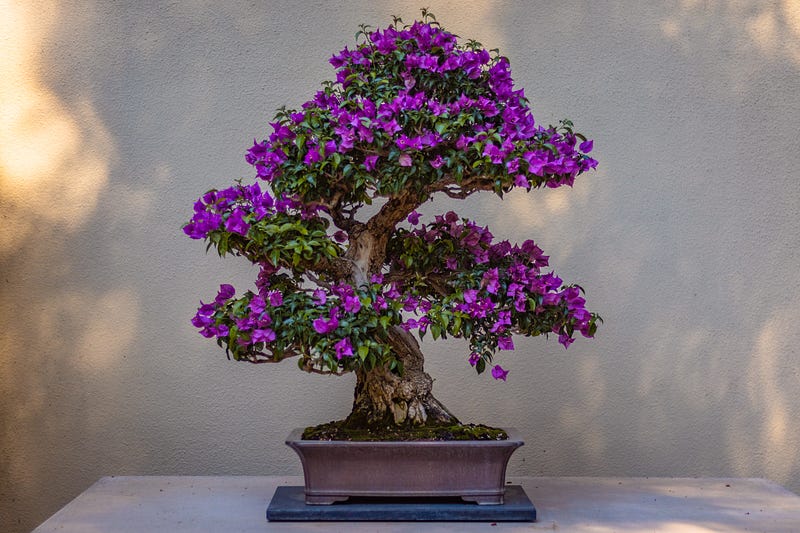
Photo by Devin H on Unsplash

A bit of history

Unlike what many believe, the art of bonsai didn’t originate in Japan, but in China. Already during the Yin and Zhou dynasties, more than 3000 years ago, the Chinese started to cultivate ornamental plants and to create gardens that imitated natural landscapes. However, only during the Wei and Jin dynasties (A.D. 220–420) the art of what nowadays we call bonsai emerged. This was due to the popularity of Confucianism, Buddhism and Taoism.

Confucianism, Zen Buddhism and Taoism

Confucianism, Buddhism and Taoism tended to value simplicity and elegance as well as the expression of sentiments through nature. In the Analects, a collection of sayings and ideas attributed to Confucio, we can find one of the many statements that connects the wise man with nature:

The wise find pleasure in water, the virtuous find pleasure in hills

This is why in penjing, namely the Chinese art of representing miniaturised landscapes, trees are rarely isolated and more frequently placed among other dwarf trees in a pot containing water and rocks to create a full representation of a landscape. This is done to represent the intrinsic essence of nature in its symbolic forms. For instance, according to the book ‘An Informal History of Bonsai’ by Charles R. Long, in the Japanese culture, bonsai used to be kept in temples to represent Horai-san, the sacred Taoist mountain of eternal youth.
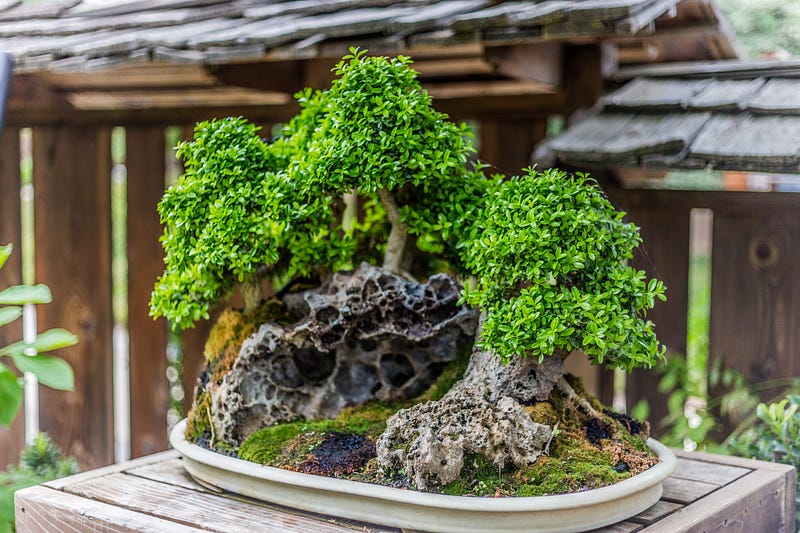
Photo by Delaney Van on Unsplash

How Bonsai are created: choosing the right tree, ‘growing’ your bonsai and different styles

But how are these beautiful miniatures created? First and foremost it is important to choose the right tree. According to Mr Long, the leaves of a bonsai tree, grown in a shallow container, will miniaturise naturally. However, it is still important to choose a tree with relatively small leaves, for instance, avocado trees should be avoided. It is also fundamental to choose a trunk that gives the illusion of maturity. Lastly, it is better to choose a tree with buttress roots. Some of the trees that work well as bonsai are: ginkgo, oak, beech, wisteria, azalea, pomegranate, spruce and maple.

After choosing the right tree, it‘s time to start taking care of its growth. According to Mr Long, bonsai are shaped by pruning, wiring and pinching. Pruning refers to the act of cutting the wooden parts of your bonsai to keep it to the right size. This may refer to cutting both roots and branches. Wiring is useful to give your bonsai the right shape. By wiring the right branches of your bonsai you will be able to create movement and give your dwarf tree the perfect style. Lastly, by pinching is meant the act of removing leaves. Similarly to wiring, this enables you to give your bonsai a perfect shape.

Different bonsai styles emerged based on the chosen tree as well as the pruning, wiring and pinching technique used. Here are some of the most popular:

  • Formal upright style: if you are a beginner this is the style you should choose. The trunk extends vertically without too much movement and the branches extend further at the bottom of your bonsai to then become shorter at the top.
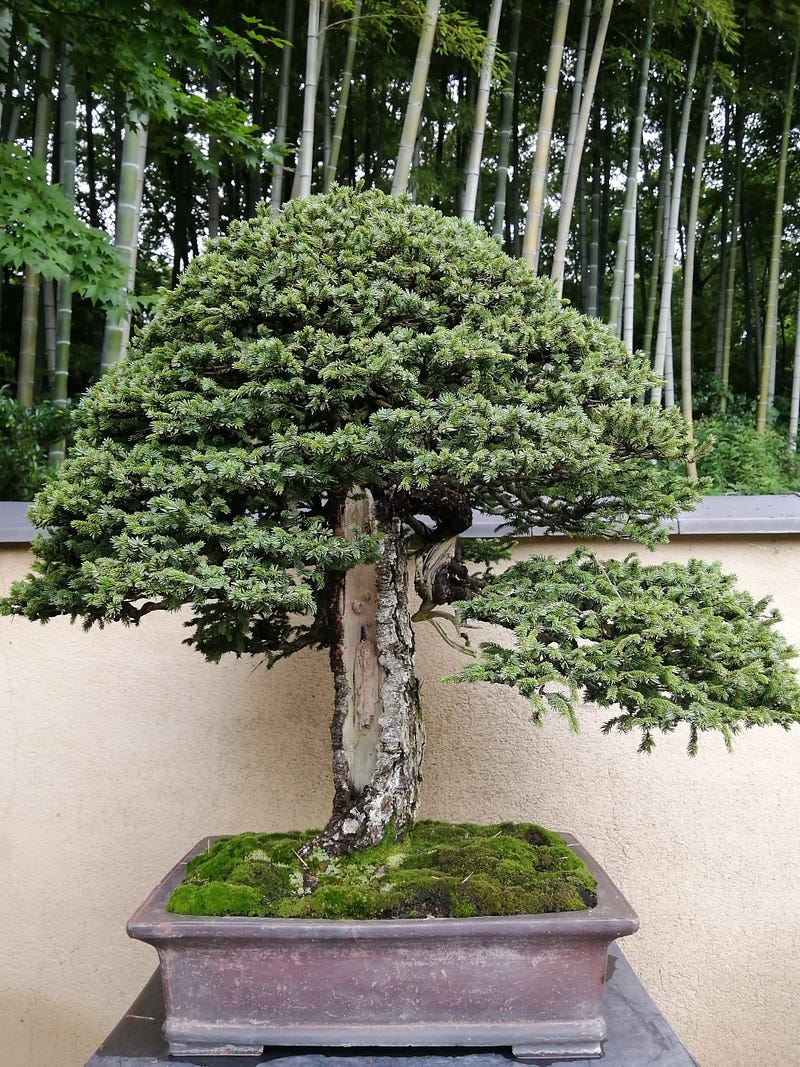
Photo by Benjamin Dehant on Unsplash
  • Informal upright style: like the formal upright style the trunk is upright, however, instead of a straight shape, the trunk should bend creating a zig-zag structure. Branches depart from the angles where the trunk bends. The top of the dwarf tree should be aligned over the base of the trunk.
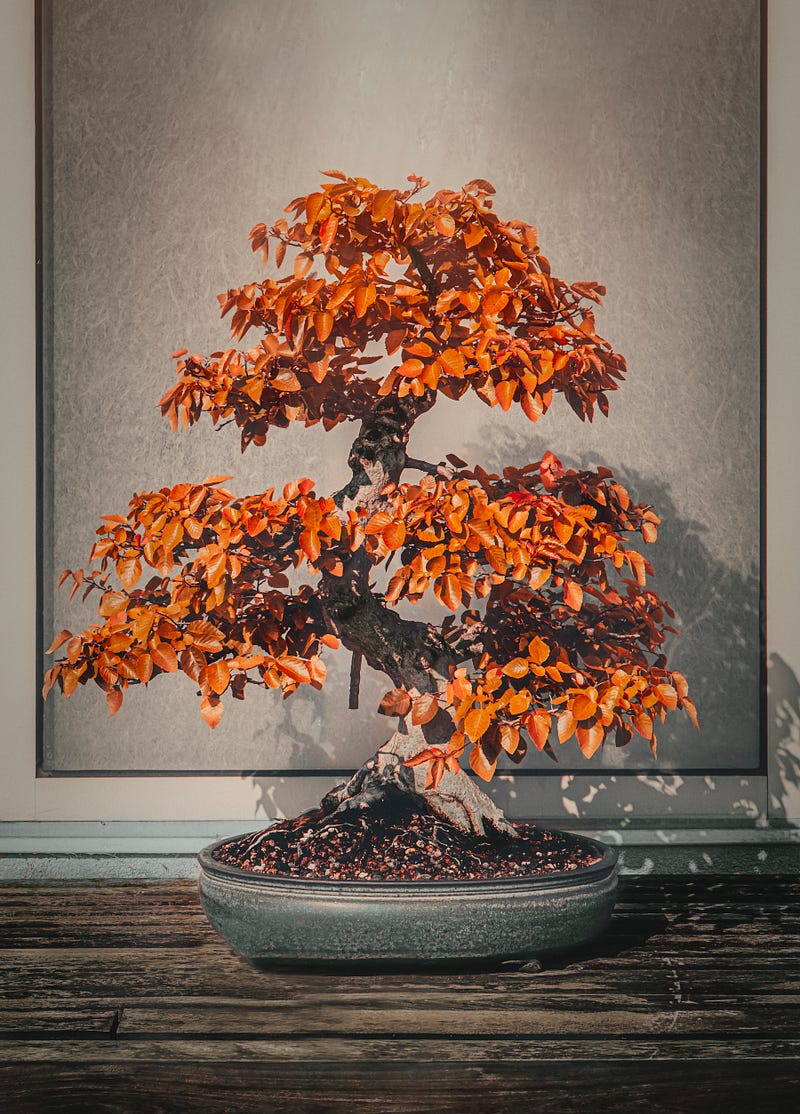
Photo by Todd Trapani on Unsplash
  • Slanting style: in this style the trunk tends to take a direction instead of going upright, creating an angle with the base. The lower branches must spread in the direction opposite to the trunk.
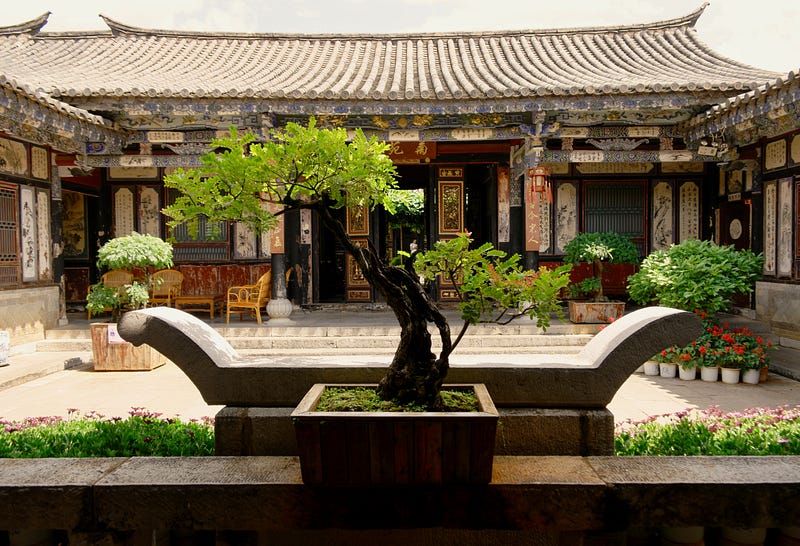
Photo by Matt Briney on Unsplash
  • The cascade style: opposite to the formal upright style, the trunk tends to stretch down towards the vase. In this case, it is better to adopt a deep round vase or a hexagonal container.
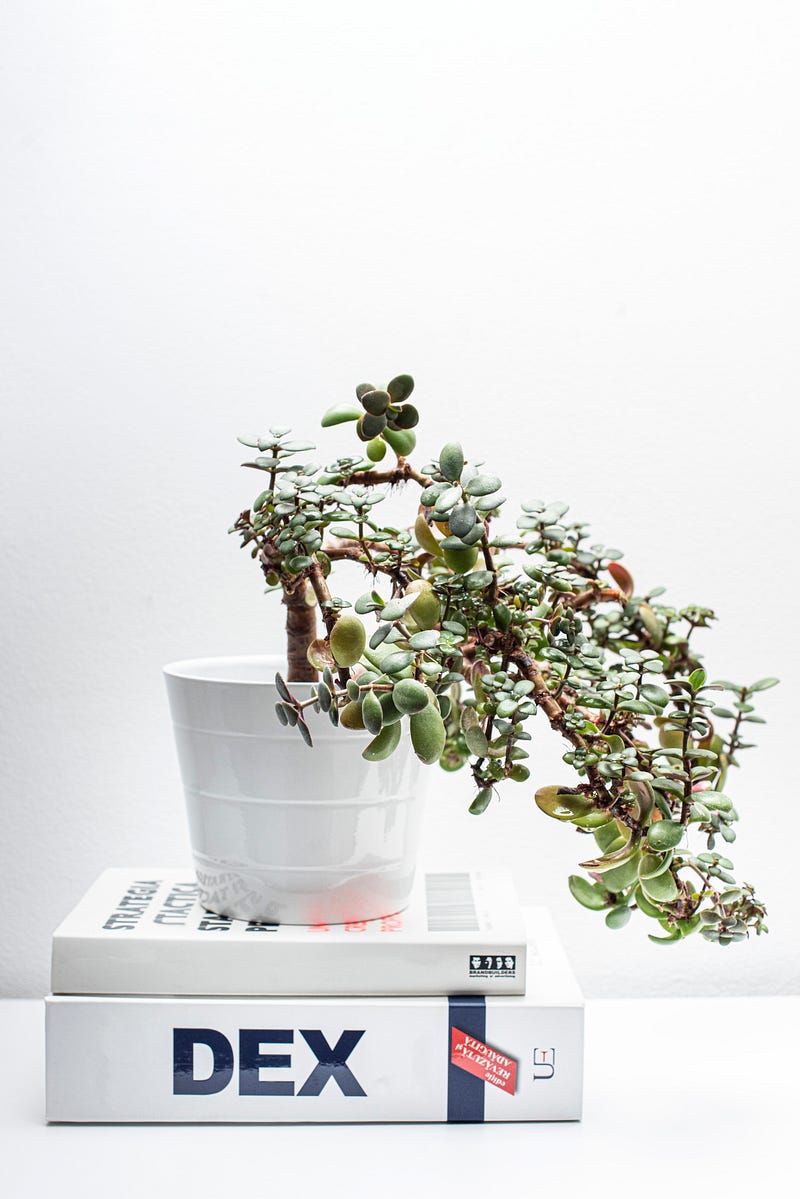
Photo by GLOBENCER on Unsplash

The ancient art of bonsai can still teach us a lot. In the ultra-urbanised world we live in, bonsai have never been so necessary. The slow growth of your dwarf tree will reconnect you with the calming pace of nature and release your daily stress. Spend your free time wiring, pruning and pinching the many trees of your miniaturise forest and create your own calm private landscape in a pot.

Bonsai
Nature
Eastern Philosophy
Mindfulness
Gardening
Recommended from ReadMedium