
The Ambiguous Message of Corporate Sustainability
Green-washing or genuinely green?
Dunkin’ Donuts: *announces to the world* We are going to replace our styrofoam cups by the end of this year with double-walled paper cups used with materials that are certified by the Sustainable Forestry Initiative Standard!
Me: *tweets* This is great, I’m going to go out and buy some coffee right now!
Internet: Well, yeah, BUT Dunkin’ should have done this a long time ago…it will result in the logging of millions of trees…there is no guarantee that the new cups or plastic lids will be recycled…a REUSABLE cup would be better.
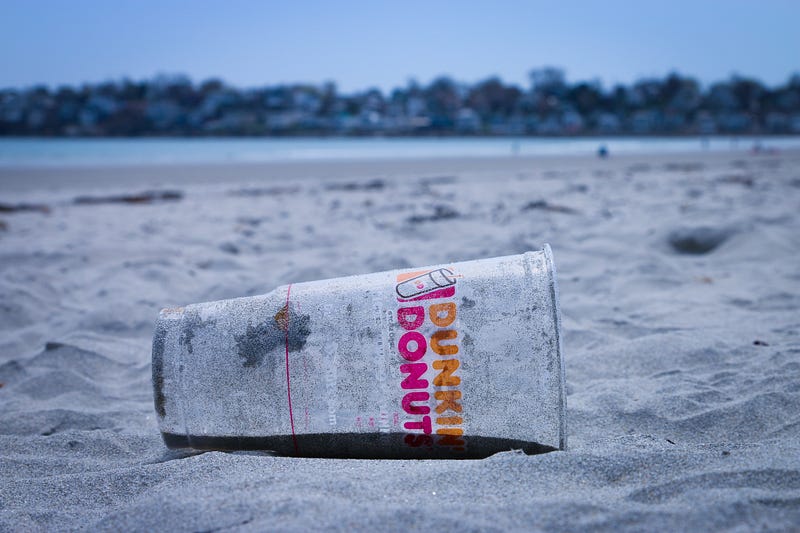
Sigh. When it comes to corporate beneficence, a good deed never seems to turn out to be more than a superficial marketing move — or, perhaps, a good deed never goes unpunished on social media. It should be noted that the majority of Dunkin’ Donuts’ international markets are already using paper cups, and the cups have previously been introduced in Massachusetts, California and New York. It is fitting to give credit where credit is due, but switching to paper cups is far from a planet-saving decision.
“We have a responsibility to improve our packaging, making it better for the planet while still meeting the needs of our guests.” Karen Raskopf, the chief communications and sustainability officer of Dunkin’ Brands.
The move from largely un-recyclable, non-biodegradable polystyrene foam to paper has its virtues. But what about that sustainability standard? The Sustainability Forestry Initiative (SFI) 2015–2019 Forest Management Standard does set goals to promote biodiversity, support the rights of indigenous people, and use third party auditors for certification. However, many consider SFI to be an industry-friendly lobbying front, established originally by the American Forest & Paper Association, to sidestep transparency into questionable practices, such as clear-cutting and use of pesticides. The paper cups touted by Dunkin’ are linked to suppliers that are involved in the logging of Canadian boreal forests; the long ribbon of boreal forest in Canada comprises 25% of the planet’s remaining intact forests. These forests are home to many rare and endangered species, and are facing continuing threats from logging, pests, wildfires, mining and the effects of climate change — the American predilection for two-ply toilet paper has a hand in these ongoing pressures.
Dunkin’ has reported that it uses at least two BILLION cups annually for what amounts to one-time usage. By the end of a year, that amounts to roughly two billion double-walled paper cups with plastic lids in landfills in place of foam cups. While tackling a corner of the ubiquitous global problem of plastic waste, there is still an issue of wastefulness that needs to be addressed. There are better solutions, some of which are extolled by a combination of environmental advocacy groups and corporate sponsors through the NextGen Cup Challenge, co-founded by McDonalds and Starbucks. Many are calling on Dunkin’ to reduce disposable cup consumption by meeting or exceeding Starbucks’ commitment to serve 5% of coffee in reusable cups; by adopting a universally recyclable cup (i.e., one that can be recycled and composted); and by committing to use at least 20% post-consumer recycled fiber in paper cups.
It can be a very simple matter to illustrate large corporations with highly visible brands as cartoon criminals, but those corporations are founded by individuals, driven by individuals, and consumed by individuals. Recently at their annual stakeholder meeting, a group of 7,700 Amazon employees demanded that their employer reexamine and improve corporate climate policy. This request involved the drafting of plans to deal with future climate disruptions and reduce dependence on fossil fuels. An initial request for a public report on climate change was voted down by shareholders at the behest of the company’s board of directors, with claims that Amazon is already dealing with climate change albeit in a piecemeal fashion. The employee group, consolidated together as the Amazon Employees for Climate Justice, persisted in an attempt to get face-to-face answers from the CEO, Jeff Bezos. He declined, or rather, he ducked out. It’s possible that he was just too busy envisioning a future space hideaway for unresponsive billionaires.
“Amazon has the scale and resources to spark the world’s imagination and lead the way on addressing the climate crisis. What we’re missing is leadership from the very top of the company.” Jamie Kowalski, a software engineer who co-filed the climate policy resolution and attended the shareholder meeting.
How much action on social, environmental and economic justice should be pinned to corporate responsibility, and how much belongs on the shoulders of the individual? Certainly we shouldn’t sit back and wait for companies to save us from environmental destruction. They won’t — that’s not their purpose and they are unlikely to commit on their own terms. There are a multitude of agencies and laws, and niche industries of environmental lobbies, preservation groups, consultancies and careers, built on the inherent lack and legacy of corporate responsibility. (Superfund, anyone?) In some cases there is a clear conflict of interest: Fossil fuel companies such as ExxonMobil and BP invite public derision when they push policy under the guise of organizations such as the US Climate Action Partnership (newly rebranded as the CEO Climate Dialogue).
Conflicts of interest are a double-edged sword — the outdoors retailer Patagonia has taken a strong stand on sustainability, including a plan to reach carbon neutrality by 2025. Patagonia’s CEO speaks frequently and openly about climate change, and their mission statement proclaims “We’re in business to save our home planet.” The company provides time for employees to vote, has fought against reduction of and damage to public lands, and has promoted grassroots environmental activism for decades. These actions seem to be built on a corporate culture of principled eco-sensitivity. This may not be true of other companies that are not directly aligned with the natural world, however, it is likely that the cumulative action of concerned employees, shareholders and customers will increasingly step in to fill the void of commitment to sustainable action.
Regardless of whether companies do something out of the goodness of their collective hearts or to boost their bottom line, in the final analysis it does not matter if motives are based on what makes long-term sense external to profits or if it amounts to little more than a public relations venture. There is no getting around the fact that large corporate entities leave a footprint, on the land, in the water and in the air. But just as the creation of appropriate agencies and legislation helped mitigate the more tangible environmental vices of the Industrial Age, public expectations and cultural norms can now serve to mold the direction of corporate sustainability.