
A novel
The Alchemist of Goreau — Chapter 3
Follow me to make sure you get new chapters as they are released
The Alchemist of Goreau is a fantasy novel set in late 1800’s in a mountainous Central European country with magic, incredible and unbelievable situations, and a healthy dose of humor. The story follows Donwillo, a mid-twenties alchemist struggling to make a name for himself in the world. When the world starts to crumble, he’s the most likely suspect. Follow his journey as he seeks to clear his name.
Are you ready to join Donwillo on a fantastical journey?
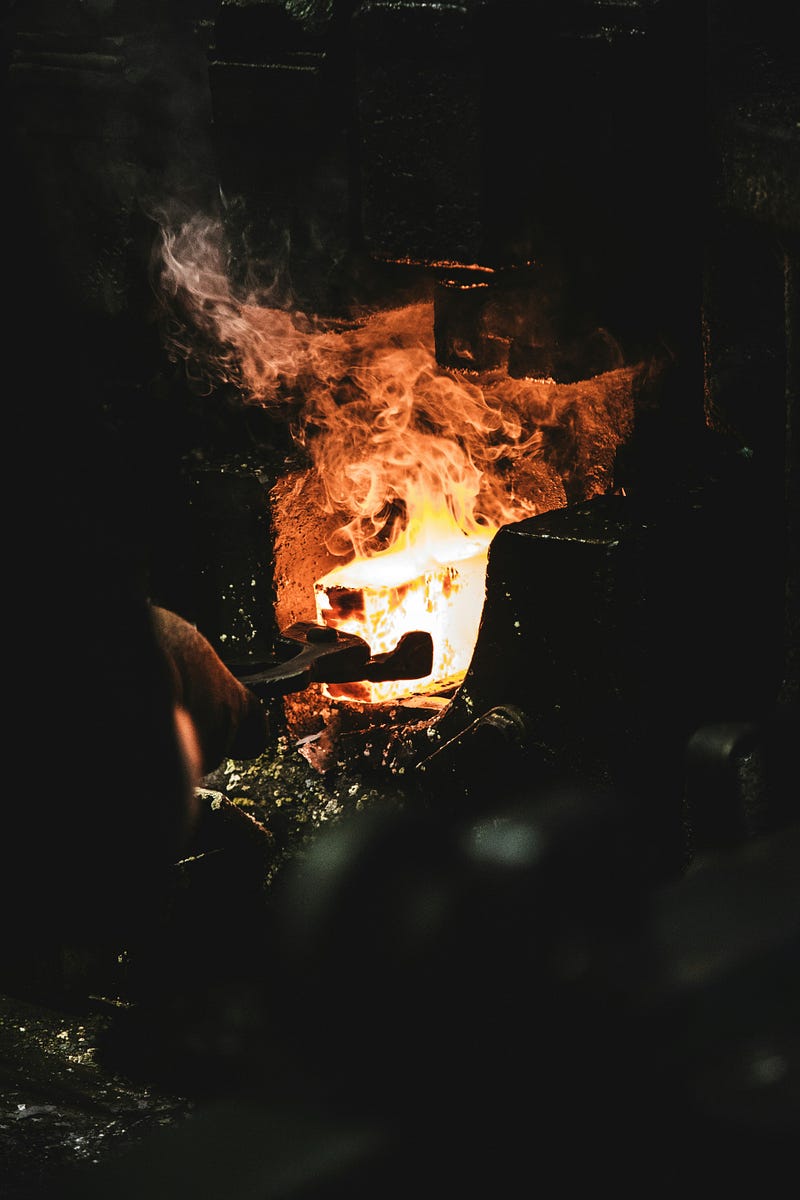
Chapter 3 — Thondhor Metalhummer
It had taken a wagon cart full of Absolutumens to coax the retired foundry chief Thondhor Metalhummer out of retirement.
In the back of his mind, he knew how this would end. He’d heard the legends of constables sticking around for one last job. It was always their last. And deep down he knew it would be no different for himself. But the money was too hard to pass up. It would change his family’s life.
Retirement had been rough for Thondhor. He wasn’t an idler. He couldn’t just putter around. He needed to be in the thick of the action, not the thick of his garden brambles.
And frankly, things had been a little tense with the wife.
She loved having him around so much she couldn’t help herself but plan event after event for them to attend. And at all of the book club gatherings, art museums, and gardening classes he found himself feeling like a ghost, like he was slowly fading into oblivion.
He tried to adjust his attitude, telling himself everyone struggles with big life transitions. But recently he’d reached the conclusion that his plastered and goofy smile was becoming more obviously fake every day.
So when offered the chance to go back to work he had to stop himself from leaping up and heartily agreeing.
Then the money made it impossible to say no.
The Mayor of Goreau had come to him with a proposition: help build a glorious new statue to replace the one that had been swallowed up by a sinkhole.
“The townsfolk need a community uniter. We’re all so discombobulated,” argued the Mayor.
Thondhor could see right through him. The mayor was up for re-election and this was a desperate ploy for more votes.
Thondhor didn’t particularly care to help the mayor get re-elected.
But, and not to put too fine a point on it, it was the money that lead to him standing in front of an assortment of wide-eyed faces inside the foundry.
The mayor stood by, wearing that political smile that makes the recipients feel like trapped wild animals being coaxed to calm down so they can free you. But they are more dangerous than the trap.
The Mayor wanted Thondhor to make a speech.
Thondhor immediately realized the issue. Having retired only the prior year, he was shocked that he didn’t recognize any of the foundry workers.
Then he traced their bewildered eyes as they looked around the foundry’s hammers, crucible, and forge, as if they had never seen those things before.
“Scabs?” asked Thondhor angrily. “What’s going on here?” he demanded.
“Sh, sh, sh,” said the Mayor, “keep your voice down! And turn that frown upside down!”
Thondhor was in no mood for this.
“You brought me back for this?”
“In short, yes I did. No one could do the job except you! Besides, you’ve had it too easy. This will be a true test of your mettle,” said the Mayor grinning.
Thondhor frowned. “I do not appreciate you making light of this situation,” he said staring out at the nervous faces brought in to break the strike.
The lot was a mixed bag of farmers, milkmen, chimney sweeps, an artist or two, a few bakers, and a bakers dozen of dock workers.
“I cannot lead these men,” he said.
“There is one woman, if that makes a difference?”
Thondhor started to leave but the Mayor put a hand on his chest to stop him.
“Stay and I’ll double your pay. Leave, and you’ll get nothing. You’ll go back to that meagre pension and growing potatoes in winter.”
It was a compelling case. With that kind of money, even if the job went sideways, his wife would be taken care of forever. And it would set his son up to pursue his dream of being a full time mountain climber.
“Look,” said the mayor, “all you have to do is practice a little leadership. Delegate the easy stuff and do the skilled stuff yourself.”
“It’s all skilled stuff,” said Thondhor angrily, his overalls stretching against his bulky chest.
“I know, I know,” said the Mayor, trying a different tactic.
“Look. I admit it. I fooled you. Bamboozled you, one might say. Tricked and pulled the wolf over your eyes,” he said.
Thondhor tilted his head sideways and mouthed, “wolf”?
“But I had too! I need this. And I need it now. The election is this Friday and I must unveil the statue tomorrow.
“How did you get the money anyway?” asked Thondhor.
“Never mind that,” said the Mayor.
He gently pushed Thondhor towards the uncertain looking scabs and chanted, “Speech, speech, speech!”
The crowd picked up the chant, it was too appealing.
“Hi, um,” Thondhor said. “You guys look, really um, prepared! Yes, okay so, um, here’s the thing,” he said trying his best to rally the troops.
“Forging a statue is all about three things. Having the right materials. Following the right steps. And having skilled and knowledgeable — “
“ — leaders” interjected the Mayor.
“Uh, I was going to say — “
The Mayor cut him off again. “ — I think they get the picture. Off to work!”
He turned to Thondhor. “You have ‘till C.O.B. to finish.”
“C.O.B?” asked Thondhor.
“Close of business.”
“You could have just said that.”
“I’ll leave you to it then,” said the Mayor, and scooted away.
Thondhor stood there stupefied for a minute. Then he got to work explaining. There was much to explain. He spent all morning explaining.
He said things like, “This is how you create the mould.”
And, “This is how you pour the molten metal. Try not to get any of it on you.”
And, “Whatever you do, don’t trust your instincts. Your instincts are probably garbage. Trust my instincts, and do exactly what you’re told, and we should all get through this alive.”
He could see by reading their faces they had not considered death to be a possibility when they signed up.
Thondhor delegated according to who he believed to be the best fit for various tasks.
The artists were given brooms and told to stay out of the way.
The farmers handled the transportation of raw materials.
The milkmen were tasked with carrying fuel to the forge.
The dock workers were in charge of statue assembly.
The bakers ensured the schematics and written instructions were followed.
And Thondhor himself manned the giant crane that carried the bucket full of molten metal from the forge to the moulds.
By 2 o’clock nobody had died horrifically, and Thondhor was feeling optimistic about the project.
“Maybe forging was like riding a bike, one never forgets,” he thought.
Then shame washed over him.
His son should have been there.
Sondheim had followed in his father’s footsteps in working at the foundry, after an appropriate amount of time spent goofing off and not taking work seriously. And now Thondhor was undermining his son’s very ability to demand better wages.
He’d been so focused on the money, he hadn’t even considered the consequences this might have for his only son.
He determined that he would make it right with Sondheim once the project was completed.
The statue itself was coming together into exactly the kind of disturbing eyesore it was meant to be.
The concept was, “the statue to end all statues.” That’s how the Mayor described it.
It was an amalgamation of all the things statues stood for: history, pride, honor, reverence, and the abundance of bronze as a building material.
In reality, these concepts were difficult to represent, which is why the statue looked a bit like a pig flying a kite in the back of boat while storm clouds shot Cupid bows down upon dainty, flamboyantly dressed sailors.
Still, the Mayor could have asked for a huge bronze turd and Thondhor wouldn’t have cared. He would have given exactly one turd, as required by the specifications.
That was foundry work. You never got involved emotionally or artistically.
Often the people with the most money had the worst taste, anyway.
Every second that passed and no disaster had occurred built confidence in the inexperienced workers.
Things were actually coming together.
Thondhor was a good leader, it’s how he maintained the position of Foundry Chief for twenty-three years. He knew when to apply pressure and when to ease off.
For a moment, Thondhor started to feel something growing in his chest. It wasn’t the expired eggs he’d eaten that morning. It was genuine pride.
The owner of the foundry, Sid, watched from a railing high above the floor. He would be handsomely compensated if Thondhor and the strike breakers delivered on the project.
Sid had inherited the business from his father the year before, and was already making a mess of things. He had no love for the actual craft. He was a businessman through and through. Cutting corners was so familiar to him he practically left circles everywhere he went.
When the strikers asked for modern safety measures, like an automatic sprinkler system and welding helmets, Sid had politely refused, and then when the workers striked, he had run a smear campaign and then put up flyers requesting cheap labor. This enraged the strikers. Their rage was proof to Sid that he was doing the right thing. After all, if workers were happy, what would drive them to greatness?
Sid had one redeeming trait. He knew not to micromanage the workers on the job. And this was one of the few reasons Thondhor had agreed to return for the job.
It took only a minute or two for Thondhor to shake the rust off. Soon, the crane was, not an extension of his body, but his darn near flesh and blood.
By six o’clock there was only one piece left to assemble: a giant, gilded pirate hat to be placed on a mast rising above the scene.
The workers were getting tired, and the heat was particularly tough on the milkmen. Still, Thondhor knew better than to rush.
He gracefully maneuvered the bucket of melted gold into position above the crucible.
The scabs knew to stand back at this point.
He started to pour. The crane arm squeaked, but held under the weight.
Across the room the wall of sand, held back by a five inch acrylic wall, suddenly and inexplicably developed a crack in it that ran one length to the other. In seconds, the wall, unable to hold back the pressure of the sand, catastrophically failed, creating a sand slide that zoomed across the room, sweeping up the workers with its wave, and crashing into the crane’s support legs.
The crane, under weight of the liquid gold, reeled as the sand wave hit it, causing the liquid to spill across the floor and mix with the sand creating a golden lava flow.
Thondhor knew it was over for him.
Still, he battled the controls, fighting to keep the crane right side up.
But it was hopeless. Screams filled the foundry.
Sid escaped out the upper fire escape.
No safety measures kicked in.
Thondhor’s life flashed before his eyes and ended with a somber picture of the cart of Absolutumens.
The crane toppled, spilling the rest of the molten gold.
He was buried in the lava mixture.
“We didn’t do anything wrong,” he thought.
And that was it for Thondhor Metalhummer.
That was it for the scabs.
That was it for the foundry, and that was it for the Mayor’s passion project.
And that was it for several hundred years of peace that had walked hand in hand with the people of Goreau.
They were about to be written into the history books, whether they liked it or not.


