
Controversy: The Alchemical Marriage of Prince
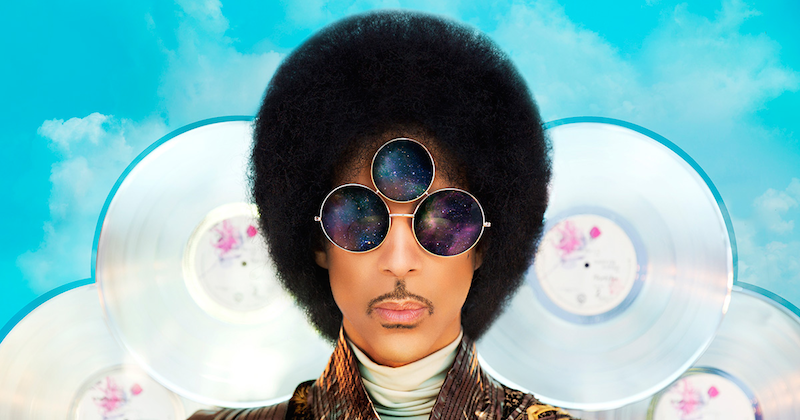
When we talk about alchemists, we usually picture the old men of European etchings bent over strange-looking tubes and vials, desperately searching for a gleam in the muck around them. The term “magician” will either conjure up a stage illusionist, all tuxedo tails and white rabbits, or bearded men in spangled robes summoning angels from the ether. But in truth, occultists can look like anyone else. Some achieve wisdom and power through old tomes and complex ritual, but others display innate understanding from the start. Just as musical virtuosos are born into astonishing natural ability, some people are simply born with a talent for the esoteric arts.
Prince Rogers Nelson was an excellent example of both. A self-taught musician who made fans of millions, Prince’s music was relentless, a generative force so compelling that he constantly sought new and innovative means of expression. He was a powerhouse of composition, releasing thirty-six studio albums in as many years despite very public warfare with his label. Five years after his death, music continues to pour out of his vaults. From searing psychedelia, to catchy synth-pop, to gritty apocalyptic soul, Prince transcended genre. His lyrics were often explicit celebrations of sensuality, but his daring image transformed him from hedonist to mystic. With his trademark breathy falsetto and heavily lined eyes, he danced between masculine and feminine — a feat he accomplished in heels to boot. In fact Miles Davis, immortal jazz revolutionary, believed this marriage of oppositions was the secret to the star’s success: masculine and feminine, secular and divine.
The Divine was ever-present in Prince’s life. His parents were Seventh Day Adventists, a strict evangelical sect that came up in the shadow of the apocalyptic Millerite movement. From the very beginning, Prince thanked God in his album credits, a tradition that continued well past his conversion in 1993. In the early days of his career, this credit occupied an interesting place at the bottom of liner notes otherwise littered with explicitly sexual lyrics, photographs of Prince in various stages of undress — Controversy lives up to its name with a full spread of Prince in the shower, a crucifix hanging just behind his head; Purple Rain, which launched the implementation of Parental Advisory warnings, begins its acknowledgements with “All Thanks to God — the Light.” Yet these hardly seem blasphemous. To Prince, sexuality was another facet of human experience, as much a divine gift as life itself. But Miles Davis was correct — the 1970’s and 80’s were cluttered with hyper-sexualized music, most of which came off as less transgressive than aggressive. Prince was able to shred a guitar like Jimmi Hendrix and funk up a riff like Sly Stone, but his world wasn’t one of sex, drugs, and rock’n’roll. Prince was something fresh, transcendent.
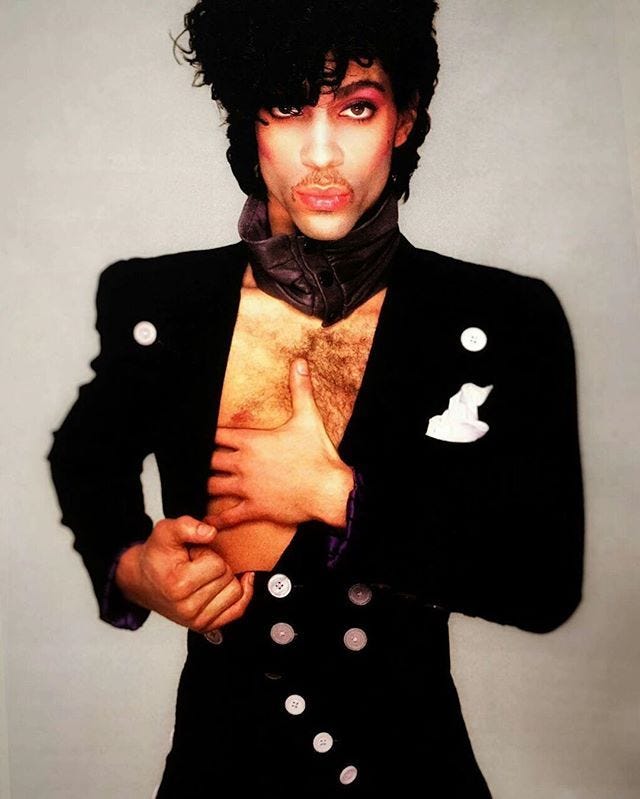
What made Prince so effective was his ability to present himself as a harmony of contraries. His first chart success, 1978’s “I Wanna Be Your Lover” was a declaration. From the first funk-forward beat, Prince defies categorization: he cuts a curious figure against brilliant spotlights, dressed in a gauzy leopard-print shirt that plunges with disco bravado, long hair blowing like a siren starlet, already sporting his trademark mustache. It’s fun, performative, but it doesn’t read as camp — this is still something quite serious. This is a man pleading his case not for a fictional love-affair but for our attention. Prince himself plays every instrument in the video, proving his musical chops with subtle stylized fades and cheeky cuts. “Don’t wanna pressure you baby,” he sings, staring into the camera with a boiling intensity before shrugging and flipping his hair into the breeze. What we see is at once coquettish and virile, playful and purposeful, infectious and technically brilliant. It’s no surprise that by 1981, nearly every aspect of his presentation and persona came under scrutiny — his retort, “Controversy,” did little to clarify for an audience who demanded classification. Despite his chanting dismissal of polarity, Controversy cemented him as a master of contraries: creative and receptive, sexual and spiritual, game-player and rule-breaker. For the duration of the 80’s Prince was pop-culture’s favourite mystery, a petite giant who smouldered with chameleon carnality, at once extravagant and enigmatic.
Prince’s ability to merge these opposing energies seemed effortless, but there were forces within him which dominated others: in esoteric thought, masculinity is synonymous with expression, the drive to action and creativity, our generative force, where femininity is a receptive state, the fertile ground ready to receive and nurture. Each requires the other for success and longevity — seeds cannot grow without soil. The Alchemical Marriage is the cultivation of both forces within one’s own psyche in the name of personal wholeness and self-mastery. But often, this unity is sought outside of one’s own self. We turn to others in order to explore and understand what we feel is missing within. Dion Fortune explained this polarity as the drive behind all human couplings in her book, “The Esoteric Philosophy of Love and Marriage.” “For the maintenance of life a single force is sufficient, but for any form of creation two forces are necessary…” This search for a receptive force may be what drove Prince’s innumerable collaborations, often with women and girl groups he personally manufactured. These women each represented a sort of anima exploration, embodying a feminine ideal that Prince was only able to achieve through their alchemical partnership: he the creator, them the bearer of artistic fruits.
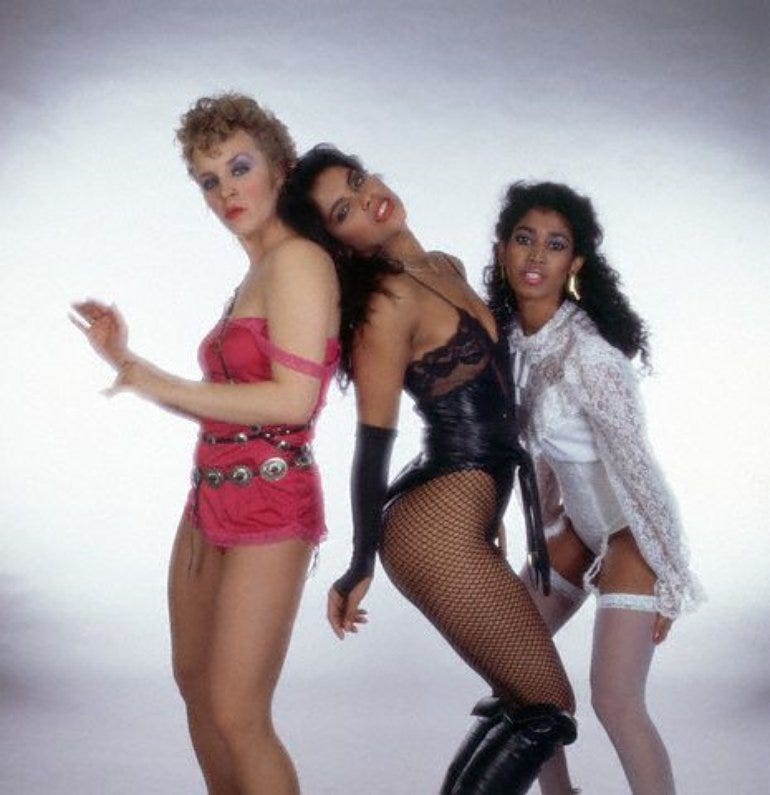
Though Prince had contributed songs to others since the beginning of his career, purposely negotiating his contract to produce new talent, Prince’s first notable exploration of feminine expression came in 1981 when he met Denise Matthews. The seed of inspiration had already been planted for some time; he had visions of women in lingerie weaving sensual fantasies like an R-rated version of the Ronettes. Denise had a few minor acting credits to her name, but Prince didn’t want an actress — he wanted to transform her, body and soul. When he installed her as the centerpiece of his newly minted girl group, he also installed her as a sort of mirror, an image of himself as the opposite sex. This Galatea was rechristened “Vanity,” and Prince couldn’t take his eyes off of her. Vanity was everything he couldn’t be: even at his most overt, Prince could not be so aggressively sexual. There was an intuitive seduction to her character where he himself could only be playfully suggestive. As both an artist and an individual, Prince was keenly aware that there were limitations to his expression and experience. His assumed personas could only take him so far — at the end of the day, Prince was a masculine force in the purest esoteric sense: perpetually driven by generative force.
In his Symposium, Plato relates a particular creation myth. Humanity, he relates, originally contained three sexes: male, female, and “the union of the two.” We learn that this third condition — the Children of the Moon, a Union of masculine Sun and feminine Earth — were forcibly separated by the gods who feared them for their strength of heart and will. So many years later, William Blake wrote of Albion, a cosmic creature of unity — the mythic Androgyne. But Albion’s fall arose not through the wrath of the gods but through personal perception: Albion had but to conceive of separation to split into four new and divided states. In perceiving self as separate from other, Albion became unable to ever again experience unity.
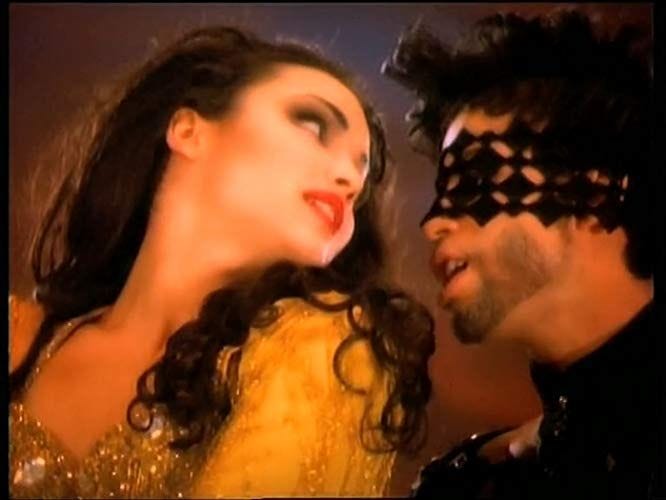
This sudden dawning perception of duality may have brought Chaos and Disorder to Prince’s career. Each new protegee was an attempt to integrate some new Anima, but inevitably, they all fell short. In her recent memoire, Sinead O’Connor relates a night spent trying to avoid Prince’s wrath incurred by her gruff and confrontational public persona: when O’Connor asserted herself as something other than an incarnation of Prince’s own feminine identity, his disillusion turned to rage. Other splits are less traumatic — many of his protegees simply took advantage of better contracts or departed when the romantic involvement faded, but each time it’s clear that Prince, like Albion, divided part of his soul for these projects. These women were not merely investments in an upcoming artist, they were attempts to bring his own ideal feminine identity into incarnate reality.
By the 90’s, Prince’s life and career were in chaos. His creative pursuits were shadowed by bitter feuds with his label and management, a rut not even his external collaborations could break. Though he still proudly — defiantly — declared his identity on tracks like “My Name is Prince,” he learned that identity was under strict legal ownership by people who were not, in fact, him. In order to experience artistic rebirth, creative unity, he would need to leave behind his name. At the time, he was working with a new act. This new Anima Woman was just 18, a dancer with a spirituality as innate as her sensuality. After a career of divided identity, loaning pieces of himself to others in order to glimpse a different reflection, he approached Mayte Garcia much differently. It was this collaboration he had in mind as he adopted his new identity: not a singular name, but a symbol of unity. The Love Symbol had appeared in some form or another as early as 1982, but it underwent its own alchemical transformation before rechristening the Artist himself: composed of the astrological glyphs for Venus and Mars, feminine and masculine, reception and drive, it now contained an additional swooping line dividing its head from its body. In alchemical texts, similar swoops and flourishes were used to represent the process of calcination, heating raw elements to yield more noble materials. By adding fire, common ingredients are transformed into rare and treasured substances. Prince threw himself into the furnace: both the Love Symbol and his romantic relationship with his new Anima Woman were pushed to the forefront of his career in 1993.
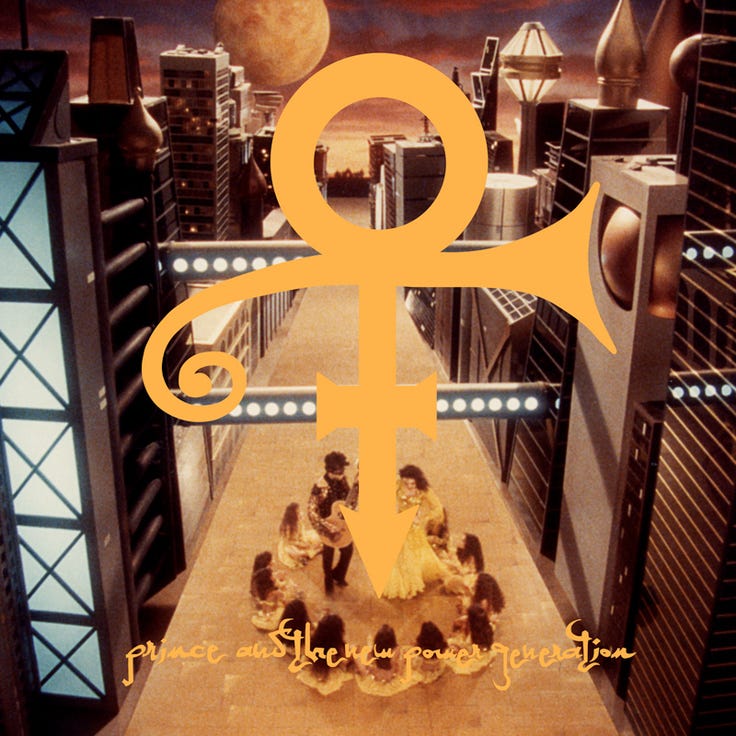
The Love Symbol was his own hypersigil. By replacing his name, he forced the public to associate him — and subsequently his artistic mission — through sigil alone. The Symbol made him synonymous with his intention: an erasure of conflict between self and other, a union of masculine and feminine energies, an alignment of drive and perception. Like any spell its effects were not immediate: his struggles with his label continued until his contract expired in 2000 and his relationship with Mayte Garcia ended in tragic loss leading to divorce, but Prince’s time under this unique sign brought an elevation of spiritual understanding. In erasing his earthly identity, his music began to explore the divine from a different direction, mapping out concepts of god, divinity, ancestry, and spiritual connection. Of course Prince reclaimed his name with the new millennium and later works certainly still have an air of playful Prince sensuality, but that spiritual curiosity remained a feature until the end.
Occultists who come to the path consciously have their own reasons for doing so — power, knowledge, self-mastery, wealth, each reason as individual as the seeker. Prince may not have consciously studied the universe’s hidden arts, but he demonstrated so many tenets with masterful ease. His innate understanding of duality both unified and divided him at times, but with each new turn came an opportunity for another. Like every human being, Prince’s life was messy and conflicted, but he was a master of his art, a study in duality and integration. Ultimately Prince found his second force: his listeners. Each album sold brought fertile new ground for his creativity to root, for love and admiration to blossom. The flowers of this union between artist and audience brought their own divine gift to Prince’s legacy: immortality.
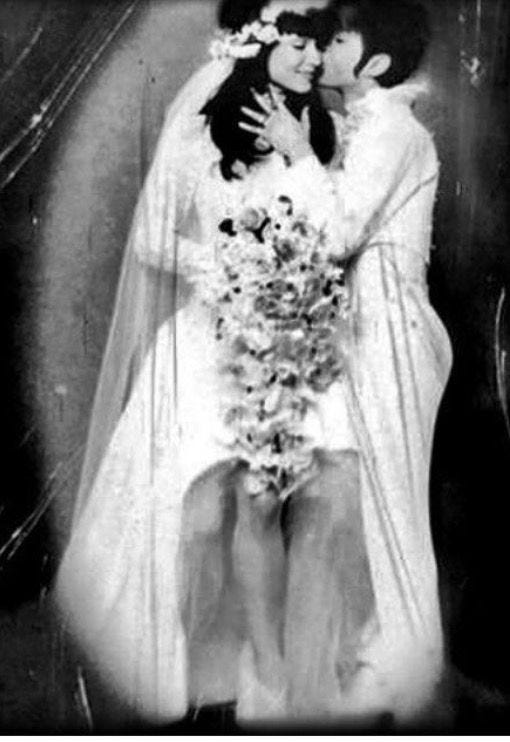
Fairlie Theta is a professional astrologer and lifetime student of the esoteric. You can find more of her work and book a personal consultation through her website, MoonandMajesty.com
If you appreciate my work, please consider following me here on Medium and forwarding this article to others who may enjoy it. I rely entirely on recommendations and reader support to continue making content. Tips are not expected, but Ko-Fi donations are deeply appreciated. If you’d like to be notified any time I publish new content here or on any other platform, you can sign up for my weekly newsletter.


