
The Agatha Christie Story Nobody Knows She Wrote
What John Grisham, Scott Turow, and other legal-thriller authors owe her
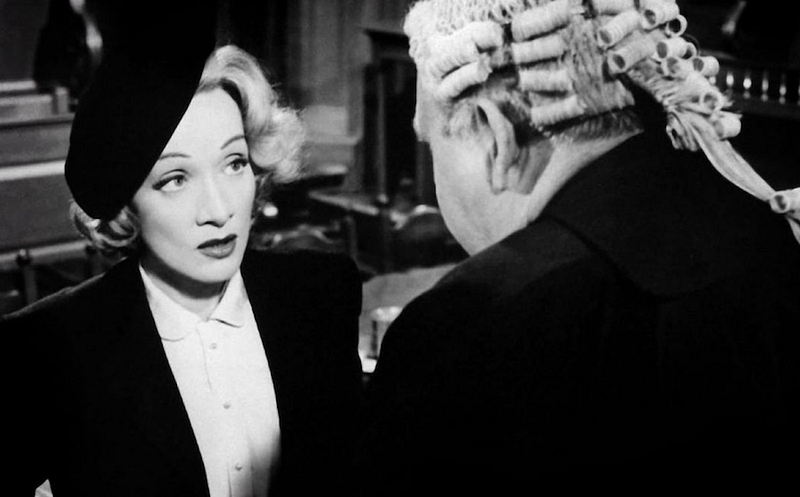
Agatha Christie’s “The Witness for the Prosecution” is her most famous story that nobody knows she wrote. By “nobody,” I mean, “me,” before I read her autobiography.
Christie’s story doesn’t involve Hercule Poirot, Jane Marple, or her less well-known sleuths, such as Tommy and Tuppence Beresford. It first appeared in 1925 in the largely forgotten pulp-fiction weekly Flynn’s. It’s been overshadowed by its movie, TV, and stage versions, most notably by Billy Wilder’s 1957 film with Marlene Dietrich as the title “witness.”
Should you care about any of this? It depends.
I went back to Christie recently after reading P.D. James’ smart appraisal of her work in Talking About Detective Fiction, which deftly sidesteps the twin perils of overpraising her literary merits and underappreciating her impact on popular culture.
Christie’s work held up well as a form of entertainment for beach blankets and airport departure lounges, and I wondered if her shorter fiction might appeal to a classic-short-stories group I co-lead on Zoom for journalists and authors around the United States.
The short answer is: possibly not.
My group leans toward fiction like Anton Chekhov’s “The Lady With the Dog,” James Joyce’s “The Dead,” and William Faulkner’s “A Rose for Emily.” Christie’s work doesn’t quite come up to the level of even the lighter-weight diversions the members enjoy, such as the title story of Ian Fleming’s collection For Your Eyes Only.
But her “Witness for the Prosecution” might interest you for other reasons.
- Its twisty plot races toward a surprise ending. Leonard Vole stands trial for the murder of a rich, elderly woman who’d left him money. He has an alibi supplied by the woman he calls his wife, but at the trial, she becomes a witness for the prosecution. Can Vole’s lawyer win an acquittal regardless? If so, will justice have resulted? I’d seen Wilder’s movie and knew the twist that was coming, but the film had made enough changes in the original that the story held my attention.
- It makes a good, brief introduction to Christie’s work. “The Witness for the Prosecution” has most of the hallmarks of her detective fiction in a more compressed form: rapid-fire clues, a surprising ending, thin characterizations, and little enough local color that the story might almost have been set in Omaha instead of London.
- It has historical interest. Christie’s story is a courtroom drama, not a detective story, and may have been the first such legal thriller to achieve worldwide fame. Scott Turow and John Grisham and other legal-thriller authors owe her, whether or not they acknowledge it directly.
If you like “The Witness for the Prosecution,” Christie wrote more than 150 other short stories, some about Hercule Poirot that you can read for free. A Poirot locked-room murder mystery, “The Second Gong,” appears in Agatha Christie: The Witness for the Prosecution And Other Stories.
After the success of her The Mousetrap, Christie turned “The Witness for the Prosecution” into a play still performed worldwide, including a production that runs through September 2024 at London’s octagonal Council Chamber. You can stream other adaptations, including the 1957 movie.
Pauline Kael deliciously summed up that film in The New Yorker with the line: “Billy Wilder’s inane yet moderately entertaining version of an Agatha Christie courtroom thriller, with Charles Laughton wiggling his wattles.” Go for it, wiggling-wattles lovers.
You might like my longer story on Christie: