
The Aftermath of Giving Up Sugar
Attempting to stay the course when my kids borrow an ice-cream maker
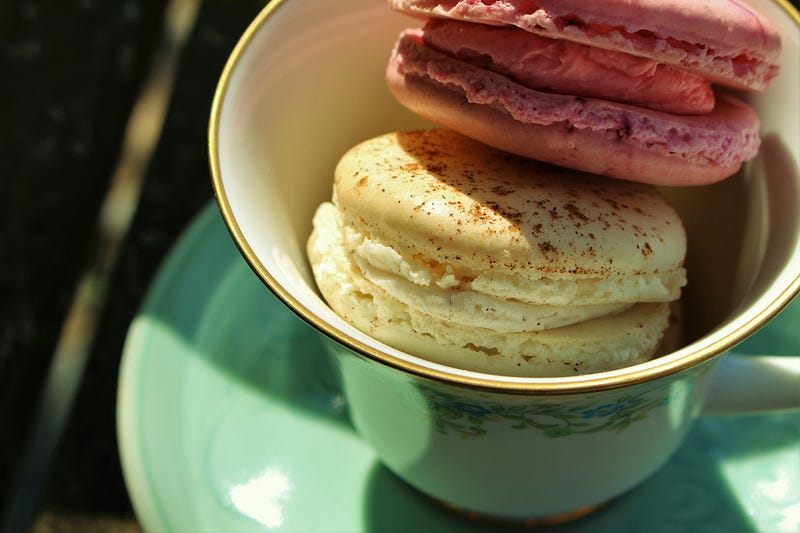
It took me over thirty years to give up sugar. They were long decades of trying, failing and trying again.
Why did I even attempt such a feat? I explain it here, in the unexpected thing that happened when I gave up sugar.
Of course, it was helpful, when I finally succeeded, that most of my kids had moved out of the house and I was in sole charge of what the freezer held.
It wasn’t like I was perfect, because nobody’s perfect. Which meant if I went out to dinner, I would sometimes say “yes” when the waiter asked
“Dessert menus?”
And this is because I’d have the fleeting thought, right when he appeared, that I could die the next day or get in a car crash on my way home. I’m always trying to prevent future regret, like being on my deathbed and thinking I should’ve had the crème brûlée.
And, plus, I’ve always been slightly put off by super disciplined people who follow the rules all the time, no matter what. On one hand I feel bad that I’m not as disciplined as the person turning down the molten chocolate cake but another part of me is also inspired, like, maybe tomorrow I, too, will surge past temptation.
I’ve also noticed, whenever I try to be too perfect, my kids accuse me of being in a bad mood. And what I really think they are noticing is me being focused. I’m busy trying to concentrate on being non-reactive while breathing in the smell of chocolate chip cookies cooling on the wire rack.
And I’m sensitive. I don’t want my choices to make other people feel guilty. Dessert is associated with happiness, at least in the moment, and a moment is a delicate thing. It’s a mood, a state of being, it’s so fleeting. To mess with it by saying, “I’ll pass on dessert” means risking the pleasurable, though temporal, feeling of hope.
And I believe in hope.
When I did reach the other side of sugar, that is, when its hold on me loosened, I experienced some clarity about the Zen concept of “non-attachment” that had confounded me for so long. While watching the Great British Baking show, for instance, I was able to substitute yogurt for Haagen Dazs chocolate ice cream. I felt like I’d achieved a new milestone.
And understood what the Zen people mean about freedom.
I was free of interrupting thoughts of Haagen Dazs, the should I or shouldn’t I.
Also, after a couple months off sugar, many things tasted too sweet. A couple bites of one soft cookie were enough for me to really notice the bitter aftertaste. In contrast, the tastes of other foods, like broccoli, really came alive. I enjoyed savory food so much more.
For the first time, I could taste sugar clearly. I could feel the rush of well-being that is likely dopamine. And also feel its transience as it dissipated. Sugar has its ups and downs.
I grew more confident that I was really over the hump, that my occasional tastes were not sabotaging me, that I was not careening back to the beginning of three decades of hard work. That I wasn’t undoing all my healthy behaviors.
This is to say, I was no longer bullied by sourdough cinnamon rolls.
But now.
They have returned. My boys. All four of them.
And, my middle two most recently borrowed my friend Ellen’s ice cream maker.
Now, when I open the refrigerator, I have to move the homemade hot fudge sauce out of the way to get to my unsweetened almond milk. When I open the freezer, I have to move over their salted caramel and also strawberry ice cream to retrieve the frozen blueberries for my protein shake. When I open the pantry, I reach behind five-pound sugar bags to grab my nut crackers.
I called Ellen to yell at her.
“Why did you let them borrow your machine?”
And then I whispered to her on the phone,
“I need you to recall it.” I tried to think of an excuse of why she needed the ice cream machine back. Right this very minute.
“Why would I do that?” she asked.
Ellen is disciplined. Wouldn’t understand.
“I don’t like borrowing such expensive machinery. They could break it.”
The other problem has become my youngest son and his nightly project of making chocolate chip cookies. He used to have tennis practice, more homework. He hand-delivers them to us warm, in front of the TV, while I’m watching Cheer, the documentary about the carved gymnasts that can flip across the mats into human pyramids.
“You’re no fun,” my ice cream making son accuses me, later, spoonful of salted caramel in his hand, willing me to take a bite.
“Come on, it’s so good.”
And in that moment, I’m again riddled with the unknown. I’m trying to synthesize everything I know while he balances the spoon before me.
It starts to drip.
Is this the one spoonful that will be the tipping point that renders me back in sugar’s inescapable grasp, like it had for so many decades?
That makes me Attached?
Will I regret this time of not enjoying all the homemade ice cream? Am I ruining any bits of joy to be had in this pandemic?
So much at stake.
Guilt, and regret and the work to get off sugar again.
“You know, food is all we have to look forward to right now,” my son says to me, irritated by my pause.
So I open up my mouth.


