The Afterlife of Property: On George Floyd’s Death and Black Fatherhood
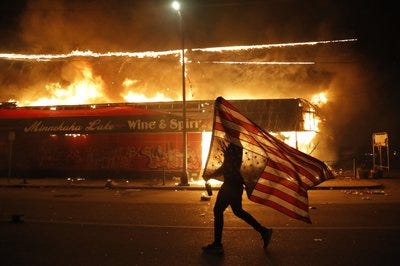
This morning, while I waited for my son’s Similac to warm up, I learned that protesters in Minneapolis burned down the police precinct where Derek Chauvin allegedly operated from. I was disquieted. I changed his diaper, fed my child, and settled into what feels like a daily routine of looking at the ledger of Black death in the media and on my Twitter timeline; I always feel I am one encounter with a cop away from joining. All I know is that I wanted justice for George Floyd.
I think about my recent encounter with the police. I was driving on Old Stage Coach Road, north of Wal-Mart, blasting some Biggie when I noticed the red and blue lights in my rearview. I could not hear the klaxon’s sounds. It felt surreal. I looked past my recently installed car seat and the “Baby on Board” sticker affixed on my rear window pane and saw the flashing, flashing, flashing. I pulled over. My heart tightened as it does with all encounters with police. I wanted to hang on to see and hold my son. Please don’t let this be the time the state punches my card.
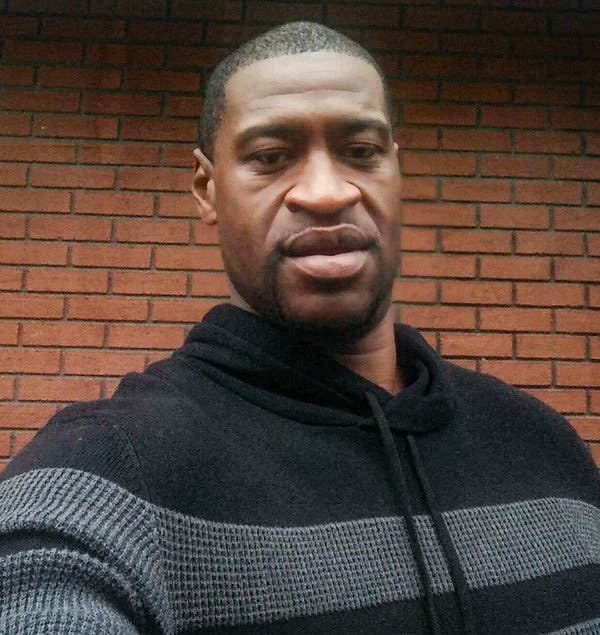
Through his Arkansas Razorbacks mask, the police informed me my tags were out of date. He was gentle, courteous. I did my best to ensure he had no reason to challenge me by forking over my license and registration and keeping my hands on the steering wheel as I spoke, traffic stop etiquette being a survival behavior ingrained into muscle memory. I prayed the officer did not seek challenge, asking to search my car or some other violation of my civil and property rights that is visited all too often on Black folk. I know what such challenge means. I would stop being a person and become an object. People do as they please with objects. Did Floyd feel this fear as Chauvin pressed down on his neck with his knee?
The police gave me a warning and went on his way. I took my hands off the steering wheel once he turned down Old Stage Coach Road. My papers laid on my passenger seat. I carefully organized them and put them back in the glove compartment. I was sweating; the air conditioning was set to 65 degrees. I looked back and wondered how that encounter would of went with my son in the back seat. I don’t play any more rap music during the trip.
The thing, the Big Thing, that happened to America — its genesis and what will be its apocalypse — is slavery. No nation that so intentionally affixed freedom to bondage would be able to escape or survive its contradictions. We had several chances to sever this paradox; Bacon’s Rebellion, the framing of the Constitution, the Civil War, Reconstruction, the Civil Rights Movement. But at each pass, freedom faced deferment and defeat. At the core of all the failures to midwife the true birth of freedom is the deep-seated belief in the hearts of enough politically active white people that Black people deserve this fate — preordained, and seemingly out of their influence — and them forgetting that fate is simply an exertion of power for good or ill. A nation gets the fate it works for. Our fate is that the state kills Black folk like George Floyd and blames them for their demise, despite all evidence to the contrary.
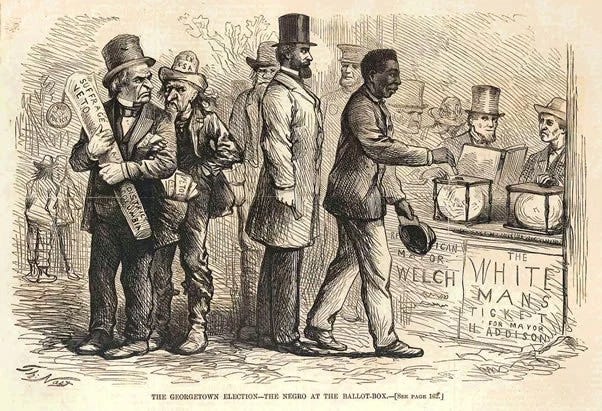
Professor Christina Sharpe, author of In the Wake: On Blackness and Being, refers to Floyd’s state of being as “the afterlife of property.” Property is used, traded, and discarded once its owner has no more use for it. In this nation built on black slavery, the afterlife of property is evidenced by the absence of reparation. “If museums and memorials,” she argues, “materialize a kind of reparation…how does one memorialize chattel slavery and its afterlives, which are unfolding still? How does one memorialize the everyday?” A nation with honest memory would never use its knee to clamp shut the windpipe of a surrendered man. A state that memorialized the brutalities which Floyd’s ancestors endured would never take four days and a burned city to react to a crime that was documented in real-time.
White people and Black personhood manifest the afterlife of property in different ways. For whites, it is the indifference to the subjugation and annihilation of Black life. Never forget that Philando Castile was gunned down in the city that now burns, despite having his papers in order; his killer walked free, for what is the consequence of killing something with the patina of property? For Black personhood, the manifestation happens in our folklore. Our music and our histories, our BBQs and our cautionary tales — that despite how caviler this nation has condition itself to be concerning us, our lives are of meaning and beauty.
It was easier to focus on the folklore when it was just me. I was fresh out of college and was eager to pursue justice. It became harder once I married, and I entered the web of love that defines so much of my happiness now; I would not have my wife a widow.
Now I have a Son, a child I have to raise in a nation that has never accepted that his people are no longer property. This imperfect nation will try to flatten him into myriad forms of property that they can own and manipulate; a statistic on some CompStat report to show crime is going down while police forces continue to commit rapine on my community; some diversity hire to show that companies and non-profits are committed to diversity while my community remains the most segregated in the nation; some behavioral or academic statistics that shows a school is doing its best while presiding over massive opportunity gaps between its white and black students. My family came together, despite police and pestilence, to welcome this beautiful human being into this world. George Floyd’s lynching, however, shows the world that we have to prepare him for. He lives now the afterlife of property, simultaneously the most precious thing in the universe and a object for America to work out its historical frustrations.
The Similac cooled enough for me to give to my son. I cuddle him, and sing him what is quickly becoming his favorite song — Lauryn Hill’s cover of“Can’t Take My Eyes Off Of You.”


