avatarRandy Runtsch

Free AI web copilot to create summaries, insights and extended knowledge, download it at here

928

Abstract

1.readmedium.com/v2/resize:fit:800/0*juh8KGRGbT56qpor"><figcaption>A yellow-bellied marmot peers out from a rock. Photo by the author.</figcaption></figure><p id="fea0">Yellow-bellied marmots feature thick brown and rust-colored fur. They have a white patch between their eyes, and a white coat covers their snout.</p><figure id="2ecc"><img src="https://cdn-images-1.readmedium.com/v2/resize:fit:800/0*BIqAz0LTwRmMxT4j"><figcaption>Yellow-bellied marmot resting on a rock. Photo by the author.</figcaption></figure><p id="dc09">Yellow-bellied marmots are omnivores. They munch on a wide variety of vegetation. They also eat bird eggs and insects.</p><p id="b8e8">Marmots are cool-climate animals. They thrive at elevations above 6,500 feet.</p><figure id="988d"><img src="https://cdn-images-1.readmedium.com/v2/resize:fit:800/0*XVho_KPcMX-EJT1Z"><figcaption>This yellow-bellied marmot appears to be waving. Photo by the author.</

Options

figcaption></figure><p id="7d61">Hibernating for eight months each year, marmots spend up to 80 percent of their lives in their burrows. Fortunate for hikers and motorists, they like to lay on rocks and forage out in the open during the warmer months.</p><p id="dce8">Yellow-bellied marmots live in groups of up to twenty animals. A single male dominates the group.</p><figure id="5df2"><img src="https://cdn-images-1.readmedium.com/v2/resize:fit:800/1*YleCGWzbCmCtuYmcsx5J5Q.jpeg"><figcaption>Yellow-bellied marmot chews on a yellow flower. Photo by the author.</figcaption></figure><p id="0390">Most people are impressed at the sight of large mammals, such as elk, deer, bighorn sheep, and bears. But adorable yellow-bellied marmots always please my eye.</p><p id="cb67" type="7">“Any glimpse into the life of an animal quickens our own and makes it so much the larger and better in every way.” — John Muir</p></article></body>

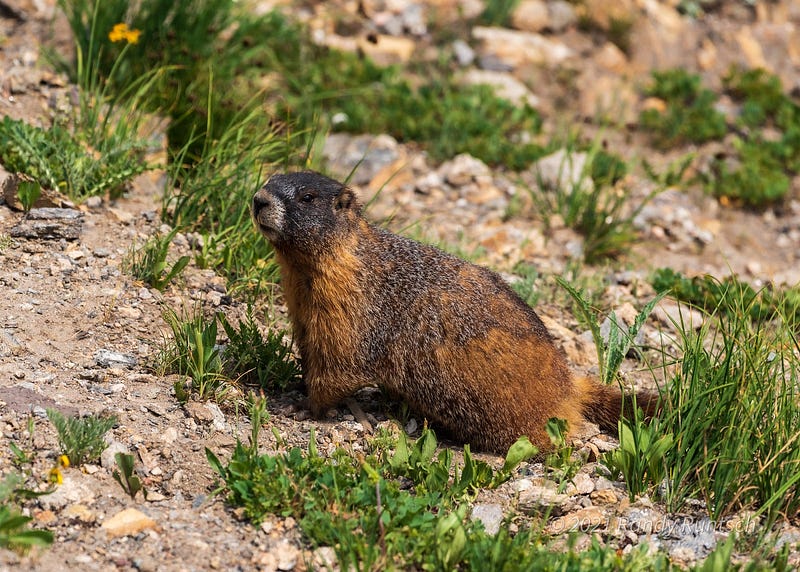
A yellow-bellied marmot seems to pose for a portrait. Photo by the author.

Wildlife and Photography

The Adorable Yellow-bellied Marmots of the Mountain States

Sometimes, seemingly humbles animals demands the most attention

Each species is a masterpiece, a creation assembled with extreme care and genius. — E. O. Wilson

The yellow-bellied marmot is a large ground squirrel. These rodents inhabit the mountains of the western United States and southwestern Canada.

These cute and chunky marmots can weigh up to 11 pounds. They can grow to 27 inches long.
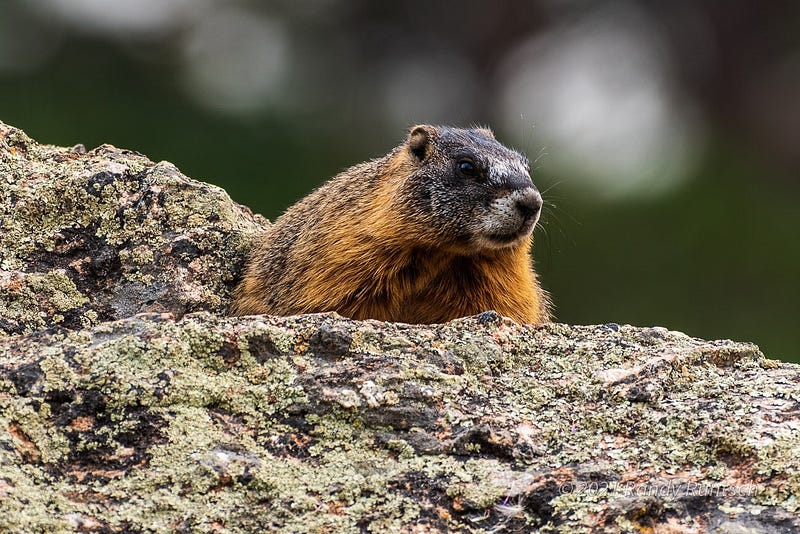
A yellow-bellied marmot peers out from a rock. Photo by the author.

Yellow-bellied marmots feature thick brown and rust-colored fur. They have a white patch between their eyes, and a white coat covers their snout.
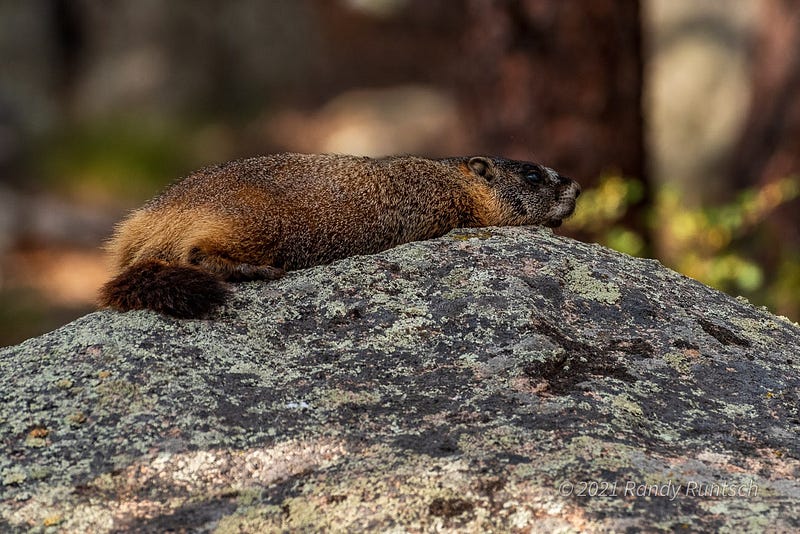
Yellow-bellied marmot resting on a rock. Photo by the author.

Yellow-bellied marmots are omnivores. They munch on a wide variety of vegetation. They also eat bird eggs and insects.

Marmots are cool-climate animals. They thrive at elevations above 6,500 feet.
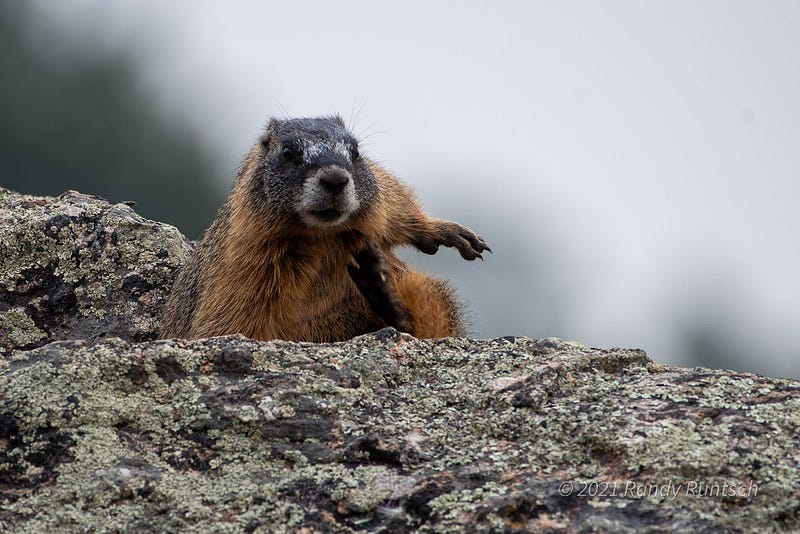
This yellow-bellied marmot appears to be waving. Photo by the author.

Hibernating for eight months each year, marmots spend up to 80 percent of their lives in their burrows. Fortunate for hikers and motorists, they like to lay on rocks and forage out in the open during the warmer months.

Yellow-bellied marmots live in groups of up to twenty animals. A single male dominates the group.
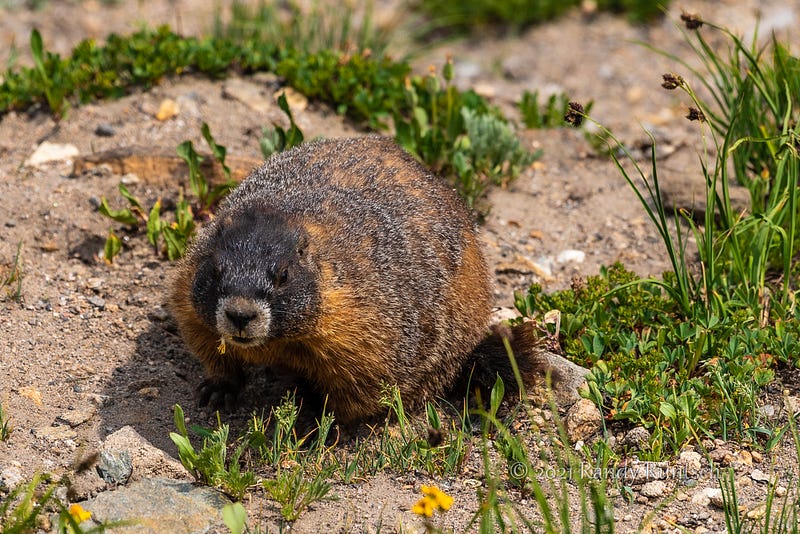
Yellow-bellied marmot chews on a yellow flower. Photo by the author.

Most people are impressed at the sight of large mammals, such as elk, deer, bighorn sheep, and bears. But adorable yellow-bellied marmots always please my eye.

“Any glimpse into the life of an animal quickens our own and makes it so much the larger and better in every way.” — John Muir

Animals
Wildlife
Photography
Nature
Mountains
Recommended from ReadMedium